House of Commons Hansard #102 of the 45th Parliament, 1st session. (The original version is on Parliament's site.) The word of the day was taxes.

Topics

line drawing of robot

This summary is computer-generated. Usually it’s accurate, but every now and then it’ll contain inaccuracies or total fabrications.

Facilitating Agricultural Regulatory Modernization Act First reading of Bill C-273. The bill proposes allowing Canadian farmers to access agricultural products approved by allied nations within 90 days, aiming to reduce bureaucratic delays and regulatory red tape to lower costs and increase food production. 300 words.

Petitions

Opposition Motion—Fuel Taxes Members debate a Conservative motion proposing the total removal of federal fuel taxes to address the national cost of living crisis. The Conservatives demand immediate relief for farmers and truckers by eliminating excise, GST, and carbon levies. In response, the Government announces a temporary suspension of excise taxes. Meanwhile, the Bloc Québécois questions the motion's environmental impact, and the NDP argues that corporate profits should fund relief without cutting infrastructure or health services. 50500 words, 6 hours in 2 segments: 1 2.

Statements by Members

Question Period

The Conservatives dismiss the government's fuel tax relief as a half measure, demanding the elimination of all taxes on gas. They urge the government to defend private property rights following the Cowichan ruling and secret Musqueam agreements. They also raise ethics concerns over the Alto rail project and Iran’s UN committee membership.
The Bloc advocates for French-language regional news by calling for increased media funding and contributions from web giants. They also demand the government eliminate the EI "spring gap" and provide additional weeks of benefits for seasonal workers.
The NDP urges the government to enforce the Canada Health Act against expanding two-tiered diagnostics and care.
The Greens criticize cuts to scientific research in environment and agriculture, specifically for insect taxonomy.

Youth Criminal Justice Act Second reading of Bill C-231. The bill seeks to amend the Youth Criminal Justice Act by prioritizing addiction treatment for youth over traditional punitive measures. Representatives from all parties express support for the initiative, emphasizing the need for rehabilitation over incarceration. While supporting the overarching goal, some members propose targeted amendments to better integrate structured, evidence-based intervention and help youth break the vicious cycle of addiction. 5900 words, 45 minutes.

Conservation Donations Members debate Motion No. 15, proposing tax parity for land and monetary conservation donations. Liberals argue this voluntary approach leverages private investment for biodiversity goals. Conservatives oppose the motion, arguing it advances a "30 by 30" agenda that restricts economic activity and public land access. The Bloc Québécois supports the measure as a necessary tool to address the biodiversity crisis. 8300 words, 1 hour.

Adjournment Debates

Access to disability benefits Gord Johns argues the current disability tax credit process duplicates provincial efforts, wastes physician time, and creates barriers for applicants. He advocates for Bill C-211 to streamline access. Maggie Chi defends the current federal system, asserting it ensures consistent, equal support for Canadians across all provinces.
PrescribeIT program expenditure Matt Strauss criticizes the government for spending $250 million on the failed PrescribeIT project, demanding transparency through the release of the contract. Maggie Chi defends the government's decision to end the program, emphasizing their ongoing commitment to digitizing health care through new legislation and collaboration with provinces and territories.
Phoenix pay system replacement William Stevenson criticizes the government for the ongoing failures of the Phoenix pay system and expresses concern that the proposed replacement, Dayforce, will repeat past errors. Maggie Chi defends the government by citing improvements in pay accuracy and emphasizes that the gradual transition is designed to ensure reliability.
Was this summary helpful and accurate?

TaxationOral Questions

2:40 p.m.

Louis-Hébert Québec

Liberal

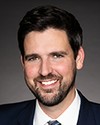
Joël Lightbound LiberalMinister of Government Transformation

Mr. Speaker, it would be so simple and it would help people, like the 26,537 residents in her riding who have access to the Canadian dental care plan. It would be so simple for the member to support that program. It would be so simple for her to support the Canada child benefit, which allocates $67 million a year to 10,000 families in her riding.

When the member says “peanuts”, she is talking about $2.4 billion going back to Canadians because we are eliminating the excise tax on gasoline. That is not peanuts. That is significant.

TaxationOral Questions

2:40 p.m.

Conservative

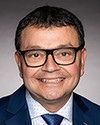
Dominique Vien Conservative Bellechasse—Les Etchemins—Lévis, QC

Mr. Speaker, what I also find odd is that Canadians already pay about 20% more for gas than Americans do, while the Liberals are proposing partial relief that will cover barely a third of taxes for a third of the year. What we in the Conservative Party propose is that the Liberals keep co-opting the Conservative Party platform, but in its entirety, instead of just half of it. Then we would agree with them.

TaxationOral Questions

2:40 p.m.

Louis-Hébert Québec

Liberal

Joël Lightbound LiberalMinister of Government Transformation

Mr. Speaker, I am very proud of the fact that we eliminated the carbon tax, which lowered the price of gas in this country by 28¢ a litre. I also find it ironic that the member opposite was part of the Quebec government that put a price on pollution with its cap-and-trade system. That is peak irony.

TaxationOral Questions

2:45 p.m.

Conservative

Jacques Gourde Conservative Lévis—Lotbinière, QC

Mr. Speaker, the measures announced this morning by the Liberal government are too little too late in the face of the magnitude of the cost of living crisis in Canada. The price of diesel today is $2.75 a litre. The announced tax cut of four cents a litre changes nothing for our truckers. The Liberal government is still charging eight cents a litre in GST and seven cents a litre for the clean fuel regulations. Canadians are paying 20% more for gas than Americans.

Will the Liberal government stop patting itself on the back and start working for all Canadians?

TaxationOral Questions

2:45 p.m.

Saint-Maurice—Champlain Québec

Liberal

François-Philippe Champagne LiberalMinister of Finance and National Revenue

Mr. Speaker, like the people watching us on TV, I must give the member an A in theatre but perhaps a C in math.

The fact is that we are leaving $2.4 billion in the pockets of truckers. I look forward to seeing the people of Saint‑Nicolas and Lévis. I hope he will put this video on his platforms to inform all truckers in the Quebec City region that we are there for them and that we understand that lowering the price of diesel will also help with food costs. We know that the price of diesel has an impact on logistics. We will continue fighting for Canadians every single day.

The EconomyOral Questions

2:45 p.m.

Liberal

Braedon Clark Liberal Sackville—Bedford—Preston, NS

Mr. Speaker, over the past year, Canadians have navigated a rapidly changing and increasingly fragmented world, one that is more complex, more volatile and more unpredictable. In this environment, Canadians have done what they have always done. We have rolled up our sleeves, looked out for one another and adapted. This work belongs to all of us. This is Canada's moment to build together. Last night, the good people of Scarborough Southwest, University—Rosedale and Terrebonne placed their faith in this plan.

Could the Minister of Finance please update the House on the next steps in our plan to build a strong and resilient Canadian economy and give us a—

The EconomyOral Questions

2:45 p.m.

The Speaker Francis Scarpaleggia

The hon. Minister of Finance.

The EconomyOral Questions

2:45 p.m.

Saint-Maurice—Champlain Québec

Liberal

François-Philippe Champagne LiberalMinister of Finance and National Revenue

Mr. Speaker, budget 2025 presented generational investments in housing, infrastructure, productivity, innovation and our defence. It is our plan to grow the strongest economy in the G7.

I will have the pleasure of presenting the spring economic update on April 28 to the House. This is going to be a plan that is going to help families. It is going to help our industry. It is going to help our nation prosper and to bring good news to Canadians across the nation.

Indigenous AffairsOral Questions

2:45 p.m.

Conservative

Jamie Schmale Conservative Haliburton—Kawartha Lakes, ON

Mr. Speaker, Canadians are facing rising costs, economic uncertainty and housing challenges. The Cowichan ruling in British Columbia is now adding a new layer of doubt about whether homes in the city of Richmond are truly secure. Home ownership is the foundation of financial stability for millions of Canadians, yet the Liberals have failed to clearly defend it in court.

Will the Prime Minister instruct his lawyers to unequivocally argue that the private property rights of Canadian homeowners must come first and finally provide the certainty Canadians demand?

Indigenous AffairsOral Questions

2:45 p.m.

Northwest Territories Northwest Territories

Liberal

Rebecca Alty LiberalMinister of Crown-Indigenous Relations

Mr. Speaker, let me be clear that Canadians can still buy, sell, inherit and renovate their homes under provincial and municipal law.

We disagreed with the Cowichan ruling and appealed it on September 8, 2025. We believe that the Cowichan decision requires legal clarity. That is why the government will pursue all legal options through the appeal process. We will protect private property owners and uphold the Constitution without fearmongering.

Indigenous AffairsOral Questions

2:45 p.m.

Conservative

Jamie Schmale Conservative Haliburton—Kawartha Lakes, ON

Mr. Speaker, the government filed its appeal at the last second, but here is the thing: In 2018, the government instructed its lawyers to not make the argument that fee simple property is supreme while the case was in the lower courts. Unfortunately for the property owners involved, the government cannot mount an appeal with an argument that it did not make originally.

I ask the minister to please help Canadians and all of us understand how the government intends to win a court case with an argument it cannot make.

Indigenous AffairsOral Questions

2:45 p.m.

Northwest Territories Northwest Territories

Liberal

Rebecca Alty LiberalMinister of Crown-Indigenous Relations

Mr. Speaker, again, we are appealing the Cowichan ruling, and we will be pursuing all legal options.

Indigenous AffairsOral Questions

April 14th, 2026 / 2:50 p.m.

Conservative

Chak Au Conservative Richmond Centre—Marpole, BC

Mr. Speaker, the Liberal government avoids the question, hiding behind appeals and technical definitions instead of stating a clear and substantive position. This is pattern. In court and in backroom agreements, the Liberals refuse to say whether they will stand up for Canadian homeowners. Canadians deserve certainty.

Will the Prime Minister direct lawyers to argue that the private property rights of Canadian homeowners must come first, yes or no?

Indigenous AffairsOral Questions

2:50 p.m.

Northwest Territories Northwest Territories

Liberal

Rebecca Alty LiberalMinister of Crown-Indigenous Relations

Mr. Speaker, let me be clear. Canadians can still buy, sell, inherit and renovate their homes under provincial and municipal law.

We disagree with the Cowichan ruling, which we appealed on September 8, 2025. We believe that this decision requires legal clarity. That is why the government will pursue all legal options through the appeal process.

We will protect property rights and uphold the Constitution.

Indigenous AffairsOral Questions

2:50 p.m.

Conservative

Chak Au Conservative Richmond Centre—Marpole, BC

Mr. Speaker, appealing the decision is not the question. The government still has not said whether it is arguing that Canadian homeowners' private property rights come first. I will keep asking this question until there is a clear answer.

Will the Liberals make that position clear in court and in all future agreements, yes or no?

Indigenous AffairsOral Questions

2:50 p.m.

Central Nova Nova Scotia

Liberal

Sean Fraser LiberalMinister of Justice and Attorney General of Canada and Minister responsible for the Atlantic Canada Opportunities Agency

Mr. Speaker, my hon. colleague has asked us to state the position of the Government of Canada clearly. We disagree with the decision of the Supreme Court of British Columbia. We have decided to appeal that decision in order to pursue a different outcome. At trial we defended fee simple, and we believe that more clarity is needed, particularly on the issue of private property rights.

These debates are legal debates. The appropriate forum for them to take place is through the appeal process, not on the floor of the House of Commons.

Indigenous AffairsOral Questions

2:50 p.m.

Conservative

Ellis Ross Conservative Skeena—Bulkley Valley, BC

Mr. Speaker, the Cowichan ruling has created uncertainty for homeowners and first nations in B.C., calling into question whether private property rights are secure. Canadians are already struggling with affordability. They should not have to wonder whether or not they own their own homes. Cowichan themselves said that they did not seek to invalidate private property ownership.

Will the Prime Minister direct his lawyers to thoroughly argue in court that the private property rights of Canadian homeowners must be a priority as well?

Indigenous AffairsOral Questions

2:50 p.m.

Northwest Territories Northwest Territories

Liberal

Rebecca Alty LiberalMinister of Crown-Indigenous Relations

Mr. Speaker, as I have told the House, we are appealing the decision, but what I would like to point out is that courts are one way of settling the aboriginal title and negotiations are another. This is what we have done in that member's jurisdiction.

We have been working with the Government of British Columbia as well as the Haida Nation. It has been two years since the Haida title agreement has been in place in the province of British Columbia. The sky has not fallen. Private property is protected under the Haida agreement.

Indigenous AffairsOral Questions

2:50 p.m.

Conservative

Ellis Ross Conservative Skeena—Bulkley Valley, BC

Mr. Speaker, this could have been avoided. The Liberal government's secret approach to agreements, such as the Musqueam rights recognition agreement, without transparency or clear protections for private property, has added to the anxiety private property owners are already experiencing. The consequences are uncertainty, stalled sales and the potential to derail previous reconciliation efforts.

Will the Prime Minister commit today that no future agreements will be signed unless they explicitly protect and prioritize the private property rights of Canadian homeowners?

Indigenous AffairsOral Questions

2:50 p.m.

Vancouver Fraserview—South Burnaby B.C.

Liberal

Gregor Robertson LiberalMinister of Housing and Infrastructure and Minister responsible for Pacific Economic Development Canada

Mr. Speaker, let us be clear. This band of Conservatives is what is sowing dissent and anxiety in Canada. The government is being crystal clear. We support—

Indigenous AffairsOral Questions

2:50 p.m.

Some hon. members

Oh, oh!

Indigenous AffairsOral Questions

2:50 p.m.

The Speaker Francis Scarpaleggia

I did not really hear all the words there, but it was an interruption, so the minister may start from the top.

Indigenous AffairsOral Questions

2:50 p.m.

Some hon. members

Oh, oh!

Indigenous AffairsOral Questions

2:50 p.m.

The Speaker Francis Scarpaleggia

He might have to start from the top again if the hon. member for Kamloops—Thompson—Nicola continues.

The hon. minister has the floor.

Indigenous AffairsOral Questions

2:50 p.m.

Some hon. members

Oh, oh!