
The hon. chief government whip.
House of Commons Hansard #102 of the 45th Parliament, 1st session. (The original version is on Parliament's site.) The word of the day was taxes.

House of Commons Hansard #102 of the 45th Parliament, 1st session. (The original version is on Parliament's site.) The word of the day was taxes.

This summary is computer-generated. Usually it’s accurate, but every now and then it’ll contain inaccuracies or total fabrications.
Facilitating Agricultural Regulatory Modernization Act First reading of Bill C-273. The bill proposes allowing Canadian farmers to access agricultural products approved by allied nations within 90 days, aiming to reduce bureaucratic delays and regulatory red tape to lower costs and increase food production. 300 words.
Opposition Motion—Fuel Taxes Members debate a Conservative motion proposing the total removal of federal fuel taxes to address the national cost of living crisis. The Conservatives demand immediate relief for farmers and truckers by eliminating excise, GST, and carbon levies. In response, the Government announces a temporary suspension of excise taxes. Meanwhile, the Bloc Québécois questions the motion's environmental impact, and the NDP argues that corporate profits should fund relief without cutting infrastructure or health services. 50500 words, 6 hours in 2 segments: 1 2.
Youth Criminal Justice Act Second reading of Bill C-231. The bill seeks to amend the Youth Criminal Justice Act by prioritizing addiction treatment for youth over traditional punitive measures. Representatives from all parties express support for the initiative, emphasizing the need for rehabilitation over incarceration. While supporting the overarching goal, some members propose targeted amendments to better integrate structured, evidence-based intervention and help youth break the vicious cycle of addiction. 5900 words, 45 minutes.
Conservation Donations Members debate Motion No. 15, proposing tax parity for land and monetary conservation donations. Liberals argue this voluntary approach leverages private investment for biodiversity goals. Conservatives oppose the motion, arguing it advances a "30 by 30" agenda that restricts economic activity and public land access. The Bloc Québécois supports the measure as a necessary tool to address the biodiversity crisis. 8300 words, 1 hour.
Opposition Motion—Fuel TaxesBusiness of SupplyGovernment Orders

Mark Gerretsen Liberal Kingston and the Islands, ON
Mr. Speaker, I will be the first to say that my opinion on things absolutely changes, given the context and the circumstances that the world is in, from time to time. As a matter of fact, I would even argue that this is the whole reason why we come to this room. All 343 of us come to this room not just to give speeches endlessly and then sit down or leave. Call me an idealist, but do we not come here with the whole point of trying to convince people of something? As such, from time to time, I will be the first to say that I will put myself in a position to say that maybe my position on something is wrong and maybe I should look at it differently. To be critical of that is to be critical of the entire democratic process, the entire reason why 343 of us come to this room.

Bardish Chagger Liberal Waterloo, ON
Mr. Speaker, I appreciated the reminder of how the Conservatives do tend to bring about their convenience. It is more like the “do as I say, not as I do” Conservative Party. We really do not necessarily know where they stand. Sometimes their own members are confused.
I would like to hear from the member, just to bring the constituents of the riding of Waterloo up to speed, what we are debating today and perhaps what took place.
Mark Gerretsen Liberal Kingston and the Islands, ON
Mr. Speaker, we are debating an opposition motion that was kind of made moot as a result of what the government announced today. However, I will say to the member's point that, yes, Conservatives are continually changing how they feel about a particular issue based on the context that they happen to be in. The member will remember that when we had somebody cross the floor to the Conservatives, we never treated them the way the Conservatives treat everybody who crosses this way.
Opposition Motion—Fuel TaxesBusiness of SupplyGovernment Orders
Conservative

Éric Lefebvre Conservative Richmond—Arthabaska, QC
Mr. Speaker, we are here today to discuss a Conservative proposal aimed at supporting Canadians in the face of the ongoing energy crisis in the Middle East.
In short, we are proposing that the House call on the government to adopt the Conservative plan to save Canadians not 10¢, but 25¢ per litre by eliminating federal taxes on gasoline and diesel for the remainder of 2026. To support Canadians, we are calling on the government to take immediate, concrete and responsible action to put money back in the pockets of our youth, our families, our workers, our seniors and our industries.
Our proposal includes four immediate tax-relief measures:
(a) removing the Fuel Excise Tax for the remainder of 2026, which costs Canadians 10 cents-a-litre; (b) removing the GST on gasoline and diesel for the remainder of 2026, which costs Canadians 8 cents-a-litre; (c) permanently removing the Fuel Standards tax, which costs Canadians 7 cents-a-litre; and (d) permanently removing the industrial carbon tax, which will rise to $170 a tonne, and is projected to shrink the economy by 1.3 per cent and lead to 50,000 job losses.
All told, this would allow Canadians to save around 25¢ per litre of gas, which means $20 every time a parent fills up the minivan, or more than $1,200 a year for a family. These are immediate steps the government can take to ease the pressure on our constituents. In addition, our plan will save businesses and workers around 21¢ per litre of diesel, providing relief in an already difficult economic climate. This will allow businesses to retain their employees and remain competitive.
This will also help consumers, who will end up paying the price if nothing is done to curb rising fuel prices, which will force suppliers to raise their prices. This means higher grocery prices, higher housing costs, and higher fuel costs for Canadians from coast to coast to coast.
After years of inflation, high taxes and rising costs, Canadians have tightened their belts enough. It is time for a change. It is time for this Liberal government to cut taxes in response to the current energy crisis.
While gas prices have risen sharply across Canada and elsewhere in the world, the biggest winner right now is the government. It is estimated that there will be an exceptional, unanticipated and unbudgeted tax windfall of $9 billion in total. That is $9 billion that will swell the federal coffers.
I unequivocally believe that these additional tax revenues should be returned to taxpayers, the people in our communities who work hard every day. That is why the Conservatives are calling on the Liberals to use $5 billion of the estimated $9 billion in additional revenue to eliminate all federal taxes on gasoline and diesel. To be clear, the federal government will collect more revenue from the higher oil prices than it would cost to suspend the fuel tax for the rest of the year. If it is going to make billions of dollars more from higher oil prices, the least it can do is give that money back to Canadian families and business owners.
We saw that this morning. Once again, the Liberal government stole a Conservative proposal. However, according to the Conservatives' strong affordability plan, the government only came up with a half-measure, which is no surprise. If we look at the numbers, the Conservatives proposed to completely eliminate all federal fuel taxes. That measure would put 25¢ a litre back into the pockets of Canadians. The Liberals had every option but they chose to eliminate only the excise tax, which is a cut of 10¢ a litre. That is 15¢ a litre less than our proposal. The Liberal proposal is a cut of 10¢ a litre for four months, while we were proposing a cut of 25¢ a litre for the rest of this year.
When it comes to diesel, the gap is even wider. Our proposal provides 21¢ in relief to the truckers and farmers who keep our economy running. Do not forget that farmers work 365 days a year and are on call 24 hours a day. Farmers are the ones who put breakfast, lunch and dinner on our plates. We need to give them the level of support that matches the responsibility they bear of feeding Canadians. I would like to take this opportunity to thank all farmers.
A Conservative government will significantly reduce the diesel tax for farmers, as our proposal is 17¢ per litre lower than the government proposal. The government has deliberately chosen to keep Canadians' hard-earned money here in Ottawa. We called for these taxes to be eliminated until the end of the year to allow families of four to save approximately $1,200 per year. However, the Liberals chose to end this relief on September 7—four months earlier than in our plan.
Canadians have a right to know that the Liberals have reduced the cost of fuel by only 10¢. The Liberals forgot to mention the reality at the pumps: Canadians are still paying 15¢ per litre for gas and 17¢ per litre for diesel in taxes alone. These taxes could be reduced to help ordinary folks get through this energy crisis.
Some things are outside Canada's control. We cannot control the U.S President, what is happening in Iran or global energy prices. However, Canada has the power to shape its own destiny right here at home. That means removing internal trade barriers, cutting red tape and putting Canadians first. That said, the Liberal government had the full power to lower the cost of gas for Canadians, the full power to axe all the taxes it charges at the pumps and the full power to support Canadians and make life more affordable.
To wrap up, I have many questions. Why will the Liberals not adopt our entire plan to axe all federal taxes on gas and diesel? Why will the Liberals not take action to help Canadians save 25¢ per litre of gas? Why will the Liberals not take action to help families of four save $1,200 by the end of this year? These are important questions that Canadians in my riding and across the country are asking day after day.

Steeve Lavoie Liberal Beauport—Limoilou, QC
Mr. Speaker, my colleague is wondering why we are not accepting their plan, yet I could ask him the same question. Why is he not voting in favour of affordability for our families?
We need only consider dental care and how important it is in our regions. I see the number of people who registered in my riding. We even organized sign-up sessions. That is something practical. I went into politics to do practical things. Now, we have a real opportunity to do that. Talking and proposing things are all well and good, but when it comes time to vote for practical action, the opposition, unfortunately, is not on board.
Does my colleague intend to join us in the future and vote for measures that help people in practical ways?
Éric Lefebvre Conservative Richmond—Arthabaska, QC
Mr. Speaker, today's debate is on the opposition motion and concerns gas taxes, but my colleague is talking to me about the Liberal dental plan. What we are discussing today is the gas tax. The Liberal proposal is 10¢ for a short period of time. We are talking about eliminating all taxes, which amount to 25¢ per litre. That is money that goes directly into people's pockets.
There is a significant increase in revenues right now. The Liberals owe it to Canadians to put that gas tax money back in their pockets.

Gabriel Ste-Marie Bloc Joliette—Manawan, QC
Mr. Speaker, I would like to speak to the motion's last two points.
First, the Conservative Party estimates that eliminating clean fuel standards would save seven cents per litre, but the actual savings would be zero cents per litre. This is because the Conservative Party's numbers are based on old data from back when oil prices were much lower than they are now with the current crisis and price spikes that have put oil on par with biofuels. Their math is wrong, and this measure would be pointless.
Second, the last point is about eliminating the industrial carbon tax. Does my colleague realize that this will lower the cost of gas at the pump by zero cents per litre because the price of crude oil is determined by the market? This would be a gift to oil companies that would not be passed on to consumers because the price of crude oil is determined internationally and prices are soaring, which means more profit. Foreign capital owns about 75% of the oil industry in the west, and their profits go overseas. Why go into debt for that?
Éric Lefebvre Conservative Richmond—Arthabaska, QC
Mr. Speaker, once again, I appreciate the question from my colleague from the Bloc Québécois.
Today, I am not here to debate how tax revenue is calculated. I am here for the people of Canada. Right now, Canadians are being suffocated. They are being bled dry. We have an opportunity here to help our farmers, our manufacturers, our families, and our seniors by significantly reducing taxes on gasoline and diesel. That is what the Conservative government is proposing.

Sukhman Gill Conservative Abbotsford—South Langley, BC
Mr. Speaker, my question is very simple. The hon. member has been talking about his constituents and how they have been feeling the squeeze at the gas pumps. We see that the Liberals have adopted half of our plan. Could my colleague please elaborate on why they should have stolen the full idea of the Conservative plan that we were proposing, and not just half of it?
Éric Lefebvre Conservative Richmond—Arthabaska, QC
Mr. Speaker, I would like thank my colleague. I quite like him and am lucky enough to play hockey with him.
We were talking about half-measures just now. What the Liberal Party is proposing is a measure that will last four months, while what we are talking about would cover all of 2026. We cannot offer a half-measure for a few months and then reinstate the taxes.
They are talking about 10¢ per litre, whereas our proposal is for 25¢ per litre. That is a significant difference. As we know, right now, the residents of my riding, those in my colleague's riding, and all of my colleagues' constituents are being fleeced. One way to help them would be to eliminate all taxes for the entire year of 2026 to demonstrate a genuine effort by the Canadian government to address their situation.

Michael Guglielmin Conservative Vaughan—Woodbridge, ON
Mr. Speaker, it is always a honour to rise on behalf of the amazing residents of Vaughan—Woodbridge to fight for a more affordable life. Speaking of affordable, I would like to take the opportunity to say that it is unfortunate that the Prime Minister put together a costly majority government, not through the ballot box but through politicians who betrayed their constituents and betrayed their principles, principles they ran on and sought public office on, principles they will be held to account for during the next election.
We have been calling for relief at the pumps. Our motion today calls for the Prime Minister to adopt the Conservative plan to suspend all taxes on fuel until the end of the year. Earlier today, the Prime Minister confirmed once again that Conservatives have the solutions for Canada, but Liberals seem to want to introduce only half measures that will not deliver the full benefits to Canadians.
This morning, the Prime Minister announced the suspension of the federal fuel excise tax on gas and diesel. The suspension takes effect on April 20 and runs until September 7. Any measure that reduces the cost of fuel for Canadians is a step in the right direction, but this is only one part of the four-part plan of our Conservative motion before the House today. Unfortunately the Liberal government and the Prime Minister missed three of the other points of our plan and are not removing tax until the end of the year as we have proposed.
Conservatives have brought forward a plan to eliminate the fuel excise tax, the GST on tax and diesel, the industrial carbon tax and the clean fuel standard for the rest of 2026. This would cut costs by 25¢ a litre and save families, on average, $1,218 this year. This morning's announcement addresses 10¢ of that tax on gas, and only until September 7.
A parent in my riding got up this morning, strapped their kids in their car and drove them to school. They then went to work. Before they did any of that, they stopped at the pump. One year ago, that fill-up cost them roughly $92 for a minivan. Last week, it cost them more than $127. Next week, it might be more. Over the years, deliberate policy choices the Liberal government has made built a tax structure on fuel that now squeezes Canadians every time they grip the nozzle.
The Prime Minister says he wants to govern in a collaborative way, but the results are nonexistent. It is time for his rhetoric to match reality. It is an illusion that the Prime Minister will deliver on affordability, when he is out to remove only one tax, the fuel excise tax, and only from April 20 until Labour Day.
The CAA's own price tracker tells the story plainly. Gas across Canada now averages more than $1.82 a litre, up from $1.32 a year ago and just $1.52 six short weeks ago. That is a 38% spike in the cost of getting to work, getting kids to school and getting food to market. For millions of Canadians who are already living paycheque to paycheque, this compounding crisis, layered on top of crises the government has created, is too much to bear.
That is why we are here today to debate the motion. Conservatives have brought a specific plan to deliver immediate relief at the pump. We are calling on the government to adopt it. We need to provide immediate relief for families.
Government members are going to rise today and tell us that this is about global oil markets. They will reference the Middle East. They will explain the Strait of Hormuz. We have heard the Prime Minister use at a press conference the exact same description I just referenced, saying it is beyond Canada's control and asking what we could possibly do.
The global market explanation has one flaw that can be exposed with a single fact: Americans face the same global oil market, but Canadians pay almost 20% more at the pumps than the Americans do. It is the same disruption, yet when an American family pulls into a gas station, it pays dramatically less. The question that the House needs to be asking is why.
The answer is that it is the federal Liberal tax policy. Americans do not pay the fuel excise tax on every litre. They do not pay the clean fuel standard. The hidden carbon tax, which the Parliamentary Budget Officer himself confirmed, costs Canadians seven cents per litre, with no rebate attached. Americans do not carry an industrial carbon tax that will rise to $170 a tonne.
Here is a precise outline of what Canadians pay in addition to what Americans pay, in federal tax alone on every litre of gasoline: 10¢ a litre in fuel excise tax, which Conservatives are calling to be removed until the end of the year, not just until Labour Day; eight cents a litre in GST on gas and diesel; and seven cents a litre in the hidden carbon tax, with no rebate attached. That is 25¢ in additional costs per litre for all Canadians. On top of that, we have an industrial carbon tax already at $110 per tonne and rising to $170 per tonne.
Therefore, when we talk about global markets' being the cause of rising prices, it is indeed an immediate factor, but there are deep-rooted factors caused by our federal government that we could take decisive action on and address today.
There is another added dimension in the crisis the government hopes Canadians do not notice: The higher the price is on fuel, the more the government collects. According to a former Liberal top economic adviser, Tyler Meredith, every $10 increase in the price per barrel of oil brings roughly $2 billion in additional revenue for the federal government through the higher taxes paid by the oil industry from higher profits.
For context, oil is currently trading at $45 to $55 above pre-war baselines. The federal government stands to collect $9 billion or $10 billion in additional annual revenue if these prices are sustained. These figures have been validated by independent economists, such as Scotiabank's director of forecasting and modelling, Olivier Gervais.
The Conservative plan asks for $5 billion of that $9 billion windfall to be returned to Canadians, who generated it. Let us be clear: Conservatives are not asking the Liberals to spend money they do not have. We are asking them to return money they did not earn, which is money that flows directly to Ottawa precisely because Canadians are paying more at the pump.
After years of Conservatives and Canadians from across the country pleading it do so, the government eliminated the consumer carbon tax, yet what the Liberals try to hide from the public is that two more taxes remain in place, and both of those taxes are growing.
The clean fuel standard is silent. It is invisible on the price board at the pump, but that seven cents per litre is there every time we fill up our vehicle. Then there is the industrial carbon tax, currently at $110 per tonne and scheduled to rise again to $170 per tonne. The Liberals will tell us that this tax hits only industry, but the Canadian Federation of Independent Business tells us that nearly 70% of small businesses have seen their energy costs rise, and 32% of them already have raised their prices just to cover it. The Fraser Institute analysis found that the trajectory to $170 per tonne will cost the average Canadian worker $1,160 in lost annual income, eliminate 50,000 jobs and shrink our economy by 1.3%.
All this is to say that Liberals can try to reduce the impact of this all they want, but businesses do not absorb taxes. Taxes flow through to the shelf, and consumers pay more. Every time a Liberal member rises in the House and suggests that the industrial carbon tax does not touch ordinary Canadians, they contradict the lived experience of every small business owner and every family who has watched their grocery bill rise and the price at the pumps go up.
To reiterate, this four-point plan will be before the House—
Opposition Motion—Fuel TaxesBusiness of SupplyGovernment Orders

Jenny Kwan NDP Vancouver East, BC
Mr. Speaker, Canadians are being squeezed at the checkout counter like never before. Families are cutting back on essentials, skipping meals and struggling to afford groceries, while a handful of grocery giants continue to post massive profits. This is not a free market working for people. It is a system tilted in favour of corporate power, where Canadians pay more and get less. The cost of groceries is not just a household issue; it is a national affordability crisis, and it demands bold action.
Under the leadership of Avi Lewis, New Democrats are ready to take on grocery price gouging head-on. That means tackling surveillance pricing, building real public options in food distribution, strengthening local and regional supply chains and supporting Canadian producers. We have done this before.
From protecting farmland in B.C. to building public systems that put people first, the NDP knows that when we act in the public interest, we can lower costs and improve lives. It is time to take back control from grocery giants and put—
Cost of FoodStatements by Members

Vince Gasparro Liberal Eglinton—Lawrence, ON
Mr. Speaker, as a recovering banker, you will forgive me if I relapse for a moment. I want to recognize the Canadian ETF Association and the profound impact exchange-traded funds have had on investors globally.
Canada gave the world one of its most important financial innovations: the exchange-traded fund. Born on the Toronto Stock Exchange, ETFs have fundamentally transformed how investors access capital markets by making investing more transparent, efficient and affordable. Today, ETFs employ 15,500 Canadians and manage more than $802 billion in assets. ETFs direct capital into Canadian businesses and infrastructure. They strengthen our capital markets and ensure that Canadians can build wealth with confidence. If we want to remain a global leader in financial innovation, we must continue to stay ahead of the Americans and others.
I want to thank Prerna Matthews, Alex Perel, Eli Yufest and the Canadian ETF Association for their great work.

Chak Au Conservative Richmond Centre—Marpole, BC
Mr. Speaker, a year ago, a tragedy in Vancouver turned a joyful Lapu-Lapu festival into sorrow. As we approach this anniversary, the grief and trauma remain. For many families, the path to healing continues.
Even in the midst of that pain, we saw the strength of a community coming together, a community with compassion, resilience and strength. Neighbours lifted up one another, strangers became family and Canadians across the country stood in solidarity. Last Sunday, I attended a community fundraiser supporting those still on the road to recovery. It was a reminder that as time passes, our support must not.
As we honour those we lost, we stand with those still healing, together.

Leslie Church Liberal Toronto—St. Paul's, ON
Mr. Speaker, this Wednesday, April 15, Canadians across the country will come together for National Canadian Film Day, a celebration of who we are and the stories we tell about ourselves. From classrooms to community centres, from libraries to living rooms, people will gather to watch Canadian films sitting side by side. More than 2,000 free screenings will take place across the country with over 200 films and millions more tuning in from home for stories that reflect our communities, stories that challenge us and stories that remind us who we are and what we share.
I am especially proud of Sharon Corder and Jack Blum from Toronto—St. Paul's who co-founded Reel Canada, the organization behind National Canadian Film Day. Their vision has grown into something truly special: a celebration of Canada right across the country and the globe.
Tomorrow and in the days to come, I hope Canadians take 90 minutes, give or take, to find a film, gather with others and celebrate the stories, the artists, the directors and the visionaries who bring us together.

Roman Baber Conservative York Centre, ON
Mr. Speaker, Olivia Chow and Toronto city council are building an injection site between a day care and a middle school in our beautiful neighbourhood of Downsview. It will be another Toronto homeless shelter that hands out pipes and needles. It will have a safe room where non-residents can get in, get a needle, inject themselves, leave and roam the neighbourhood. Toronto's homeless shelters have morphed into drug injection sites. Now Olivia Chow wants $700 million from the Liberal government to pay for the construction of 20 more of these shelters all around Toronto.
Join me for a visit at Jane and Wilson near the Toronto Plaza shelter. It is an epicentre for drugs, crime and chaos. There are needles everywhere, drug trade and solicitation. The intersection is dead. Olivia wants to turn Jane and Wilson into Keele and Wilson using federal money, but we do not want Olivia's shelter harming our children and we do not want the Liberal government to fund the construction of these drug dens that bring crime and chaos to Toronto streets.
Downsview residents do not consent to this shelter, and we will fight it tooth and nail.
Steeve Lavoie Liberal Beauport—Limoilou, QC
Mr. Speaker, I rise today to pay tribute to one of my constituents in Beauport—Limoilou. Marc Bergeron is a psychoeducator who coordinates the “1, 2, 3 Go! Limoilou” initiative.
For the past 20 years, Mr. Bergeron has been driving around Limoilou in his little bus filled with activities, stopping at every park. Above all, he spreads happiness and pure joy. He gets lots of attention everywhere he goes, making people smile, making people laugh and bringing people together. He simply creates beautiful, happy moments for people of all ages.
Over the years, his bus has become a true gathering place and a landmark for many families. His dedication reminds us that it is the small, everyday acts that make our neighbourhoods more welcoming and more vibrant.
As he prepares to begin his well-deserved retirement, I want to acknowledge his significant contribution to our community.
I want to thank Mr. Bergeron.

Lianne Rood Conservative Middlesex—London, ON
Mr. Speaker, I am deeply troubled by the profound tragedy that occurred Sunday at Sarnia's Lambton College campus. My heart goes out to his family and all who knew 20-year-old Dane Nisbet, a promising young former junior hockey player who was taken far too soon, and also to the two others who were injured.
This senseless and unnecessary act of violence has shaken the community. We all know it could have been prevented. The primary suspect was already under a court order prohibiting him from possessing firearms and has a rap sheet a mile long. He was arrested in March for assault with a weapon and failure to comply. Last May, he was arrested on two counts of assault with a weapon and a breach of order, and he was previously charged with assaulting an elderly man. This guy should never have been on the streets. It is absolutely insane how he was not in jail.
Who bears the responsibility for this? It is the Liberal catch-and-release bail policies that continue to place dangerous offenders back on our streets instead of keeping them behind bars. We must fix these failed policies now to protect innocent lives. Canadians deserve safer—
Tragic Event in SarniaStatements by Members

Judy Sgro Liberal Humber River—Black Creek, ON
Mr. Speaker, I rise in response to deeply troubling reports of executions and repression in Iran, including the execution of six political dissidents by the regime in recent weeks.
In addition to this political repression is the escalation of the obsessive, systemic and ongoing persecution and scapegoating of the Iranian Baha’i religious community. As an example, Borna and Peyvand Naimi, two Baha’i cousins, targeted for their religious faith, remain detained, and have been reportedly tortured and, like others, coerced into false confessions.
Targeting people for their religious beliefs is a grave violation of worldwide human rights. Canada must continue to condemn these abuses, work with allies and press for accountability. Iranians deserve dignity, justice and freedom from fear.
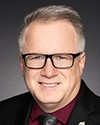
Marc Dalton Conservative Pitt Meadows—Maple Ridge, BC
Mr. Speaker, Canadians are under immense economic strain, and now the Liberal government has jeopardized the very foundation of home ownership. The Cowichan decision and secret Musqueam agreement have cast a dark shadow over private property rights. By failing to defend fee simple ownership in court and dropping key legal arguments, the government has sparked fear and financial chaos. Appraisers are warning that affected property values could plunge 40%. Financing is drying up and projects are already being cancelled. This is a massive failure of leadership.
Conservatives are calling on the Prime Minister to reinstate a strong legal defence of private property, ensure all agreements unmistakably protect ownership, deliver a clear plan within 30 days and immediately convene a parliamentary committee.
Canadians deserve certainty and security, not empty words. The government must protect Canadian homes and restore confidence now.

Yves Perron Bloc Berthier—Maskinongé, QC
Mr. Speaker, on April 4, the community of Saint‑Paulin said goodbye to one of its leading citizens, Claude Frappier.
First elected to council in 2004, his dedication to the common good motivated him to take on the position of acting mayor in November 2020. Re-elected as mayor on 2021, he discharged his duties with unprecedented diligence, determination and dedication until illness forced him to step away from the position.
Everyone admired Mr. Frappier. Always attentive to the needs of others, open-minded and generous, he will long be remembered by the people of the RCM of Maskinongé, as evidenced by the impressive number of people who came to pay their respects on April 4.
Mr. Frappier was a model of engagement and devotion to the betterment of his community, and I am grateful to him.