I think it is the hon. member for Lakeland. The hon. member will—
House of Commons Hansard #102 of the 45th Parliament, 1st session. (The original version is on Parliament's site.) The word of the day was taxes.

House of Commons Hansard #102 of the 45th Parliament, 1st session. (The original version is on Parliament's site.) The word of the day was taxes.

This summary is computer-generated. Usually it’s accurate, but every now and then it’ll contain inaccuracies or total fabrications.
Facilitating Agricultural Regulatory Modernization Act First reading of Bill C-273. The bill proposes allowing Canadian farmers to access agricultural products approved by allied nations within 90 days, aiming to reduce bureaucratic delays and regulatory red tape to lower costs and increase food production. 300 words.
Opposition Motion—Fuel Taxes Members debate a Conservative motion proposing the total removal of federal fuel taxes to address the national cost of living crisis. The Conservatives demand immediate relief for farmers and truckers by eliminating excise, GST, and carbon levies. In response, the Government announces a temporary suspension of excise taxes. Meanwhile, the Bloc Québécois questions the motion's environmental impact, and the NDP argues that corporate profits should fund relief without cutting infrastructure or health services. 50500 words, 6 hours in 2 segments: 1 2.
Youth Criminal Justice Act Second reading of Bill C-231. The bill seeks to amend the Youth Criminal Justice Act by prioritizing addiction treatment for youth over traditional punitive measures. Representatives from all parties express support for the initiative, emphasizing the need for rehabilitation over incarceration. While supporting the overarching goal, some members propose targeted amendments to better integrate structured, evidence-based intervention and help youth break the vicious cycle of addiction. 5900 words, 45 minutes.
Conservation Donations Members debate Motion No. 15, proposing tax parity for land and monetary conservation donations. Liberals argue this voluntary approach leverages private investment for biodiversity goals. Conservatives oppose the motion, arguing it advances a "30 by 30" agenda that restricts economic activity and public land access. The Bloc Québécois supports the measure as a necessary tool to address the biodiversity crisis. 8300 words, 1 hour.
Indigenous AffairsOral Questions
Indigenous AffairsOral Questions

The Speaker Francis Scarpaleggia
Let us just all take a moment. We do not have the required silence. Unfortunately, I cannot hear all the banter, so I do not know who is to blame, or who was first, and all of that.
Let us have some quiet so the Minister of Housing and Infrastructure can start from the top and answer this very important question on this very important issue.

Gregor Robertson Liberal Vancouver Fraserview—South Burnaby, BC
Mr. Speaker, I will reinforce the concerns this side of the House has about the anxiety and fearmongering the Conservatives are pushing on this issue.
This is a very serious issue. The government supports the appeal. The government supports the rights of private property owners. The government supports reconciliation. We will pursue the course of action of appealing the superior court decision in B.C. We will see justice and clarity on this.
We do not need the politics being played by the Conservatives to make this worse for Canadians.

Brad Vis Conservative Mission—Matsqui—Abbotsford, BC
Mr. Speaker, what I am seeing today from the government is a government pursuing a policy of confusion that has the whole province of British Columbia upset. Earlier today in question period, the Minister of Crown-Indigenous Relations said that the government will pursue all legal options.
Can the minister clarify for British Columbians whether that includes an argument to protect the private property rights of the British Columbians impacted by the Cowichan decision, yes or no? I would like a straight answer, in good faith.

Jill McKnight LiberalMinister of Veterans Affairs and Associate Minister of National Defence
Mr. Speaker, Canada disagrees with the B.C. Supreme Court's ruling, and we appealed it on September 8. We are committed to maintaining legal clarity and stability for private land ownership. Further legal clarity is required to address the decision, particularly as it relates to private property rights.

Sukhman Gill Conservative Abbotsford—South Langley, BC
Mr. Speaker, the Cowichan ruling has raised very real concerns about the security of property rights in Canada. At a time of high costs and economic uncertainty, Canadians should not be questioning the ownership of their homes.
The Liberals negotiated the Musqueam agreement in secret, with no transparency, leaving homeowners unable to sell and builders unwilling to invest, all during a housing crisis.
Will the Liberals commit to protecting Canadian rights by ensuring no future agreements are signed without clearly stating that private properties come first and are protected?

Taleeb Noormohamed LiberalParliamentary Secretary to the Minister of Artificial Intelligence and Digital Innovation
Mr. Speaker, our government has made it clear, first by appealing the decision and then by making clear statements that we not only stand for property rights but also defend them.
The concern here is that the opposition is not interested in the answer. What its members are interested in is fearmongering, spreading misinformation, driving mistrust in the market and creating economic uncertainty. That is what they are about. We are about making sure we are protecting property rights, building a strong economy and pursuing reconciliation.

Tamara Jansen Conservative Cloverdale—Langley City, BC
Mr. Speaker, I held a town hall with business leaders in my riding, and I expected to hear about tariffs and red tape. Instead, the number one concern by far was this: Do we still even own our own homes?
Decisions such as the Cowichan ruling and the Liberals' secret Musqueam agreement are shaking confidence in property rights. Investment is freezing, builders are backing off and uncertainty is growing. People are starting to wonder if we are drifting toward that “you will own nothing and be happy” mantra.
Is that where the Prime Minister is taking us, or will he instruct his lawyers to defend the property rights of Canadian homeowners, yes or no?

Rebecca Alty LiberalMinister of Crown-Indigenous Relations
Mr. Speaker, reconciliation and economic development go hand in hand. Through litigation, we are defending private property. For those nations where we are in negotiations with the Government of British Columbia and first nations, it is an opportunity to sit down at the table and actually be clear that private property is excluded, so we will continue through litigation, as well as through negotiation.

Louis Villeneuve Liberal Brome—Missisquoi, QC
Mr. Speaker, Canada's new government recently announced a new strategy to protect nature. Backed by a $3.8-billion investment, this new strategy will help protect and restore critical habitats, ensure that industrial strategies complement our conservation efforts and mobilize new capital for nature.
Can the Secretary of State for Nature tell Canadians about our new plan to protect our natural environment for generations to come?

Nathalie Provost LiberalSecretary of State (Nature)
Mr. Speaker, I thank my colleague, the member for Brome—Missisquoi, for his question and for his commitment to nature. It is important and precious to Canadians. That is why our government remains committed to protecting 30% of our lands and waters by 2030. Our new initiative, “A Force of Nature: Canada's Strategy to Protect Nature”, will protect nature more effectively and at a lower cost, specifically by mobilizing private capital. Canadians love nature, and so do we. It needs to be protected, and that is exactly what we will do.

Michael Cooper Conservative St. Albert—Sturgeon River, AB
Mr. Speaker, for more than eight hours, Liberal MPs have been filibustering to shield the finance minister from appearing before the ethics committee to answer questions about his role in directing billions of tax dollars to the Alto high-speed rail project, notwithstanding that his partner is none other than a VP at Alto. This raises serious questions about a potential conflict of interest.
If the minister has nothing to hide, will he tell the filibustering Liberal MPs to stop, and will he come to committee?
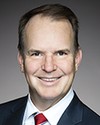
Steven MacKinnon LiberalMinister of Transport and Leader of the Government in the House of Commons
Mr. Speaker, as the member knows, Canadian members of Parliament and designated public office holders follow among the most stringent ethics rules in the world. We will comply vigorously, as my colleague the Minister of Finance has done.
I will take this opportunity to remind the hon. member across the aisle that Alto is a crown corporation, 100% owned by Canadians.
Michael Cooper Conservative St. Albert—Sturgeon River, AB
Mr. Speaker, the minister has acknowledged a conflict in respect of Alto, hence setting up the so-called ethics screen, yet he has repeatedly introduced, spoken to and voted on legislation to advance the project.
Instead of clearing the air, we now have the spectacle of Liberal MPs filibustering at committee to shield the minister from accountability. It begs this question: Is this what Canadians can expect a Liberal majority government to look like?
Steven MacKinnon LiberalMinister of Transport and Leader of the Government in the House of Commons
Mr. Speaker, while we are on the topic, let us talk about the dream of high-speed rail for Canadians: 1,000 kilometres of a linear project that will change the face of mobility in this country, for workers, for students, and for people who live in one city and work, play or study in another. This will take greenhouse gases out of the atmosphere and will change life for millions of Canadians.
This is the kind of project Conservatives used to dream about. The Liberal government is going to build high-speed rail with or without them.

Shelby Kramp-Neuman Conservative Hastings—Lennox and Addington—Tyendinaga, ON
Mr. Speaker, in February 2025, the Prime Minister announced a project that will see thousands of property owners across Ontario and Quebec face expropriation, communities divided and Canadians forced to pay over $90 billion. From day one, the government has failed to answer even the most basic questions about the cost, timing, impacts, routes or construction. This is not government vision; it is reckless vanity.
Will the minister finally listen to the thousands of concerned property owners in eastern Ontario, cancel the Alto high-speed rail and invest in priorities and infrastructure that Canadians actually need?
Steven MacKinnon LiberalMinister of Transport and Leader of the Government in the House of Commons
Mr Speaker, just three years ago, in 2023, a grand gathering of Conservatives gathered in convention and solemnly debated the great dream of high-speed rail in this country. The conclusion the Conservative delegates came to overwhelmingly, just three years ago said, was to build high-speed rail in this country.
Now the Conservative leader cynically says he would cancel it. The Conservatives used to think big, but now it is up to us.

Linda Lapointe Liberal Rivière-des-Mille-Îles, QC
Mr. Speaker, over the past year, Canadians have had to adapt to a rapidly changing and increasingly fragmented world. Today's world is more complex, more unstable, and, for many, more costly and unpredictable.
In this context, Canadians have done what they have always done: rolled up their sleeves, supported one another and adapted. This work is required of every one of us. Now is the time for Canada to build together. Yesterday, the citizens of Scarborough Southwest, Terrebonne and University—Rosedale renewed their confidence in this plan.
Can the Minister of Finance inform the House of the next steps in our plan?

François-Philippe Champagne LiberalMinister of Finance and National Revenue
Mr. Speaker, I would like to thank my colleague for her excellent work.
Indeed, the 2025 budget is a generational plan to invest in housing, infrastructure, innovation and productivity as well as defence. Together, we will build the strongest economy in the G7.
I look forward to presenting the spring economic statement to the House on April 28. We will continue to build an inclusive Canada, a strong Canada for all Canadians.

Michael Chong Conservative Wellington—Halton Hills North, ON
Mr. Speaker, Iran is a serial violator of human rights, and because of that the government formally designates Iran as a state supporter of terrorism under the State Immunity Act. However, last Wednesday, the Liberal government voted in favour of Iran's membership on the United Nations Committee for Programme and Coordination, which plans, programs and coordinates human rights at the United Nations.
Why did the government vote in favour of Iran's membership on this committee?

Mona Fortier LiberalParliamentary Secretary to the Minister of Foreign Affairs
Mr. Speaker, the Prime Minister has been very clear. We are currently supporting and making sure that civilians and civilian infrastructure are protected and that international law is respected, and we will stand for the safety and security of Canadians wherever they may be around the world. We will continue to monitor the efforts that are being made in Iran.
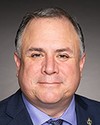
Gord Johns NDP Courtenay—Alberni, BC
Mr. Speaker, two months ago the Minister of Health stood in the House and called herself “the guardian of the Canada Health Act”, yet after months of delay, she has failed to act while Danielle Smith expands American-style “pay for access” diagnostics and two-tiered care. Canadians cannot afford more stalling while our universal health care system is undermined.
If the minister is truly the guardian, why is she taking so long to enforce the law and stop the erosion of our public health care system?

Marjorie Michel LiberalMinister of Health
Mr. Speaker, I acknowledge the concern that my colleague from the opposite side has. Yes, I am the guardian of the Canada Health Act, and we are working closely with all provinces and territories. We know that Alberta is moving in a direction. My department is having a conversation with Alberta right now. I will have a conversation with my counterparts and will get back to the member.

Elizabeth May Green Saanich—Gulf Islands, BC
Mr. Speaker, my question goes to the heart of the issue: Does the government respect science?
We are hearing cuts announced across Environment and Climate Change in terms of its research efforts, and in Agriculture and Agri-Food Canada and its critical research. Hundreds of scientists around the world have expressed alarm at killing an entire segment of our scientific capacity for insect taxonomy.
Has the Prime Minister ever consulted his chief science adviser about these cuts before the pink slips go out?