House of Commons Hansard #111 of the 45th Parliament, 1st session. (The original version is on Parliament's site.) The word of the day was liberals.

Topics

line drawing of robot

This summary is computer-generated. Usually it’s accurate, but every now and then it’ll contain inaccuracies or total fabrications.

An Act to Amend the Criminal Code Third reading of Bill C-225. The bill aims to combat intimate partner violence by strengthening criminal justice measures regarding coercive control and homicide sentencing. It introduces targeted bail reforms to better protect victims. Members from all parties highlight the collaborative drafting process and agree that this legislation is a necessary step to address escalating threats, resulting in the bill passing its third reading. 7100 words, 1 hour.

Motion That Debate Be Not Further Adjourned Liberal House Leader Steven MacKinnon moves to end debate on Government Business No. 9, a motion proposing that committee membership ratios be adjusted to reflect the Liberal Party’s recent attainment of a majority. Conservatives and the Bloc Québécois strongly dissent, characterizing the effort as an undemocratic attempt to stifle oversight. MacKinnon maintains the change upholds parliamentary tradition and ensures committees function efficiently. 4100 words, 30 minutes.

Consideration of Government Business No.9 Members debate a government motion to adjust the composition of standing committees following recent floor crossings. Conservatives and the Bloc argue the proposed "supermajority" undermines democratic norms and accountability by ignoring the will of the voters, while Liberals maintain that increasing their committee membership simply aligns with Westminster traditions to reflect their new majority standing in the House, stressing the importance of collaboration and unity. 6400 words, 40 minutes.

Statements by Members

Question Period

The Conservatives condemn the government's reckless spending and credit card budgeting, highlighting how inflationary deficits increase the cost of living. They point to G7-worst food inflation and urge the Prime Minister to cap the deficit. They also demand an Auditor General investigation into the PrescribeIT boondoggle, support for struggling seniors, and reforming farm transfer taxes.
The Liberals highlight Canada’s best G7 fiscal position and the Canada Strong wealth fund. They defend social program investments while touting inflation-outpacing wage growth. They also emphasize infrastructure and pipeline projects, support for seniors, and protecting workers and business leaders against foreign tariffs. They further clarify ending unsuccessful programs to save money.
The Bloc demands a wage subsidy and EI reform to protect Quebec industries from excessive US tariffs. They further condemn the government’s pipeline investments and failure to fight climate change.
The NDP advocates for a west coast owner-operator model to combat corporate concentration and foreign ownership of fisheries.

Petitions

Government Business No. 9—Changes to the Standing Orders Members debate Motion No. 9, which restructures parliamentary committees to grant the governing Liberal Party a majority. Conservative and Bloc MPs condemn the move as an undemocratic power grab designed to limit legislative scrutiny and oversight of government initiatives and scandals like ArriveCan. Conversely, Liberal members argue that parliamentary tradition necessitates that a majority in the House must be reflected in standing committee composition. The House ultimately votes to pass the motion. 41200 words, 6 hours.

Was this summary helpful and accurate?

FinanceOral Questions

2:20 p.m.

Saint-Maurice—Champlain Québec

Liberal

François-Philippe Champagne LiberalMinister of Finance and National Revenue

Mr. Speaker, I know the Leader of the Opposition is looking for good news. Well, I have good news. He will have to update his QP cards because we announced the first Canadian sovereign wealth fund, a fund to build Canada strong, a fund that will allow Canadians to build this country like never before, to invest in projects across this country, to allow Canadians to invest alongside the government and to make sure that we all benefit. This is the essence of a Canada for all.

We are building together and we will benefit together. Let us build Canada strong together.

FinanceOral Questions

2:20 p.m.

Battle River—Crowfoot Alberta

Conservative

Pierre Poilievre ConservativeLeader of the Opposition

Mr. Speaker, the question was for the Prime Minister, who is again in hiding and, instead, what we got is a man talking about a sovereign—

FinanceOral Questions

2:20 p.m.

Some hon. members

Oh, oh!

FinanceOral Questions

2:20 p.m.

The Speaker Francis Scarpaleggia

I do not know if that is metaphorical. If it is, it is a bit of a stretch. I want to warn the hon. member, who knows better, to avoid those kinds of allusions.

The member may continue.

FinanceOral Questions

2:20 p.m.

Conservative

Pierre Poilievre Conservative Battle River—Crowfoot, AB

Mr. Speaker, we need to actually have wealth for a sovereign wealth fund. What the Liberal Prime Minister is proposing to do is use the credit card in order to put $25 billion into a Liberal slush fund. This is after the Liberal government doubled the debt and gave us the worst inflation in 40 years.

The Prime Minister is spending more: more taxes, more costs, more of the same. Will he put it all on the nation's credit card again tomorrow?

FinanceOral Questions

2:20 p.m.

Saint-Maurice—Champlain Québec

Liberal

François-Philippe Champagne LiberalMinister of Finance and National Revenue

Mr. Speaker, let me help the Leader of the Opposition. After all, it is Monday. The International Monetary Fund just said last week that Canada has the strongest fiscal position in the G7. The Canadian economy is the second-fastest growing economy in the G7. It is growing almost twice as fast as the one in Germany, almost twice as much as the one in Japan, and almost three times as much as that of our colleagues in Italy.

The Canadian economy is strong. We are going to build Canada strong together. We are going to have our Canada Strong fund. Canadians will benefit—
FinanceOral Questions

2:20 p.m.

The Speaker Francis Scarpaleggia

The hon. Leader of the Opposition.

FinanceOral Questions

2:20 p.m.

Battle River—Crowfoot Alberta

Conservative

Pierre Poilievre ConservativeLeader of the Opposition

Mr. Speaker, the Prime Minister cannot answer questions in the House of Commons because he has been wrong on every single major economic issue of our time, and the results are what Canadians are paying for now: more costs, more debt, more taxes and more of the same. In fact, the Prime Minister has given Canada the worst food inflation in the G7, the worst household debt in the G7, the worst housing costs in the G7, and the second-highest unemployment in the G7. Tomorrow, he intends to put it all on the national credit card.

Trudeau had a $31-billion deficit left over for this year. Will the Prime Minister break through that limit and put that on the national credit card as well?

FinanceOral Questions

2:20 p.m.

Gatineau Québec

Liberal

Steven MacKinnon LiberalMinister of Transport and Leader of the Government in the House of Commons

Mr. Speaker, inflation has been in the Bank of Canada's target zone for some time, but we are continuously intrigued by the notion of inflationary spending.

I want to ask, and have the Leader of the Opposition answer with absolute clarity, is it the Canada child benefit that is inflationary? Is it the Canada disability benefit? Is it the Canadian dental care plan? Is it the groceries and essentials benefit? Is it old age security? Exactly what is inflationary spending in the eyes of the Leader of the Opposition?

FinanceOral Questions

2:25 p.m.

Battle River—Crowfoot Alberta

Conservative

Pierre Poilievre ConservativeLeader of the Opposition

Mr. Speaker, I am glad he asked, because I have some direct answers. This is how to answer a question.

What is inflationary spending? It is $90 billion for the wasteful Alto project; $1 billion for a gun grab that the public safety minister admits will not stop crime; $20 billion, which is double, for consultants; a 7% increase in the spending on the national bureaucracy; over $1 billion in handouts to fake and phony refugees; a 100% increase in spending on corporate welfare. It is all inflationary spending.

Will the Liberals stop putting it on the national credit card and get rid of it instead?

FinanceOral Questions

2:25 p.m.

Gatineau Québec

Liberal

Steven MacKinnon LiberalMinister of Transport and Leader of the Government in the House of Commons

Mr. Speaker, even for the Leader of the Opposition, it is pretty hard to say that money that has not been spent yet is inflationary. We have not done it yet, although we will be building high-speed rail as part of our plan to build Canada strong.

Let me keep going down the list. Is the Canada workers benefit inflationary spending? Is it the national school food program? Is it the Canada student loans? What exactly, in the eyes of the Leader of the Opposition, is inflationary spending? Will he—

FinanceOral Questions

2:25 p.m.

The Speaker Francis Scarpaleggia

The hon. member for Saint-Jean.

The EconomyOral Questions

2:25 p.m.

Bloc

Christine Normandin Bloc Saint-Jean, QC

Mr. Speaker, not only is the Prime Minister not getting any relief from the Trump administration with the tariff crisis, but, with tomorrow marking a year since he took office, the situation is worse now than it was at the outset. The way the new U.S. tariffs are calculated is a direct attack on our economy. By taxing all products containing steel or aluminum based on their full value, Washington is disproportionately targeting Quebec and our SMEs. Our workers and businesses do not have time to wait for a saviour.

When will a wage subsidy be introduced to prevent layoffs?

The EconomyOral Questions

2:25 p.m.

Ahuntsic-Cartierville Québec

Liberal

Mélanie Joly LiberalMinister of Industry and Minister responsible for Canada Economic Development for Quebec Regions

Mr. Speaker, my colleague is correct. We completely disagree with the White House's new interpretation of tariffs. We have held numerous discussions with the manufacturing sector in Quebec and across the country. That is precisely why we will be there to support our business leaders and workers across the country.

The EconomyOral Questions

2:25 p.m.

Bloc

Christine Normandin Bloc Saint-Jean, QC

Mr. Speaker, since the Prime Minister was elected a year ago tomorrow, the situation with Donald Trump has not improved. It is getting worse. That is why, tomorrow, the Prime Minister has to make good on the empty promises he has been making for a year now and come to the aid of Quebec's economy. That is why we need a wage subsidy to prevent a wave of layoffs. That is why there needs to be support for our forestry industry in the face of the illegal U.S. tariffs. That is why the idea of EI reform must be revived.

Will the Prime Minister finally rise to the occasion tomorrow?

The EconomyOral Questions

2:25 p.m.

Ahuntsic-Cartierville Québec

Liberal

Mélanie Joly LiberalMinister of Industry and Minister responsible for Canada Economic Development for Quebec Regions

Mr. Speaker, first, we know that the Premier of Quebec is in Washington today. Of course we will work with her, knowing that she will stand up for Quebec's businesses and workers. I had the opportunity to speak with her, and so did the Prime Minister. We will be there for our businesses. We already have various ways of supporting our businesses with their investments, but we will do more. It will be our pleasure to work with my colleague to ensure that we stand up for workers in Quebec.

The EconomyOral Questions

2:25 p.m.

Bloc

Gabriel Ste-Marie Bloc Joliette—Manawan, QC

Mr. Speaker, jobs must be saved. It is time for Ottawa to recognize how serious the situation is with the new tariff calculation. South Shore Furniture announced this morning that it is closing. This means 126 jobs will be lost in Sainte‑Croix and Coaticook. Cyrell AMP in Beloeil has had to raise its prices by 50% because of the tariffs. In Joliette, the small business Liard Industries has to pay five times more in excessive tariffs than before. Everyone in every region is struggling, including ADF in Terrebonne and Max Atlas in Saint-Jean-sur-Richelieu.

Will Ottawa announce a wage subsidy tomorrow to prevent layoffs?

The EconomyOral Questions

2:25 p.m.

Ahuntsic-Cartierville Québec

Liberal

Mélanie Joly LiberalMinister of Industry and Minister responsible for Canada Economic Development for Quebec Regions

Mr. Speaker, I have been in touch with the president of ADF in Terrebonne. I have been in touch with Max Atlas. I have also been in touch with the CEO of BRP. As a result, we have a great deal of information about the reality facing businesses right now. We are well aware that the change in the tariff calculation is having a negative impact on our businesses and our workers. We have been there for Canadians since the tariff war began. We will continue to be there, and we will be there tomorrow as well.

FinanceOral Questions

2:30 p.m.

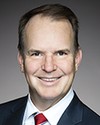
Conservative

Melissa Lantsman Conservative Thornhill, ON

Mr. Speaker, when the Prime Minister took office, he pledged to spend less than Justin Trudeau. Instead, he added $90 billion of net new spending, two-thirds of that on day-to-day operations. Bureaucracy is up 7% and operating costs are up 9%, all higher than his promised savings. He is putting the nation's finances on a credit card and pretending all of that is normal.

Will the Prime Minister commit today that his deficit will not exceed the already excessive $31 billion Justin Trudeau left behind, or has he simply grabbed Trudeau's credit card and asked for a higher limit?

FinanceOral Questions

2:30 p.m.

Saint John—Kennebecasis New Brunswick

Liberal

Wayne Long LiberalSecretary of State (Canada Revenue Agency and Financial Institutions)

Mr. Speaker, the member's leader talks about presence in the House. He has been here for 22 years and has produced nothing.

Let us look at some economic facts: best fiscal position in the G7, second-fastest growing economy in the G7, best net debt-to-GDP in the G7 and wages outpacing inflation.

It is time for that member's leader and that party to stop the bizarre press conferences, stop the podcast tours and help us build Canada strong.

FinanceOral Questions

2:30 p.m.

Conservative

Melissa Lantsman Conservative Thornhill, ON

Mr. Speaker, nobody thought it was possible to outspend Justin Trudeau, but here we are, with the same cast of characters sitting in the exact same seats saying the same thing. The Prime Minister doubled last year's deficit and sent the bill to Canadian kitchen tables: the worst grocery prices, the highest household debt, the worst housing costs in the G7. Those are the actual facts.

When Liberals doubled the debt, they doubled the food bank lineups and they doubled the rent, passing on the balance from the credit card to every Canadian family. Will the Prime Minister stop the credit card budgeting, or does he think Canadians can also just apply for a higher limit?

FinanceOral Questions

2:30 p.m.

Thunder Bay—Superior North Ontario

Liberal

Patty Hajdu LiberalMinister of Jobs and Families and Minister responsible for the Federal Economic Development Agency for Northern Ontario

Mr. Speaker, all across Canada, Canadians have been pulling together to make sure that we build Canada strong. I would challenge the member from the opposite party to ask herself this: Why is she voting against kids getting food in school? Why is she voting against affordable child care? Why does she vote against skilled tradespeople having the opportunity to fill their apprenticeship and actually get those great jobs? Why is she voting against investments in infrastructure, in housing and in water?

It does not matter what solution we propose. Those guys are against Canada and Canadians.

FinanceOral Questions

2:30 p.m.

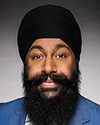
Conservative

Jasraj Singh Hallan Conservative Calgary East, AB

Mr. Speaker, the only surplus this Prime Minister knows is the one in his offshore tax haven. The guy literally doubled Trudeau's deficit and gave Canadians the worst food inflation in the G7 and the worst household debt in the G7. Tomorrow, he is going to table another costly credit card budget and put it on the national credit card, all on the backs of Canadians.

Will the Prime Minister end his credit card budgeting so Canadians can finally afford to live?

FinanceOral Questions

2:30 p.m.

Markham—Thornhill Ontario

Liberal

Tim Hodgson LiberalMinister of Energy and Natural Resources

Mr. Speaker, while they are complaining, this is what we are doing: We are getting things built.

On Friday, we announced the $4.4-billion expansion of the Sunrise pipeline project, which generates $3.3 billion in annual GDP. It adds 2,500 construction jobs this summer. It adds $700 million in tax revenue to B.C. and the federal government to build Canada strong. That is what we are doing.

FinanceOral Questions

2:30 p.m.

Conservative

Jasraj Singh Hallan Conservative Calgary East, AB

Mr. Speaker, the only thing these guys have built so far is literally 12 bureaucracies, nothing else. The Prime Minister said he would spend less. A year after that, he has increased bureaucracy, he has increased consultants and he has increased the deficit, all on the national credit card, all on the backs of Canadians.

Once again, will the Liberals end their credit card budgeting so Canadians can finally afford to live?