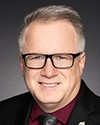
House of Commons Hansard #140 of the 45th Parliament, 1st session. (The original version is on Parliament's site.) The word of the day was treaties.

Topics

line drawing of robot

This summary is computer-generated. Usually it’s accurate, but every now and then it’ll contain inaccuracies or total fabrications.

National Framework on Skilled Trades and Labour Mobility Act Second reading of Bill C-266. The bill proposes a national framework to harmonize skilled trades certification and facilitate labour mobility. Liberals argue it will break down barriers for workers, while Conservatives express skepticism regarding effectiveness and prioritize other solutions. The Bloc Québécois criticizes the federal centralization of provincial jurisdiction. The motion currently awaits a recorded vote. 8000 words, 1 hour.

Commissioner for Modern Treaty Implementation Act Third reading of Bill C-10. The bill establishes an independent commissioner to oversee modern treaty implementation. The Liberal government argues this mechanism ensures accountability and transparency regarding federal obligations. Conservatives oppose the bill, viewing it as ineffective bureaucracy avoiding direct ministerial responsibility. The Bloc and NDP support the initiative at Indigenous partners' request, though both express skepticism regarding lack of enforcement mechanisms and the government's record on reconciliation. 33900 words, 4 hours in 2 segments: 1 2.

Statements by Members

Question Period

The Conservatives condemn the synagogue shooting and criticize the government’s fiscal record, blaming inflation on a doubled deficit. They advocate for eliminating gas taxes and cutting consultants to provide relief. They also raise concerns about the cost of countertariffs on manufacturers, the need for faster housing permits, and the industrial carbon tax.
The Liberals voice support for the Jewish community and highlight affordability measures like the groceries and essentials benefit and a national school food program. They emphasize economic strength, touting the new productivity mega deduction to attract investment. They also defend using countertariffs to protect workers in the trade war and champion the Pickering refurbishment.
The Bloc advocates for the digital services tax so tech giants fund Quebec culture. They also oppose privatizing major airports, like Montreal’s, and criticize the government’s lack of consultation with Quebec.
The NDP opposes legislation that undermines collective bargaining, accusing the government of favoring wealthy investors over workers' rights.

Petitions

Air Transportation Heather McPherson (NDP) requests an emergency debate on the federal government’s plan to open major Canadian airports to private investment, arguing this change threatens national sovereignty, security, job stability, and affordability for Canadian travelers. 300 words.

Adjournment Debates

Canada's economic and employment performance Garnett Genuis argues that rising unemployment and job losses, particularly among youth, stem from failed government policies. He calls for regulatory reform and tax changes. Kevin Lamoureux counters by highlighting job growth under the current administration, citing major economic investments and collaboration, while dismissing Conservative criticisms as opposition for opposition's sake.
Environmental oversight in Alberta Heather McPherson criticizes the government for failing to enforce environmental laws and protect Indigenous rights regarding oil sands tailings and water contamination. Wade Grant defends the government's approach, emphasizing ongoing collaborative consultations, scientific monitoring, and a commitment to rigorous, community-led assessments of environmental and health impacts.
Federal labour legislation and strikes Leah Gazan (NDP) attacks Bill C-39, arguing it violates constitutional rights to strike to benefit corporate interests. Leslie Church (Liberal) defends the legislation, claiming it modernizes labour frameworks and ensures economic stability, insisting that government intervention remains a necessary last resort to protect the economy during disputes.
Was this summary helpful and accurate?

The House resumed consideration of the motion that Bill C-10, An Act respecting the Commissioner for Modern Treaty Implementation, be read the third time and passed.

Bill C-10 Commissioner for Modern Treaty Implementation ActGovernment Orders

4:40 p.m.

Conservative

Marc Dalton Conservative Pitt Meadows—Maple Ridge, BC

Madam Speaker, it has been an honour to serve the residents of Pitt Meadows—Maple Ridge and now Mission for going on seven years. I appreciate this role and take my responsibilities seriously.

Today is the first day of a fall session. I was a teacher for many years prior to being elected, and September is the start of a new school year, not only in elementary and high schools but also on campuses, with new sports programs, dance classes and many other activities. There is a sense of excitement among many students at the beginning of something new and getting involved. I want to wish students and teachers a successful and fulfilling year.

I have a confession to make. As we enter this fall session, I do not have the same excitement. As a matter of fact, I have a bit of a heavy heart over what has been happening in our beautiful country of Canada for the past years under the Liberal government and, I would also add, in my province of British Columbia under the NDP government. Millions of Canadians are struggling to make ends meet. They are feeling the cost of living squeeze at the grocery stores and gas pumps. Small business owners tell me they feel that the government is, in many respects, warring against them to make them unprofitable and increase regulatory and tax burdens. Canada has dropped like a rock in our ranking in per capita income compared to the rest of the world. I will not talk about crime in our communities or drugs on the streets.

However, I must give credit to the Liberals where credit is due. They are master illusionists. Has anyone ever seen a magician saw an attractive assistant in two, only for the assistant to appear whole, with the wave of a wand and the swoosh of a cape? How do magicians do it? It is a little easier now with AI to find out their secrets. The Liberals are masters of illusion. They give the appearance of doing things, tricking our eyes and minds, but it is an illusion. One and a half years ago, the Prime Minister talked about moving Canada forward at unimaginable speed on major infrastructure and economic projects and about the need to rapidly diversify. Things have been pretty stagnant on that front. They may be able to point to one or two different projects, but it has been very sluggish. They said lots of good-sounding words and talked about doubling housing that is going the wrong direction.

I asked my parliamentary assistant how many new bureaucracies and offices the Liberals have they formed since they have been in government, and he sent me a list. It came to almost 50. There are 48 announced to be funded and formed, layers and layers of bureaucracies weighing down taxpayers with more debt, more regulations, more paper shuffling and more delays. Therefore, when the Liberal government tells me that Bill C-10 will fix its relationship with indigenous peoples by adding a new bureaucracy, I have to ask a simple question: With what? When we open the box, there is nothing inside. We have tried this before.

As I asked in my question to the parliamentary secretary moments ago, between 2015 and 2017, the government created the modern treaty implementation office, the assessment of modern treaty implementation office, the performance management framework, the modern treaty management environment, the deputy minister's oversight committee and the reconciliation secretariat, six separate entities specifically designed to monitor, support and ensure treaty implementation. At this rate, I have to ask: How many government offices does it take to change a light bulb? Apparently, it is six, or I guess seven now. After six offices and committees and layers of bureaucracy, the light bulb is still out.

It is a bureaucracy and a government that have run amok. In 2024, the Auditor General again reported that the federal system remains fragmented, bureaucratic and unaccountable. Responsibility is scattered across Indigenous Services Canada, Crown-Indigenous Relations, Justice Canada and the Treasury Board.

When commitments go unfulfilled, no one is accountable, not politically, not financially, not morally. It is like it is their fault. Adding a commissioner does not change culture or performance. Only enforcement, accountability and clear expectations can. The government's response is what we have in the bill, to create yet another agency to monitor implementation.

Success should not be measured in bureaucratic reports. It should be measured in results on the ground, homes, water, policing, infrastructure, governance and economic opportunities. A commissioner will not build a house. A commissioner will not hire a police officer. A commissioner will not deliver clean water.

The Liberal philosophy is that Ottawa always knows best, that Ottawa must monitor, that Ottawa must supervise. The Liberals want to teach from above instead of supporting from beside. Bill C-10 is the purest expression of that instinct. Indigenous communities do not need a commissioner. The government needs a mirror. Its record is damning. The government has had 11 years to act. In that time, how many new modern treaties has it delivered? The answer is zero. That is a fact.

In contrast, the Conservative government, under Prime Minister Stephen Harper, without all these extra bureaucracies, produced five modern treaties in six years. This is not a question of capacity or goodwill. It can be done and it has to be done. The government knows it has failed indigenous people, and it knows that the Auditor General has told it so, not once, not twice, but repeatedly. There is the 2005 report on treaty land entitlements, the 2006 report on the B.C. treaty process, the 2013 audit of modern treaty implementation, the 2016 report on the Labrador and Inuit Land Claims Agreement. There have been more than 14 reports since 2015, covering housing, clean water and treaty implementation, more than two decades of road maps.

Instead of following the map, the government got lost in its own maze of offices, titles and press conferences. While it wandered in the wilderness, communities have suffered. Treaty rights have not been honoured. Fiscal transfers have been delayed. Infrastructure has crumbled. Policing was underfunded and housing has been inadequate.

In 2023, the government even proposed a collaborative modern treaty implementation policy. That sounded like progress, especially with 70 treaty negotiations bogged down. Two years later, nothing has been implemented. We do not need another report telling us that the government has failed. We already know that.

I ask the House how a future commissioner of modern treaty implementation would magically motivate the government to finish the work. It would not. The problem has never been a lack of oversight. The problem is a lack of execution, a lack of political will and a lack of ministerial accountability. There are some alternatives. I will maybe get to that in my responses to some questions. I will say that we already have the courts. We have the Auditor General. We already have parliamentary committees, deputy ministers, performance frameworks and internal audits. The government does not need another reminder that it is failing to do its job.

Over 100,000 public servants have been added since 2015, with $20 billion a year spent on external consultants. We have a public service that is larger than ever, a public service more ineffective in every respect. Faced with that failure, the Liberal answer is always the same, one more office, just one more commissioner and just one more structure. Actually, it is not just one more. The Liberals are going a dime a dozen. It is the illusion of action.


Bill C-10 Commissioner for Modern Treaty Implementation ActGovernment Orders

4:50 p.m.

Winnipeg North Manitoba

Liberal

Kevin Lamoureux LiberalParliamentary Secretary to the Leader of the Government in the House of Commons

Madam Speaker, it is no surprise. I disagree with the member. At the end of the day, he does not recognize the fact that it would be an independent agent. He listed off some other things that are out there. When he asked me the question, I made the comment that if he used the same principles for his arguments, then there would be no need for an Auditor General of Canada and how silly that would be. I suspect he sees the value in that independent agent.

Here, given the importance of modern treaties to our nation, recognizing the importance of having a commissioner who is an independent agent of Parliament is a good thing. Every other political entity in the House recognizes that, sees that and supports that, except for the Conservative Party of Canada. Is it quite possible that the Conservatives are once again offside on a very important issue? I would appeal to them to reconsider and ultimately support Bill C-10 because it would ensure more accountability and more transparency and it would reinforce the importance of modern treaties.

Bill C-10 Commissioner for Modern Treaty Implementation ActGovernment Orders

4:50 p.m.

Conservative

Marc Dalton Conservative Pitt Meadows—Maple Ridge, BC

Madam Speaker, certainly we support auditors general and different agencies, but we do not need half a dozen or a dozen agents doing the same exact work or with a slight modification. A key aspect is just to hold ministers accountable. Every minister should report to Parliament on treaty implementation. If an obligation is unfulfilled, this is not a bureaucratic problem. It is a leadership failure and there must be consequences. We need to reduce government. We need to reduce bureaucracy instead of expanding it.

Bill C-10 Commissioner for Modern Treaty Implementation ActGovernment Orders

4:50 p.m.

Bloc

Mario Beaulieu Bloc La Pointe-de-l'Île, QC

Madam Speaker, I congratulate my colleague on his speech.

Does he not think that having a commissioner or an office to monitor progress and the government's compliance with modern treaties might be a good thing, or does he believe that there should be absolutely no mechanism in place to monitor compliance with modern treaties?

Bill C-10 Commissioner for Modern Treaty Implementation ActGovernment Orders

4:55 p.m.

Conservative

Marc Dalton Conservative Pitt Meadows—Maple Ridge, BC

Madam Speaker, I thank the Bloc member.

I agree with him. I say yes to an office, a commissioner, but no to six different ways of doing the same thing. I think that is important.

I fully agree that the government has a responsibility to fulfill its duty and do its job.

Bill C-10 Commissioner for Modern Treaty Implementation ActGovernment Orders

4:55 p.m.

Conservative

Grant Jackson Conservative Brandon—Souris, MB

Madam Speaker, the comments from the member for Winnipeg North are really interesting because the member from Edmonton earlier admitted that there is a treaty commissioner that some provinces have, to deal with the failure of government to follow through with the commitments of the historic numbered treaties. I think everybody finds that to be very reasonable. However, this bill would create a modern treaty commissioner. With numerous modern treaties it is actively pursuing, some of which are before this House for debate, the government is admitting that it is already preparing for the fact that it is not going to follow through with the commitments that it has written into those treaties. The government needs to create another independent office at the same time as it is passing these treaties, to make sure it actually keeps the commitments that it is making to the first nations people in this country.

That is a bit outrageous, and I wonder if my colleague from British Columbia would agree.

Bill C-10 Commissioner for Modern Treaty Implementation ActGovernment Orders

4:55 p.m.

Conservative

Marc Dalton Conservative Pitt Meadows—Maple Ridge, BC

Madam Speaker, yes, working together with the different levels of government and not duplicating is key, just to become effective. Conservatives believe in prosperity for all Canadians, indigenous and non-indigenous, and so we need to get things moving and not just paper shuffling, which is what the Liberals are great at doing.

Bill C-10 Commissioner for Modern Treaty Implementation ActGovernment Orders

4:55 p.m.

St. Boniface—St. Vital Manitoba

Liberal

Ginette Lavack LiberalParliamentary Secretary to the Minister of Indigenous Services

Madam Speaker, my colleague has rightly pointed out that there are already mechanisms dealing directly with treaty implementation, yet our modern treaty partners have continued to identify gaps in the implementation of these treaties. They themselves at committee have been telling us, and asking us for independent oversight. Does that not suggest that the issue is not simply the number of bodies that exist, but whether there is independent accountability when governments need to act and fail to act?

Bill C-10 Commissioner for Modern Treaty Implementation ActGovernment Orders

4:55 p.m.

Conservative

Marc Dalton Conservative Pitt Meadows—Maple Ridge, BC

Madam Speaker, the member reinforces our point that there are tremendous gaps that the Liberals are responsible for, and they need to get the job done.

Bill C-10 Commissioner for Modern Treaty Implementation ActGovernment Orders

4:55 p.m.

St. Boniface—St. Vital Manitoba

Liberal

Ginette Lavack LiberalParliamentary Secretary to the Minister of Indigenous Services

Madam Speaker, I will be sharing my time with the member for Québec Centre today.

It is with gratitude and respect that I rise at the third reading of Bill C-10, the commissioner for modern treaty implementation act. This bill represents a meaningful opportunity to respond to indigenous advocacy, honour constitutional obligations and advance reconciliation in a way that is practical, measurable and grounded in partnership with modern treaty governments.

Modern treaties form part of Canada's constitutional architecture. They define rights, establish shared decision-making and set out how indigenous, federal, provincial and territorial governments will work together. Modern treaties create co-management boards, regulatory pathways and clear authorities over land, water, wildlife and resources. They provide predictability for major projects. They strengthen sovereignty in the Arctic and open the door to economic opportunities for modern treaty communities and for Canada as a whole. This is what reconciliation looks like when it is lived and not only discussed.

Modern treaty partners have been clear and consistent: The most important step Canada can take right now is to strengthen accountability for implementation. That is exactly what this legislation would do. The commissioner for modern treaty implementation would be an independent agent of Parliament, someone with the mandate, the expertise and the authority to keep sustained attention on this important work.

Agents of Parliament provide important accountability mechanisms. When agents of Parliament issue reports, whether moderately critical or sharply consequential, departments respond, awareness increases, priorities shift and problems get fixed. That is how accountability takes root.

The commissioner would bring that same dynamic to modern treaty implementation. With access to information powers comparable to those of the Auditor General, the commissioner would be able to conduct performance audits, do reviews and examine key challenges in treaty implementation. They would be able to look at individual treaties and crosscutting issues across the entire modern treaty landscape. They would be able to identify opportunities for systemic improvements, highlight best practices and recommend ways to overcome challenges.

One witness at the Standing Committee on Indigenous and Northern Affairs offered a powerful cultural image: the traditional practice of raising a totem pole to call attention to someone who has not upheld their responsibilities. The point was visibility, ensuring that commitments are honoured. The commissioner would play a similar role by bringing clarity to where obligations are being met and where they are not, reinforcing the seriousness of Canada's commitment to modern treaty communities. This is how modern treaty implementation can improve: through clarity and accountability.

Another theme that emerged clearly during the examination of the bill at INAN was the need for consistency across successive governments and federal departments and agencies. Modern treaties are long-term agreements that must endure beyond election cycles and shifting political priorities. Modern treaties are complex. They require public servants who have a strong awareness and understanding of modern treaty commitments and obligations, as well as the spirit and intent of those agreements, and the practical realities of working in partnership with indigenous governments as equals.

During INAN's study of Bill C-10, Nicole Rempel from K'ómoks First Nation; Grand Chief Paul John Murdoch, Cree Nation Government; and Brianne Paulin, legal counsel, Nisga'a Lisims Government noted that inconsistent interpretations across departments remain one of the biggest barriers to effective implementation. An independent commissioner with expert knowledge could help ensure that the understanding of the spirit, intent and legal obligations of modern treaties remain consistent, even as governments change. As Canada increases its focus on issues like major projects and Arctic security, government institutions will need a deeper understanding of modern treaty rights and jurisdictions.

Within the broader modern treaty landscape, the commissioner could serve as a tool to help drive greater consistency in how departments understand and act on their modern treaty obligations, including those not traditionally involved in indigenous relations. Troy Sam, the chief councillor for Kitsumkalum Band Council, noted at INAN that public reporting to Parliament changes the accountability dynamic, making implementation visible, measurable and subject to scrutiny.

In this way, the commissioner would support better governance on all sides, clarifying expectations, reinforcing standards and encouraging federal departments to approach treaty obligations with a more coordinated, whole-of-government approach. This is how culture change takes hold. It is through consistent attention on key issues, education and public reporting to help guide the government's response. By providing independent analysis through views and performance audits, by reminding governments of their obligations and by ensuring that unilateral or cross-governmental actions do not undermine the treaty relationship, the commissioner would strengthen the stability and predictability that modern treaties were designed to provide.

Reconciliation requires us to look honestly at the past, act responsibly in the present and build a future grounded in respect and partnership. The Truth and Reconciliation Commission reminds us that to build for the future, we must learn from the past. That includes acknowledging the harm caused by federal policies designed to suppress indigenous cultures and assimilate indigenous peoples. It also includes recognizing the intergenerational trauma that those policies created and understanding that reconciliation is not a single act but a multi-generational journey.

Modern treaties have been one of the most effective tools for moving that journey forward. They support self-determination, they reduce reliance on colonial legislation like the Indian Act, they create real opportunities for indigenous participation in the broader economy, they help build generational wealth and they strengthen the nation-to-nation, government-to-government and Inuit-Crown relationships that are essential to Canada's future. The commissioner could help ensure that these agreements are implemented in a way that reflects their spirit and purpose. That is reconciliation in action.

Some have asked why this work cannot simply be done by existing institutions. The answer is clear: Modern treaties are unique. They are constitutional agreements with complex, crosscutting obligations that span dozens of departments. They require specialized knowledge, sustained attention and a mandate focused solely on implementation. The Auditor General plays a vital role, but their mandate is broad. They cannot provide the continuous, treaty-specific oversight that partners themselves have asked for. The commissioner would fill those gaps. As Eva Clayton, president of the Nisga'a Lisims Government, said at INAN, the commissioner is the missing piece. It is the mechanism that ensures the ecosystem of tools Canada has created actually leads to cultural change inside government.

By supporting the implementation of modern treaties, this legislation would help create the conditions for success. It would reflect a true co-developed approach to developing solutions made in partnership with indigenous peoples. It would strengthen trust, it would strengthen transparency and it would be another step toward strengthening the relationship that underpins economic opportunities across the country.

I want to close by acknowledging the leadership of the indigenous governments that have guided this work. Their clarity, their patience and their determination have shaped this legislation. They have shown us what partnership looks like, and they have shown us what it means to build a relationship that lasts.

Passing this legislation would help make sure that Canada lives up to its modern treaty obligations, its objectives and, most importantly, its relationships. It would help us be a better treaty partner, and it would help us build a future grounded in respect, in partnership and in the full implementation of the agreements that bind us together.

I urge all members of the House to support this bill.

Bill C-10 Commissioner for Modern Treaty Implementation ActGovernment Orders

5:05 p.m.

Conservative

Kelly McCauley Conservative Edmonton West, AB

Madam Speaker, I am looking at a government document. It is titled “Implementation of Modern Treaties and Self-Government Agreements”. It is a provisional annual report. It states that the implementation of modern treaty commitments is the responsibility of the Minister of Crown-Indigenous Relations. Earlier this morning, at the beginning of the debate, we heard the minister state that it was not the minister's responsibility. It would be part of the new commissioner's role.

Who is going to be responsible for it? Will it be the minister, as the government's own document states, or the commissioner, as the minister stated?

Bill C-10 Commissioner for Modern Treaty Implementation ActGovernment Orders

5:05 p.m.

Liberal

Ginette Lavack Liberal St. Boniface—St. Vital, MB

Madam Speaker, the commissioner's role is to be an independent body with oversight over treaties. They are there to do the reporting and provide recommendations, but also to ensure that any recommendations are implemented by the various departments. Many of these treaties will cross a multitude of departments, which will have responsibilities to ensure the proper implementation of them.

The role of the commissioner is oversight and reporting, and the role of the various ministries and departments is to implement changes and ensure the proper fulfillment of obligations.

Bill C-10 Commissioner for Modern Treaty Implementation ActGovernment Orders

5:05 p.m.

Bloc

Sébastien Lemire Bloc Abitibi—Témiscamingue, QC

Madam Speaker, I thank my colleague from Saint‑Boniface—Saint-Vital for her speech. Having served with her on the Standing Committee on Indigenous and Northern Affairs, I find her presence reassuring. She is all about conciliation and listening, which are so important in the relationship with first nations. However, the reason this bill exists today is that, for decades, governments failed to carry out the follow-up required by modern treaties and expected by the first nations who signed agreements with the government. That is how we have gotten to this point decades later. I want to commend the Land Claims Agreement Coalition for its leadership. It championed these claims and helped to co-develop this bill. Ultimately, this bill exists is because the follow-up measures were not carried out.

As a member of the government, will my colleague ensure that action is taken on the recommendations that the commissioner will submit? How can we ensure that the government and the ministers responsible will take the data and recommendations set out in these reports seriously, as it does the recommendations of the Auditor General or the Parliamentary Budget Officer? What responsibility does she intend to take internally to ensure that the government complies with these recommendations?

Bill C-10 Commissioner for Modern Treaty Implementation ActGovernment Orders

5:10 p.m.

Liberal

Ginette Lavack Liberal St. Boniface—St. Vital, MB

Madam Speaker, I thank my colleague for his question and welcome him back to the House. I really appreciated the opportunity to work with him on the Standing Committee on Indigenous and Northern Affairs.

To answer his question, I would say that, although other institutions do exist to ensure the implementation of treaties, we heard very clearly from first nations members that there was a lack of implementation because there was a lack of ongoing oversight. Although we have the Auditor General, their mandate is too broad. We need somebody who can provide support and exert pressure on all the departments involved in this issue. We need to ensure that there is follow up. Only by being consistent, over and over again, will we be able to ensure that there is movement and that we make progress. I would say that it is really by focusing on treaties through an independent commissioner that we will be able to make progress on this file.

Bill C-10 Commissioner for Modern Treaty Implementation ActGovernment Orders

5:10 p.m.

Liberal

Marianne Dandurand Liberal Compton—Stanstead, QC

Madam Speaker, I would like to thank my colleague from Saint-Boniface—Saint-Vital for her commitment to indigenous issues. I know she spent the summer conducting consultations, including in Quebec.

I would like my colleague to tell us how this initiative is being received and how much interest it is generating amongst indigenous groups. There is a sense that some opposition parties may not want this bill to quickly move forward. What would be the consequences of delaying this bill?

Bill C-10 Commissioner for Modern Treaty Implementation ActGovernment Orders

5:10 p.m.

Liberal

Ginette Lavack Liberal St. Boniface—St. Vital, MB

Madam Speaker, first nations have been calling for this kind of service, if I can call it that, for over 20 years. We have been told that they lack the necessary and sustained resources and mechanisms to ensure that treaties are fully implemented. If this bill is not passed, it means we will continue to find ourselves embroiled in litigation and other similar legal proceedings. With the ongoing work of a commissioner—

Bill C-10 Commissioner for Modern Treaty Implementation ActGovernment Orders

5:10 p.m.

The Assistant Deputy Speaker (Alexandra Mendès) Alexandra Mendes

Resuming debate. The hon. member for Québec Centre.

Bill C-10 Commissioner for Modern Treaty Implementation ActGovernment Orders

5:10 p.m.

Liberal

Jean-Yves Duclos Liberal Québec Centre, QC

Madam Speaker, I am very grateful for the opportunity to rise today to speak to Bill C‑10, an act respecting the commissioner for modern treaty implementation.

This bill seeks to create a new, independent officer of Parliament. It is a way to hold current and future governments accountable for the commitments made under modern treaties with indigenous peoples across the country.

It is because of the need for a more consistent approach to modern treaty implementation that we strongly encourage the swift passage of Bill C‑10.

I would like to reiterate that modern treaties are legally binding agreements that recognize the rights, priorities and aspirations of indigenous peoples. They aim to support indigenous self-government, establish better frameworks for economic development and environmental management and protection, and promote cultural vitality.

Modern treaty implementation is crucial. While significant progress is being made, there are still opportunities to strengthen this implementation. Modern treaty partners have made it clear that Canada could become an even stronger partner and do more to honour agreements and commitments protected under the Constitution.

For many years, indigenous partners have driven home the vital importance of proactive federal action in addressing modern treaty challenges. They are not alone. The Auditor General's 2003, 2007 and 2015 reports identified similar areas for improvement in the Canadian government's implementation efforts. One such area of improvement concerns independent oversight and accountability. That is why the bill before us today is so important.

The commissioner for modern treaty implementation would be able to help resolve long-standing issues through targeted reports and audits. He or she could also look at specific issues concerning one or more treaties and choose the best path forward. In doing so, the commissioner would highlight opportunities for Canada to strengthen the role of the Canadian government as a treaty partner, which should lead to more sustained federal implementation efforts and improved relationships all around.

David Wright, an associate professor at the faculty of law at the University of Calgary, used a very clear analogy before the Standing Committee on Indigenous and Northern Affairs on March 12. The Auditor General is more like a family doctor, a generalist, while the commissioner will be a specialist whose mission will be precisely to diagnose and address the specific effects of modern treaty implementation. That is a powerful analogy.

The commissioner will draw on their specific expertise in modern treaties to ensure that reviews and audits are based on a solid understanding of the spirit and intent of those treaties.

The commissioner will have their own office, just like the Auditor General and the Privacy Commissioner. They will not be accountable to any specific department or to the Prime Minister, but will report directly to Parliament.

This bill will also provide access to analyses and recommendations from independent experts.

Furthermore, over the years, in response to feedback from modern treaty partners, successive governments have worked to strengthen the implementation of modern treaties.

In 2015, the Government of Canada adopted the cabinet directive on the federal approach to modern treaty implementation. This measure marked the beginning of an important step toward greater transparency and accountability to help overcome systemic barriers in this regard.

In 2023, the Canadian government also adopted Canada's collaborative modern treaty implementation policy.

In May 2024, the government announced its intention to create a new officer of Parliament, which I strongly support today.

Bill C-10 is a vital means of supporting our relationships with modern treaty partners.

We have a duty to uphold our treaty obligations.

Bill C-10 responds to more than 20 years of calls for independent oversight and for Canada to act as a stronger partner. This bill is the result of a co-development process and a genuine partnership between our government and modern treaty partners.

Modern treaties have the power to strengthen the social, cultural and economic foundations of indigenous communities, thereby fostering more robust local economies, job creation, better infrastructure for everyone and support for clean energy. Currently, 27 modern treaties are in effect with 30 indigenous partners. These agreements cover more than 40% of Canada's territory, 80% of which is in the northern part of the country.

In conclusion, we have come a long way, but there is still more we can do to increase transparency and accountability, and to fully honour our commitments to modern treaty partners. That is why we have drafted this bill and why we are calling for its swift passage. That is why it is so important.

This bill demonstrates Canada's commitment and dedication and represents a step toward a better future for our important modern treaty partners. It is time for the House to show unity. The implementation of modern treaties is a national imperative.

Finally, like others have done, I would like to thank all the strong indigenous voices who paved the way for this bill to be introduced in the House. Their leadership inspires us to keep our promises.

Bill C-10 Commissioner for Modern Treaty Implementation ActGovernment Orders

September 21st, 2026 / 5:20 p.m.

Bloc

Sébastien Lemire Bloc Abitibi—Témiscamingue, QC

Madam Speaker, I thank my colleague from Québec Centre for his speech and his awareness. It is clear that he has done his research. In the current context, I want to ask him a question. I think we see the need for a commissioner position and what it can bring, but what comes next for indigenous nations?

We can all agree that there are benefits that come with a modern treaty. We see how the Cree people of Quebec, who were the first to benefit from a modern treaty, were able to ensure significant economic and social development. I visited Chisasibi this summer, and I saw the prosperity that self-governance and modern treaties can bring. Still, what comes next?

Could the Wendat or Anishinabe also have access to a modern treaty and a decentralization of powers from Ottawa, as well as recognition of their autonomy? What are the next steps?

Bill C-10 Commissioner for Modern Treaty Implementation ActGovernment Orders

5:20 p.m.

Liberal

Jean-Yves Duclos Liberal Québec Centre, QC

Madam Speaker, I would like to emphasize the importance and insightfulness of this question, which relates specifically to Quebec and the Quebec City region. I would like to emphasize how important my colleague's support is, as well as how important his voice is here in the House. He regularly reminds our colleagues in the Conservative Party that this bill will benefit Canada as a whole.

In Quebec, for example, people are talking about the extremely important work that will take place in connection with Churchill Falls. One of our colleagues pointed out that signing a modern treaty with the Cree Nation was a game-changer in Quebec, enabling progress on the construction of vital energy and economic infrastructure. I predict, as he probably does, that this sort of example will also help us work effectively with the indigenous peoples who will be partners in the Churchill Falls project.

Bill C-10 Commissioner for Modern Treaty Implementation ActGovernment Orders

5:20 p.m.

Conservative

Garnett Genuis Conservative Sherwood Park—Fort Saskatchewan, AB

Madam Speaker, the Government of Canada has certain obligations in relation to the treaties it signs. It is the responsibility of the prime minister, the ministers and all our institutions to act in a way that responds to those obligations. This legislation would create an additional commissioner office with staff, without binding powers over government action. It seems to me that the core of accountability is the decisions of government in response to these obligations.

What prevents the government from simply fulfilling its obligations, from listening to indigenous nations directly, from using the existing institutions we have and from putting these resources into things that actually concretely and positively impact the lives of indigenous people?

Bill C-10 Commissioner for Modern Treaty Implementation ActGovernment Orders

5:20 p.m.

Liberal

Jean-Yves Duclos Liberal Québec Centre, QC

Madam Speaker, our colleague is quite right to mention listening. Listening is key to this bill. Over the last 20 years, many indigenous peoples have asked the Canadian government to create this commissioner role. We must listen to what indigenous peoples are asking us to do if we are to work with them in a spirit of respect.

I urge my colleague to encourage his fellow Conservative Party members to move forward. People have been waiting for this office for 20 years. We must now take the next step.

Bill C-10 Commissioner for Modern Treaty Implementation ActGovernment Orders

5:20 p.m.

Winnipeg North Manitoba

Liberal

Kevin Lamoureux LiberalParliamentary Secretary to the Leader of the Government in the House of Commons

Madam Speaker, could my colleague and friend provide his thoughts on the importance of recognizing that Bill C-10 would establish an independent agent of Parliament? By doing so, it would, I believe, not only for the current government but also for future governments, provide an excellent opportunity to have more transparency and more accountability on what is a critically important file for all Canadians.

Bill C-10 Commissioner for Modern Treaty Implementation ActGovernment Orders

5:20 p.m.

Liberal

Jean-Yves Duclos Liberal Québec Centre, QC

Madam Speaker, the member used some deeply meaningful words: transparency, responsibility, accountability, listening and collaboration. All of these are very important if we want to make progress on some of the major projects that the Canadian government is trying to implement.

All of these major projects are going to transform our economy, create more, better jobs for our children, young people and others, and lead to a cleaner economy and environment. None of this is possible unless we work respectfully with indigenous peoples and respect their rights specifically.

As my colleague mentioned several times today, the purpose of the office of the commissioner for modern treaty implementation is to ensure that the Canadian government has all the tools, including oversight tools, to ensure that its relations with indigenous peoples support other federal initiatives.