
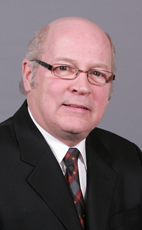
House of Commons photo

Crucial Fact

  • His favourite word was quebec.

Last in Parliament September 2007, as Bloc MP for Roberval—Lac-Saint-Jean (Québec)

Won his last election, in 2006, with 45% of the vote.

Statements in the House

Government Contracts June 10th, 1999

Mr. Speaker, I understand that the Prime Minister feels Mr. Wilson is doing a good job, but we do not share that opinion. The Prime Minister himself chose the ethics counsellor. He appointed him, and Mr. Wilson is under his control.

By seeking the support of his own ethics counsellor, is the Prime Minister not setting himself up as both judge and jury on the matter of his own virtue?

Government Contracts June 10th, 1999

Mr. Speaker, under the previous Progressive Conservative government, the present ethics counsellor, at the time with the Department of Industry, showed great sensitivity to government pressures. He was even faulted for that.

Does the Prime Minister realize that, by placing all of his defence on the testimony of the ethics counsellor, he is placing enormous pressure on that individual?

Prime Minister June 9th, 1999

Mr. Speaker, we are playing with words here.

Instead of hiding behind the ethics adviser, the Prime Minister ought to understand that, in 1993, he managed to find a buyer in six days, but has not managed to get paid in six years.

How can we not believe sincerely that this was a sale of convenience? Why does he not clarify the matter by tabling the record of sale? We will understand.

Prime Minister June 9th, 1999

Mr. Speaker, the Prime Minister says that he sold his shares in 161341 Canada Inc. and did not receive any money.

The Deputy Prime Minister says that the Prime Minister's trust tried to help Mr. Prince sell the shares and Mr. Prince states that he does not have them, that they were returned. We are up to our eyeballs in contradictions.

Today is Wednesday. The session is coming to a close. Is it not appropriate to the Prime Minister's position that he clarify this situation? The best way to do so would be to table the contract. That will settle it.

Prime Minister June 8th, 1999

Mr. Speaker, the Prime Minister's defence is that he sold his interests. But nobody has seen hide nor hair of a deed of sale.

What we want the Prime Minister to do, if he wants to be left in peace, is to table the deed of sale.

Prime Minister June 8th, 1999

Mr. Speaker, I have the impression there is double standard in government.

While the Prime Minister is asking the Minister of Finance not to intervene in transportation matters because he has interests, he boasts about how he intervenes in matters in which he has interests.

Why may the Minister of Finance not intervene in matters that concern him in cabinet, when the Prime Minister must intervene because it is his duty to his constituents?

Prime Minister June 8th, 1999

Mr. Speaker, the Prime Minister will understand that some doubt still remains when he refers to his ethics adviser, this person who is hard to speak to, who works on order, and reports to him, not the House of Commons.

I ask him once more: this business of keeping this sale secret, refusing to produce something as simple as a paper stating “I have sold my shares and here are the signatures”, does this not leave even the Prime Minister with doubts?

He could clarify the situation. Let him do what needs doing, then. Is there something in this contract that we ought not to see? If so, he should let us know.

Prime Minister June 8th, 1999

Mr. Speaker, quite seriously, the Prime Minister could avoid a good number of problems if he simply complied with this request and agreed to clarify the situation.

I am asking him once again, quite simply this: in light of all the hullabaloo surrounding this situation, and the fact that the sale occurred when he was just an MP and not the Prime Minister, does he not think that it would be so much simpler if he were just to produce the record of sale? That will settle it.

Prime Minister June 7th, 1999

Mr. Speaker, members opposite may rise in this House and use every possible defence, but there is only one thing the Prime Minister can do to unequivocally clear himself. It is quite simple, and it is clear to those who are listening to us. Why does the Prime Minister not table the agreement confirming the sale of his shares? Then we will stop asking questions on this issue, but first we want to see the bill of sale.

Prime Minister June 7th, 1999

Mr. Speaker, the more time passes, the harder it is to figure out what exactly is the Prime Minister's interest in the transaction involving Auberge Grand-Mère and all the related issues.

Do the government, the Deputy Prime Minister and the Prime Minister himself not agree that, to put an end, once and for all, to this whole issue involving him, the Prime Minister should, in all conscience, simply table in the House the agreement confirming the sale of his shares in that company?