
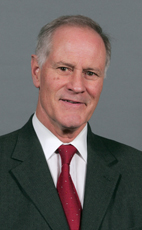
House of Commons photo

Crucial Fact

  • His favourite word was world.

Last in Parliament March 2008, as Liberal MP for Toronto Centre (Ontario)

Won his last election, in 2006, with 52% of the vote.

Statements in the House

Foreign Affairs February 20th, 2003

Mr. Speaker, I had the opportunity of having a long conversation this morning with my colleague, Jack Straw, in the United Kingdom. There is no confusion in the mind of the United Kingdom government on the position of Canada and there is no confusion either on this side of the House or in the population of Canada.

Canada is on the side of peace and of working through the international institutions we have created throughout the years, and that is what we have always done.

Foreign Affairs February 20th, 2003

Mr. Speaker, I am sorry if there is confusion on this issue. I have to believe it is in the minds of our hon. opponents, because the fact is that we have been clear throughout this whole issue that we are supporting the United Nations process. The Prime Minister clearly said that when he spoke to Mr. Bush some time ago. He has consistently repeated that message. Our diplomatic efforts have been in that respect.

Yesterday, Mr. Heinbecker clearly was trying to work through the United Nations process to see if we could bring clarity through that, and that is the Canadian position. We are very proud of the way we have been able to--

Foreign Affairs February 18th, 2003

Mr. Speaker, I thank the hon. member for her question. I am very concerned about Ms. Betancourt's situation. This morning, I spoke to the Colombian foreign affairs minister. Last night, I met with Ms. Betancourt's daughter. It is a tragedy that people are taken hostage for political reasons in this world.

I believe that if the House were to adopt a motion condemning such activity, it would send the message to FARC that the world condemns this type of activity and that Canadians want Ms. Betancourt and all the other hostages to be released—

Foreign Affairs February 18th, 2003

Mr. Speaker, as I said to the hon. member and as the government has recognized in the House, we are very preoccupied by the status and the state of the people of Zimbabwe.

I ask the hon. member to work with me and to work with the government to take responsible decisions that are in the best interests of the people of Zimbabwe.

We are working with the Commonwealth. We will continue to do this. The Prime Minister follows this very carefully with his colleagues. We will take the right decision at the right time in the interests of the people of Zimbabwe and in the interests of making sure that the Commonwealth disciplines Zimbabwe in the right way.

Foreign Affairs February 18th, 2003

Mr. Speaker, we certainly regard, with great preoccupation, the problems in Zimbabwe, as does the hon. member. We have been following this extremely closely. We continue to urge on President Mugabe to change the conditions in his country.

We recognize that there are serious problems in that country but we remain in contact with our colleagues, Mr. Obasanjo, Mr. Mbeki, and Mr. Howard, the Prime Minister of Australia, to see if we can work something through with the troika before we make any precipitous steps.

This is a matter that concerns us greatly but we want to work through it in a way that recognizes the best interests of the people of Zimbabwe. This is not an easy political decision to make.

Iraq February 18th, 2003

Mr. Speaker, what is very clear is that, in making representations, the Government of Canada has above all steadfastly supported the UN. The Prime Minister and the government have argued that it is up to the Security Council to face up to its responsibilities and set the terms and conditions of resolution 1441.

This approach enables us to contribute to making an eventual resolution of this crisis possible. Taking rhetorical positions is not conducive to any real solution.

Foreign Affairs February 17th, 2003

Mr. Speaker, as I have responded to questions in the House before, I quite concede the fact that the delays in receiving passports have been long.

They are the result of an extraordinary increase in the numbers of passports requested. The delays are increased as well because of security measures which we have had to take to ensure the integrity of a passport document which is one of the most important documents that Canadians have when they travel abroad.

I assure the hon. member that we are taking steps to reduce the timelines and I hope that within the next couple of weeks we will be able to get this down to a much more reasonable delay.

Iraq February 17th, 2003

Mr. Speaker, our government is taking action. The Prime Minister spent the entire weekend on the phone with his counterparts across the world to come up with the compromise needed so that the Security Council can help us come out of this crisis with the UN strengthened, with our ability to make peace strengthened, and to prevent this situation from escalating to war.

This is what we have been doing. This is serious work, not like what others have been doing.

Iraq February 17th, 2003

Mr. Speaker, on the contrary, we have contributed to a solution that is fully in line with Canada's initial position in this matter, to the effect that this is a matter that requires the active participation of the Security Council as an instrument chosen by the world to manage this type of dangerous crisis.

That is the current situation. It is resolution 1441 that establishes the parameters under which we must act. Our position will remain unchanged.

Mr. Blix has given his testimony. We know where we stand. The Security Council will assume its responsibility and Canada has always supported this.

Iraq February 17th, 2003

Mr. Speaker, in examining the facts, it is very much my impression that the Prime Minister of Italy is the one coming around to our Prime Minister's position, and not the opposite.

This is the outcome of this government's untiring efforts, which have consistently promoted one approach since the beginning of this crisis.