Mr. Speaker, I would like to be recorded as voting no.

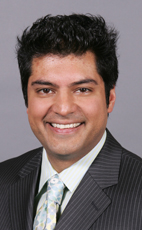 House of Commons photo
Lost his last election, in 2008, with 42% of the vote.
Assisted Human Reproduction Act March 26th, 2003
Mr. Speaker, I would like to be recorded as voting no.
Iraq March 26th, 2003
Mr. Speaker, shame on the government for not being on the ground helping that aid get in.
Yesterday the Liberals shot down the Canadian Alliance motion calling upon the government to provide humanitarian aid to the people of Iraq. The coalition is going to be responsible for moving billions of dollars of food, medicine and other aid into Iraq and once again the Prime Minister has abandoned our allies.
Will the Prime Minister finally admit that the only reason this aid will get to the Iraqi people is because of the work of our traditional allies?
Iraq March 26th, 2003
Mr. Speaker, the government has known that the aid money would be needed for some time and only today will it announce help. The government continues to play games with the lives of innocent Iraqis by announcing an aid package, but then stands by the decision not to help the coalition in its efforts to deliver this aid. The government would have been a bit more credible with the announcement if it had not voted against the Canadian Alliance motion on humanitarian aid yesterday. How does the Prime Minister expect this aid to do any good when it continues to refuse to work with the coalition in delivering it?
Iraq March 25th, 2003
Mr. Speaker, in the meantime it will maintain diplomatic relations with Saddam and that is unacceptable.
The government claims that only the UN Security Council has the moral and legal authority to deal with Saddam Hussein. This is the body that allowed a million people to be massacred in Rwanda and allowed ethnic cleansing to almost wipe out the Muslim population in Yugoslavia. The UN has abandoned the people of Iraq, but that does not mean that Canada has to as well. Will the government do what is right and join the 40 nation coalition to free the people of Iraq?
Iraq March 25th, 2003
Mr. Speaker, in 2001, Amnesty International reported, and I quote, “...torture is used systematically against political detainees. The scale and severity of the torture in Iraq can only result from the acceptance of its use at the highest level”.
The implication is clear. Saddam's regime is guilty of crimes against humanity. The evidence is overwhelming, yet the government's response is underwhelming. Why will the government not do what is right and help free the citizens of Iraq?
Supply March 24th, 2003
Mr. Speaker, I, as I think many members of the House, would be open to debating the future of the UN and look at how we could restructure it to some extent to work more equitably and actually not have cases such as we see today, where often one country can veto the direction of many others when it comes to maybe doing what is right.
I would like to see Canada have a stronger role at that table but we need to ask ourselves here in Canada whether we in fact are taken seriously internationally.
We have been doing some great things over the years when we look at our peacekeeping abilities and our influence at being seen as a neutral country but over the years this, unfortunately, has deteriorated. Why has this deteriorated? I would say that it is because the current government does not see the value of putting some of our military capability or some of the investments, which are required for us to be taken somewhat seriously internationally, at the forefront and evaluate what our role should be in international conflicts.
I have no doubt that people still respect our country and want Canada to bring its experiences to the forefront of many of these particular international crisis. We are such a pluralistic country, one that stands for a lot of values that other countries would like. How in fact could we strengthen our role here at home so we actually can be taken seriously?
I am all in favour of restructuring the UN but we need to take some concrete steps here at home to ensure that we as a country are strong and viewed that way internationally before we can even be taken seriously around the world.
Supply March 24th, 2003
Mr. Speaker, it is a difficult thing to talk about at times because many of the stories that I was told with regard to what happened to our family in Uganda were pretty severe.
I was fortunate as I was only a toddler at the time, only nine months old, when we came to Canada as refugees. As I have said before, the reason I think I ended up in this place at such a young age was because of the value of democracy and freedom that my father always spoke to me about when I was growing up. At the time we left Uganda it was under pretty much life and death circumstances. We lost everything during that process. We were forced to leave. If we had not left we would have paid with our lives. From what I understand, that radical dictator, Idi Amin, killed about half a million of his own people.
There was enough justification to act at the time but the UN was not able to do so. Canada did its part, and I commend it for that. It played its part by accepting a large number of refugees. As a matter of fact I think it accepted one of the largest number of refugees at that time of any other country. I commend the government of the time for doing that.
However the only government that actually acted, which everyone basically endorsed it to go ahead, was the Tanzanian government which moved in and ousted Idi Amin who went into exile in Saudi Arabia.
I am torn. As we have heard, no one wants to endorse war but clearly where there are violations of human rights, where potentially millions of people can be killed senselessly by dictators such as, in the case of my family, Idi Amin, why can this country and other countries not stand together and do what is right? I know in my heart I am torn but in this case I cannot give in to a radical dictator like Saddam Hussein, the same way I can never endorse what happened to my family. I believe I have a moral obligation because of my experiences to try to bring that sort of opportunity of freedom to others who are facing those same circumstances.
Supply March 24th, 2003
Mr. Speaker, I will be splitting my time with the member for Renfrew—Nipissing—Pembroke.
Before I begin my remarks, I would like to read the motion that we are debating here today into the record because I think it is a very valuable motion, and if people take the time to see what we are trying to do, they will realize that it is something that we would have hoped to see as a form of leadership from the government. The motion reads:
That this House:
(1) endorse the decision of the Allied international coalition of military forces to enforce Iraq's compliance with its international obligations under successive resolutions of the United Nations Security Council, with a view to restoring international peace and security in the Middle East region;
(2) express its unequivocal support for the Canadian service men and women, and other personnel serving in an exchange program with the United States and for those service men and women performing escort duties for British and United States Ships, our full confidence in them and the hope that all will return safely to their homes;
(3) extend to the innocent people of Iraq its support and sympathy during the military action to disarm Iraq of its weapons of mass destruction and the reconstruction period that will follow; and
(4) urge the government to commit itself to help the Iraqi people, including through humanitarian assistance, to build a new Iraq at peace with itself and its neighbours.
As we can see, and as the member who just recently spoke said, that motion has been crafted very carefully to try to hit all the key points that we as a government and we as a country should be focusing on in trying to deal with the plight of the people in Iraq, who I think have suffered a huge amount especially if we look at the last 12 years of the regime of Saddam Hussein and the pain and torture he has inflicted on his own people.
As I previously stated, I have always stood here with mixed feelings when we stop to talk about war. It is not a pleasant thing and I think that most members in the House have similar sentiments. Why is that? Because on these issues of war and peace especially, I believe it is only natural to be conflicted on where we stand. For some people it is easy to say “peace at all costs”, a refrain disproven in Munich and a refrain, I believe, that has been disproven at the United Nations.
I have always been a firm believer that in order to disarm Saddam and free the people of Iraq we need to follow the UN process. I have stated this a number of times to my constituents and in the House. I have also said that we must follow the UN process to its logical conclusion, that being, hopefully, the disarmament of Iraq by the United Nations or through other means, although I will caution that I did not say here that, and I will quote, I support open-ended war in Iraq. Where does this leave my position on Iraq?
It has been ever evolving, especially as the twists and turns of the UN have played themselves out over the last few weeks. At first I was optimistic that the UN would do its job. My hopes were dashed by the intransigence of the French government. Then I hoped that the ultimatum put forward by the coalition would convince Saddam to accept exile, a life of luxury. He did not and war broke out, so I had to make a decision last week on whether or not I would support our allies. Indeed, I did vote to support our allied coalition.
Why did I support this? It came down to a moral choice for me, a choice between right and wrong. My family fled Uganda when Idi Amin began butchering the people of that country. The UN refused to stop it. Tanzania intervened without UN approval, just as the coalition has done today in Iraq. I asked myself how I could deny the people of Iraq the chance for freedom, the very same opportunity I was given, just because of a diplomatic disaster at the UN. I could not. As someone in a position to help others, I believe it is my duty to do what I can to help them and not ignore their pleas for freedom, such as the Liberals and the French have done.
Before I expand upon my own experience and my choice, let me back up and talk about the United Nations process, its successes and failures. After all, it was on this process that the hopes of the world were hinged.
Canadians passionately believe in the United Nations process. The UN has always been portrayed as the great international body where nations of all political stripes gather, debate and solve world crises. It does not matter if the nations are run by most terrible dictators who slaughter their civilians by hundreds of thousands or if the nations are democracies that win and lose elections on how fast they can deliver essential health care services.
Everyone is welcome at the UN. Everyone has an equal say. Well, everyone with the exception of France, the United Kingdom, China, the United States and Russia. Those countries, due to realities of winning World War II, were able to snag a great veto power for themselves, a power that allows one of those nations to stop all debate and prevent the solving of any problem that they may want.
In fact, as Canadians have looked to the United Nations as a beacon of hope, I would argue that it instead has become a blight on humanity. I am not referring to the many excellent programs that the UN delivers in the way of humanitarian assistance. I know that even in my own community the Aga Khan Foundation is involved in many of them. Programs such as UNICEF, UNESCO and others are indeed very worthy and do offer a beacon of hope. Programs such as the rebuilding of Afghanistan and the possible role it will play in the reconstruction of Iraq are commendable. Nor do I deny the UN's positive role in negotiating international treaties.
What I am referring to when I say blight is that archaic institution called the Security Council. That relic born of a post-World War II scenario was cemented during the cold war as a talk shop capable of doing nothing. The Security Council has always been governed by the veto of cold war powers. The Soviet Union would veto when the west would bring forward ideas and the west would veto when the Russians wanted to do something constructive.
Of course a UN booster would point to the fact that there have been 1,400 resolutions passed by the Security Council; 1,400 resolutions that were obviously not vetoed. Fair enough, let us look at those resolutions. For example, in the Middle East we all know that Israel has been in defiance of numerous resolutions. We also know that the Palestinians have been in breach of others. Yet what does the international community do about it? Nothing. Why? It is because each of these groups have a veto wielding state behind them and the UN can only work when superpowers give their consent.
When this consent is not given, I would argue that the UN is impotent and has failed the citizens of the world. Three very recent cases I can think of are Rwanda, the former Yugoslavia, and of course Iraq. I will not go into much detail regarding Rwanda, but suffice it to say that I am sure we all remember the failure of the UN to prevent the genocide of millions of innocents.
Of course in Yugoslavia we all watched for years in the early 1990s as the UN peacekeepers failed to stop the daily massacres and constant civil war. We remember those Canadian peacekeepers taken hostage by Serbian forces and we remember the impotence of the UN to protect them. We watched Bosnia for years until finally the United States, not the UN, took the initiative and forced the combatants to make peace.
Again, only a couple of years later, when the crisis once again erupted in Yugoslavia, this time in Kosovo, we watched hopelessly as the Russians threatened to use their veto to block any attempt to end the genocide. Once again the United States acted. This time Canada was by its side in NATO. We declared war and we stopped the massacre. The UN failed once again.
Where does that leave Iraq? Interestingly, Iraq is a unique example in the history of the United Nations. It is a sad history when only three times it has authorized the use of force to prevent war and genocide. The first was the U.S.-initiated action on Korea. Resolution 82 passed on June 25, 1950, and several subsequent resolutions authorized the United States to make war on North Korea in order to liberate the south.
The second time the UN has authorized action was in 1990 when on November 29 the Security Council, in resolution 678 said:
Authorizes Member States... to use all necessary means to uphold and implement resolution 660....
This of course laid the basis for the UN action that took place in the early months of 1991.
The third time was the one with which we are all familiar, resolution 1441. This is where it was stated that:
--Iraq has been and remains in material breach of its obligations under relevant resolutions, including resolution 687....
It goes on to state:
--while acknowledging paragraph 1 above, to afford Iraq, by this resolution, a final opportunity to comply with its disarmament obligations under relevant resolutions of the Council;
I know my time is running short but I want to make the case that clearly there have been violations and clearly Saddam has been persecuting his own people for years. There was a reason to act and there was a reason for us here in Canada to take a principled stand. I wish the government would have joined our coalition allies to be able to say that and liberate these people.
Since my time is up, I would like to offer an amendment. I move:
That the motion be amended in the first paragraph by replacing the words “endorse the decision” with the words “recognize the legitimacy of the decision” and by inserting after the word “security” the words “including justice”.
Question No. 129 March 24th, 2003
For the fiscal years 1993-1994, 1994-1995, 1995-1996, 1996-1997, 1997-1998, 1998-1999, 1999-2000 and 2000-2001, from all departments and agencies of the government, including crown corporations and quasi/non-governmental agencies funded by the government, and not including research and student-related grants and loans, what is the list of grants, loans, contributions and contracts awarded in the constituency of Edmonton—Strathcona, including the name and address of the recipient, whether or not it was competitively awarded, the date, the amount and the type of funding, and if repayable, whether or not it has been repaid?
Return tabled.
Iraq March 24th, 2003
Mr. Speaker, that still does not excuse the government's absence on this issue. It has been proven that Saddam Hussein has engaged in a campaign of genocide against the Iraqi people. His refusal to disarm has led to the deaths of hundreds of thousands of innocent Iraqis over the past 12 years.
How many more people will have to die until the government feels it is justified to support the allied coalition that is currently freeing the people of Iraq?