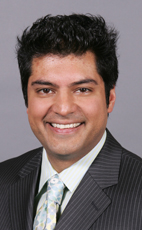
House of Commons photo

Crucial Fact

  • His favourite word was tax.

Last in Parliament September 2008, as Conservative MP for Edmonton Strathcona (Alberta)

Lost his last election, in 2008, with 42% of the vote.

Statements in the House

Air Safety October 11th, 2002

Mr. Speaker, customs managers at Pearson international airport are replacing experienced customs inspectors with students for pre-board screening during weekend peak periods.

The minister is jeopardizing the safety and security of Canada because she and her department are unable to settle in house a human resource issue.

When will the minister stop using untrained students to provide frontline security services for Canada?

Resumption of debate on Address in Reply October 11th, 2002

Mr. Speaker, I will give the hon. member a chance to calm down the rhetoric himself and actually give him a chance to respond.

Specifically on his last point on Kyoto, perhaps he could actually give us an idea if the government has a plan of action as to how it will implement this. Obviously, people are concerned about the Kyoto accord. I would like to know if he and the government, instead of just going ahead with the ratification of it, actually have a plan for implementation that they can share with Canadians so they understand what the whole deal is about.

Canada Customs and Revenue Agency October 10th, 2002

Mr. Speaker, I would suggest to the minister that she start doing her job and listen to the customs agents.

During the last two weeks Canadians have experienced delays at border crossings and trade has been slowed. Customs agents have voiced valid concerns over their workload and personal safety, yet these concerns have been ignored by the minister.

These problems have been caused by the mismanagement of customs by the Minister of National Revenue. When will the minister address these serious problems and allow customs agents to get back to the business of protecting Canadians?

Canada Customs and Revenue Agency October 10th, 2002

Mr. Speaker, for over a year the revenue minister has ignored the advice of customs agents. These agents are Canada's first line of defence, yet the minister refuses to give them the tools, like access to information, resources or firearms, to protect themselves, let alone Canadians.

Now our agents are fed up with the government's inaction and both our security and trading relations are in jeopardy.

Why will the government not give customs agents the tools they need to do their job?

Committee Business and Reinstatement of Government Bills October 7th, 2002

Mr. Speaker, it is a pleasure to stand in this place today to speak on the motions we are dealing with on reinstating bills, but I would like to start by addressing some of the points that were made by the hon. Secretary of State for Amateur Sport. I noticed how passionate he was when he spoke about Bill C-54, one of his bills. I know that he is a great fan of sports so I hope he will, and I encourage him to, come out and join us when, as he may know, our MPs' soccer team will be playing Wednesday night against the EU All-Stars. We are called the Commoners. Knowing how passionate he is about sport, I know he will be there ready to kick some balls, if you know what I mean, Mr. Speaker. I am sure he will join us on Wednesday and I encourage him to do so.

Now I want to make a point that he seemed to miss in his speech. When he talked about the opposition being against reinstating the bills we are talking about, he seemed to miss the point. On this side we encourage the work done in the previous session. We do not want to stop it or thwart it unnecessarily. We want to get back to business right away. What the hon. minister forgot to mention was that the two bills we do have problems with are Bill C-5 and Bill C-15B. The other bills that we want to reinstate right away and get right into the business of debating are, obviously, Bills C-53, C-55, C-54, C-56, C-60 and C-61. We would like to see all these bills from the previous session of Parliament reinstated. We would like to get back to business but the Secretary of State for Amateur Sport failed to mention that and focused specifically on Bill C-54, the bill in which he is so interested.

Today in debating Motions 2A and 2B, we are suggesting that we in the opposition have a serious problem when it comes to Bill C-5 and Bill C-15B of the previous session of Parliament. It is clear from what we have heard from a number of members why we have a problem with those two particular bills and why we introduced this amendment so that those bills would be left out of mix. That is because of the way those two bills evolved in this place and specifically because of the way the government dealt with talking to stakeholders in trying to build consensus. The government just refused to bring stakeholders together. It refused to listen to the people who would be most affected by these two particular bills.

I will focus on Bill C-5. The stakeholders, especially the agriculturalists, the ranchers, the farmers and all these particular groups, had huge concerns with Bill C-5. In fact, the government failed to listen to them properly and equally and give them representation leading into Bill C-5 and in passing the bill as we were reaching the final stages of it.

Some of my colleagues, in discussing the problems we had with Bill C-5, focused particularly on the issue of compensation. The Secretary of State for Amateur Sport said he did not see a problem between the ideas of compensation and fair market value or with the fact that compensation would be given at the discretion of the government any way it sees fit. There would not be a real equation or plan put together. It would be left to the government to decide what is fair compensation is, while it is not actually willing to commit to fair market compensation.

I was surprised. He said he was a lawyer and that he advised his clients. I am glad I never went to him for advice, because the biggest problem with Bill C-5 is the idea that many of the people involved, their livelihoods, their farms, their ranches or whatever it might be, are afraid to commit. As much as they are environmentalists and stewards of land and take on voluntary efforts to protect their land and inhabitants of the land, they want to make sure that they are compensated fairly if the government decides to expropriate their land, for whatever reason, whether it is for protecting habitat, protecting endangered species, whatever the case that is made to take the land away from people who rely on it.

Is that too much to ask? I think that in a free and democratic society it is only a fair demand to have free and fair compensation based on market value. I am still astounded to this day as to why the government is so afraid to make that sort of commitment to the people who in the end are going to do the most good in protecting the environment. This is just something that is beyond me, but let us face it, the government has done a lot of things that are beyond me and beyond Canadians many times over, so it is no real surprise.

My colleague who just spoke talked about the government's attitude in dealing with bills like Bill C-5 and Bill C-15B. We saw it most recently with its attitude on Kyoto. The government does not want to bring stakeholders together. It does not want to try to build a consensus. It has an attitude of divide and conquer, as I believe my colleague mentioned.

What are we doing in this country if that is the way we are going to approach Canadians and build consensus? Are we going to divide and conquer? That seems like we would be pushing people in different parts of the country further apart instead of trying to bring them together.

The government had an opportunity to show some leadership on Bill C-15B and Bill C-5 by trying to bring together all of those stakeholders I mentioned earlier, the people who live off and work the land, the environmentalists, the ranchers, and the people who have long-term leases doing natural resource work for their businesses. All of these groups could have been brought together if the idea of compensation had been addressed properly.

This same pattern the government shows is being unveiled in its whole plan for Kyoto. There is only one way to describe it: either we are for the environment or we are against it. There is no in-between. This boggles my mind. Clearly we have the opportunity under Kyoto, at least if we look at it properly, to look away from what has been done under Kyoto and to try to bring all stakeholders together for the environment. If cleaner air is what we are actually trying to achieve, then we have to do it by bringing people together. I am speaking of those people who are involved in the natural resource industries, oil and gas and all types of industry that deal with the production of fossil fuels whatever they might be. We need to bring them together through technological advances to be able to solve the problem of greenhouse gas emissions and try to clean up the environment. We should not cut them out or restrict production. We do not need the types of solutions the government has by not bringing people together. It seems that we actually are going to go backwards if we try to go down the road of Kyoto.

That is why I am saying here today that we have seen this constant pattern. One would think the government would have learned in the past session of Parliament with the type of opposition it had, especially under Bill C-5, from all the different groups that put a lot of work into that bill to try to convince the government that compensation was a big part of something the government is missing and a big part of why people would oppose that legislation. Yet the government refuses to acknowledge that. If the government goes down the road of Kyoto it is going to suffer the same fate. We are going to be dividing people. They are not going to be working in the best interests of the environment. They are going to be looking out for themselves, because the government refuses to take in other socio-economic factors when it makes a decision. It is a real shame that the government has that sort of attitude.

I know I have digressed a bit because Kyoto is a big concern for a lot of Canadians as we lead into this Parliament, but to go back to Bill C-5, there are a few different provisions that we had addressed in Bill C-5 when the bill was going through the House. One of the things I talked about was compensation. Clearly this is something that the government can still amend and improve before the bill comes back to the House if that is what the government decides to do.

Particularly in dealing with Bill C-5, the idea of criminal liability was another issue that many farmers were afraid of, especially ranchers and farmers who deal with the land. If unfortunately by accident a habitat or an endangered species were destroyed unintentionally, under the bill these people could be penalized under the highest type of criminal penalties that sometimes do not take into consideration harm incurred by accident. This was a big fear among many farmers and ranchers. Those accidents may occur. Are we going to penalize those individuals to the highest levels and actually prosecute them criminally? That seems to be a bit outrageous.

Overall the other thing we missed out on with Bill C-5, which the government has continuously failed to deal with and continues to fail to do as we head down the road of Kyoto and other issues like health care, is trying to work with the provinces to develop a sense of cooperation. Let us face it. For a lot of the things we do and decide here, the provinces are given the responsibility to administer them. Unless we are bringing them on board with some of these bigger issues, we are not going to have the success rates that we would like to see. I wish the government would start to take into consideration provincial responsibilities and work in a more cooperative spirit with the provinces, but let us face it: The divide and conquer attitude of the government is something we are going to see continuously and it is going to fail Canadians over and over again.

We wish we could see more leadership but that will not be coming from that side. I will not hold my breath because I would probably expire if I waited for those things.

Resumption of debate on Address in Reply October 3rd, 2002

Mr. Speaker, I listened attentively to our hon. colleague from the opposite side. It dawned on me that even though he was sharing his thoughts on the Middle East, we are here trying to debate the throne speech this morning. He is a little ahead of himself, seeing that the Middle East debate is later on this evening.

However I would like to ask him a question specifically on the throne speech, since he is so concerned about some of the Middle East countries and some of the areas of the regions he spoke about. I believe he referred to India and Pakistan.

Clearly in the throne speech one of the major priorities for the government is Kyoto and the environmental accord it is pushing forward on, regardless of the effects on the economy, regardless of the human impact in Canada, which we still do not know because no impact studies have been provided by the government. I would like to ask the member specifically, since he is obviously concerned about some of the regions of the world that he spoke about in his speech, what sort of message are we sending out to many of these countries, especially on Kyoto, when we are forcing industrialized countries to sign on to an agreement that is not even engaging some of the worst polluters in the world, India, Pakistan and China to name a few?

Would he not agree that the best way to solve some of the environmental problems is to actually put some regulations in place that would force industrialized countries to work with those countries instead of signing some grandiose agreement? Should we not put something in place so that we could share technologies with those countries and force them to change their environmental practices in a proactive way, rather than forcing something that could cause huge negative impacts for our economy?

Iraq October 2nd, 2002

Mr. Speaker, I will attempt to do my best to answer the question. I am not clear what the member was asking.

Following the debate as I have and as many Canadians have over last night and tonight, we are concerned about what is happening in Iraq and we want to resolve the problem.

I will take the opportunity, if the member says the debate is going over well on the other side, to ask where the leadership was? The government does nothing but portray anyone who says we need to support our allies or even work with countries such as the United States as being pro-American.

If anything, the government has shown poor anti-American sentiments. If it were proactive, I would argue, it would have had a more positive effect on foreign policy in the United States than any other country because of our proximity and relation to the United States.

It is because the government has been so absent on foreign affairs relations, and especially its relations with the United States, that now maybe if the member has something to complain about he should be pointing the finger at himself.

Iraq October 2nd, 2002

Mr. Speaker, I would like to thank my colleague for his thoughtful question.

I know it is difficult to share some of the experiences that people go through on a daily basis in some of these corrupt regimes that are willing to impose personal harm on their own people. This astounds me. I can speak to my family's experience, not completely and directly from my own experience as I was young when we left.

My family's experience was that they lost everything through the process of coming to Canada. The only saving grace was that we came to a country that welcomed us with open arms and gave us an opportunity to make a new start. Everything was lost in Uganda. I have been back to Uganda and everything has been devastated. The country has never recuperated from the constant civil war.

There needs to be a proactive approach. This is what my colleague was driving at. We cannot idly sit by, especially in the case of Iraq, where one has constant human rights violations.

I will reiterate the point I made when I began my speech. Someone who is not only inflicting harm on their own, but is willing to inflict harm on others within the region of the Middle East and even potentially here on our own continent is a threat we must take seriously and that is something that needs particular action.

Iraq October 2nd, 2002

Mr. Speaker, it is a pleasure to rise today in the House to debate a very serious issue, one that I think is causing a lot of tension among members. Clearly any sort of aggression in any other country or getting involved in any action using military forces, even though we have not yet discussed that at this point in the discussion, does create some sense of unease among all of us.

Before I begin my speech, I have to take note of what was said by the hon. member who just spoke. It seems to me that she was missing a very valuable point in this whole debate. We are very fortunate in Canada because we do not have to deal with the pressure of having bombs blowing up around us. We live in relative peace and harmony. I can only speak from my family's experience coming here as refugees almost 30 years ago, when we fled an oppressive regime that quite frankly would have killed us if we had not left. Unfortunately, many people did die in the exodus from Uganda. We were very fortunate to come to a country such as Canada. Here I am 30 years later in Parliament, able to discuss what sort of action we should be taking in other countries to stop similar dictators.

The point I want to make for the hon. member is that Idi Amin, the dictator that our family was forced to flee in Uganda, did not pose a world threat. He did not pose a threat to his neighbours. Actually he was kept in check in Uganda. He was quite crazy and was taken care of in that country. The fact is that Saddam Hussein poses a world threat, a threat to people in the region and a threat to other democracies around the world. He may even possess, and actually the proof is there, the type of military equipment to be able to do so.

This is the point we have to start bringing back to this debate, this fact that we are justifying some future attempt. Hopefully we will not even have military action, but in the event that it happens the reason why there is some moral justification here is the fact Saddam Hussein has gone well beyond the bounds, not only treating his own people with huge human rights abuses but posing that same threat around the world. This is why countries like ours should take an interest in what is happening. I wish the government would have taken more of an interest in what is happening. Maybe we could have influenced the process of what was happening in the Middle East. I will get to that during my speech.

I want to start by saying for the people at home who are watching this debate and wondering where everyone is coming from that we need to summarize the context. Where exactly are we going with what sort of action we may take here in Canada or what sort of support we may give our allies? I would hazard a guess that we are debating if Canada should “pledge support to the developing coalition of nations, including Britain, Australia and the United States, determined to send a clear signal to Saddam Hussein that failure to comply with an unconditional program of inspection, as spelled out in either new or existing UN resolutions”, could “justify action to ensure the safety...of people in the region from Iraq's suspected weapons of mass destruction”, that we would take action in order to protect those people, but even, as I attempted to begin by saying, other areas where this radical dictator may attack next.

It is interesting that as we have been watching the debate unfold, especially on the government side, in my opinion there was no clear direction or focus for what the government's position would be other than supporting the UN in its work in sending arms and weapons inspectors into Iraq. This is something that I think almost all sides of the House tend to agree on.

Recently, though, we have heard even stronger comments coming from the government because, I would hazard a guess, the official opposition has never been shy to make its position clear and quite frankly the government tends to listen to us first before it starts to make any sort of proactive attempt on any policy, now including foreign affairs. I say that because one of the journalists I spoke to today told me that it is interesting that I would tell him what my position is, that clearly there is no difference now between the opposition and the government. I told him there is a big difference: It is called leadership. The current government has shown no leadership when it comes to trying to put something into place, especially when it comes to the influence of diplomatic relations in a wartorn region. The government has been absent.

Rather than hiding behind the UN, we could have led the process. We have the capability and we were respected around the world at one point for doing so. The government has done nothing proactive in that area and now the government is going even further than the official opposition.

I was shocked to hear, from a government that has had no position on how it would handle this, the defence minister saying yesterday that Canada could expect to provide military support to some of our allies if it comes to that. We have to walk before we can run.

I was shocked again at the flip-flop of the government. There was no clear, decisive direction. All of a sudden it is coming from all different directions, now saying that we may even consider going with military action with our allies, or at least that we have the capability to do so, as the defence minister said. We would like to see proof of that because that was one of the concerns in the official opposition.

Can we take any military action against Iraq? The way the government has treated the armed forces in the country and the way it has stretched the budgets and resources, we in the official opposition question what sort of commitment, other than a moral commitment to our allies, we could give. We would not want to send our military troops into a situation that would put their lives at risk, as the government has been prepared to do in the past. We hope that the minister will clarify his statements and say exactly what the position of the government is on this and what sort of military commitment he is talking about, because this was quite a shock to most of us in the opposition.

I would like to talk specifically about any action that the government could take over the next little while when it comes to supporting diplomatic efforts. However before that, we need to back up and put one thing into perspective.

I have been talking to a number of groups as the critic for Central and Eastern Europe and the Middle East. One of the groups that is taking a huge interest in what is happening here tonight and in the future is the National Council on Canada-Arab Relations. It sent me a report with its concerns. It agrees that the regime of Saddam Hussein is a corrupt one which abuses human rights and that something needs to be done.

Its focus is more on diplomatic pressure. I wish the government would step up to the plate to provide that sort of leadership. One of the things the council brought to our attention, which we must consider no matter what one's opinion is as we continue to move forward on this debate, is about the regional instability. This is why Canada has a role to play. The concern of the council was that an attack on Iraq would increase popular opposition in Arab countries toward governments that are complicit with the United States. This would cause political instability for some of our strongest Arab allies, including Jordan, Egypt and Saudi Arabia. Political instability in these countries could quickly escalate into regional crisis.

“Just open a map,” said a member of the Kuwaiti royal family in close consultation with Washington. “Afghanistan is in turmoil, the Middle East is in flames, and you want to open a third front in the region? That would truly turn into a war of civilizations”.

Ultimately we may still be facing a case of war in that particular country, but the reason I bring up that quote is because I would like to move into an area I spoke about earlier, the fact that the government has shown no leadership when it comes to diplomatic pressures in this particular region and how we should be focusing in on that particular area before even the Minister of Defence starts wading into any military action.

When we look at the past regarding Canada's role, we were respected in the international community for many years for our role in peacekeeping, mediating, and in trying to bring people to the table who had never spoken to each other, or influencing radical dictators and people around them to basically put things into perspective and hopefully showing the example of Canada to the world as how many diverse cultures can live together. This is an area where we unfortunately have fallen behind the eight ball when it comes to leadership around the world.

I touched upon the fact that even our peacekeepers, our armed forces, have not been equipped to do their jobs effectively around the world. The government does not seem to show the leadership outside the UN. Even our influence in the UN is somewhat limited. We have not been brokers anywhere around the world any longer. We have joined various groups in the past but we have not led in any type of initiative.

The Aga Khan recently visited Canada. The Aga Khan is the spiritual leader for the Ismaili Muslims and a world leader when it comes to bringing stability and a lot of goodwill around the world. He spoke about Canada's traditional role in peacekeeping, but also exporting something we have done so well, and that is creating one of the most successful pluralistic societies around the world. We can do that because we respect diversity. We respect differences and we build on those strengths. This is something, if we learn to export, the government could show some leadership and move this forward.

On the diplomatic front, before we even get to any military action, I ask the government and I challenge the Secretary of State for Central and Eastern Europe and Middle East, other than going on a junket next week to promote trade, to promote some of these ideas to promote peace. Members will find that the government has failed miserably.

Iraq October 2nd, 2002

Mr. Speaker, I am encouraged by the hon. member's comments. I think everyone in the House would agree that we want to try to avoid war at all costs. He has eloquently said that. He is also concerned, as many are, for the livelihoods of the Iraqis in Iraq.

Obviously, I can speak a little bit to that because my family escaped persecution from a radical regime in Uganda. My heart goes out to other countries in the world where people have to face that sort of persecution. We were lucky we could come to a country like Canada, which defends freedom around the world, at least in the past, and make our home here.

One thing was a little disturbing to me in recent comments by the government in trying to deal with this issue. We in the opposition have been calling for, as the government has, involvement of the UN and the arm's agents to go back into Iraq to do an unfettered job. Hopefully, they will be able to do so. We have not been calling for military action at all yet and we say that is a last resort as well.

Recently the defence minister, from what I understand, has said that Canada would be willing to deploy troops in military action into Iraq. We have to walk before we run. The government is getting ahead of itself, especially in trying to exercise diplomatic involvement in the region. Perhaps the member can explain how the government has moved to this complete opposite direction when before it had almost no position on the particular issue.