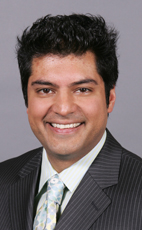
House of Commons photo

Crucial Fact

  • His favourite word was tax.

Last in Parliament September 2008, as Conservative MP for Edmonton Strathcona (Alberta)

Lost his last election, in 2008, with 42% of the vote.

Statements in the House

Supply December 4th, 2001

Mr. Speaker, I congratulate my hon. colleague for his excellent discourse on the business of supply and the official opposition motion. The motion is most pertinent as we are expecting a budget in about a week's time.

Unfortunately the Minister of Finance has been completely unaccountable to Canadians. We have not seen a budget in this place for almost two years, which is unacceptable in any democracy. I am glad the official opposition is taking the finances of the country seriously, unlike the government.

I would like my hon. colleague to comment specifically in an area where the government usually likes to take credit. When times are good the minister boasts about how the government has done so much to stimulate the economy, how growth is happening, how things are very positive. Yet, when things start to go downhill, especially as we are seeing currently with the country in a recession, the minister is nowhere to be seen to take responsibility on the chin for the government's fiscal policy and how it has led the country into recession.

My hon. colleague spoke about the idea of moving priorities from low areas to high areas. Maybe he could expand on that and give the government some lessons on how it could stimulate the economy during this Liberal-led recession.

Canada Customs and Revenue Agency December 4th, 2001

Mr. Speaker, I would like to congratulate those customs officials who have been working so hard on behalf of Canadians to protect Canadians where this minister has failed, especially to provide the technology required.

The revenue minister talks a lot about technology at our borders and how changes in Bill S-23 would improve security, yet the auditor general says that the technology is inadequate.

How can the minister stand in this House and say that he is using technology to protect Canadians when the auditor general says that it just will not do the job?

Canada Customs and Revenue Agency December 4th, 2001

Mr. Speaker, yesterday the minister in charge of customs said in the House that the government is striving “to keep the border open through greater reliance on technology”.

Could the minister tell the House what measures have in fact been put in place to reflect this, or is his idea of reliance on technology high tech U.S. helicopters?

Supply December 4th, 2001

Mr. Speaker, it is a shame that at a time when we are in a recession the parliamentary secretary finds some of the concerns we have raised humorous and entertaining. I do not think Canadians would feel the same way he does. It just shows that the government is completely out of step with the rest of the country.

To address particularly what he said, and my colleague from Calgary Southeast spoke directly to this question earlier, when times were good, the government was not shy about taking credit, especially the finance minister who talked about how Canadians were experiencing growth due to his work and the government's spending priorities. However, when the tables are turned and things go downhill, the government runs and hides from its responsibility and fails to take the responsibility for Canadians and for the direction of the economy, which is heading into a recession. We have these waves under this particular government.

Just as the government likes to take credit when times are good, it should equally take the responsibility when times are bad, and it should take responsibility for the recession.

Supply December 4th, 2001

Mr. Speaker, as the hon. member understands, being a longstanding member of the House, it is often very difficult to include many priority areas in a motion such as is before us today. I think he knows, as well as most members in the House, that our caucus is well represented by agriculture and rural areas and we often fight very hard with the government to stand up for the farmers in the country, especially the agriculture producers.

In our policy we have been calling for a half billion dollar increase in agricultural subsidies. Our agricultural critic has hammered the government and the agriculture minister, who seems to be absent from much of the debate regarding agriculture and really does not seem to put agriculture as a priority on the agenda.

To turn back to today's motion, we have identified some key areas that have become a priority, especially after the tragic events of September 11. This is why we focused specifically on things that can happen, not only to address the security concerns but also to deal with the looming Liberal recession, which I spoke about. This would allow the government to create an atmosphere, according to some of the things we are suggesting, and to stimulate the economy and allow investors, employers and workers to stimulate the economy in these troubled times so that we are not as hard hit as some of the other regions of the world.

Supply December 4th, 2001

Mr. Speaker, it is a pleasure to rise today to speak to the opposition motion, especially after the heated and passionate discourse of my hon. colleague from Calgary Southeast. I am very happy to contribute to this particular debate. I would like to start first by just reiterating the motion in the House today:

That, in the opinion of this House, the upcoming budget should:

(a) reallocate financial resources from low and falling priorities into higher need areas such as national security;

(b) reverse the unbudgeted spending increases to a maximum growth rate of inflation plus population;

(c) increase national security and defence spending by $3 billion;

(d) reduce Employment Insurance (EI) premiums by at least 15 cents for next year and continue reducing EI premiums to the break-even rate as soon as possible;

(e) commit to enhancing job creation by eliminating the capital tax over a maximum of three years beginning with a minimum 25% cut this year; and

(f) sell non-core government assets and use the proceeds to accelerate debt reduction.

As the official opposition revenue critic, I would like to take this opportunity, and I believe the word opportunity is key here today, to address the issue of funding national security initiatives, particularly the adequate funding of the Canada Customs and Revenue Agency.

It is the assertion of the official opposition that the protection of Canadian sovereignty and the safety of its citizens is the government's top priority and must be reflected as a budgetary priority. The impending budget must remedy Canada's security deficiencies while proactively equipping Canadian businesses with the tools to claw their way out of this current Liberal recession.

As a trading nation, with close to 90% of our trade destined for the United States, it is imperative this trade relationship be a priority for the government opposite. The aftermath of the tragic events of September 11 has severely hampered our ability to deliver Canadian goods to U.S. markets. Border impediments, consumer confidence and the onset of a Liberal recession have set the stage for the finance minister to finally deliver a federal budget.

I would like to take a moment to talk about this particular issue. As my colleague from Calgary southeast identified, we have not seen a budget in this place for close to two years. This is completely unacceptable. Not only that, we do not even know who is writing the budget over there. Quite frankly, we saw an article this past weekend in the National Post which indicated that it was not the finance minister writing the budget, but it was the Prime Minister writing the budget. Maybe that is why it has taken almost two years to have a budget come out. That is what I would put forward to the House.

Also my hon. colleague from Calgary Southeast talked about the fact that the finance minister or someone over on the government side has been musing the fact that this will be a temporary budget for another budget that we will see in the spring.

If the government took its job seriously, if it budgeted effectively, if it did its job in the House and was accountable to Canadians, we would have this normal cycle of budgetary sequence. However the government has become so arrogant and is leading us now into a recession. It is catching up with this budget to deal with security issues and hopefully to create the right atmosphere to stimulate the economy, where it failed so miserably. Unfortunately that is why Canadians will go down this road of a recession because the government has mismanaged its responsibilities so miserably.

Yesterday Canada's business leaders, who have formed the Coalition for a Secure and Trade Efficient Border, released a comprehensive report entitled, “Rethinking Our Borders: A Plan for Action”. This coalition employs millions of Canadians and accounts for the lion's share of Canada's exports. It has experienced firsthand the economic fallout from the September 11 attacks. Members of the coalition are the ones who had to issue the pink slips and are in the best position to waken the Liberal government to the Canadian economic reality.

The position and demands of the Canadian Alliance are virtually identical to those of the coalition, and I would like to take this opportunity to quote excerpts from the coalition report. If I state the words of Canada's employers rather than that of Canada's loyal opposition, maybe the words stand a better chance of reaching the ear of cabinet.

These are some of the statements in the report. The report states that a commitment is needed at the highest levels in Canada and the United States. It goes on to state: “It is useful to recall that the Canada-U.S. Free Trade Agreement would never have been signed without the strong personal commitment of the most senior ministers and their U.S. counter-parts, the Prime Minister and the president.

The determination to redesign how our borders are managed must start at the top in both countries and individual agencies must be told that their job is to make the strategy work. Without this clear direction from the top, the sweeping changes needed risk being lost to the thousands of inter-jurisdictional jealousies. It is also important to recognize that these issues will not be solved overnight and will require sustained resources and commitment from both governments.

The goal must be to ensure that terrorists cannot defeat us on either front”.

The report goes on to say: “Solutions must be developed cooperatively with the United States. The business community is keenly aware of ongoing budgetary constraints, particularly in light of the current economic slowdown. However, the government's success in improving Canada's economic health through spending reductions has eroded the effect of certain measures that were already in place.

It is time to rebalance spending priorities, in accordance with the demonstrated need, to reflect the new imperatives of the post-September 11th reality. Increased resources will lead to increased security and a better business environment if they are properly allocated.

Border management depends on better funding transportation infrastructure. The federal government must work with provinces and municipalities to provide necessary road and other infrastructure improvements leading to and at the border crossings.

Transportation security must be improved. Among other measures, Transport Canada should develop principles for cargo and passenger security, shoreside infrastructure should be constructed to increase access to AIS (Automatic Identification System), and visa requirements should be introduced for ships' crews”.

The excerpts I just referred to address the priorities that must be addressed in the upcoming budget.

I would like to close by addressing the specific funding priorities targeted by the Canadian Alliance that we believe must be included in next week's budget.

The finance minister must allocate a minimum of $1 billion base funding increase to enhance national security for the RCMP, CSIS, immigration and customs. There must be a $2 billion base funding increase to enhance national defence, bringing spending up to $12 billion based upon public accounts. The budget must demonstrate a control of program spending by limiting growth to the sum of population growth and inflation, about 3%.

Finally, the budget must show respect for the legitimate concerns of Canadian families and businesses. Too many times in the past, Liberal budgets have been selfish manipulations of the hard-earned tax dollars of Canadians. Canadians are feeling insecure both economically and physically.

This is an opportunity for the finance minister, or whomever is writing the budget over there, to respond with the real measures that will renew Canadian confidence in our ability to protect ourselves and the subsequent renewal of economic confidence that consumers, investors and Americans will have of Canada.

I hope that the finance minister will not squander this opportunity as he has squandered billions of tax dollars in the past. Much responsibility rests on his shoulders. On behalf of the constituents of Edmonton--Strathcona and Canadians everywhere, I hope he is up to the challenge.

Therefore, I move:

That the motion be amended by replacing the word “by” in line (c) with the words “immediately by a minimum of”.

Income Tax Conventions Implementation Act, 2001 December 3rd, 2001

Mr. Speaker, it is a pleasure to speak to Bill S-31 today, especially in light of the fact that there is agreement among all parties to see the bill move through the House as quickly as possible.

As the Parliamentary Secretary to the Minister of Finance has stated, the bill would help streamline tax rules in Canada and elsewhere so we can increase and promote trade and commerce with our trading partners.

I was to keep my comments brief and I still plan to do that. However the parliamentary secretary said a couple of things in his statement that I must address, so I will stretch my speech slightly. I am sure many members are excited and ecstatic to hear that.

I will specifically address the point he made that opposition parties in the House continuously cite problems with the government's policy when it comes to immigration and customs. He says we are irresponsible for doing so, or something to that effect. It is completely outrageous to make a comment like that.

Bill S-31 is an act to ratify tax conventions agreed to by Canada and Slovenia, Ecuador, Venezuela, Peru, Senegal, the Czech Republic, the Slovak Republic and Germany. These agreements were set out to avoid double taxation between the respective nations and establish a co-operative framework to prevent fiscal evasion with respect to taxes on income.

Canada is a trading nation. I do not need to tell members that. As such it is important to establish formal tax and trade relationships with partner nations. For all intents and purposes Bill S-31 is a housecleaning bill that would facilitate such relationships.

The Canadian Alliance has traditionally encouraged all measures to further equalize and liberalize foreign trade and investment. In this regard Bill S-31 is a positive measure. However we usually have concerns when bills are introduced in the Senate, a body that is unelected and unaccountable. We have concerns about bills originating from that place and coming into this place. That is our only major concern with Bill S-31.

The tax treaties the bill would implement reflect efforts to update and expand Canada's network of tax treaties to obtain results in conformity with current tax policy. These treaties are generally patterned on the model double taxation convention prepared by the Organization for Economic Co-operation and Development.

It is important to look at the countries with which Bill S-31 would establish relationships, namely those in South America and continental Europe.

Canada's economy has flourished as a result of NAFTA whereby 80% of our exports are destined for U.S. markets. As a result of the tragic events of September 11 it is more than evident that we need to diversify our trade overview and seek additional markets.

Over the past century Canada's traditional trade links with Europe have declined. Bill S-31 is an excellent opportunity for Canadian exporters to develop and promote those trade relationships in the future. Germany, the Czech Republic and the Slovak Republic are target markets for Canadian products and ingenuity. South America, as was witnessed at the summit in Quebec, is an emerging market ripe for Canadian exporters.

To qualify our support for the bill I will read into the record the Canadian Alliance's policy pertaining to the matter:

We support securing access to international markets through the negotiation of trade agreements. Our trade agenda will focus on diversifying both the products we sell abroad and the markets into which we sell those products. We will vigorously pursue reduction of international trade barriers, tariffs and subsidies. We will work with international organizations that have relevant expertise to ensure Canadians' concerns about labour practices, environmental protection and human rights are reflected.

In light of the positive attributes of the bill, the Liberal government has not done enough to promote and protect the trade relationship we have with the United States under NAFTA.

As members may have seen, today the Coalition for a Secure and Trade Efficient Border released a report containing recommendations which echoed the demands the Canadian Alliance has been speaking about, actions that must be taken by the government to protect our citizens and provide continued unfettered access to U.S. markets.

The Parliamentary Secretary to the Minister of Finance talked about how the opposition parties continue to bring up shortfalls with the government and that it is not the proper thing to do. I must remind the hon. member that, as the opposition, we have a responsibility in Canada to try to keep this arrogant government to account. That is one of our jobs. If the parliamentary secretary does not agree with that, then he should review his belief in democracy. This is specifically what we are supposed to do.

I would remind the hon. member that because of time allocation, we did not have enough time to debate Bill C-36. Many members would have liked to have spoken on this most profound bill that will affect all our civil liberties.

I will cite a November 17 edition of The Economist which I basically cited during my speech at that point in time, especially with regard to what the parliamentary secretary said.

In light of people who criticize certain policies of the government, The Economist said:

Those who criticize such measures should be given careful hearing, even if their views must be sometimes overridden.

It went on to say that one of the chief aims of democracy in liberal societies and those in office is to preserve democracy and promote liberty.

We in the opposition cite certain things that we see as profound problems with the way the government operates, and that we have done. The parliamentary secretary referred to our concerns with immigration. We have also expressed concerns on the way our border security is handled. We have expressed a number of concerns in these areas not because we want to put down the excellent work that is being done by immigration officials or customs agents. We have to take a moment to congratulate them for their work, with the limited resources available, and for the type of work they have done around the clock ever since the tragic events of September 11, which has been phenomenal.

I have taken the time to go down to some of those border crossings and talk to those agents. They have some serious concerns that the government has neglected to address and which the report on border security, which came out today, highlights. I hope the government will take this into account.

In light of Bill S-31, which promotes the trade relationships in Europe and other places in South America, it is so important that our security of the nation and our security at our borders is viewed as being taken seriously. If that means we have to review from time to time the way our immigration system works, especially as it pertains to refugees, the screening process and a number of other issues pertaining to our refugee settlement program, then it is responsible for the opposition to cite some of those concerns. The same thing goes for customs.

I have said time and time again, and I think many members know, that my family was displaced when I was a baby. We came to Canada as refugees in the early 1970s. We were very grateful for the process that we went through to come here. Canada opened up its arms and allowed my family to make a new life here. We do not want to jeopardize this. We want to have a system that can settle genuine refugees as effectively as possible.

We have cited some of the problems with our current plan. We let people into Canada who often do not come with documentation and we let them roam free until an opportunity comes up for them to have a refugee hearing. That is unacceptable, especially if they potentially pose a security threat. I do not think anyone would disagree that we want to help people coming here. In some cases it is true that people come to Canada without the proper documentation. They may have fled their countries under very turbulent circumstances. We have to be sensitive to that.

Our immigration critic, our solicitor general critic and a number of other critics have talked about the importance of being able to screen effectively those refugees who are making these claims from coming to the country, even if it means detaining them temporarily so we can do the proper security checks to make sure that Canadians are protected.

It is the job of the government to protect Canadians. We have seen a number of failed cases where potential refugee claimants have come to the country without the proper documentation and then have been allowed to roam free. This is a big concern for Canadians. Unfortunately, because of the lack of responsibility on this refugee settlement issue, the minds of Canadians have been changing on the whole view of immigration.

I recently saw a few reports and a few polls which were taken. Canadians are starting to become skeptical of allowing more immigrants into the country in light of what has happened since September 11.

This is a road that I hope Canadians never go down. If anything we should be increasing and looking at ways of improving our immigration system, its efficiency, the way it screens refugees and the way it lets people into the country. Hopefully we can improve and we can increase the number of refugees that come to Canada.

The parliamentary secretary surprised me when he spoke about the irresponsibility of the opposition citing weaknesses in government policy, but this is our role. We want to do it constructively so that we build a stronger and better country to protect Canadians and to make our systems, which many Canadians cherish, work more effectively.

In light of Bill S-31 as it pertains specifically to the borders, there still are some huge concerns when it comes to customs. We have raised them on a number of occasions. Also, as cited in the report released today, there are many concerns among the coalition of business groups and others, especially those involved in transportation, and a number of other industry related groups which can be affected very negatively if border security issues are not taken seriously.

We learned also in question period today, and in some of the other documented media reports, that even though the Americans are looking to working with us on border security issues, they are concerned and they have taken the precaution of setting up more military related personnel at the border.

This should raise some red flags for the government. In light of the great job that our customs agents and immigration officials are doing at the border, it is imperative that if we are to continue to modify tax agreements as this bill is proposing, we do what is required on the security front to allow for trade, especially with the United States, to be expedited effectively. To do that we need to ensure that we put the right resources at the border.

We are anticipating the budget which will come out next week. It is a budget that is long overdue. It has been almost two years since the finance minister produced one. This is unprecedented in the history of any democratic regime. Almost every type of organization that is accountable to a certain group of people, whether it is industry or other levels of government, has to take the time to report its financial condition to the people to whom it is accountable. The government has failed to do that for two years.

Therefore we are looking forward to the introduction of the budget by the government next week. We hope that the areas of customs and security at the border will be taken seriously. We have heard different reports leaked as to how much money will be put into those areas. Alongside any investment to increase the customs agent personnel at the border, it is also important to have the infrastructure to allow for the proper flow of goods and services across the border, as the report mentioned. That is another concern that has been cited.

As much as we may do at the border to allow for the proper security measures, we still have some outdated areas of transportation, especially when it comes to infrastructure, that do not allow for the increased amount of trade we share with the United States. This is of great concern to a number of industry groups that want to see efficiency at the border and that want to work with the government and stakeholders on the security issues. However infrastructure has to be a big part of that.

In conclusion, as important as the bill is in trying to facilitate agreements with other countries with which we are currently trading and to facilitate the growth of trade and commerce with those countries, we have to take a step back.

As I said, I was very disturbed to hear the parliamentary secretary say that it was irresponsible for the opposition to talk about potential problems in our system. It is so important that these things be dealt with hand in hand. If we are not taking seriously the security concerns and the efficiency concerns of our current policy as it applies to immigration, customs and in a number of other areas hand in hand with refining tax agreements, no one will be better off, especially in light of the tragic events of September 11.

Anti-terrorism Act November 27th, 2001

Madam Speaker, I rise today to participate in a very important debate. I cannot begin to express my disappointment and disdain for the government's decision to impose time allocation on this extremely important legislation.

The government's rationale for this vulgar display of power is that the opposition is seeking to discuss the bill in detail. This is the most important piece of legislation to be debated by this parliament in my lifetime and the arrogant, undemocratic Liberal government has decided that it has heard enough.

The Liberals, in particular the Prime Minister, have lauded themselves as champions of the charter of rights and freedoms, yet before us we have a bill that significantly infringes upon the charter rights of Canadians and the debate has been stifled. Shame on the government.

All this talk of protecting our democracy in the face of terror is totally hypocritical. There were no dilatory tactics or filibusters threatened by the opposition. The concerns raised by all the opposition parties were the reasonable concerns raised by Canadians from coast to coast.

The House is politically divided along regional lines. In time of war and in the face of terror it is crucially important to seek consensus on this groundbreaking bill. We all know that consensus is time consuming and it is hard work. It is what democracy is supposed to be about.

Unfortunately, the Prime Minister believes that everything is partisan and to the victor go the spoils. A true leader would have brought Canadians together in a time of crisis. The Prime Minister has proven true to his traditional form by dividing Canadians in order to fulfill his wishes.

Much of the public debate has been focused on threats to democracy. I believe the true threat to Canadian parliamentary democracy is the arrogant, dictatorial reign of the current Prime Minister and the government.

I would like to quote from an editorial entitled, “Terrorism and Freedom” from the November 17 edition of the Economist :

Infringements of civil rights, if genuinely required, should be open to scrutiny, and considered a painful sacrifice, or a purely tactical retreat, not as the mere brushing aside of irritating legal technicalities. Those who criticise such measures should be given a careful hearing, even if their views must sometimes be overridden. After all, one of the chief aims of most terrorists, including Osama bin Laden and his ilk, is to undermine the long-established, hard-won freedoms of liberal societies. In a democracy, one of the chief aims of those in office should be to preserve them.

I call on the Prime Minister and the justice minister to weigh these words carefully, for history may judge harshly their disregard for those whose concerns are being brushed aside here today.

With the very little amount of time granted to me today, I want to focus my remarks on the specific provision in Bill C-36 that grants police the power of preventive arrest and the potentially dangerous impact this provision could have on Canadians if left unchecked.

Preventive arrest grants police the power to arrest and detain people for up to 72 hours based on suspicion alone.

We in the Canadian Alliance understand how these extraordinary powers are necessary in order to prevent catastrophic events like September 11 from ever occurring again. However, I have tremendous apprehensions over the lack of oversight and amount of secrecy regarding these measures.

The Economist article went on to say:

--it is essential that any new police powers be as limited as possible, and that the rival claims of liberty be taken seriously--even in the face of shadowy enemies. Striking this balance is bound to be tricky.

We must get this balance right.

The fact that the government has quashed debate while genuine questions of civil liberties remain unanswered is deplorable.

Canada has progressed over generations to be one of the most tolerant societies in the world. We are enriched by our ethnic and religious diversity. In many parts of the world it would be unspeakable to have a mosque, a temple, a synagogue, and a catholic and aprotestant church in the same region let alone on the same street. The same can be said about a classroom where children of all races and creeds learn in peace. That is the beauty of our country. That is what we are trying to protect by carefully scrutinizing Bill C-36.

I am a Muslim, the targeted group of this particular anti-terrorist legislation and investigation.

It does not matter how the government sugar coats it. All the provisions brought forward in response to September 11 involve racial profiling. There have been numerous incidents in Canada, the U.S. and Britain which have involved racial discrimination and even violence against Arabs, Muslims and Arab looking people.

Let me state clearly that I understand that the al-Qaeda regime was effective because it was able to infiltrate North American society and operate undetected. However, we must not go on a witch hunt, ostracizing recognizable, law-abiding communities within Canada.

We must learn from the mistakes of the past. During World War II, Japanese Canadians were interned to protect Canada from rogue agents. We must ensure that this never happens again. The hostility and societal disdain created by racially profiling Muslim and Arab Canadians as potential terrorists is creating an internment of its own.

Someone arrested under the new powers of preventive arrest is in effect guilty until proven innocent. Not only is it up to the individuals to prove their innocence, once acquitted it is up to the individuals to have their names cleared by petitioning the solicitor general.

What of their names and reputations? Where is the oversight to create the balance needed to protect the rights of Canadians? The justice minister put a sunset clause on this provision; however, it will still exist unchecked for five years.

I am calling on the government to be extremely diligent in using these new powers of preventive arrest for the consequences will have a scarring effect on our society. When a person of Arab or Indo-Canadian appearance is removed from an airplane because they are making other passengers uneasy, it is an abomination of everything for which this country stands. Yes, we must be vigilant to fight terrorism, but the cost must not be to undermine our society, thereby facilitating the very mandate of the terrorists.

These are extraordinary times that require extraordinary measures. In a pluralistic, democratic society, it is imperative that government powers be scrutinized and accountable. Canadians believe that a small loss of liberty is a fair return for greater security. That does not give licence to the government to ride roughshod over the rights of Canadians.

These powers granted by Bill C-36 are sweeping. I truly believe that there are inadequate safeguards to protect the rights of those who may be targeted by this legislation. In seeking a balance between increased power and protection of civil liberties, the government has failed miserably. Let us hope that those charged with executing the powers enacted by this legislation do so responsibly.

Airline Security November 22nd, 2001

Mr. Speaker, the minister has missed an opportunity to instill public confidence in airline security. The bill fails to meet the basic criteria of public safety and is more concerned with increasing ministerial powers.

Why does the bill make so many provisions for interim measures? Surely public safety requires more than just a short term fix.

Airline Security November 22nd, 2001

Mr. Speaker, why would the Minister of Transport introduce a public safety bill that has no new provisions to screen baggage or cargo, that does nothing to prevent foreign nationals from leasing planes here, unlike in the U.S., and has no new penalties for interfering with airport security?

Could the minister explain how he can view his bill as a public safety bill when it does not meet the tenets of public safety?