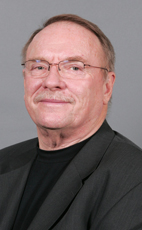
House of Commons photo

Crucial Fact

  • His favourite word was kyoto.

Last in Parliament September 2008, as Conservative MP for Red Deer (Alberta)

Won his last election, in 2006, with 76% of the vote.

Statements in the House

Health Care February 25th, 2000

Mr. Speaker, 54% of Canadians say that health care is their number one concern.

The Minister of Health proposes more rounds of talks with the provinces, but not until May. We already know the system is not working. We know the status quo is not an option. We already know that health care is not sustainable.

Here is what the government does not tell us. Canada ranks 23rd out of 29 OECD countries for total health expenditures. The provinces are having to devise their own strategies because the government shows no leadership. Above all, the disasters in health care continue.

We have a government which has misplaced $1 billion. Ours is a country whose government has placed us in the bottom third of the OECD countries, below Hungary and the Czech Republic.

Will it take the total collapse of health care before this government gets off the fence and does something?

Petitions February 16th, 2000

Madam Speaker, the second petition is signed by 325 constituents, who urge parliament to fulfill the 1989 promise of the House of Commons to end child poverty by the year 2000.

Petitions February 16th, 2000

Madam Speaker, today I rise to present two petitions signed by the people from the constituency of Red Deer.

The first petition, which is signed by 28 individuals, requests that parliament immediately enact changes to Canada's immigration laws governing refugees.

Health Care February 7th, 2000

Mr. Speaker, Canadians are telling us that health care is in trouble.

At the premiers' conference last week all agreed that the health care system is not sustainable and that it is not able to maintain the status quo. The premiers know there is a problem. Reform knows there is a problem. Change must occur in the health care system and it must occur now.

In an Angus Reid poll conducted last month, 78% of Canadians agreed that the health care system in their province is currently in a crisis.

Is it any wonder that the health care system is in such peril? We have a government that is showing no leadership, offering no solutions and taking no action. The Liberals have squandered more than $1 billion as patients sit in crowded waiting rooms and are shuffled between hospitals.

Can hon. members imagine how many MRIs we could have bought if we had not wasted that $1 billion on a boondoggle?

Supply November 22nd, 1999

Mr. Speaker, I know of the member's great concern for democracy and I know he looks at these issues in great depth. Is he not aware of how this is setting the stage for something that will be much greater than just the Nisga'a treaty itself?

I wonder how he goes back home, as I know he does, and meets his constituents when a recent poll done in his riding showed that 91.45% of his constituents said that there should be a referendum on this treaty. I wonder how he answers them when he says that the government of the day in Ottawa says that there should not be and that he really does not have to listen to them.

I once had a member do that to me in my riding in 1991. He said that he knew what we people thought but that Ottawa knew better, that his party knew better. I wonder if this member does not have a few concerns that some of the members of his constituency might not say the same thing when 91.45% of them said that we should have a referendum on this issue.

The Reform Party November 15th, 1999

Mr. Speaker, today the Reform Party has released its foreign affairs policy paper. This paper was prepared in close consultation with many foreign policy experts. It is an approach to foreign policy that the Reform Party believes will take Canada into the 21st century with credibility and confidence.

Canada is sliding into an insignificant status in the world and all Canadians will suffer due to the loss of prestige, trade and influence.

Canada needs a vision for the 21st century, not knee-jerk reactions to world events. This policy promotes the pursuit of national interests to marshal Canada's assets to emphasize our sovereignty and political, economic and strategic interests in vital areas.

We propose investment in hard power with a military that has the tools to exercise effective influence. Canada cannot become the world's 911 number. It needs a revamped foreign affairs policy that will enable us to move into the 21st century.

The Reform Party is prepared for the challenges of the new millennium. It is too bad the Liberals are stuck—

Royal Canadian Legion November 5th, 1999

Mr. Speaker, I take this opportunity to pay tribute to the many volunteers and veterans who perform such valuable work for the Royal Canadian Legion.

In particular, I draw special attention to my constituent, Mr. Roy Frisken, the current president of the Red Deer Legion who has volunteered thousands of hours to both the legion and other community organizations.

In 1943 Roy joined the Canadian army and in 1945 he was a participant in the heavy fighting that occurred in northern Holland. Roy has been instrumental in supporting local youth activities that occur in our riding. They all know they can count on Roy. It is this kind of leadership that shows continuous dedication to our nation.

Roy Frisken and many other volunteers across the country have played a crucial role in shaping the fantastic communities we now enjoy. With Remembrance Day next Thursday, I ask members to take the time to thank veterans for their sacrifices and to support their local legions so that they can continue to provide important services to the community. We will not forget.

Civil International Space Station Agreement Implementation Act November 2nd, 1999

Madam Speaker, certainly it will come back to the House. The committee will be a controlled process with controlled witnesses. I would like the assurance of that member that closure will not be used at every stage from here on in, that we will not have closure, closure, closure; four hours, four hours, and that is it.

That is not the way to treat democracy. That is not the way to treat the people of Canada. They should be upset with the way the government is operating. It is a total abuse of democracy.

Civil International Space Station Agreement Implementation Act November 2nd, 1999

Madam Speaker, I appreciate the question of the member for Peace River. He is very right. Numerous letters from Canadians constantly remind us that we had input into the treaty that was signed at a UN conference somewhere in the world. We could talk about Kyoto. We could talk about Cairo. We could talk about many international agreements that have been signed, including the MAI.

These agreements are done in secret. Canadians are never consulted about them until after the fact when they are asked to ratify them. We have some that do not really represent the Canadian interest. Yet they are signed, sealed and delivered on behalf of Canadians. I guess the big concern is about how much negotiation went on for the space station. We do not know anything about that. It was all done behind closed doors.

Then there was something, as the member mentioned, that put doubt in our minds, the Nisga'a agreement. That is just the tip of the iceberg of how the government treats its citizens when it thinks it can ram through with four hours and 12 minutes of debate something that will affect not only the people here but our children and our grandchildren and will result in a disruption in the country like we have never seen before.

Why would we take a race based policy, one that is not based on equality of people, entrench it in the constitution and create a future for us that will be just what we are seeing in Atlantic Canada now, what we have seen in B.C. and the comments we are hearing in our constituencies? Why would we create something like that without clearly opening it up to the public? What is the government afraid of that it has to use closure and shut things down?

It is despicable. B.C. had four months of debate and then used closure. Here we had four hours. How can that be called democracy? How can the Liberals say it is even a semblance of democracy? Perception is everything.

They expect us to stand and rubber stamp an agreement. Whether we rubber stamp the space agency agreement or the Nisga'a agreement they will use closure. They use closure like they change their socks. It is just the way they run this place. It is a dictatorship and the perception out there is that there is a level of arrogance. They will not even open the House and let us debate, let people hear what are the issues, and let us look at them all.

This is just like the last parliament with the Tories running things: close shop, shut the door, use closure, do not listen to people, do not consult anyone and control the witnesses who come forward. That is exactly how the government is operating.

Now we hear that as the committees travel they will not be able to call the witnesses they want. It will be a select group, a closed door. They will just hear from witnesses that are friendly to government policy. What kind of democracy is that? I hope Canadians will demand the government to change the way it treats its citizens.

Civil International Space Station Agreement Implementation Act November 2nd, 1999

Mr. Speaker, unfortunately you were not here for most of my speech, but I did talk about the connection between the negotiations with the provinces and the federal government with regard to agreements. I used, as an example, the space station, which was an agreement that I hoped the federal government had consulted with the provincial governments. I had to use examples of where the federal government had not consulted with the provinces, like the Nisga'a agreement and many of the other agreements that have come forward like the student loan program.

It is a tradition for the federal government to not consult with the provinces about these issues. It is just how it does business. It just rams legislation through, which is the unfortunate, but I am very aware of that.

What I am most concerned about is that not only is that an abuse of democracy, but when the government starts to say “We'll take this witness, but not that witness. We'll pick them”, that goes absolutely to the ultimate end in lack of democracy, which was the point I was trying to make.