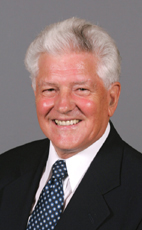
House of Commons photo

Crucial Fact

  • His favourite word was particular.

Last in Parliament November 2005, as Conservative MP for Kelowna (B.C.)

Won his last election, in 2004, with 48% of the vote.

Statements in the House

International Day of Older Persons October 1st, 2002

Mr. Speaker, the General Assembly of the United Nations has designated today, October 1, as International Day of Older Persons and in so doing recognizes the important contribution seniors make to our society.

The Canadian Alliance believes that not one Canadian senior in this country should be in distress because of a lack of service or support: by managing the Canada Pension Plan properly; by administering sensible tax policies that support families; by committing to health care and ensuring that the services that seniors require are there when they need them; and by making our streets safe and our communities strong so that Canadian seniors are free to fully participate in their communities.

With a concerted effort from all levels of government, we can achieve the kind of healthy, productive, independent living Canadian seniors deserve. By creating an environment that benefits our seniors, we continue to ensure their valuable contribution to Canadian society.

Education June 17th, 2002

Madam Speaker, it is with pride that I rise today to honour the outstanding contribution to education of both teachers and students in the riding of Kelowna, British Columbia.

Bradley Talbot and Douglas Grunert, teachers at Rutland Senior Secondary School, received the prestigious Prime Minister's Award for Teaching Excellence. Christine Letourneau and Leona Géber, teachers at Shannon Lake Elementary School in Westbank, were awarded Certificates of Achievement, joining a select 50 teachers across Canada.

Students also made their mark. Landon Bailey of Mount Boucherie Secondary School, Chris Pisesky of Kelowna Senior Secondary, and Patrick Wilson of Immaculata Regional High School were awarded Millennium Excellence Awards for showing outstanding achievement in academics, community service, leadership and innovation.

On behalf of the constituents of Kelowna I wish to congratulate the recipients. Our communities benefit greatly from their commitment to excellence.

Petitions June 12th, 2002

Mr. Speaker, I would like to present two petitions. The first one has signatories from Kelowna and Winnipeg. They call upon parliament to protect our children by taking all steps necessary to ensure that all materials that promote or glorify pedophilia or sado-masochistic activities involving children be outlawed.

The second petition has signatories from Kelowna, St. Albert and Calgary. The petitioners draw parliament's attention to the fact that they want immediate invocation of section 33 of the charter, the notwithstanding clause, to override the judgment of Duncan Shaw, the same judge who in 1999 erred in his decision that the child pornography law was unconstitutional, and second, the amendment of the child pornography section of the criminal code by deleting the term artistic merit.

Health Care System June 11th, 2002

Mr. Chairman, I do not know who is throwing the greatest fear into whose heart. However the hon. member opposite commented that in the last while the Liberals have seemed to be systematically taking money out of the health care system.

I would remind the hon. member opposite that although the Liberals put money back into the budget last year and the year before that they are still a billion dollars short of what they took out eight years ago. It is therefore not an unfounded accusation.

The biggest concern of both seniors and young people is stability and the need to feel secure and safe in our society. This is what I heard from seniors across Canada. They said they want to feel secure and safe. They want to be treated at home to the degree that it is possible. They want the services they need when they need them. They want to be able to afford the medicines they need despite being on fixed incomes.

We can point the finger forever and say it is the fault of the Liberals, the Conservatives or the provinces. However it is the fault of all of us if we do nothing about it.

One of the reasons I am here tonight is to draw attention to the fact that there are solutions. Will the government take it on itself to introduce stable funding into the health care system, something it has refused to do for the last eight years? The government has played around with the system. It has added money and taken money away. The end result is that it is still short of where it was in 1993.

Health Care System June 11th, 2002

With all due respect, I am not quite sure the hon. member is implying that the Liberals solve problems. They have created problems.

We must get down to grips and ask what we are doing. We have given the government some good suggestions. I wish the hon. member would take them seriously.

Health Care System June 11th, 2002

Mr. Chairman, my hon. colleague has put his finger on what is probably the most interesting, controversial and devastating aspect of the whole health care system.

I talked earlier about greed versus service. Perhaps health has become politicized to the point where politics have become more important than providing service to people. Politics is the system of determining who gets what, when and how much. That is why I am so concerned about having stable funding legislated. We could then predict what would happen. Provinces, institutions and health organizations must plan ahead. When health becomes a political football planning goes out the window. That is significant.

My hon. colleague also mentioned the demographic shift. It is not just that a larger proportion of people in our society are getting older. People are also living longer. As a consequence demands on the health care system are increasing. It is a double whammy that complicates the issue.

To politicize all this stuff is to suggest politics can decide what the facts of life are. I do not know of any politician yet who has affected the law of gravity. It exists regardless. We must become realistic. We must ask ourselves what the issues are and deal with them on that basis. We cannot simply say “I am a Liberal and I solve problems that way”, “I am a Canadian Alliance and I solve problems that way”, or “I am a Conservative and I solve problems that way.”

Health Care System June 11th, 2002

Mr. Chairman, it would be presumptuous on my part to say I have all the answers. I do not. However there are some principles we could address to help us deal with the problem at least in part. First, we could recognize that not all health services and procedures need to be provided by highly trained doctors, specialists or even nurses. Other people could perform them because a lot of health care services are the vested interest of certain professional groups.

Second, we could provide and allow for a system that permits home care. Many patients would be far healthier at home or in a setting of their choice than in an institution. Providing this kind of care would help a lot.

Third, it is absolutely imperative that our institutions of higher learning address the problem of insufficient numbers of people being trained in the various health fields.

Fourth, we must address the issue of attitude. All professionals including myself should make service rather than money our number one concern. Let us look at the recent situation in British Columbia. It seems the most important issue to the doctors, particularly physicians, has been money rather than people.

That is wrong. The health care profession is a service profession. Its practitioners are there to help and heal people. They are healers in the first instance. Sure, we want to pay them well. We want them to have a good standard of living. However when greed takes precedence over service we have a serious problem.

We need to move on all four of these areas.

Health Care System June 11th, 2002

Mr. Chairman, it is good to see you in the chair and wonderful to have you out tonight. I also want to recognize my hon. colleague from across the way. I think she delivered a very significant set of comments.

I want to address my comments to a particular segment of our society and their relationship to health care, seniors. Since 2000, it has been my responsibility for the Canadian Alliance to look at the issues for seniors. The major issue for seniors, whether they were in British Columbia, in Saskatchewan, in Nova Scotia or in New Brunswick, was the issue of health care.

Our consultations were informal and we ended up talking to real people about real problems and where they existed on the day to day experience. The viewpoints expressed by these people were not those of learned scholars. They were the viewpoints of people who were suffering and people who were experiencing difficulty with the health care system.

The idea was to have organizations and groups of seniors work together to make things better. These organizations and many of the frontline caregivers struggle under a health care system that is too often inadequate and underfunded.

Through these visits, I came to realize that my main objective was not to sell a particular political idea but rather to be a voice for these people in the Parliament of Canada where the important decisions are made. That is what I intend to do here tonight.

It is the same perspective that will become increasingly important because of the demographic shift that has taken place in Canada. By the year 2040, roughly 25% of our population will reach the age of 65 or older. The implications of that are very serious for the health care system. We also need to recognize that the greatest proportion of the money spent on health care is for people between age of 85 and older, particularly women. Older seniors, the majority of them women living alone, need more and more health care. Will the health care system and health care services meet that growing demand? Where will we get the final funding to support home care and long term care? Will the specialty services required for older seniors be there when they are needed? How can we ensure that the cost of prescription drugs will be reasonable and affordable?

Only a few months ago the Canadian Medical Association charged the federal government with systematically underfunding the health care system, in particular, specialty care. What does the federal government intend to do with the CMA's charge that it is systematically underfunding the health care system?

Those are some of the questions that the seniors asked as we talked to them about their problems and concerns with health care.

Let me read into the record what some of the seniors specifically said. I want to be very careful to read this exactly the way they said it. I do not have all of them but we have some.

The comments are as follows: Health care spending is wasted; too many services have been cut and there is a lack of facilities; hospitals, emergency units and intensive care facilities are being closed, forcing families to be transferred greater and greater distances away from family support; the cost of drugs is too high and more affordable generic drugs take too long to come to market; federal health care funding must be restored; the federal-provincial governments must work together to resolve health care issues; the cost of covering diseases such a Alzheimer's and diabetes are insurmountably high for seniors; user fees for emergency rooms might alleviate crowding and unnecessary use; nursing homes are understaffed; a better understanding of the care needed for seniors could mean that not all health care providers need be doctors, nurses or specialists; organizations that care for seniors could do a better job of co-ordinating activities to avoid duplication; there is a lack of monitoring of quality and standards of institutionalized care; governments could lower or remove taxes to offset the cost of living at home; prevention and a lifelong promotion of good health could reduce health care costs.

Those are only a few of the comments that were made but they cover a full range of issues. They refer to almost every aspect of health care, from home care to drug costs.

Seniors are aware of the deficiencies of the health care system. If I could summarize in one statement what seniors fear most about the state of the current health care system it would be this: They feel their ability to receive timely and affordable care in the setting of their choice is being compromised. This is the kind of health care seniors want: timely, affordable, and in the setting of their choice. If we can offer seniors a health care system that provides these three things we will have gone a long way to addressing the most pressing problems.

What does timely mean? When seniors ask for health care that is timely they are seeking services that are available where and when they need them. Seniors need to have access to services, particularly those of specialists, without delay. If they need to be cared for in a hospital they do not want to wait until a bed becomes available. Nor do they want to drive miles and miles to get treatment. If resources and services were more readily available at the community level the desire for timely care would be satisfied.

Seniors want health care to be affordable. When seniors ask for affordable health care they mean services that are within their means. This is particularly true of seniors living on fixed incomes. Seniors have told me that living on a fixed income presents a challenge in terms of both meeting current costs and planning for inevitable cost increases in the future.

As provincial governments try to deal with deficits and decreased funding from the federal government, services for seniors are too often hit with cutbacks. Seniors are expected to absorb increased costs to the provinces in such areas as medical services, drug plans, community and care services, transportation, income supplements and housing. In some cases seniors have said they were forced into financial distress and into a position where they had to choose between food or medicine. If on top of that they are faced with a long term illness, what do they do? Affordability is critical to the health and well-being of seniors.

Seniors want to have care in the setting of their choice. This is probably the most important aspect of health care for seniors. Without question their preferred choice is to remain at home. Yet they are faced with uncertainty. I do a daily scan of newspapers for stories related to seniors. Overwhelmingly, by a ratio of about three to one, the issue of cutbacks to home care is the big issue.

Not only are cuts to home care in direct opposition to what seniors want. They deny seniors independence, something they consider their most valuable asset. Seniors argue that the lack of good home care puts direct pressure on other housing options. Seniors have been quick to tell me that neither low income housing nor institutional care options meet the demands of persons facing the prospect of leaving their homes.

Seniors are not only talking about their problems and concerns. They are talking about solutions. I do not want to oversimplify the issues, but I believe seniors could achieve timely and affordable health care in a setting of their choice if two things happened: First, we need to develop and maintain a harmonious relationship between the provinces, territories and federal government. In January the Minister of Health said:

The provinces...deliver health care, they are on the front lines of health care every day, and therefore what I want to do is work with them cooperatively to renew the system they largely run in this country.

This kind of comment is encouraging to Canadian seniors. They like that kind of co-operative spirit.

Second, we need stable funding. We are not alone in this. The Romanow commission agrees it is the case.

We could achieve solutions to our health care problems by establishing harmonious relationships and stable funding. I would argue, as our party has from time to time, that this should become the sixth principle of the Canada Health Act. We could call it a guide or a requirement. In any event, stable funding should be a legislated requirement under the Canada Health Act. It can be done. I would challenge the government to do so at the earliest possible opportunity.

Species at Risk Act June 10th, 2002

Mr. Speaker, it was interesting to listen to my hon. colleague across the way. I want to start off exactly where he began his speech because I think he referred to clause 64 of the legislation.

He talked about Motion No. 109 that was withdrawn earlier today. It does change considerably the position the committee had which the government brought to the House earlier. I draw the hon. member's attention to the fact that we understand only too well exactly what withdrawing the amendment means. It means that the government, or the privy council, or the governor in council to use the exact technical phrase, shall make regulations.

That word shall is significant. It is something we wanted in the legislation absolutely, but we also wanted something else. While that is a step, it is such a baby step that it does not even take one-half size of a baby's shoe to move forward. The hon. member needs to recognize that putting it in a regulation does not have the same force as if it were in the legislation itself.

Moments ago just before the hon. member sat down he said there was mandatory protection of endangered species if they were not looked after within 180 days. That is in the legislation. That is not in the regulations. We are saying that the species at risk should be protected. However, it is not mandatory that the landowner or the person who suffered from the implementation of the act be compensated.

The only thing that is mandated is that regulations shall be created. It does not say when those regulations shall be created. It does not say what the compensation shall be. Let me read for the record the things the regulations are to cover. They are to cover:

(a) the procedures to be followed in claiming compensation; (b) the methods to be used in determining the eligibility of a person for compensation--

--the eligibility of a person, and that would include a corporation--

--the amount of loss suffered by a person and the amount of compensation in respect of any loss; and (c) the terms and conditions for the provision of compensation.

If those kinds of things were couched into what is a reasonable and fair compensation, one could say maybe some of these details ought not to be in the legislation. Something that ought to be in legislation is the principle on which the compensation shall be determined.

There is no doubt that the compensation should be determined on the basis of fair market value, not something that is apparently fair and reasonable. What is the point of talking about fair and reasonable? That gate is so wide open, the road is so wide as to drive us to wherever we want to go. It means absolutely nothing in terms of specifics.

There is no provision either in that particular clause that says it should be done in a timely manner. What is the point of agreeing that a person or company, or whatever, has suffered damage to the tune of several million dollars but there is no indication as to when the several million dollars shall be paid? Would it be paid 180 days after the ruling has come down, would it be 10 days later, or an infinite number of years later? We do not know. It is not there.

Removing this amendment is fine. It is moving a baby step forward but it does not deal with the fundamental principle of justice and the fundamental principle of democracy, and the fundamental principle on which democratic capitalism operates. That is the basis on which private entrepreneurs are to put money on the table to take the risks of developing means of production, means of service and thereby derive a profit, but it also serves the interests and the needs of society at large.

We need to encourage that. With this kind of legislation we want to assure that, but the legislation does not make that absolutely clear.

At this point I emphasize again that the Canadian Alliance and I personally are in no way opposed to the provision and protection of species at risk. We want to protect the species that are at risk. That is fundamental.

The hon. member mentioned co-operation. I agree wholeheartedly with him that many of the fishers, hunters, lumber companies and farmers are the first to take care and to preserve endangered species.

I remember so clearly when my father taught me how to plough on the farm. A burrowing owl was burrowing in one of our fields. My father said “When you plough in that field, you will probably find that burrowing owl somewhere. You have to make sure that you go well around that spot so that you do not disturb what the owl is doing. That is its habitat and we want to protect it”. When I wondered why Dad cared that much, he said “I care that much because that bird has a right to live just like you do”.

That is co-operation. That is voluntarism. That is what I respect and admire very much.

When we get into a position where a government can take away property, can expropriate land, can cause damage to the earning power of a company without adequate compensation, that is very dangerous. It creates a precedent that encourages people to not invest. It is a disincentive. That is what bothers me. That is the issue on which we want to rest our particular case.

There are other issues in the bill that I want to comment on. I want to register clearly and unequivocally that we want fair and reasonable compensation that is determined on the basis of market value, that is the definition of fair and reasonable, that it be in the legislation and that it be timely. We underscore that because until that amendment is made, we cannot support this legislation.

Any government that puts itself in the position of being able to completely ignore the scientific evidence about the species that are at risk, this can become a politicized decision from scientists. I am sure other members in the House know as I do that there is a considerable amount of science that in the first instance has a certain political element. However, when we deliberately create in legislation the potential of a government to take unto itself the power to overrule, that is a very dangerous precedent. There have to be checks and balances in this kind of decision.

I encourage all of us to consider very carefully what it is that removing this amendment will actually do and what the provisions are now. I assure everyone that we want to protect the species that are at risk. We also want to protect landowners and the people who suffer loss because of implementation of the act. We also want to make sure that the science is objective and unbiased and that it is not contaminated by infiltration of political considerations that might cause greater advantage to some people than to other people because of their political affiliation or their contribution to particular political parties.

Supply June 6th, 2002

Mr. Speaker, I am absolutely intrigued at the response of the hon. member to my colleague's question. There has to be a real issue here with regard to fairness. I was going to ask a different question but I have to take issue with him on the issue of fairness given the way things are being done in Canada right now.

Western Canada is getting a fraction of what is due to it on a per capita basis. If the government really wants to treat Canadians fairly, it had better distribute the funds in such a way so that all the provinces are treated at least on an equitable basis, per capita. That is the least the government could do.