No, it was not, and there were lots of witnesses out there. I want everybody in the House to know that what the hon. member did out there was a total disgrace to any member of parliament.

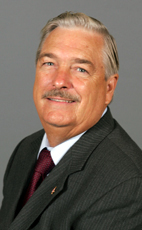 House of Commons photo
Won his last election, in 2004, with 46% of the vote.
Privilege April 15th, 1999
No, it was not, and there were lots of witnesses out there. I want everybody in the House to know that what the hon. member did out there was a total disgrace to any member of parliament.
Privilege April 15th, 1999
Mr. Speaker, I am one of the members he is talking about. What happened outside is that nobody made any threats to the member over there. As we were standing there he walked by us and called us bigots. He also said that he would like us to do something physically to his body that normally you would only have a female person do if you were heterosexual. I took great exception to that. When he walked in the door I asked him to come back out to finish the discussion.
Youth Criminal Justice Act April 15th, 1999
Madam Speaker, I listened to the hon. member's speech and I agree with just about everything the member had to say. It shocked me when I sat here and listened to the members before him speak.
If some young person breaks into a car and hot wires it, they are becoming entrepreneurs. This is coming from members in the House. The hon. member from Nipissing stated that because young people steal cars they are just being children.
That is what is wrong here. I have gone around schools and talked to children who are afraid of children. I have talked to their parents who have said “The government has handcuffed us. We cannot do anything. The government has taken the right of parenting away from us. It has become the almighty parent and it penalizes us if we try to do anything to help our own children to stop this type of stuff”.
I would like the hon. member to comment.
Supply April 13th, 1999
Madam Speaker, I kind of got a kick out of listening to the question coming from the other side. I would like the hon. member to know that he answered it quite correctly.
I am not afraid to stand in the House and say I am in disagreement with the united alternative. This does not mean I am in disagreement or at odds with my leader. It just means I am not afraid to come out in public and state my concerns because I know I will not have to sit in some far off place like the members of the Liberal Party, or ex-members of the Liberal Party, after they have talked about the government. The members in that democratic party across the way either agree with what their leader says or they shut up.
André Fréchette March 19th, 1999
Mr. Speaker, last week former chief page André Fréchette added another remarkable achievement to his career. Many colleagues will recall when we bid a happy retirement to my good friend in December, 1994 after 42 and a half years of service as a page.
Some 42 months later André bowled the perfect game, hurling 12 straight strikes for a score of 450 at five pin bowling in the Vanier Francophone Centre. He also achieved a triple of 1,000 points and even won the 50:50. Tonight he will be awarded some prizes but he says the best prize was making his grandson David proud of him.
David is celebrating his eighth birthday today and his grandfather says David is also becoming a good bowler.
André says he misses this place but he has been enjoying his retirement, including time for another favourite hobby, picking berries and turning them into jams and jellies.
Happy eighth birthday, David. Please give your grandfather a hug from his old friends here in the House of Commons and make sure he uses the number 42 on any lottery tickets he buys.
Softwood Lumber March 18th, 1999
Mr. Speaker, when Canada entered the softwood lumber agreement with the United States, it sold it to Canadian producers as a guarantee that they would get five years of peaceful exports and job security. Instead they got job losses and uncertainty. Now the U.S. is threatening further restrictions by adding rough headed products to this already set in stone quota.
What action will the government take to stop the constant harassment by the United States with regard to our forest industry?
Federal-Provincial Fiscal Arrangements Act March 10th, 1999
Mr. Speaker, before I address Bill C-65 today I would like to thank the hon. member for Crowfoot for putting forward his grave concerns about how far this federal government is intruding into provincial jurisdiction. I think my colleague from Crowfoot did that very adequately, especially in regard to Bill C-68, but it goes further, as the member is well aware.
Interprovincial trade barriers are another strong case in point. The government refuses to look at the issue or even to address it. However, it is not only this government. We have become mired in this mess through not only this government, but through previous Progressive Conservative and Liberal governments from times long past, hopefully never to be repeated again.
Let us have a look at this bill. One of the things I find very contentious in regard to this bill is that equalization happens every five years. The government has had five years to study this bill. It is a large bill and it amounts to a large amount of money, yet the government decided that we would only receive three days' notice. There was no draft legislation. We were not allowed academic input. What bothers me most is that there was no public consultation.
I have news for government members. The people who pay the bills are the people who pay their wages. I know they do not believe this, although I have said it time and again, but the government has no money. It has exactly what it can gouge from the taxpayers of Canada. That is the only money it has and that is the money it uses. When it starts letting out hundreds of millions of dollars government members should be well aware of exactly what they are doing.
No one in this House is against helping those who need help, but most of us would agree that we should do it under a fair system, one that treats everything and everyone in this country equally.
Let us look at what we are talking about cost-wise. This program will cost an additional $48 million in the first year which will rise to $242 million by the fifth year, once the changes are fully implemented. Funding for the equalization program will increase by an estimated $700 million by year five.
We are not talking about small amounts of money, no matter what some members opposite have said. To me $700 million is a large amount of money.
I might add that I am from the province of British Columbia, which is a have province. I really have to wonder about that. Right now we have the highest unemployment we have had in many years in the province of British Columbia. The logging industry is in dire straits with massive layoffs. The mining industry is packing up and running, not only due to federal legislation but also greatly due to the provincial government that is in power in British Columbia today.
Speaking of the government that is in power there today, I want people in the House to know that it is an NDP government, the so-called caring and sharing government of the working people, which brings me to another concern I have with this bill.
The bills states that casino funds will be put into the mix. I want everyone here to fully understand what happened in British Columbia with regard to charities, with regard to bingo and with regard to gaming by an NDP provincial government. That government ripped that right out of those charities and now we are saying that we will go ahead and introduce it in this legislation.
I have a great concern that things might not all be on the up and up with some provincial governments with regard to where these funds will really go.
The hon. member from Newfoundland said that Newfoundland has a rate of 19% unemployment. That is high. I had the opportunity to travel to Newfoundland last year. I travelled across Newfoundland extensively. I know they are having tough times. British Columbia as well is having tough times. I cannot say that it is all the provincial government's fault. I would have to say that a great portion of it falls right here on the shoulders of members sitting across the way because of high taxation. We know that is what kills jobs. What kills entrepreneurship and what keeps businesses from staying in the country is the high level of taxation.
It is not hard to see where this government comes from. It is called tax and spend. I am not saying that the government has to go this route at all. However, if it would look at the simple facts, which countries around the world have tried and tested, and if it were to cut taxation, the level of government revenues would actually increase.
I say to members across the way, believe it or not. People start to create jobs then. They have a few dollars in their pockets to spend and it does not go into the government's pocket. I know Liberal members do not like to hear that. When it goes into the government's pocket that means the taxpayer no longer has it in theirs. That upsets government members terribly.
It is sort of like going back to the old days and knowing that if we could put something away for our retirement we would live far better in our elderly years. This government only thinks of one thing. The more it taxes, the better its members can live in their elderly years, not the taxpayer. I really have to wonder about that.
Let us look at the unfairness of some of this. Let us look at what the auditor general gave the government in 1997 to address. What has it done to date? Absolutely zip.
The auditor general said with regard to the equalization payments that property taxes vary from province to province. Property assessment methods vary between municipalities, let alone provinces. Property assessments are infrequent and done in different years.
The government is lumping this all in as one, but it varies. Bring it in under the provincial GDP. Let us open it up, have a look at it and discuss it. Do not give it to us for three days, after the government has had five years to study it, especially when it has done zip. Government members say “Here it is. Let's get at it”.
I know members on the other side of the House understand that this is the way Liberals have done business for years and years and years. However, on this side of the House the times are changing. Whether they like it or not they are coming into a new century.
Sooner or later, you will have to take off your shades and address these problems with your eyes wide open for a change. The people of Canada are waiting for you people to finally do that. They have been waiting and waiting and waiting.
Hopefully it will happen before all of you over there are in line for your old age pensions. Then maybe you will not find out exactly what a large portion of Canadians have to live with, high taxation.
I say again that there is nobody in this House from any party who I know of who is against helping those who need honest help. Absolutely nothing. However, let us look at this so that it is proper help and we do not keep ripping off the provinces.
I will say a prayer tonight in the hopes that the government will finally wake up.
Softwood Lumber March 5th, 1999
Mr. Speaker, the Canada-U.S. softwood lumber deal is killing a number of Canadian businesses. This deal expires in two years, yet 86 out of 146 companies replying to my recent questionnaire have little or no trust in this government to spell out a better agreement.
How will this government regain the trust of these companies in order to give confidence back to the industry?
Supply March 4th, 1999
Mr. Speaker, I sat here and listened to the hon. member's speech. He talked eloquently about the caring, sharing aspect of the Liberal government when it comes to families.
Let us look at their tax situation right now. Let us look at what it has created. It has created child prostitution. It has created children being out on the streets. They are called latchkey kids.
Let us talk about the caring, sharing member over there who turned down help for hepatitis C victims and who turned down our motion to stop child pornography. It is dead against families; that is all the government has ever been since I have been in the House.
Citizenship Of Canada Act February 19th, 1999
She is not accountable to anyone. She has the right to override anything. There are dictatorships that wish they had this kind of power. Canadians have sat back far too long and just gradually and grudgingly accepted this. It is time for the public to start voicing concerns about what is going on in the country.
The member for Wild Rose was dead on when he said what was happening. I thank the member for Wild Rose for bringing that matter to the attention of Canadians. I hope everybody realizes exactly what they are buying into when acts like this one are put into place.
I would like to end on that note. I see members on the government side are happy that I will be closing off the debate. To tell the truth, I wish I did not have to stand here today to talk to the bill at all. I know hon. members opposite do too, because they do not like people out there to hear what is really going on. That is fine. I understand that.
My ultimate wish is that this legislation goes on to the garbage pile where it belongs.