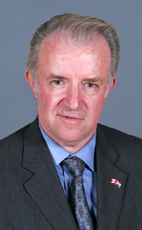
House of Commons photo

Crucial Fact

  • His favourite word was money.

Last in Parliament November 2005, as Conservative MP for Southern Interior (B.C.)

Won his last election, in 2004, with 37% of the vote.

Statements in the House

Special Import Measures Act September 25th, 1998

Mr. Speaker, it is a very good example by my colleague and I think it is one we do need to deal with. The one thing I would caution when we do this is not to be subtle. Subtlety is a hallmark of Canadians. We like to tiptoe around and are always afraid we will offend somebody.

The example he gave is excellent. But if we do that, make sure people understand exactly why we are doing it. Do not just simply do it and let them put two and two together and maybe come up with what we are up to. Make it absolutely clear. Do this to us and here are the consequences. We talk about that in the criminal justice system. We talk about it with almost every example one can think of. It is consequence of action. Whenever something is done there will be a consequence for what is done.

We talk about it in our own lives. Let us start talking about it with the Americans as well. Let us say “Here is what we think is fair. Here is what we are prepared to do. But if you do not want to play by this rule, if you do not want to be fair, above board and completely open, then know now that if you start messing with us, we will retaliate. We will not get carried away in doing it. We will do it in the best Canadian tradition to try to do it in balance with what you do”. But make sure they know we are going to do it. If we lay that out, do not back down when the time comes. Make sure they understand when they take an action, if it is an unfair action, there will be a consequence and we will indeed follow through on it.

Special Import Measures Act September 25th, 1998

Mr. Speaker, I am pleased to rise to speak on this today. I would like to say, as my other colleagues have said before me today, that the basic principle of the bill we do support.

Certain measures obviously have to be put into place. The clearer it is and the more explicit it is, the better that bill will be. It never hurts to reiterate to the government the one proviso which we have said at considerable length today to ensure that it understands exactly where our level of support is coming from.

When I first came to Ottawa I said that I was not here to oppose for opposition sake. I do not care about the statistics or how many we support, how many we reject, whether we support a government that we would ultimately like to replace. If it writes good legislation I will be the first to congratulate it. If it writes legislation that I think has some merit but that could be made better, rather than criticize we will try to show alternatives to amend it so that the bill which is possibly supportable could be made better. It could be something that we maybe are having a little trouble supporting which could be made into something which we could support. It would still be its legislation. It behoves the government to listen and carefully consider the amendments put in by the official opposition or another opposition parties. The bottom line is to get good legislation.

The chief thing we have asked for in this legislation is a measure that will take into consideration the downstream impact of what this bill might put into place. Something that we consider will show how it is going impact on industries in Canada and whether it is going to create a problem for some of those industries, and how is it going to impact on the consumer. It may be extremely well intentioned to put some countervailing duties or tariffs in place in terms of the fairness of the concept of it because it thinks that, in the case of the Gerber baby situation, it needs to be dealt with. It is irresponsible to put something like that into place before considering the impact on consumers. That is a glowing example for the government to look at. There are a lot of other examples out there.

It would be relatively simple for the government to move an amendment or to accept our amendment to ensure that these concerns are dealt with. I believe that all reasonable people, regardless of party, who look at this and give open minded consideration to our proposed amendments in this area will see the merit of them.

I would like to deal with one other aspect of this. We talk about downstream benefit, impact on people and other considerations with this legislation. We also have to look at and balance the other side of this. This is dealing with import, the Special Measures Import Act. What about export? Whenever we start putting into place regulations dealing with how we are going to treat imported goods from other countries, we cannot do that unless we take a serious look at problems, regulations needed or regulations already in place that are oppressive when dealing with our exports.

Because of the nature of my resource based riding, its proximity to the U.S. border and its absence of good transportation networks to other Canadian markets, the one I am most concerned about is the softwood lumber industry. Prior to free trade and under free trade we have had one problem after another with exports of softwood lumber to the United States. All kinds of outrageous claims have been made by the American administration. It claims we had subsidized our forest industry. This is ironic as right now British Columbia, with our NDP government, has placed the cost of producing B.C. lumber among the highest in North America.

In spite of that we still manage to stay competitive but the softwood lumber deal is killing us. Every time the United States' lobby managed to get some kind of countervailing tariff in place against softwood lumber we appealed it through the process and we won. We no sooner win then it comes out with another one in a different area for softwood lumber. We would fight that one and we would win. Still the threats kept coming. I will not say in its wisdom but finally the government, the bureaucratic system, decided that we should do something different. It was proposed to the government that we should go into the softwood lumber quota system.

I have had a lot of problems with the softwood lumber quota with a variety of different companies in my riding. I have gone to the softwood lumber division of foreign affairs. I have a pretty good sense of how this whole thing has come into play and how it works. Those people have been quite candid with me and I appreciate that because they have to work with what they are given.

When the quota system came in they did not have the slightest idea how it was going to work. Companies in my riding were told “we have no idea what your quota is going to be, just keep on shipping and keep track of everything, we will sort it out somewhere down the road and we will figure out how it is going to work”.

I can tell members how it works, terribly. One company in my riding basically shut down. People were shipping and using their number and softwood lumber could not even track it properly. We played the greatest numbers game for a year and a half. They operated from hand to mouth never knowing from one day to the next or one week or one month whether they were going to be able to sell anything they manufactured, whether they should even try to buy timber in order to turn into lumber because everything has to be done ahead. The last thing you need is an inventory of logs if you cannot cut it into something you can sell.

On the other hand, it does you absolutely no good to win on the softwood lumber quota war and find out you do have quota but you do not have any logs because you did not dare put in the kind of financial outlay that was necessary in order to have the inventory when you did get it sorted out.

We no sooner got sorted out with one company when another one, the biggest timber supplier and manufacturer in my riding, was told on each of three successive years that the quota it has will be held and it will not get any further cutbacks, and in each successive year it gets more cutbacks. It is a big operation with three locations in my riding. It has been told that the latest cutback that it was promised in the previous year would not happen is equivalent to the amount of output from its main centre operating in the riding. That means the company would shut down the entire operation in one city in my riding. It affects over 100 people.

This is not the kind of balance we need. When we start talking about import acts we had better take a very serious look at our export requirements as well because they go hand in hand. I am not pointing fingers at any party but in the past Canada through successive governments and bureaucrats negotiates with the United States on bended knees. That is not a Clinton joke.

We have to start dealing with a little more strength. We have to start saying that there is a quid pro quo. If you start doing unreasonable things with us we are going to make sure our act allows us to balance that out. We cannot have deals where maybe it is good for one area or region of a country and we say we will let this in because it is good but we do not care what is happening in another part of the country. Or we will balance it out by letting something good happen in that part of the country but which is maybe not good for the first region. That is not the way we should be working in this country. There should be an open fairness. The quote system does not provide that.

The way we have dealt with the United States prior to the softwood lumber quota does not do that. I do not see how we can enter into a new act to lay out the rules so that all the people who export into Canada know exactly what the rules are and those rules are perfectly fair. That is very utopian. Why are we providing other countries like the United States with a clear set of rules saying what we will do and how it will work? Then they can look at that and say now they know how to work the system but they also still get to turn the screws whenever they do not think something is quite right in coming into their country exported from Canada.

I think we have to come up with some way of saying this is what we are proposing to do but we have some problems with what you are doing to us and we have to resolve those first.

I remember going down to the United States as part of the Standing Committee on Transport a few years ago. One of the things we were talking about was the St. Lawrence navigation system into the great lakes, the locks, where we have this incredibly unbalanced system. We end up paying the majority of the cost of operating the lock system into the great lakes even though the American shipping system gets 65% of the economic benefit of making use of it. I believe that what is fair is we either at least split it or better still that we pay for it based on the economic advantage gained.

We had a meeting with some of the American big boys in Washington, D.C. and their reaction was that is the way it has always been and that is the way it is going to be. What are you going to do about it, close it down?

I think if somebody puts that type of bluff on the table we have to call them. When I was having that conversation I was getting more and more irritated talking to this American good old boy. My response to him when he put that idiotic question to me was obviously we do not want to shut down the navigation system of the great lakes but obviously you do not want it shut down either because you are getting more advantage out of it than we are. If you leave us no other alternative I guess we are going to have to look at that, and I walked away.

I think we need to deal fairly with these other countries but we need to deal with a little more strength. Internationally Canadians are known as those nice people who never raise their voice, those nice people who never argue, those nice people who when you hit them turn around so you can get a good shot at the other side.

I am tired of that. So are my constituents and so are the employers in my riding who are hurt by some of these acts that we come out with without thinking of the full ramifications, and employees especially, the everyday constituents in my riding who are impacted by these things, whether import or export.

In another part of my riding I have a tremendous agricultural area, the south Okanagan, and every year they fear the dumping of the American apple crop into the south end of my riding.

Yes, we need things that lay out clear rules we are going to follow in terms of imports but by God we had better have some very clear rules that go hand in hand with these things dealing with our exports as well. I do not think we can come in and put this all in place and say there, see how nice we are, don't you want to follow our example. They will say no because they never have in the past.

I believe we had better take a good hard look at this before we finalize it. By all means let us move on but let us do it cautiously. Let us put the amendments that have been talked about today in place with proper consideration for people who are going to be impacted by anything we do as a result of this act.

Then let us stop before we make that final passage and start dealing with the export side of it as well because any time we are laying out all our cards and being incredibly fair to our competitors without the competitors showing some evidence of fairness and laying their cards out as well, we are dealing with a blind hand and, as any poker player knows, we will lose every time.

I trust the Liberals will consider what is being said not to oppose them and not to run them down. It is being said very seriously to ensure the legislation passed in this House, not the Liberal legislation, the legislation passed collectively in this House, is good legislation and that everybody who participated in it can feel satisfied.

Supply September 22nd, 1998

I will table it. I would love to. I will give the member the figures on that. Ninety per cent of respondents opposed the bill after being asked a totally neutral question. I am representing my constituents. I would suggest to the hon. member that he has a lot of backbenchers over there who are not representing their constituents.

Supply September 22nd, 1998

Mr. Speaker, that was a very interesting little spiel from the hon. member. I am sure he has been taking lessons from the Minister of Foreign Affairs. He said that the bill was about crime control. That is a myth that I cannot believe they believe. It has nothing to do with crime control.

Law-abiding citizens are not the problem. Criminals are the problem. By definition criminals break the law. Why does the government think a registration program law-abiding citizens have to comply with will solve crimes?

Can we imagine the bank robber on his way to the bank saying “Gee, we had better not rob the bank today because I haven't registered this rifle?” When was the last time somebody robbed a bank with a rifle?

Crime control, give me a break. If the member wants to talk about what we are doing today then at least he should make some sensible remarks.

The hon. member said that the chiefs of police were against us. I acknowledge that. Politically appointed chiefs of police are onside with the government that appoints people. What a surprise. I do not know if it was intentional or not, but he was wrong when he said that police associations were in favour of it. They are not. The Regina police refused to support the RCMP in a request to register firearms. The Canadian Police Association that covers police from one end of the country to the other, frontline police who do the work, is opposed to the legislation.

He talked about my constituents. I surveyed my constituents with a question that firearms owners challenged me on. They asked why I was being so neutral, why I was not being stronger and more supportive in the way I asked questions. I told them it had to be an absolutely neutral, fair question which we had designed for us. I got the biggest response on that survey of any householder survey I have ever sent out.

Supply September 22nd, 1998

Mr. Speaker, I start off by explaining that I am an active firearms owner and user. I am a trap and skeet shooter. I am not particularly good at it but I enjoy doing it.

I am also a competitive pistol shooter. I am much better at that. Having said that, I say to the Liberals across the way and to everyone else that I support gun control. Gun control is good. We should have it in Canada. There is no question about that.

Gun control is ensuring that international arms dealers do not operate out of our country. Gun control is about ensuring that criminals do not smuggle Uzis and AK-47s into this country. Gun control is about ensuring that terrorists cannot easily arm themselves with illegal weapons. Gun control is about getting firearms out of the hands of criminals. Gun control is desirable for the average Canadian, and I agree with it. But Bill C-68 is not about gun control.

I have had a lot of people write to me. An overwhelming majority were opposed to this bill. Some were in favour. I spent as much time looking at their letters as I do with the others, perhaps even more. I know what a lot of the people opposed to it are going to say but I want to see what the people who are in favour in this bill have to say about it. One women said if it saves only one life is it not worth it. I am not going to brush that off. I am going to have a very serious look at that. If it saves even one life is it worth it? The figure that was going around at the time was $89 million. Later it went to $118.9 million. That figure is now quite low but that is the figure I worked with and looked at.

In 1993, 1,354 lives were lost in some manner related to a firearm, suicide, homicide, accident, legal intervention, every means we can connect to a firearm. The same year I looked at those figures I found out from talking to a doctor in charge of the breast cancer detection program in British Columbia that 17,000 women would be diagnosed that year alone with breast cancer. Of those 5,400 would be terminal. I asked if I provided him with $118.9 million what would he do with it and what results would we get. He talked to some of his colleagues. They did some math. He came back and said that if I gave them that much money they could double the early detection screening in the high risk category. I asked what results would that give. He said that statistically they could save 1,710 lives. That is 1,710 real lives saved, victims in this country, or some unknown percentage in some unknown way of 1,354 that has never been explained to us by the past justice minister or the present one. If this bill is about saving lives there are a lot better ways to spend the money.

We have another consideration. There are going to be a lot of things talked about today. I want to hit on a couple of very specific points. There is a challenge by the province of Alberta that has gone to court and is complete. We are waiting for the decision of that court challenge. The government is spending a lot of money on that court challenge. I might add that the province of Alberta is supported by the provinces of Saskatchewan, Manitoba, Ontario and the territories.

When they say there is a lot of support out there, yes there is. I think it is because of misinformation. But that aside, there is a lot of support out there. There is also a lot of resentment to this bill from individuals Canadians, from groups of Canadians and from entire provincial governments. There is a lot of opposition to this as well. That should be a clue to the government that even if it wants to keep this bill it should perhaps at a very minimum look at it and see if there is some alternative to some of the aspects of it. Even without the most objectionable parts of it there is some alternative to what it is proposing to do.

Under the Alberta court challenge it is anticipated, and this is from fairly high up and not our opinion, that the federal government is going to lose that challenge. The decision will likely read that the federal government does not have the right to regulate private property. If that happens what it will do is not only strike down the registration provisions of Bill C-68, it will strike down the registration of handguns as well.

If there is support for Bill C-68 from people who want to see sporting rifles and shotguns registered, can we imagine the outcry from these people if the actions of the government, albeit intending to support the desires of those people, inadvertently causes the loss of the registration of handguns? I think the government would end up losing ground rather than gaining. In light of that it might want to reconsider.

The government, by claiming that the bill would reduce crime, has played a very cruel hoax on Canadians by providing them with a false sense of security and possibly reducing vigilance against criminal attack. The government claims that Bill C-68 will make our homes and streets safer but the legislation does absolutely nothing whatsoever to justify that claim.

The money the government is wasting on Bill C-68 could be spent far more effectively on disease prevention, detection and cures; on policing costs; on establishing DNA databanks to aid the police in apprehending and convicting violent criminals; on post-secondary education for young people who are inheriting a debt of two decades of wasteful program spending, which I might add can be compared very closely with this bill and the amount of money it will cost.

Bill C-68 is not gun control. It is a phenomenal waste of money. It provides a false sense of security to Canadians. It does absolutely nothing to hamper the criminal misuse of firearms. If anything, it actually helps criminals by diverting police activities from their apprehension.

The Canadian Police Association, the frontline police officers, not the politically appointed chiefs of police, who deal directly with criminals and criminal situations are totally opposed to the bill.

If the government's intentions were good, now is the time to correct the outcome. What the government intended may not be the way it will come out. I call on the government to rescind Bill C-68 and replace it with legislation that cracks down on the criminal misuse of firearms. If the intention is good that is great.

In the first speech I ever made in the House of Commons I said, and sincerely meant it, that I was not here to oppose the government for opposition sake. If the government does something right I will be the first to congratulate it. If the government comes out with a bill that I do not happen to agree with, I will speak out on it and try to suggest alternatives to make it a better bill.

I have done that in committee. I have worked with government officials not to try to expose what they are doing and say they are a bunch of whatever but rather to say what I believe the problems are and to give a justifiable and valid alternative.

There are alternatives. The government should not blindside itself by saying that everything it does it automatically right. It would be far better to say that everything it does it means to be right but sometimes it will have to make some changes along the way.

I believe this is one of those times. I hope enlightened members will look at it and see that it is not a weakness to suggest that the intentions were good but perhaps some changes are needed. This bill is one of those occasions.

Request For Emergency Debate September 21st, 1998

Mr. Speaker, I seek to present a motion under Standing Order 52(1) and 52(2) for the adjournment of the House for the purpose of discussing a specific and important matter that requires the consideration of all hon. members. It is the anticipated decision of the Alberta Court of Appeal regarding Bill C-68, an act respecting firearms and other weapons.

The court decision on the challenge of Bill C-68 is due any day and it is widely expected that it will rule in favour of the province. The decision will likely read that the federal government does not have the right to regulate private property. This will not only strike down the government's plans to force the registration of sporting rifles and shotguns. It will also strike down the registration of handguns as well.

A great number of Canadians, including many who are opposed to the registration of hunting rifles and shotguns, would be extremely concerned about the loss of the handgun registry.

I propose we examine an alternative to the court ruling by debating the feasibility of the government repealing Bill C-68 before the court decision is rendered and then petitioning the court to dismiss the action as having been settled. I believe this is in the best interest of all Canadians and in the best interest of the government. Someone does have to look out for them.

Parks Canada Act May 28th, 1998

Madam Speaker, it is an interesting debate. It is not only interesting to hear the government's point of view, which I will get to in a few moments, but also to hear the views of the NDP and the Bloc Quebecois.

I remember bills going through the transport committee in the last parliament and any time we said anything that suggested we were in any way infringing on the full, unfettered rights of people of Quebec, even though it was not fact, Bloc members would go ballistic. They do not seem to recognize what is practical and reasonable in this country.

My colleague from Souris—Moose Mountain talked about the idea of territorial bilingualism, of having services wherever they are necessary and practical.

I hope the Bloc will listen to this. In 1994 I invited a member of the Bloc Quebecois to be my guest in my riding, which was then Kootenay—West Revelstoke, to see what that side of the country was like and to meet the people from that side of the country. This was at a time when they were talking about taking us on and disconnecting those people. I also invited him to explain to the constituents of my riding what the Bloc's movement was all about.

I took the opportunity to tour the member of parliament for Portneuf around my riding to show him bilingualism in effect. I took him down to the hospital in Castlegar to show him how everything is bilingual in that hospital. It is English and it is Russian. We have a very large number of Russian Doukhobor people whose heritage we celebrate. It does not create division. It makes our area richer because we work together.

I took him to the city park in Nelson to show him the bilingual signs, which are in English and in Japanese. The second language institutions in Nelson have made quite a business teaching English as a second language, particularly with the Asian connection.

He saw that we do not try to quash people being served in their most appropriate language. We go out of our way to celebrate, not kill the culture and heritage of others who can make us richer.

I listened to the government member speaking to the intention of the amendment relating to parks. Notwithstanding his statements, the intention of the amendment, as it has been put forward by the committee, would apply to fence painters and to garbage collectors. It would apply to everybody. He had better be careful when he says that it will not, because the minister has already said that it will.

There is a clause in the bill that is unacceptable. It is unacceptable to us. It is unacceptable to the government. Now we have two amendments. We have a Reform amendment which would take the offending clause out. We have government amendment which would tinker with it a bit, push it a bit here and push it around there.

I will read for the hon. member the government's motion. Maybe he has not read it clearly enough.

For greater certainty—to ensure that, where services are provided or made available by another person or organization on its behalf, any member of the public in Canada or elsewhere can communicate with and obtain those services from that person or organization in either official language, in any case where those services, if provided by the Agency, would be required under—the Official Languages Act—

The Official Languages Act is already there.

Now we are getting down to that grey area. We have somebody painting the fence. Along comes a person who asks “Which way do I go to get to the park?” Is that communication with the public? It is not part of their job, but the amendment says if they communicate with the public. The fact is that it could be interpreted that way. Maybe the member who is chuckling over there thinks that would not happen. Maybe not, but it could.

We used to chastise insurance companies and other companies for writing contracts, agreements and policies in legalise which nobody could understand. In fact, it gets down to a point where lawyers dealing with a claim start battling over the interpretation. Some enlightened companies started putting out policies and contracts in plain language. A minimal amount is said and it is in the plainest language possible.

There is a clause that the minister instructed not be put in. It was put in anyway. The government recognized it was not good. Realistically, how should it be dealt with? If there is a clause that should not have been put in, should it be tinkered with and massaged so that it might be interpreted better, or should it simply be taken out? The logical answer is to take it out. Otherwise the bill becomes bigger and bigger. At some point there will be an amendment to clarify what the amendment meant. That amendment will impact on some other part of the bill, so another amendment will be brought forward.

Keep it as simple as possible. I know the government hates to do that because it likes everybody to think it is so important. It thinks people could not live without it and live without all the wild and wonderful interpretations in the great complex legislation it deals with. The fact of the matter is, the simpler the government keeps it the more respect it will command because finally it will be putting out something that makes sense.

If there is a clause which the minister says should not be in the bill, the solution is to take it out. We support taking it out. That is not knocking the people of Quebec.

The member from the Bloc Quebecois who harangued Reform for its position on this should recognize that, as it stands now, in a national park in Quebec, if they want someone to put a fence around some part of a path so people do not hurt themselves, they cannot hire a local francophone to do it. They can only hire a fully bilingual person to do it. Maybe it is so when you curse that you are an equal opportunity curser. I do not know. It simply does not make sense that somebody fixing a fence or picking up the garbage in Quebec has to speak English any more than it makes sense for someone doing those same tasks in British Columbia has to speak French.

We are not saying that they cannot speak French. We are not saying that somebody who is a francophone should not be able to bid on the contract. We are simply saying that for these jobs it should not be imperative that they be bilingual. It does not make sense. It is bureaucratic. Think of the costs. Did the government even stop to think of what the costs would be?

My colleague for Souris—Moose Mountain mentioned that if a road has to be built, the local contractor should be able to do it at less expense than importing someone from Winnipeg where there is a large francophone population. Perhaps there is a road builder there where many people speak French. If not, I guess someone would have to be brought in from Quebec. Think of the costs that would be involved if local contractors could not meet the requirements and someone had to be brought in from another area. They would have to move their equipment, their manpower, lodgings and all the rest of it.

If the government wants to do what is sensible, do not tinker with it, remove it. It should not have been in there in the first place. The minister even said that. Simply do what the minister said in the first place. We do not always agree with the ministers, so when we finally come up with something we agree on we would hope that government would not turn around and disagree with the minister by not taking it out.

Parks Canada Act May 28th, 1998

Madam Speaker, it is ironic that my riding name changed in 1997 because of changes to the electoral boundaries act. Now that you and your colleagues are getting used to this name we just passed a bill today that will change it again. We always like to keep a challenge for the Chair.

There is also a real challenge before us today with this bill, with this motion and with the process through which this place works. I believe there is some merit in this motion. I have some degree of sympathy for those neighbouring communities. It could be argued that we should support it or that we should not because it is not clear enough and that it should have been better clarified.

The real irony and the real shame of this House is that the government has already stood up to say that it does not support this motion. This is the way this place works. The government makes that decree through one government member who represents the appropriate ministry. Then all the rest of the sheep have to vote the same way. We have already seen this. That is one of the ironies of debate in this House.

We can stand up and pontificate on the need to do good things for the citizens of this country but if the government has already made up its mind not to do anything good for the people then that is the way it will be. That is really unfortunate. It is unfortunate that we cannot discuss things openly and meaningfully where the government can listen and say that it does not support something because it truly does not make sense or that it does make sense and it should look at it.

The British parliamentary system on which our system is based has done away with the confidence convention. We often see members from various parties voting across party lines because they truly want to support what is good for their constituents.

With regard to the specific amendment, until the riding name changed in 1997, part of my riding bordered one of our national parks. If you live in the middle a province that does not have a national park within hundreds of miles of your place, then you come and go and that is part of your normal routine life. If you live on the edge of a park, you are sometimes forced by your proximity to it to go frequently through that park. It penalizes those people for the government to make them pay for freedom of movement because of their proximity to a national park and because they will have all kinds of tourists driving by their doorsteps which sometimes has economic benefits and sometimes has drawbacks, in particular in terms of highway traffic and congestion. That is unfair.

Bloc Quebecois members were on the right track when they started talking about this issue. They should have done a little more work on it although there may not have been sufficient time to do that. There should have been more work that said these are the specific fees we are talking about, maybe they should pay for the use of a facility inside the park because they are getting the same benefit as people from elsewhere. But in terms of access into and through, there should definitely be a preferential low rate for those people who are forced by nature of their proximity to pay these high fees. It is unfortunate that the Bloc has not defined in its motion what a local person is or what the ratio of fee should be.

We already know the government is going to defeat the motion, so it does not matter how good of an argument we make. I believe there is some desire on the government side to be fair, so in the interest of fairness I hope government members listen to the arguments of the Bloc, to mine and those of others who speak to this motion, or of those who speak about the motion since I am not necessarily supporting it the way it is written.

I hope they recognize the need to be fair to those people who are forced, not who choose, to make frequent access to the park by nature of their proximity to it. I hope they try to recognize that something should be done. They are going to defeat the motion, fine, but they should recognize that something needs to be done. I hope they will take that into account and that they will try to find a way to ensure fairness is brought to those local residents.

Oliver, B.C. May 25th, 1998

Mr. Speaker, the riding of West Kootenay—Okanagan is one of the most scenic and beautiful in Canada. One of the jewels of the riding is the town of Oliver in the Okanagan Valley. Oliver recently made the news under the caption “the hate capital of Canada”. This was the result of one inappropriate remark by an individual concerned about the racist content of an Internet service in Oliver which has since shut down.

In actual fact the remark is about as far from the truth as possible. Oliver is a warm and friendly blend of just about every racial origin imaginable. Population groups include aboriginal people, Portuguese and East Indian with lesser numbers of other European, Asian and Latin American people.

From June 19 to 21 Oliver will be holding its sunshine festival. This year will feature a multicultural celebration. I invite all Canadians to visit Oliver this summer, especially during the festival. Visitors will find orchards, vineyards, warm beaches and some of the finest wineries in Canada or abroad. Even more important, they will find a warm and friendly local population that will go out of its way to make sure visitors have a wonderful and memorable stay.

Petitions May 14th, 1998

Mr. Speaker, in brief, the petitioners would like to have the age limit lowered, have longer periods of incarceration for individuals who commit violent crimes, to hold them more accountable and also to hold the parents more accountable when they contribute to the crime by not giving proper attention to their children.