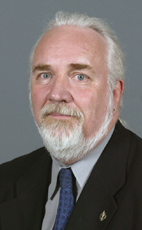
House of Commons photo

Crucial Fact

  • His favourite word was police.

Last in Parliament November 2005, as Independent MP for Surrey North (B.C.)

Won his last election, in 2004, with 44% of the vote.

Statements in the House

Petitions November 2nd, 1999

Mr. Speaker, I am pleased to present the latest instalment of this petition on behalf of Diane Sowden of Coquitlam, British Columbia. The petition contains the names of some 7,100 citizens. It brings the total to some 11,500 Canadians who are calling on parliament to enact legislation raising the age of consent from 14 years to 16 years for sexual activity between a young person and an adult.

Young Offenders Act November 2nd, 1999

moved for leave to introduce Bill C-297, an act to amend the Young Offenders Act.

Mr. Speaker, I have the pleasure to reintroduce the bill formerly known as Bill C-260, an act to amend the Young Offenders Act, to make the offence set out in section 7.2 of the Young Offenders Act a hybrid offence.

I appreciate that the Minister of Justice has recognized the value of this legislation as it is incorporated in its entirety in government Bill C-3.

I am forced to keep my bill alive as it has received the support of the majority of members of the House. As well, it is my bill that keeps the clock ticking to force the government to deal with this issue. There is no guarantee that Bill C-3 will even pass successfully from this place or that it will pass in its entirety with the issue raised by my legislation.

The bill was a votable item in the previous session. On May 25, 1999 it was referred from this place to the Standing Committee on Justice and Human Rights. The bill is in the same form as it was in the first session of this parliament. Pursuant to our present rules, I am requesting that it be returned to the position it held prior to prorogation.

(Motions deemed adopted, bill read the first time and printed)

Petitions November 1st, 1999

Mr. Speaker, pursuant to Standing Order 36 I wish to present a petition from Mrs. Nancy Caldwell of Middleton, Nova Scotia.

Mrs. Caldwell has collected some 6,700 signatures from her fellow citizens. They are requesting that parliament enact legislation providing for tougher penalties to be meted out for those who commit sexual assaults against minors.

Nisga'A Final Agreement Act November 1st, 1999

Madam Speaker, I thank my colleague for his point of order.

There is a provision recognizing the supremacy of the charter of rights and freedoms, but it is clear that paragraph 13 states that federal and provincial laws take second place to this agreement. The agreement must prevail whenever there is an inconsistency or conflict between the agreement and our provincial or federal laws.

I would now like to illustrate some of my concern over this provision which retains primacy of the law to this agreement.

I would like to refer to chapter 12 of the agreement. Chapter 12 covers the administration of justice. I note that in paragraph 1 the Nisga'a government has the power to provide a Nisga'a police service. That is no problem as this provision has been permitted on a number of our aboriginal lands across the country.

My concern is with paragraph 4(a)(iii), which provides that the Nisga'a people will be permitted to create laws regarding the use of force by members of the Nisga'a police service as long as those laws are in substantial conformity with provincial legislation. I am concerned that the agreement is limited to require the Nisga'a laws only to conform to provincial legislation.

There is substantial and effective law on the use of force by police officers within the Criminal Code of Canada. There appears to be no requirement for the Nisga'a to conform to the federal law in this regard.

This surely cannot be the intent of the government. Section 25 of the criminal code provides our peace officers with statutory authority in the use of force while administering and enforcing the law. This section protects peace officers across Canada, but there is a question as to whether it will protect the members of the Nisga'a police service should the Nisga'a government go that route.

Furthermore, I wonder whether the Nisga'a people will be at risk if we do not have the same legislated rules for the utilization of force by Nisga'a law enforcement personnel. Will members of the Nisga'a police service have broader or greater powers in regard to the use of force than is presently provided for within the criminal code?

This whole section on the administration of justice makes me wonder whether the federal position was asleep at the switch in the drafting of the agreement. As I have just stated, there is no mention of ensuring that federal law with respect to the use of force is maintained.

There also does not appear to be any provision to recognize federal police officers who in the course of their duties are required to operate within Nisga'a lands. Paragraph 15 of this section recognizes the possibility of a “provincial or other police constable” performing duties within the Nisga'a lands, but there is no mention of federal police officers.

When reading the agreement in its totality it often refers to provincial and municipal police services, but it does not mention our federal law enforcement personnel. The agreement recognizes and accepts the need for these provincial and municipal police services to, at times, effect duties and responsibilities on Nisga'a lands. I can readily see the issuance of subpoenas, arrest warrants and investigative inquiry causing outside police officers to enter Nisga'a territory, but I can also see the necessity of federal officers, such as the RCMP, to do the same. I can immediately think of the RCMP Prime Minister's protection detail operating within the Nisga'a lands should the Prime Minister ever decide to visit that area of this country. I can think of RCMP officers involved in drug investigations and customs and immigration work, perhaps organized crime and white collar crime.

I am concerned that the agreement seems to be silent in this regard. Is the federal government abdicating its responsibility for federal policing under this agreement? If not, why is the federal aspect of policing not specifically included within the agreement?

This legislation cries out for review, debate and amendment. Initial indications from the government lead us to conclude that changes are just not to be considered. The Nisga'a people themselves will be disadvantaged by this Liberal government policy. The people of British Columbia will be negatively affected. The precedence of this legislation will in turn affect other native bands and citizens of other provinces.

I urge members of the government to reflect on what they are doing. Too often members on the opposite side of this place take their marching orders from the Prime Minister's office and cabinet and fail to stop inappropriate and ill-advised legislation from passing into law.

I conducted a poll in my constituency of Surrey North. Admittedly, it was not a scientific poll. However, 83% of the respondents were opposed to the current form of the Nisga'a agreement. A full 77% were completely opposed to the process which was employed to get the agreement.

I am glad the government, in its wisdom, which I question, will send the aboriginal affairs committee to British Columbia. I think the government will have its eyes opened because the numbers which I have quoted are reflective of the feeling in British Columbia.

I thank the House for providing me the opportunity to express these concerns over Bill C-9, the Nisga'a final agreement act.

Nisga'A Final Agreement Act November 1st, 1999

Madam Speaker, I am most pleased to have the opportunity to speak today to the historic Nisga'a final agreement.

As a member of parliament from British Columbia, my constituents will certainly be impacted in a number of ways on the issue which we are now debating.

We have already seen emotional and antagonistic reactions to the Nisga'a final agreement. I encourage all members in this place to please study the agreement in a calm and rational manner and to please spend the time and the effort to properly review the debate and the process of the legislation. It really does us no good to become involved in heated exchanges and it certainly does our constituents no good if we do not properly review what is now before us.

The legislation appears to be the start of what may become a series of agreements with a number of our aboriginal citizens of this country. As a precedent we must ensure that what is being done is right for all Canadians, both the Nisga'a who will be most acutely affected by this agreement, and the non-Nisga'a who will also be influenced in a number of ways.

I note the title of what we are currently being asked to study. It is called the Nisga'a final agreement. That bothers me. It does not have to be the final agreement. With all due respect, changes can be made and have to be made. This is an agreement between the Nisga'a people, the province of British Columbia and the Minister of Indian Affairs and Northern Development. The agreement is binding on the parties, but the Minister of Indian Affairs and Northern Development only recommends agreement to this place.

It is up to each and every member of parliament now to decide whether to accept this agreement, whether the agreement requires change or whether the agreement is unacceptable and must be rejected. As it states within the agreement, the former minister only warranted her participation to the extent of her authority. She signed the agreement as the Minister of Indian Affairs and Northern Development. She had no more authority than that. I realize that she may well have had cabinet support for her actions, but she definitely was not acting on behalf of this place. That is why we are now tasked with review, comment and a vote. We should not and cannot shirk this responsibility.

As I said, the title, Nisga'a final agreement, troubles me. We are not being presented with a fait accompli. This legislation is just like any legislation that comes before us. We must do our job and ensure that it is correct and proper. We must ensure that it accomplishes our aims in the fairest and most effective manner.

As I stated above, the agreement is between the Nisga'a, the province of B.C. and the Minister of Indian Affairs and Northern Development. Those parties need only ratify any changes or amendments made by this place. In fact, the agreement makes specific reference to amendments as decided by the parties.

I will now express the concerns I have with specific parts of this agreement.

Canadians will hear a lot about paragraph 13 of chapter 2 concerning the general provisions of this agreement. It states:

Federal and provincial laws apply to the Nisga'a Nation...but:

(a) in the event of an inconsistency or conflict between this Agreement and the provisions of any federal or provincial law, this Agreement will prevail to the extent of the inconsistency or conflict.

Conditional Sentencing October 29th, 1999

Mr. Speaker, in 1995 the government introduced conditional sentencing and despite warnings from the Reform Party it refused to limit the “serve your sentence at home” policy to first-time, non-violent offenders.

Despite the inconsistent and lenient treatment of the provision by the courts, the government still refuses to restrict this legislation. Like most problems with our justice system, the government prefers to force the courts to resolve issues without direction from parliament.

This week a 42 year old individual pleaded guilty to conspiracy in trafficking cocaine. Mr. Justice Norman Douglas called cocaine an insidious drug which ruins people's lives and results in more spinoff crime. But did he remove the individual from the community to protect the citizens? No, he imposed an eight month sentence at home. The individual must obey a 9 p.m. curfew, unless working, and report to police every Saturday morning. That sort of punishment does nothing to discourage individuals from trafficking in serious drugs. I even wonder if that individual can avoid the curfew by arguing that the selling of cocaine is a form of work.

Canadians have waited for over four years for the government to address its screw-up on conditional sentencing, but unfortunately the government fails to admit its mistakes.

Petitions October 27th, 1999

Mr. Speaker, the second petition contains 110 signatures from people in my constituency. They request that parliament oppose any effort to exclude references to the supremacy of God in our constitution and laws.

Petitions October 27th, 1999

Mr. Speaker, pursuant to Standing Order 36 I present two petitions.

The first one contains 50 signatures from people either working or living in my riding. They ask the government to implement the decision of the Canadian Human Rights Tribunal on equal pay for work of equal value.

Surrey Spirit Of Youth Mural Project October 25th, 1999

Mr. Speaker, I wish to acknowledge the work of the youth involved in the Surrey Spirit of Youth Mural Project.

Last summer over 50 students designed and painted 16 murals throughout the city. The project has now produced 23 murals depicting various themes reflective of our community, including the environment, multiculturalism, heritage and the celebration of youth.

The prime mover behind the project is the Surrey Crime Prevention Society under Jim King and Peter Maarsman. The project visionary and driving force is Marc Pelech, a high school art teacher.

Many local organizations and businesses contribute materials and funding, with support from all levels of government. The Spirit of Youth mural project is a good example of how people with vision can come together with business and government to enhance the communities we live in. I invite members to visit its website at www.surreycrime.bc.ca and click on the mural project.

My congratulations to all those involved, especially to the young artists who spent the entire summer, much of it under tarps, providing us with 16 more reasons we are proud to call Surrey home.

Justice June 11th, 1999

Mr. Speaker, the solicitor general claims to be getting serious about drugs in the prisons.

Three inmates from the women's prison in Kitchener were recently convicted for conspiring to traffic in the penitentiary. One got nine months and the other two got one day each to be served currently with sentences already being served.

If the solicitor general is so serious about the prison drug problem, I ask the parliamentary secretary if his boss considered speaking with his colleague, the Minister of Justice, about mandating sentences for drug trafficking in prisons to be served consecutively to sentences already being served.