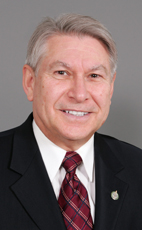
House of Commons photo

Crucial Fact

  • His favourite word was terms.

Last in Parliament September 2008, as Liberal MP for Thunder Bay—Rainy River (Ontario)

Lost his last election, in 2011, with 22% of the vote.

Statements in the House

Publications Assistance Program December 8th, 2006

Mr. Speaker, Canada Post has recently announced that it will not be renewing its funding of $15 million for the publications assistance program. This cut will cause severe hardship for hundreds of small papers across the country as they are not eligible for support, such as those provided to magazines, film and television. This cut takes direct aim at rural communities and will stop many presses permanently.

Will the Minister of Canadian Heritage immediately address this punishing funding cut?

Tourism Industry December 8th, 2006

Mr. Speaker, the recent announcement by the government of its intention to cancel the GST visitor rebate program is a serious blow to the tourism industry in the ridings of rural Canada.

The government claims that only 3% of visitors to Canada take advantage of this program, but the facts show that a majority of tourist outfitters in northwestern Ontario use the rebate system. The finance ministry does not track GST rebates that are issued by tourist camps and tour businesses, so it is impossible for it to know the true participation rate.

U.S. tourists visiting my region alone generate $396 million of economic activity each year and employ more than 12,000 people in the area. The cutting of this program represents yet another setback to an industry that is already challenged by decreased visits due to the high Canadian dollar and increasing border security.

I call on all members of Parliament to support our tourism industry by voting against the cancellation of the GST visitor rebate program.

December 7th, 2006

Mr. Speaker, if the government has given more money to CATSA, then the government should be able to live up to its part of the agreement, which was for full operating costs.

If there is a shortfall that was not addressed in the initial agreement, the Thunder Bay Airport Authority advises me that CATSA had still indicated that it was on for full operating costs.

If the government is doing such a wonderful job, I believe the hon. member should take it to the minister and ask him to go to CATSA to see why it is not living up to its part of the agreement.

I believe that rather than compel the airport authority to reinstate an airport fee, a fee that very few airports around the world do not have, with the exception of Thunder Bay airport which is one of the few airports that does not have a fee, and then it is taxed, I am sure the hon. member will understand that this could happen to any airport at any time in western, eastern or northern Canada.

December 7th, 2006

Mr. Speaker, I am pleased to have this opportunity to express my concerns about the shortfall of funding for the Canadian Air Transport Security Authority to provide security services at Canada's airports.

Of particular concern to me is the Thunder Bay International Airport in my riding of Thunder Bay—Rainy River. This airport serves nearly 600,000 passengers each year. It is the only airport in Canada that does not charge an airport improvement fee to its passengers. In fact, it is the lowest cost NAS airport in Canada. However, this notable achievement has recently been put at risk.

The airport has just been advised that CATSA will not be paying for the full operating costs of the hold baggage screening system that was installed earlier this year. Annual operating costs for the baggage screening system are expected to be $250,000 per year. However, CATSA has indicated that it can only afford to pay $70,000 per year of the costs.

This shortfall of funds has left the airport holding the bag. As a result, the airport will be stuck with the expenses, despite the fact that airports are not supposed to be responsible for security expenses.

CATSA was set up in 2002 to provide air transport security. An air security tax was implemented to pay for these much needed services to ensure security for air travellers in the post-9/11 reality. The government has raised hundreds of millions of dollars from this fee. Revenues for the 2006-07 year are projected to reach $365 million.

In addition, there are currently $375 million in excess revenues in the fund, money that is no doubt collecting a tidy sum in interest revenues.

The way I figure it, at a minimum of 3% interest, the government is earning an additional $11,250,000 this year alone on that fund, but it will not give the Thunder Bay airport $180,000 to pay its bills.

I am very distressed that the government is downloading air security costs to our airports. In the case of Thunder Bay airport, this extra expense will require a 24% increase to raise the funds required to cover the cost. That increase will result in higher travel costs for Thunder Bay passengers, passengers who are already paying the air travellers security charge for their tickets. In essence, this is a double tax. This is more than shameful, I am sure the hon. member will agree with me.

But wait, it gets worse. As a not for profit organization, the Thunder Bay International Airport Authority must charge its customers, the airlines, in order to make money to pay operating expenses.

I am sure the government understands the basic principles of finance. In order to pay expenses, we must raise the money to do so. Spending more money than we make is not good fiscal policy.

The airport is now facing an increase of its expenses and, therefore, it must increase its revenues to pay those bills. The catch is this: the government charges rent to the airport authority based on its gross revenues each year. That is right, gross revenues. Therefore, by adding $180,000 to the airport's expenses, the government has also forced the airport to add that amount to its revenues.

Each dollar of increased revenue effectively carries a 1% surcharge to Transport Canada. and that surcharge is as high as 12% at Canada's largest airports, like Toronto Pearson International Airport.

This situation is absolutely hideous. The government shortchanges the airports by sticking them with the bill for security costs and that funding shortfall results in a windfall for the government.

Criminal Code December 6th, 2006

Mr. Speaker, the issue of the addictive properties seem to be well-documented in numerous jurisdictions. When we talk about the use in certain restricted areas, why do we think we could actually tolerate even that level of the addictive properties of VLTs?

Softwood Lumber Products Export Charge Act, 2006 December 4th, 2006

Mr. Speaker, I would like to be recorded as voting in favour.

Airport Security November 28th, 2006

Mr. Speaker, the Canadian Air Transport Security Authority has informed the Thunder Bay airport that it will not be paying the full costs of its screening system. CATSA will only pay $70,000 of the required $250,000 because it does not have enough funding from the government to pay its own expenses. This requires the airport to increase fees by 24%. The minister currently has $375 million in a fund for air security.

When will the Minister of Finance provide CATSA with the money needed to pay for air security at Canada's airports?

The Québécois November 27th, 2006

Mr. Speaker, right now many surveys are being done around the country that seem to be either pro or con depending on where one is. Could the hon. member tell the House if he feels this is a welcoming gesture, one that would be helpful toward sending the signal of unification to the rest of the country?

Air Security November 23rd, 2006

Mr. Speaker, the Canadian Air Transport Security Authority has told the Thunder Bay Airport that it will not be paying the full operating costs for the whole baggage screening system that was recently installed to comply with security regulations. CATSA will pay only $70,000 per year of the required $250,000 per year because it does not have enough funding from the government to pay its own expenses.

The Minister of Finance has an additional $375 million in air security revenues in a bank account while the government shortchanges Canada's airports instead of paying the bills.

The Thunder Bay Airport must now hike fees 24% to pay to operate CATSA's equipment. What is worse, the extra costs mean a 13% increase on rents payable to the federal government.

I call on the Minister of Finance to provide CATSA with the money it needs to provide and pay for air security at our airports.

Petitions November 23rd, 2006

Mr. Speaker, I am presenting today a petition from the people of Thunder Bay—Rainy River concerned about cuts to literacy and requesting, in a very positive manner, the reinstatement of funding for literacy.

The riding Thunder Bay—Rainy River has 16 municipalities and 11 first nations and these cuts affect all of them. We are asking the government, in its economic statement today, to ensure that literacy is restored to its previous level and, indeed, to go beyond that.