
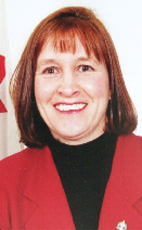
House of Commons photo

Crucial Fact

  • Her favourite word was money.

Last in Parliament May 2004, as Canadian Alliance MP for South Surrey—White Rock—Langley (B.C.)

Won her last election, in 2000, with 60% of the vote.

Statements in the House

Speech From The Throne October 15th, 1999

Madam Speaker, I, like some of my other colleagues, will begin by pointing out to Canadians and to the members of the House an issue that was not addressed in the Speech from the Throne: the state of Canada's airline industry.

We were all inundated over the summer months with positions both for and against changes in the airline industry but the government remains silent. There was absolutely no mention in the throne speech of the crisis in the airline industry. It is very clear that major changes will be coming. These are the questions I have. Where is the government's vision for the future of the Canadian airline industry? Where does the government feel Canadians want to see the airline industry go?

It is the government's apparent lack of vision that causes concern. The government seems to always be responding or reacting to situations rather than working out some of the problems or finding solutions in advance. Unfortunately its history of popping up into the issues and trying to influence the private sector is usually done for the wrong reasons.

Once the dust settles over the current airline industry situation, government and parliament must work together in a non-partisan fashion. We must work together with the stakeholders to develop a clear blueprint for Canada's airline industry in the 21st century.

I do not think there is a Canadian who has not heard of Onex, Air Canada and Canadian Airlines International. Canadians accept the fact that Canadian Airlines International is in trouble. I think everyone is aware of the Onex offer to merge the two airlines to stabilize Canada's airline industry under one major airline.

I do not think there are many Canadians, and I am one of them, who are aware of what Air Canada's counterproposal may be. However, I would suggest that one way or another it looks like we will only have one national airline in Canada. More importantly, parliament must play a role and it must be done in a non-partisan fashion.

The Reform Party believes that the role of government should be to facilitate a private enterprise solution to this problem. That means less government regulation not more. It means that the government must establish the priority of protecting the interests of Canadian consumers at both the national and regional levels, the interests of the Canadian taxpayer, the interests of the airline employees and the interests of those who invest in Canada's airline industry.

Maybe a starting point would be a comparison with the airline industry in Australia. It is interesting that in Australia where the demographics and the geography is very similar to Canada and where it has similar concerns and issues that Australia can have two profitable national airlines. Maybe there is something that we can learn from Australia's airline industry.

We also have to look at what role this government and previous Liberal and Conservative governments played in bringing our airline industry to the point where it is today. More importantly, the issue we have to address is how to fix the problem.

I will move on from the airline industry because there are other transportation issues in the country that must be addressed. Canada is on the brink of entering a new century. We can either enter the new century boldly or we can enter it timidly and in response to other situations around the world.

The brief mention of infrastructure programs in the throne speech leaves a lot of questions in the air. It mentions that the federal government will work with the provinces and the private sector over the next year to develop a new five year plan for improving the infrastructure. I think that is very short sighted of the government and of our country.

We have to take a much larger and longer vision of where we want to go with our infrastructure and on how we are going to get there. We would be remiss if we were not looking in ten 20-year cycles as opposed to only looking five years down the road. Not only is that true for our infrastructure program but it is also true for our national highway system.

Government has studied the problem of Canada's highway system for years. It really is time to quit studying and to do something about it. It is time for the government to implement a national highway strategy program. It is also time for the government to invest more than the 10% it collects in gas taxes into our highway infrastructure. It is time that the government started recognizing that highways and the ability to move people and goods is very important. It is important for rural Canada, it is important for urban Canada and it is important for the well being of all Canadians that our transportation networks are sound, well planned and certainly in good condition.

One of the issues that is very dear to my heart is the issue of trade corridors. A large part of the reason for Canada's economic improvement over the last years is due to the massive increase in trade, mainly with the Americans. I do not know that Canadians understand or realize that over $1.5 billion worth of trade happens across the Canada-U.S. border every single day of the year.

I am really pleased to see that the Liberal government has decided that trade is good for Canada, but if this growth is to continue, if we are to continue to maximize the future of our trading partners on the North American continent, our infrastructure must grow to accommodate that trade.

It is not just good enough to have trade agreements. It is not just good enough to have agreements among countries and documents that are signed between the leaders. We have to be able to move the goods that we have agreed to trade. We have to make sure that the movement of those goods is done in an efficient and timely manner.

I do not think we can ignore rail transportation, particularly the movement of grain across our country. That has been an issue for a number years and it remains an issue that has to be resolved. Two reports have been produced for parliament to consider, the Estey and Kroeger reports. I look forward to the coming years and seeing this happen.

There are also environmental concerns. If the Minister of Environment is concerned about vehicle emissions then I would suggest that he go to any major commercial border crossing. He could go down to the Ambassador Bridge between Windsor and Detroit and see 100 trucks on either side of the bridge, idling for hours waiting to fill out unnecessary paperwork at customs. He could watch the fumes from their diesel engines billow into the air and check why Canadian and American archaic cabotage rules are forcing many trucks to travel on the continent empty. It is time to address some of these issues.

More important, the government's plan of talking with the provinces about highways is not just good enough. We need to develop a seamless transportation system involving our highways, our railways, our waterways and skies to move goods and people in the most efficient manner not on a national basis but on a continental-wide basis. Only then can we ensure that we are looking after the health, safety and economic well-being of all Canadians.

Privilege October 14th, 1999

Mr. Speaker, I am prepared to table this information.

Privilege October 14th, 1999

Mr. Speaker, the CSIS Act clearly limits what information CSIS can collect, generally restricting it to information that may on reasonable grounds be suspected of constituting threats to the security of Canada. I would suggest that the CSIS collection of all this information was improper.

As limiting as the laws are restricting the ability of CSIS to collect information, they are equally restrictive with regard to the ability of the service to disclose any information collected. Section 19 of the CSIS Act severely restricts the information it may disclose and nowhere in this section does it permit the disclosure of information to a private individual to assist his lawsuit against a member of parliament.

In addition to the CSIS Act, section 3.(7) of the human resources policy manual states that employees must not support or oppose any person, organization or product by using information obtained through their employment by the service except when authorized by the director. It is quite clear that the disclosure of this information to the plaintiff was in violation of the service's own policy.

Unfortunately CSIS was not satisfied with the role in assisting with the preparation of the lawsuit against me. They proceeded to directly involve themselves in the case in what can best be described by the following: In July 1998 Madam Justice MacLeod of the Ontario court ordered that the plaintiff must answer 38 questions that he had refused to answer at discovery.

Immediately following the court's granting of the aforementioned order, counsel for CSIS filed a certificate of objection signed by Jim Corcoran, CSIS deputy director of operations, with Madam Justice MacLeod pursuant to sections 37 and 38 of the Canada Evidence Act. In that certificate Mr. Corcoran claimed that disclosure of the information requested in 32 of the 38 questions which were ordered to be answered would be “injurious to the national security of Canada”. The remaining six questions were considered personal.

In July, I was forced to challenge the validity of that certificate through a notice of application filed in the federal court.

In August, Mr. Justice Teitelbaum of the Federal Court of Canada issued an order which, among other things, instructed that cross-examination of the affidavit should occur prior to October 5, 1998. CSIS filed the affidavit by Barry Denofsky, director general of analysis and production, on September 11. However, in direct contravention of the order of Mr. Justice Teitelbaum, they refused to make Denofsky available for cross-examination.

On October 5, Mr. Justice Teitelbaum ruled that CSIS must make Denofsky available for cross-examination and costs were awarded against CSIS. Mr. Denofsky appeared for cross-examination. However he refused to answer almost all questions of substance, 51 in total.

My lawyer filed a notice of motion requiring CSIS to produce Mr. Denofsky for further cross-examination, requiring him to answer the questions he had previously refused. The day before the federal court hearing on January 14, almost 11 weeks after Mr. Denofsky's cross-examination, CSIS provided responses to 39 of the 51 questions they previously had refused to answer.

On January 15, 1999, the hearing before Mr. Teitelbaum took place and Mr. Justice Teitelbaum ruled on March 5. He ordered CSIS to answer an additional three questions, which meant out of the original 51 questions that CSIS had refused to answer only nine of them, less than 20%, were deemed to be valid objections. Once again costs were awarded against CSIS.

It is clear from the behaviour of CSIS that its main objective was to drag out the proceedings and deny me the opportunity of having this case heard in court. However the delaying tactics of CSIS were only part of the process. The content of its responses was even more troubling, which I have included in the documentation.

In answering a question about the information the service passed to the plaintiff they neglected to mention the 107 press releases. CSIS also stated that it had passed the video tapes to the plaintiff in response to a request from him. However, as I have mentioned before, the plaintiff in discovery said that they were provided to him without his asking.

In addition it mentioned that only one CSIS policy document was passed to the plaintiff. Yet the very affidavit that this discovery was about lists five different CSIS policy documents. In other words, of the three points that CSIS made in this answer all three of them were incorrect.

I cannot imagine, after making inquiries, that any member of a professional intelligence agency would be so incompetent that they could possibly inadvertently overlook all of this information, including the very affidavit that was being reviewed.

The last piece of evidence that I will mention concerns the very certificate of objection that CSIS filed. When CSIS filed the certificate on July 7, 1998, the deputy director of operations, Jim Corcoran, certified that he had carefully reviewed and considered all the questions set out in that statement. He then certified that “the information sought by this motion, either by confirmation or denial of the said information, would be contrary to the public interest as it would be injurious to the national security of Canada”.

One such question was where the plaintiff refused to state during discovery whether or not it was normal that a full scale security investigation be done for people getting their security clearance renewed. Despite the claim of CSIS that the answer to this question would be injurious to the national security of Canada, I have obtained the answer to this question from the Treasury Board's public website, listed under personal security standards.

In conclusion, Mr. Speaker, I believe that I have provided you with sufficient evidence to find that there is a prima facie case of contempt against the Canadian Security Intelligence Service. As an opposition critic who has previously been critical of CSIS, its role in this case has effectively prevented me from raising concerns about it for three and a half years.

In addition, CSIS has sent me and all members of the House a clear message that it is keeping track of us, watching what we do and listening to everything we say, and that it is prepared to pounce if it objects to the way in which we conduct ourselves. It has also shown that it is prepared to misuse the extraordinary authority that parliament has given to it to put us in an unwinnable situation.

The premier of Quebec launched an inquiry when officials in his government improperly released information about a federal member of parliament. While not raised in a question of privilege it was considered wrong and an inquiry was ordered. The National Assembly of Quebec chose to take action against this activity, and this parliament should do the same in the case concerning CSIS.

In my case CSIS conducted certain activities and utilized significant resources against me. The evidence shows that CSIS certainly took a role in orchestrating the lawsuit against me. As I have shown, CSIS improperly collected information and then subsequently disclosed that information to a third party in clear violation of CSIS policy.

I have shown that CSIS abandoned the traditional non-partisan role of the public service by taking an active role in the preparation of a lawsuit against an opposition member of parliament, including having its legal counsel provide the plaintiff and the plaintiff's lawyer with advice.

Finally, I have shown that CSIS has misused its extraordinary authority to protect national security, that it was twice sanctioned by the federal court for misconduct, and that it deliberately misled the court to frustrate my ability to resolve the lawsuit.

One of the basic tenets of democracy is that opposition politicians have the ability to oppose the government without fear of intimidation. I suggest that the Canadian Security Intelligence Service has tried to introduce intimidation into Canadian politics.

I believe it is vital that this form of intimidation is stopped immediately. Opposition critics need to know that they can fulfil their function of criticizing a government department without fear that the department will retaliate by orchestrating a lawsuit against them.

I therefore encourage you, Mr. Speaker, to make a precedent in this case by finding the behaviour of CSIS in this case in contempt of the House. I will provide the document I have here to support this claim. If you find that there is a prima facie case of privilege, I will move that this issue be sent to the appropriate committee for consideration.

Privilege October 14th, 1999

Mr. Speaker, I rise today to make what I consider to be a very serious question of privilege.

This question of privilege arises from a lawsuit that was launched against me in 1996 but does not pertain to the actions of the individual who filed the lawsuit. Rather it concerns the activities and conduct of a government agency, the Canadian Security Intelligence Service, during the course of this lawsuit.

To begin, I want to say that I do not question the established precedent that prevents a member from using privilege to guard against the lawsuit for what is said outside of the House. This question of privilege has absolutely nothing to do with that. Instead, I will provide prima facie evidence to the Chair that demonstrates how the conduct and activities of CSIS regarding this case form what I believe to be a new and disturbing method of intimidation of a member of parliament.

I will show that CSIS improperly collected information and then subsequently disclosed that information in clear violation of CSIS policy to a third party. I will show that CSIS abandoned the traditional non-partisan role of the public service by taking an active role in the preparation of a lawsuit against an opposition member of parliament, including having its legal counsel provide the plaintiff and the plaintiff's lawyer with advice.

Finally, I will show that CSIS misused its extraordinary authority to protect national security, was twice sanctioned for misconduct and deliberately misled the court to frustrate my ability to resolve the lawsuit.

Thus the gist of my question of privilege is the deliberate effort of CSIS to intimidate me from speaking freely in the House of Commons and from performing my role as official opposition critic.

I raise this issue today because this is the first opportunity to do so since the completion of my court case. Although the standing orders state that the sub judice convention only applies in a civil lawsuit during the trial days of the proceedings, I undertook an agreement with the Board of Internal Economy not to utilize this lawsuit for political purposes. At the time I entered into that agreement, I was unaware of the role that CSIS had played in the case up to that time, nor could I possibly have envisioned the role that CSIS would subsequently take in this case. I have lived up to my obligation with the BOIE and have bided my time until today, my opportunity to raise this issue.

As I previously mentioned, this form of intimidation is unprecedented. However in Erskine May, 21st edition, page 115 states that an offence for contempt “may be treated as a contempt even though there is no precedent of the offence. It is therefore impossible to list every act which might be considered to amount to a contempt, the power to punish for such an offence being of its nature discretionary”.

On October 29, 1980, a Speaker of this House had this to say:

—the dimension of contempt of parliament is such that the House will not be constrained in finding a breach of privilege of members, or of the House.

This is precisely the reason that, while our privileges are defined, contempt of the House has no limits.

Let me provide this brief summary of the evidence in the documents that I have before me that confirms their efforts to intimidate me. I am prepared to read it all but would prefer just to provide it to you, Mr. Speaker. Almost all the information contained in the plaintiff's statement of claim originated from CSIS. In fact the statement of claim contains a copy of my press release which bears the fax identification of the former solicitor general which was sent to CSIS.

The plaintiff's affidavit of documents consists of 107 documents which included some of my press releases, as well as newspaper clippings, radio and television transcripts from media outlets across the country. Every one of them came from CSIS, some of them before and some of them after the commencement of the lawsuit.

The plaintiff also included four video tapes of media reports, all of which were recorded by CSIS and forwarded to the plaintiff. In a discovery of the plaintiff conducted on February 17, 1998, the plaintiff admitted in regard to the video tapes that “they were provided to me without my asking”. Both the plaintiff and his lawyer admitted during the proceedings that CSIS assisted the plaintiff in the preparation of his lawsuit.

In a letter dated July 20, 1998, from the plaintiff's lawyer to my lawyer the following passage is included: “certain members of CSIS have co-operated with the plaintiff in preparation of his case”.

At a discovery of the plaintiff at the federal court on November 3, 1998, the plaintiff acknowledged that part of the reason he had contacted a senior manager at CSIS was to discuss the means by which he would proceed with his lawsuit. As well, at that same discovery the lawyer for the plaintiff admitted that “the legal counsel for CSIS had spoken with me from time to time, and I am sure with the plaintiff from time to time, trying to give us advice”.

Thus it is clear from these comments that CSIS played a role in the preparation and conduct of the lawsuit against me. What is of particular concern is the fact that throughout the discoveries it was confirmed that it was Mr. Tom Bradley who played the key role in providing all this information to the plaintiff. This is of concern because Tom Bradley is, or was until recently, a senior member of the CSIS secretariat.

On the CSIS organizational chart the secretariat answers directly to the director of CSIS and among their duties was liaison between CSIS and the solicitor general's office.

Airline Industry October 13th, 1999

Mr. Speaker, yesterday the government failed to provide Canadians with its vision of our airline industry in the new millennium. One can only assume that it does not have one. Why has the government failed to provide Canadians with some indication of its vision of Canada's airline industry in the 21st century?

Airline Industry October 13th, 1999

Mr. Speaker, yesterday the throne speech failed to mention the massive restructuring that Canada's airlines are about to face. Air Canada and Canadian Airlines were in merger discussions six months prior to section 47 being invoked. Could the minister please explain to Canadians why he invoked section 47 when he did?

White Rock, B.C. June 9th, 1999

Mr. Speaker, yesterday morning the city of White Rock suffered a once in a lifetime storm when 70 millimetres of rain fell in less than six hours.

This intense rainfall, coupled with a hail storm, was more than the city storm drainage system could handle and, as the torrents roared downhill to scenic Marine Drive, dozens of homes, cars and businesses were flooded. The city and local RCMP detachment responded quickly, rescuing a number of residents trapped by the flash flood.

However, the people of White Rock are resilient. They immediately began to clean up their homes, their businesses and their city. Schools that were closed to flooding yesterday are already open today.

The province of B.C. has promised disaster financial assistance. I hope that those who suffered losses yesterday receive the required support quickly so they can get back on their feet.

Preclearance Act June 4th, 1999

Mr. Speaker, it is no surprise to any of my colleagues that I would be speaking on the preclearance bill. The movement of goods and persons across the Canada-U.S. border is a pet project of mine. I have been working with the Cascadia trade corridor project for almost two years now and have appreciated the preclearance that has been a pilot project at the Vancouver airport.

Although I share the concerns of my hon. colleague, that the bill should have and could have been introduced through the House of Commons rather than the Senate, which is an unelected, unaccountable body, I do feel that the legislation is very dearly and badly needed to advance the free trade that has been developed between Canada and the United States, as well as making it easier for our trading partners from countries other than the United States and Canada.

This preclearance bill will make it much easier for the international community to use Canada as a gateway to its trade in the U.S. or to use Canada as a gateway from the U.S. back home. It is essential that we make the movement of people, who have legitimate business to carry on, or a legitimate desire to visit Canada or the United States, as unencumbered as possible.

One of the concerns people express is that travellers would fall under the Canadian Charter of Rights and Freedoms, and this preclearance bill addresses that. It allows American customs and immigration officers to have a degree of law enforcement of the American act on Canadian soil, but with limitations. I think that would meet the concern that some Canadians have that the Canadian Charter of Rights and Freedoms would be somewhat undermined.

I think this preclearance bill does deal with the issue. For anyone who is concerned about the heavy arm of the U.S. authorities, that would be minimized. It is not to say that we will not see the odd incident that we have seen in the past happen, but I think the bill clarifies the role that U.S. officials would have in Canada and reciprocally what role Canadian officials would have in the United States.

I would like to share with Canadians, who might be watching or reading Hansard on the Internet, that we cannot underestimate the importance of our trade with the United States. There is over $1.4 billion worth of trade between Canada and the United States every single day. The free trade agreement accounts for about a third of Canada's GDP, which means a lot of jobs. It means a lot of Canadians are working today because of the trade arrangement we have with the United States.

Canadians can also appreciate that part of that ease of trade is the ease of movement of persons and goods across the border. We in the House have a responsibility to make sure that everything humanly possible is done to make sure that the trade corridors have the right infrastructure and the right legislation to allow for the movement of trade, people and goods, that will allow this free trade agreement with the United States, and potentially our NAFTA agreement with Mexico, to reach the potential that is out there. It means jobs for Canadians. It means an increasing standard of living for Canadians. Hopefully, it means lower taxation and a greater awareness of what the North American continent has to offer to the international trade community.

The preclearance act is a start. My understanding is that this preclearance act is primarily for airports. Although I think it is very important that it be started with the air industry because it has already shown that it works very well, we, in particular on the west coast with Amtrak, would like to see this brought in very quickly in terms of looking at train services between Canada and the United States. We could then continue to promote the “two nation vacation” concept that is being promoted by Cascadia and, I would imagine, other trade corridors are also looking at it. We could then promote the concept of international travellers being able to land in our country and getting preclearance in any mode of transportation. This would allow our customs and immigration agencies to highlight their time and pinpoint their efforts on the 20% of problem cases.

Preclearance allows far more information to be shared with our authorities before they transfer across the border. It allows customs and immigration officials at the border to concentrate on those individuals who may create the problems that we are all concerned about, whether it is illicit drugs, illicit goods or illegal immigration flowing across the border. This would allow both Canada and the United States to concentrate their efforts and resources on the problem cases.

Hopefully this preclearance will be brought through not only for air, but for rail and potentially trucks. It would be great to see trucks enter some kind of preclearance which could take place outside of the border corridor or the border infrastructure. What we see now is a congestion of trucks and trains having to stop at the borders. This has caused a problem for Canada in trying to meet its pollution requirements under its Kyoto obligations.

A lot of pollution is caused by the delay and congestion in the movement of people and goods by truck traffic. A lot of pollution we see every day is caused by trucks lining up and being put in park or neutral while they wait to proceed either on city streets or across the border at various check points. To have preclearance for people who are not a problem in an area that is not consuming time at a congestion point would be such a great thing for the advancement of our trade corridors.

The preclearance act is a good first step. I am disappointed that it came not through the House of Commons but through the Senate. Barring that, I look forward to legislation that will broaden the application of the preclearance. I would like to see that it is not too long a time before these kinds of applications are added to the preclearance.

Certainly this is a first step. I look forward to supporting it and to making sure that at the Vancouver airport, at the Amtrak station in Vancouver, at the border crossings this kind of preclearance is a very effective way of moving not only goods, but people so that we can have this two nation vacation. We can have open borders and free trade that benefits all Canadians.

Canada Elections Act June 3rd, 1999

Madam Speaker, it is a pleasure to speak to Bill C-405 respecting amendments to the Canada Elections Act. I must admit there is great uncertainty with the bill. The summary states that the photograph of each candidate shall be printed on the ballot next to the name of that candidate. That would suggest that each and every one of us would have to send our pictures in and that the ballot would have the pictures of all candidates.

However, clause 2 of the bill indicates that only where there is similarity in the names of any two candidates would their pictures be on the ballot. If we are unclear as to what the bill says, imagine somebody trying to figure out at Elections Canada whether or not all our pictures are required.

I too have problems with the suggestion that Canadian voters are not smart enough to be able to identify the candidate of their choice. As we all know, on today's election ballots the party name is attached to the name. If there is a similarity in names or if one person has the same name as somebody else, there is an indication of what political party they represent. That differentiates one candidate from another.

We are asking for people to take advantage of that situation. In past elections we have had two John Turners running for a seat in the same constituency. It was done for a reason. I believe he represented the Rhino Party, which tends to take lightly the election process. I am a little concerned that the pictures that might be received to be put on ballots may not in all circumstances be pictures of a person's face. What constitutes a picture of the candidate? We are really asking for somebody to take advantage of the situation and to turn it into a joke more than a very serious process.

I do not see the reason for it. I fail to see where the pictures are going to differentiate the individuals any more than the party name differentiates them.

Another issue should be considered. Whether we like it or not, if only two individuals have pictures on a ballot of from six to thirteen people and the others do not have pictures, it draws more attention to those two individuals. Our election process has to be fair and equal to all candidates and not give one any more of an advantage over another. In some cases where two people may have their pictures on the ballot, that would automatically draw the attention of the voter to those two individuals and may exclude the others from consideration. I do not think we want to go down that path. I think it is a dangerous path to go on.

It is a question of when there is not a real problem why we need to change the process. Elections Canada works very hard in making sure that the ballots are clear and the names are listed alphabetically. That again can cause problems if people want to take advantage of it. I know someone who put a name on the ballot that basically said “none of the above and put a couple of z 's in front of it.” We have to be careful that we do not encourage that kind of attitude in making the election process a joke.

In the case of ballots there are already methods that Election Canada uses to clarify such as, as I mentioned, alphabetical order, names with clarify, using initials and using the party's affiliation. If that in itself is not clear, a person can put his or her occupation on the ballot as well.

There is plenty of opportunity to make sure there is clarity in terms of who are the candidates. Putting picture on the ballot would not help and may make the process unfair. I will be voting against this private member's bill and encouraging my colleagues to do the same.

Supply June 3rd, 1999

Mr. Speaker, I thank the hon. member across the way for some of his comments. He probably does not know, because it is not customary for his side of the floor, that on a regular basis I communicate with my constituents and ask them what they feel about legislation. I have asked them about the Nisga'a agreement and I will ask them again when it comes before the House. I honour their suggestions and their directions.

When we talk about it not being a constitutional amendment, that is up for debate. Some people feel that it is not a direct constitutional amendment that we are looking for but that it will indirectly become part of the constitution and will not be able to be changed by an order of council.

The hon. member is colouring the image when he suggests that the government can change the agreement whenever it feels like it with an order of council. That is not so. It will take the agreement of all three parties for any changes to be made. As with the Canada-Quebec accord and with immigration, it is often impossible to get the agreement of two parties to change an agreement when one party would lose a lot of its benefits because of the change.

The hon. member says that the charter of rights will apply. Why is that addendum added to the application of the charter of rights if it does not mean anything? If it is there it means something. If it does not mean anything then it should not be there.

I think the people of British Columbia and the people of Canada are asking for clarity. They want to know exactly what it means. It is quite different taking something to the supreme court or to the courts for clarification prior to legislating than it is to have courts making decisions because of the ambiguity and the grey areas left in legislation by the government of the day.