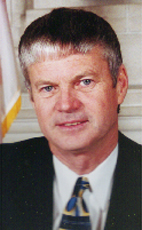
Mr. Speaker, it is a pleasure to take part in this debate and discussion on the importance of agriculture and agri-food in Canada.
We in the government can clearly show through our actions the importance of the industry. Farmers and the agri-food industry are the backbone of rural Canada. A lot happens in rural Canada, and agriculture is a major part of it. Certainly other sectors of our economy and resource sectors are involved as well.
We all contribute to the good standard of living in Canada. There is no question that there is some stress out there in certain sectors of primary production. The hon. member for Selkirk—Interlake pointed out in his comments a minute ago that some sectors were affected at the present time more than others. A couple of years ago some other sectors were affected.
We must work collectively and constructively to put together programs, recognizing that those programs have to be altered and changed as time goes on. It is like building a new building, a new office or a new kitchen. In a few years one has to recognize there are some realities to deal with.
One of the realities we had to deal with was the financial situation of the country when we formed the government in 1993. I will not go into it, because people know about that disastrous situation. In 1997, when I became minister of agriculture, the safety net envelope of the federal government was $600 million.
In the fall of 1998 the industry was saying that it needed $450 million in extra support above and beyond what was there for income support. The government put $1.07 billion in place to assist over the next two years.
The long term safety net agreement that we signed with the provinces last summer for the first time ever has an envelope in it of $435 million for income support alone. That is above and beyond the support that is there for programs such as companion programs within the provinces, the net income stabilization account, crop insurance support, et cetera. As a result of the document we all signed, it is $1.1 billion. When the provinces put their share with ours, their 40% for our 60%, it came to $1.8 billion.
As everyone knows, a couple of weeks ago the government announced an additional $500 million for income support to be allocated to the provinces based on our allocation formula of 60%. Agriculture is a shared jurisdiction, as we know, so when the provinces put their share with that it came to the $830 million which was announced a couple of weeks ago. The total available to farmers is $2.66 billion, the highest level of support for farmers since 1995. Members can say what they want, but I assure them that money will go to farmers.
In addition, we increased two and a half times the spring advance program the government put in place last year. Farmers can borrow up to $50,000 interest free this year to help put their crops in the ground. We estimate that farmers will take advantage of that to the extent of at least $700 million.
I ask the House and people across the country where the provinces were. Most of the provinces did not put any money on the table until the federal government forced them to come forward with their 40%. Some of them are even kicking and screaming at that, saying that their province does not want to take part in it.
For example, one province in the last two years received $400 million in support from the agriculture income disaster assistance program. The announcement last week of $500 million will mean another $200 million to that province on top of the estimate of the Canadian farm income program for this year of $200 million. That will be $400 million in government support to one province alone for the 2000 crop year.
I appreciate some of the comments being made today. I appreciate some of the comments out there in the public today and coming from farm leaders. I neglected to say that I will be splitting my time with the member for Toronto—Danforth.
Overall we need to talk about government support to farms, but we need to talk about farm income in general. What can we do as opposition parties, as government, as industries, as provincial governments, to put in place a longer term plan?
The analogy I would like to give is that we have been trying to fix the roof for a number of years, with some success but certainly not total success for everyone. It is time that we put effort into analyzing and reviewing the programs, which was started. That was discussed and agreed to by my provincial counterparts last week.
We have 145,000 farmers enrolled in the net income stabilization account with $3.3 billion in their accounts. Is that $3.3 billion being used to the extent that it could be? I do not know. We need to look at it.
We have 100,000 farmers that participate in crop insurance. They have $5 billion in crop insurance out there. Are the crop insurance programs the best they could be? I do not know. My guess is there will be some improvements in co-operation with the provinces. I could go on, but we need to talk about how we can assist the overall income.
We know that there are pressures and that consumers are concerned about how agriculture is treating the environment and about food safety. We also know there are farmers out there who need some transition within their own farming operation, for example. We know as well that there may be some lands out there that, given the realities of the day, economically just do not make sense. No matter what the good Lord gave them for resources and under the best of management, with the realities of today production capacity is just not there.
Can we assist those producers to do something else or something different with their land? There is no question that there are some producers who need skills training. I believe there is a role for the federal and provincial governments and industry to provide that type of thing. I look forward to hearing constructive criticism.
We need to take that approach to build a new barn. When we build that new barn a few years down the road we know we will have to do some renovations. I have farmed all my life and I am realistic. When I built barns I thought they were the be-all and end-all, but I knew that down the road I would have to analyse and make some renovations.
The long term approach is the one we have to take. There is a short term need. The government has sought all available resources for the bridging approach that will take us to the long term approach. We cannot continue to manage the way we have been on a year to year basis. As we said in the throne speech we have to do long term planning to move it beyond crisis management. I am confident that will take place as we already have it started.
Provincial ministers told me at the federal-provincial meeting last week that they too have to take that approach. They are being told by their cabinets that they have to do something in the long term approach about the overall income of farmers. This includes government support to income, but there is more to farm income than government support such as research, innovation and resource allocation.
I look forward to the comments members will be putting forward today. I am confident that as we work together we will continue to strengthen the industry to deal with the realities before us today both domestically and internationally.