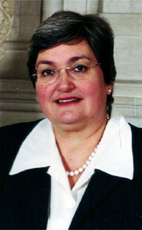
moved that Bill C-11, an act respecting immigration to Canada and the granting of refugee protection to persons who are displaced, persecuted or in danger, be read the third time and passed.
Mr. Speaker, it is with great pleasure that I stand before the House today to introduce third reading of Bill C-11, the immigration and refugee protection act.
We have all worked hard and fruitfully to bring the bill to this stage. As members know, Bill C-11 is the product of extensive consultation and dialogue. For the past four years we have spoken and exchanged views with the provinces, the territories, non-governmental groups, the legal profession, law enforcement agencies and interested Canadians.
Before we crafted the bill we consulted with committee, not once but twice, and have made many adjustments along the way. A number of ideas and clarifications suggested by the standing committee have been incorporated into the bill and I thank the members of the standing committee for their efforts.
The extensive period of consultation to clarify the policy intent of Bill C-11 has improved the bill and has provided us with new legislation for which we can all be proud.
My goal as Minister of Citizenship and Immigration is and has always been to ensure we have legislation for the new millennium that will give us the tools we need to curb abuse while encouraging increased immigration to Canada. We want faster but fair decisions for refugee claimants. The bill would help us achieve these objectives.
Bill C-11 would give Canadians the balanced approach they asked for. It would ensure openness to those who would contribute to Canada and our collective future and ensure tough penalties for those who would abuse our generosity.
I want to be clear. The bill would not be tough on the immigrants and refugees who built this country in the past or who would help us build it in the future. However, it would be tough on criminals, terrorists and those who are threats to our security in Canada.
I assure all members of the House and all Canadians that everyone will receive due process, fair treatment and the protection of our charter of rights and freedoms.
Canadians have told us clearly that it takes too long for us to do many of the things we do. They have told us that it takes too long to remove those who are not welcome in Canada.
The bill would give us a clear, responsible and balanced new law that would help us continue to build the country. In particular, it would allow us to say no faster so we could say yes more often to the immigrants and refugees Canada will need to continue to grow and prosper in the years ahead.
I again remind and assure the House and all Canadians that even as we say no faster to those who are not welcome in Canada, we would ensure there is full respect for due process and for the laws of Canada of which we are so proud.
As I mentioned before, this is framework legislation. It would enshrine rights, key policies and key principles. It would provide our immigration program with the flexibility needed to manage in an increasingly complex and continually changing environment. It would enshrine our agreements with the provinces which recognize immigration as an area of shared jurisdiction.
Our shared work on the bill has extended to proposals for the regulations that would support it. Work on the regulations is already underway and, as committee members know, the results are posted and updated on a regular basis on our website.
I want everyone to know the website address in case interested Canadians would like to visit it and get the most up to date information. Visitors to www.cic.gc.ca can receive all the information about the legislation and other programs and policies of the Department of Citizenship and Immigration. Information can be viewed on the website by members of parliament, non-governmental groups, the legal profession and anyone who has an interest in the evolving proposals for the regulations concerning immigration and refugee determination.
I think members will agree that the process is, has been and will continue to be a transparent one. Following a suggestion made at the standing committee, proposed regulations would be tabled in both Houses of parliament as part of the normal pre-consultation phase before they are finalized. This would underline the transparency of the process and ensure parliamentarians an important role.
The regulations would include a strengthened program for overseas refugee resettlement, an expanded family class and new selection criteria to attract more skilled and adaptable independent immigrants. They would also include an in-Canada landing class for temporary workers, foreign students and spouses who are already established in Canada and wish to stay.
It is important to state clearly for the record that the great majority of immigrants and refugees who come to Canada come here legally. They respect our laws and we welcome them. At the front door there is a big welcome mat as we say to those who come to Canada “Respect our laws. You are welcome. We need you. We want you here and we welcome you”.
They come here to make a contribution. They make an important contribution to our society, our economy and our communities. Refugees and immigrants built this country and will continue to do so in the years ahead.
Canadians want a new Immigration and Refugee Protection Act that respects our laws and traditions and, above all, continues our tradition of welcoming newcomers. We must continue the humanitarian traditions of openness and compassion that have made this country so proud. Bill C-11 and its accompanying regulations would do just that.
Many who participated in the development of the bill deserve recognition and acknowledgement at this time. I acknowledge the important contribution of my parliamentary secretary, the member for Gatineau. I thank him for his support and hard work in bringing the bill to this stage.
I also acknowledge the important work of all members of the standing committee, particularly the members of the Liberal caucus who engaged in consultations in the very early developmental stages. All members of the House were welcome to participate and did so at the standing committee with the kind of thoughtfulness that is very important.
I also thank members of the opposition. I know the member opposite is surprised to hear that because he was a little concerned that I was too partisan in my remarks. I thank the members of the opposition parties who asked very thoughtful questions. Even though I was surprised by some of the positions they took, I believe the hard work of all members of the House helped produce a bill which should be supported by all members of committee and of the House.
I am aware that what happened at the very end of the committee process was quite collegial. I was surprised to hear that the bill might not be supported by everyone in the House who participated because it deserves their support.
I also acknowledge the officials in my department, led very ably by the assistant deputy minister of policy, Joan Atkinson. I think anyone who participated at the standing committee or who reads Hansard will agree with me that she gave clear and detailed explanations of very complex and often difficult policy implications and objectives. She answered all questions from all members thoughtfully and articulately and has put on the record for future consideration the bill's policy intent.
I hope all members of the House will agree with me that Assistant Deputy Minister Joan Atkinson did an outstanding job of not only defending the bill but ensuring that all members of the standing committee understood the policy intent and implications of the legislation. I also thank all presenters who came before the standing committee and all who sent in detailed briefs.
I also acknowledge the many individuals and groups who met with me personally. All that consultation, input and advice has resulted in an excellent piece of legislation that will stand the test of time.
Many individuals check our website regularly. Many do not. Those who have an interest in citizenship and immigration and in the important work we do should know they are always welcome to contact members of parliament on both sides of the House. They can contact the department or the website, and the questions they have will be answered as quickly as possible. We want to ensure that people know and understand why we have the policies we have, what their intent is and how we go about implementing them in a way which is consistent with our Canadian values and in a way which has become a model for the world.
When I visit our visa posts around the world and meet with officials from countries with which we have bilateral relations, they all ask me about our open and transparent approach to immigration in Canada. They are interested in our new point system. They are interested in the fact that everything is on the Internet and that people are encouraged and welcome to apply. They are envious of our record of independent adjudication at the Immigration and Refugee Board. They are interested in the fact that we have an arm's length IRB with three divisions, one of which sorts out refugee claimants. We know that even though Canada has a different approach than other countries, at the end of the day many countries in the western world ultimately have the same approval rates that Canada has. There are different mechanisms and ways of getting there but we know, and I know this because I have met bilaterally with world leaders, that at the end of the day following due process, the difference for Canada is we make those decisions sooner in a transparent and arm's length way. We give people access to judicial review. We make sure that all risk conditions are considered. We give them landed status and encourage those who are in genuine need of protection to get on with their lives in Canada as quickly as possible, to integrate in our society and feel welcomed.
We know that there are some people who come to us who are not in genuine need of protection. The challenge for the IRB is to make those decisions and then tell those people who are not at risk of leaving Canada, who are inadmissible to Canada or who are not in genuine need of our protection that they must leave Canada. That is always difficult.
We can understand why people want to come to Canada. We are proud of the fact that for the seventh year in a row the United Nations has declared Canada as the best country in the world in to live. One important parts of our immigration program is family reunification and our commitment to do that.
This bill, as I said in my remarks before committee, strengthens our commitment to family reunification, both for immigrants and for refugees. By leaving the application open for a year, we will encourage refugees' families to reunite more quickly. By having an in-Canada landing class for spouses, we will encourage husbands, wives and partners to be together and have status in Canada as quickly as possible.
We know there are many challenges that face us but, after almost two years as Minister of Citizenship and Immigration, I want to state clearly to the House the confidence that I have in my officials around the world at the visa posts. They do their very best to make good decisions, to make decisions that are important for Canada because it is about nation building. They are the ones who interview the applicants. Those immigration officers on the frontline are the ones who make a decision as to whether an interview is needed at all. They do this in the face of significant challenges. We know that they often see documents that are not real. We know that since the photocopier was developed we are seeing an increase in fraudulent documents. That poses a great challenge.
That is why in this legislation we have made an inadmissibility category, that if persons present fraudulent documents to Canada they will be inadmissible to Canada for a period of two years. That is supposed to be a deterrent because we want people to respect our laws. We want people to come to Canada, obey our laws, do it the right way and come through the front door where there is a big welcome mat.
However, the door that we want to close is the back door to serious criminals, to terrorists, to those who pose a risk to Canada, to failed refugee claimants and to those who are not in genuine need of our protection. At that back door there is a deportation order waiting.
Canada has one of the best records of removals of any country in the world. Last year over 8,600 people were removed from this country. Of those removals one-third, over 1,700, were those who were criminally inadmissible to this country. However the other two-thirds were failed refugee claimants, people who had overstayed visitor's visas and those who had no status in Canada, no right to remain in Canada.
It is important for us to know that if we are going to open that front door wider, to reunite families, to welcome the refugees, to encourage applications from around the world, to bring the immigrants here that we will need to continue to grow and prosper, we must give Canadians the confidence that we are able to say we want our laws respected. We will treat them fairly but we want them to obey our laws. We want them to come in the front door, not to try to sneak in the back door.
As difficult as it is for us to tell people that it is time to leave Canada, we know it is an important part of the integrity of the immigration program.
My department has two mandates that are reflected in the bill. That is why I say the bill is balanced. The priority for my department is to bring in the people Canada needs, to reunite families and to welcome those refugees who are in genuine need of our protection. However, my department also has an enforcement mandate to ensure that our laws have integrity and that those people who have no right to remain in Canada are stopped from coming. That is called interdiction.
We have a network of immigration control officers around the world who do their very best in often difficult circumstances and with people who are not often telling them the truth when they try to come to Canada surreptitiously. Our immigration control officers, we call them ICOs, are the frontline to try to prevent access to Canada by those who have no right to come here. However, because we have the largest undefended border in the world and are dealing with human judgments, we know that people are sometimes able to come into Canada. Then it is important that the enforcement side of the department does its job.
When I say Bill C-11 is balanced, that is what I mean. It is balanced with a tilt to welcoming and encouraging those people to who we will need in the future to come to Canada. We are a small country with just a 30 million population.
We know about the dependency ratio. By the year 2010 there will be five people working for every one person retired. By the year 2020 there will be only three people working for every one person retired. That poses a great challenge for the government and for all of Canada. Why? Because we are not having enough babies.
I jokingly can say I have done my part. I have four children and six grandchildren. I look around the House of Commons and I do not think I can count on everyone here to go out and start producing the people we will need, although I can hear some members opposite say they have done their part as well.
The reality is that we need people in every region of the country. We need people in the urban and rural best kept secrets of Canada, the small and medium sized cities. We have to tell the world of the wonderful communities ready to welcome immigrants and refugees because they want them to succeed and buy homes. They want them to succeed and pay taxes that will support our public education and health systems. We need them to bring their families because it is families that build communities.
There are some who would suggest that the family class does not contribute, but I would say they are wrong. The family class, the parents, grandparents and dependent children who come together to create families and communities and contribute today but also in the future to the building of the country, is the reason why family reunification is such an important cornerstone of our immigration policy.
As I conclude my remarks on Bill C-11, I want to assure the House that it is an extremely important piece of legislation because it sets the framework for the immigration program for the new millennium. We know the world has changed since the last piece of immigration legislation was adopted by parliament almost 25 years ago. We know we are in a different world. We know there are all kinds of communications, not only the kind of communication available through the Internet, telephones and fax machines, but the kind of communication that is available by getting on an airplane and travelling around the world.
I visited Pier 21 in Halifax. I know it has special meaning for Madam Speaker and for the over 40 members of the House who came to Canada as immigrants, often as children, and many of whom arrived at Pier 21. That historical museum, that monument to the immigration, tells us the story of how this country has changed. It has changed in many ways because of the contribution of those people who came to Pier 21, but it has also changed because of our environment, a global world where people are on the move. That is the challenge for all of us in Canada.
Bill C-11 responds to that challenge. It is a thoughtful, reasoned approached, a bill that balances the duel mandate of my department. That bill is worthy and deserving of support of all members of the House. It is my hope that I will be pleasantly surprised and that we will see support from the opposition parties who were instrumental when assisting at committee, but then walked out the door and started to advocate for greater rights and longer processing.
One thing this piece of legislation does is attempts to streamline so we can make decisions more quickly when it comes to refugee determination and faster but fairer processing for refugee applications. We also want to be able to remove people more quickly.
Some amendments from the opposition party which would have made it more difficult to remove those people who posed a risk to Canada or those people who had committed heinous and serious crimes disturbed me. We have a tradition in this country that only Canadian citizens have the right to remain in Canada. Even Canadian citizens can be extradited if they commit a serious crime in another country and that country succeeds in making an extradition application. That is done through the Department of Justice. Everyone is assured due process.
Those people who are not Canadian citizens, who come to Canada, commit a serious crime, who pose a threat to the safety and security of our country should, in my view, be removed as quickly as possible. I was disappointed that that view was not shared by members of the opposition party. That surprised me. I think if their constituents knew that, they would insist that they support the government's goal of trying to remove those who have committed serious crimes and who are a threat to Canadian society as quickly as possible.
The vote we will have this afternoon will be for third reading of Bill C-11. I appreciate the opportunity to participate. As minister, I have seen first reading, second reading, full debate at committee and all consultations.
I would like to acknowledge and thank my predecessor for the important work she did in conducting the consultations that led to the development of the bill. It was the foundation of those important consultations over a period of four years which led to the development of the bill.
It is my hope that when we have the vote this afternoon, Bill C-11, which is so worthy and deserving of support, will receive unanimous support by all members of the House.