On a point of order, Madam Speaker. The question is on the amendment to the amendment, right?

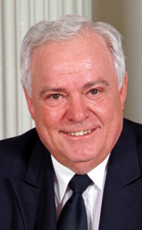 House of Commons photo
Won his last election, in 1997, with 47% of the vote.
Judges Act November 28th, 1996
On a point of order, Madam Speaker. The question is on the amendment to the amendment, right?
Air Transportation November 22nd, 1996
Mr. Speaker, the minister has yet to make a decision.
Will the minister acknowledge at least that any federal intervention in the Canadian affair must be governed by three conditions: the first, that it not inject new public funds; the second, that it prevent American control over part of the industry; and third, that it save as many jobs as possible?
Air Transportation November 22nd, 1996
Mr. Speaker, my question is for the Minister of Transport.
Day in and day out, the federal government contradicts itself about Canadian Airlines. Last Friday, representatives of the company and the federal government said that Ottawa would intervene to save Canadian if employees would agree to a salary reduction. On Monday, in response to questions from the Bloc Quebecois, the government denied its intention to intervene. On Tuesday, the Minister of Transport told the unions that Ottawa would intervene if Canadian and its employees failed to reach an agreement. On Wednesday, the Prime Minister reiterated his government's intention not to intervene.
Could the minister decide which it is finally and be clear about his government's intentions to help Canadian International?
Canada Elections Act November 22nd, 1996
Mr. Speaker, I do not know what your decision will be, but, should that be of any help to the Chair, we would agree with the suggestion of our colleague, the government whip, to allow the hon. member for Hochelaga-Maisonneuve to complete his remarks. After that, we could alternate to allow for an exchange of views, as mentioned by my colleague from Bellechasse.
That would make for a better discussion, and prevent one side or the other from monopolizing the time of the House. As you suggested earlier, once we have expressed our views, the government side could have 25, 50 or even 100 speakers in a row, but I do not think this would be good for debate. May we suggest that the Chief Government Whip's proposal to alternate speakers be accepted.
Supply November 21st, 1996
Madam Speaker, if the hon. member opposite wants to discuss the family policies of the federal government and those of the provincial government, perhaps we should go back in history and see how the Government of Canada treated the Quebec government when in Quebec most families had ten children or more. The hon. member may care to recall what the federal government did at the time. What kind of choices were made then to help families?
In Quebec, families were raised without waiting for subsidies from the government. Quebec couples did not wait for subsidies to have children. They knew what their responsibilities were, and they believed in the future of the family. Family policies came much
later, and it was the Quebec government at the time that would have appreciated more flexibility to be able to help these large families, which was not necessarily the case in other Canadian provinces.
At a time when Quebec would have liked to see specific criteria for providing assistance in situations peculiar to Quebec, it did not get the federal government's co-operation. When we want the power to deal with our own problems, that is the kind of situation we are referring to.
Today, Quebec is in favour of a family policy that is in fact quite unique and quite different from what the federal government had in mind. We believe that Quebec's needs are different, and because they are, Quebec needs all the political resources available to meet those needs.
It always boils down to this: since we have different views on most of the problems facing us today, we keep asking for all the powers we need to implement our vision and guarantee the development of our families as well as our cultural, economic and social development.
Supply November 21st, 1996
Madam Speaker, I thank my colleague for providing me with the opportunity to clarify the comments I have just made.
What is important for the members of the Bloc Quebecois in this issue is to ensure that all families, and all women, have an equal opportunity to raise their children. I mean all families, all women, all men, all couples. Whether families are poor or not, whether there are one or two parents in the home, what we want is for no one to be at a disadvantage for deciding to stay home, or to work outside the home.
No mother ought to be penalized because she has made one choice or the other. This is a fundamental freedom of choice we acknowledge for women, or for men who might be in the same situation.
We feel that rearing children must come first. We also feel that mothers, while providing this child-rearing, must also have access to the fundamental freedom to realize their potential by working outside the home or within the home.
We would not like to see a government policy which favoured one choice over the other. What we want is to see the fundamental policies designed and implemented in such a way as to ensure that a person is not penalized for having made a free choice. We would not like to see government policies advocating practices or programs that would encourage or discourage one or the other choice. We would like to see the individual's most basic rights respected.
Supply November 21st, 1996
Madam Speaker, before commenting on the Reform Party's motion, I think it would be helpful to viewers to repeat the text of the motion, which reads as follows:
That, in the opinion of this House-and there was an amendment-the government should provide tax fairness for all Canadian families by extending the Child Care Tax deduction to all families of all income levels and converting it to a credit, thereby removing the tax bias against parents caring for their own children.
My first comment takes the form of a question. In the motion, we are not told whether this deduction will be converted to a refundable or a non-refundable credit. The motion does not say. However, if our information is correct, the Reform Party would like this deduction converted to a non-refundable credit, which means that a person paying tax could benefit from a deduction, whereas a person not earning enough to pay taxes would be deprived of this assistance for child care.
In other words, this could mean that a person or a couple earning $100,000 a year could be allowed a deduction for child care, but a couple earning $20,000 a year and paying no, or practically no, taxes, would not be eligible for a refundable credit.
The question then arises as to who is being helped. Is it those most in need of child care assistance, or those least in need of it? That is the first question.
However, if we consider the spirit of the Reform Party's motion, our conclusion must be that there is indeed a real problem, but we could still agree with it. There are people who need help, and we want to help them. The reference is to a policy, a policy on the family or an anti-poverty policy. Reform members tell us that this motion is part of their family policy.
At this point, perhaps we should consider the concept of family as seen by the Reform Party. As far as Reform members are concerned, a family is a group of individuals who are related and whose union is recognized by the state. We are therefore talking about a group of individuals related by blood, marriage or adoption. Clearly, Reform members, who are ultra-conservative, are dreaming of a concept that hardly applies today.
Some families today are single-parent families, but families nevertheless. With a concept as obsolete as the one held by Reform members, obviously their solutions to family problems will differ vastly from what we might expect of people with a more modern outlook.
Although we agree that Reform members are addressing a very real problem this morning, we do not quite agree with the way they intend to deal with that problem.
First of all, the Bloc Quebecois feels that providing assistance to families should be strictly a matter of provincial jurisdiction. What has the federal government done about all the promises it made during the last election campaign that it would help our families? The Liberal government promised to spend about $700 million to create 150,000 new daycare places. What did the Liberal government do about the promise it made in the red book? What did the Liberal government try to achieve? A fraction of that promise. The Liberal government claimed that because no agreement was reached between the federal government and the provinces, that was ample justification for the government to withdraw its commitment.
The Liberal government could at least have taken the money it had promised to spend and transferred it to the provinces, which would then have been able to implement the daycare plan or create spaces for children according to a plan of their own choosing and adapted to their own needs. The bulk of the responsibility for the lack of a family policy lies with the federal government, led by the Liberal Party.
It is also perhaps worthwhile at this point to indicate that, wishing to make this a provincial responsibility, Quebec and other provinces have recently been looking at family issues. In the wake of an economic summit at which this was much discussed, the Government of Quebec has taken certain steps. It is, I think, worth mentioning that Quebec's policy puts its children first.
If the federal government acknowledges that this is a provincial responsibility, it might be worthwhile to look at a picture of the Quebec family of today. Although the family plays as fundamental a role in our society as it did in the past, the changes that have occurred in Quebec society must be taken into consideration, and this is what was proposed at the summit.
These changes indicate just how necessary a new family policy is. I am defining the present family situation in Quebec because our commitment at the time of the election was to work in the interest of all Canadians, particularly Quebecers.
At this time, there are 1.66 million children in Quebec, one third of them under the age of six. They belong to 960,000 families, 20 per cent of which are headed by single-parents.
Twenty-three per cent of our families have an income of less than $25,000, while the average family income is $50,000. In 70 per cent of two-parent families with young children, both spouses work, while 20 years ago the figure was 30 per cent, so that the family profile has changed significantly. Furthermore, a steadily increasing number of people are self-employed or work at non-typical jobs, that is to say, jobs that are unstable, involve irregular working hours or are strictly casual employment.
These changes oblige us to rethink our policies and adapt them to the new needs of our society, to make them fair, consistent and sensible. That is why Quebec's family policy will be revised and restructured around three central themes, and we hope the federal government will recognize the relevance of these changes.
The policy's first theme is how we provide services for young children and includes the following: first, plans for making full-time kindergarten available to all five-year-olds will be implemented as of September 1997; second, accelerated phasing-in of part-time educational services and free daycare for four-year-olds from disadvantaged families; and the phasing-in over a six-year period of low cost daycare for all young children whose parents are either employed or going to school.
Phase one of daycare for four-year-olds will be implemented as of September 1997, while phase 5 for children under the age of one will start in 2001.
The second central theme of this program will be to improve financial support to families as follows: a comprehensive allowance covering the essential needs of all dependent children of low income parents, whether they are employed or on welfare. This new allowance will include the Quebec family allowance and that part of social assistance payments that is used to cover children's needs. This will be in addition to the federal tax credit, for the time being, provided the federal tax credit does not disappear sometime in the coming months. That may be the case when the next budget is brought down by the Minister of Finance.
The third component is a parental insurance that will provide, upon the birth of a child, benefits equivalent to 75 per cent of net earned income, for a period of 25 weeks. Here is a measure that will help families and pregnant women who want to look after their children but still have the possibility of returning, within a short period of time, to their job outside the family home. This parental insurance will also provide additional benefits for a period of six months, starting with the third child. It increases from $39,000 to $49,000 the ceiling for eligible earnings, and it provides an insurance fund that will be funded partly by recovering part of the contributions made by employers and employees to the employment insurance fund, as provided for under federal legislation, and partly by collecting additional contributions from workers who are not covered by the employment insurance program.
Again, we hope the federal government will co-operate and allow the Quebec government to take advantage of the federal provision that authorizes the use of the employment insurance fund for such purposes.
The Quebec government will also provide substantial help to children and young families. The beneficiaries of this reform are the people who immediately come to mind: women. For several years, women's groups in Quebec have been asking for concrete measures to help women reconcile their roles as mothers and active members of the workforce, without penalizing them.
The biggest winners of this family policy are the 550,000 Quebec children who are under six years of age, including those living in socioeconomically disadvantaged environments. Early childhood services include half-day classes and free child care for disadvantaged children under four. This is undoubtedly the best solution to ensure that all children benefit from equal opportunities, and to prevent teenagers from dropping out of school in such large numbers.
This policy also promotes a better balance between work and family. In a society where both parents work, adequate and available child care services are an absolute requirement. Educational and child care services are essential in a modern society, but they are insufficient.
The Quebec government wants to ensure that child benefits are based on the principle of fairness and constitute an incentive to work. These premises guided the development of the new integrated allowance that will better meet the basic needs of all children from low income families.
Finally, the new policy takes into account the profound changes that have occurred in the workplace, by proposing the creation of a new parental insurance program. This new system will be more accessible and more generous than the system now provided through employment insurance.
Furthermore, one of the most important indirect benefits of the new policy is that the rapid growth of day care services will encourage the development of the social economy, as well as facilitate the battle against the underground economy. For the Province of Quebec, as for Ontario and other Canadian provinces, this has become a very serious problem in recent years.
It must be pointed out that the proposed family policy shows that, despite a difficult budgetary context, which exists in Quebec as well as in Canada, we in Quebec at least have shown that we have the imagination and creativity to remain a progressive society that puts its children first. It is in this perspective that, in Quebec, the government has decided to adapt so as to continue to be a tool for social development and the key to its future success.
We sincerely believe that this is a progressive policy and that it confirms the dynamic role of the government to which citizens are so deeply attached. I wanted to highlight these statements by the Government of Quebec because it is what we would most like to see happen. The Reform Party motion proposes a very restrictive and limiting measure, and we feel that this is not the right approach.
The best chance for finding solutions lies in leaving this authority with the provinces, who are still in the best position to decide what is required so that the choices made by the provinces will better correspond to the real needs of their society, to the actual composition of their families, and will provide the best future for their children.
Committees Of The House November 20th, 1996
Mr. Speaker, the Bloc Quebecois finance critic has very eloquently just stated the government's motivations for creating a new Canadian securities commission.
This raises the same old debate. Later on I will ask him to elaborate on this. The Bloc Quebecois has always called for an end to administrative duplication. The federal government claimed it was willing to look for ways to reduce duplication. This time, however, there is no duplication.
In Quebec, we have our own securities commission. The federal government has decided, according to its own logic, to create a Canadian securities commission, thus creating a duplication which did not exist before. The federal government will then say: "Since we agree that duplication should be avoided, the solution would be to eliminate the Quebec Securities Commission. Since duplication is to be avoided, there should be only one commission".
This is what the federal government's centralizing policy is all about. This is what will happen. Whenever there is duplication, the province, especially Quebec, is asked to withdraw from this area of jurisdiction, and duplication is created where there was none before. Then the federal government tries to justify its action by saying that the province should withdraw in order to avoid duplication.
I believe this is a red herring, and we join with the official opposition critic in demanding that the federal government withdraw from this area of provincial jurisdiction. I would like my colleague to add something on this matter, if time permits.
Agricultural Labourers November 19th, 1996
Mr. Speaker, it would appear that the Canadian government is planning to withdraw, by the end of March 1997, its 40 per cent share of the funding of the agricultural day haul transportation assistance program, to which Quebec contributes to the tune of 60 per cent.
In the Lanaudière area only, these cuts will mean an $80,000 shortfall. Some 800 individuals will be affected, mainly students picking berries and canning vegetables. Moreover this will deprive vegetable producers of labourers who live far from their work place and have no other means of organised public transportation.
In order to maintain a program which has a significant impact on this sector of our economy, the federal government must contribute to its funding. If it withdraws, it should at least compensate Quebec financially.
The Fight Against Unemployment November 1st, 1996
Mr. Speaker, last weekend at the biennial convention of the Liberal Party of Canada, the Prime Minister was crowing about what he has achieved over the last three years.
Yet the Liberal government's performance as far as reviving the economy and lowering unemployment is hardly impressive. It is too easy to blame the state of the country's finances or provincial governments for the way things are. When you make promises, you must be able to keep them.
Job creation should be this government's number one priority.
Urgent effort is required to bring about a significant improvement in the job market as quickly as possible. The Canadian government must take concrete steps to effect a substantial reduction in Canada's rate of unemployment. The rate of unemployment can be reduced.