
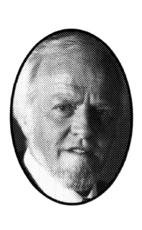
House of Commons photo

Crucial Fact

  • His favourite word was transport.

Last in Parliament April 1997, as Bloc MP for Louis-Hébert (Québec)

Won his last election, in 1993, with 56% of the vote.

Statements in the House

Student Loans December 5th, 1994

Mr. Speaker, as someone who has spent the best years of his professional career working as a teacher, guidance counsellor and school principal at the secondary level, I welcome this opportunity to take part in the debate on motion M-291, introduced by the Reform Party. The purpose of this motion is, basically, to amend the Canada Student Financial Assistance Act to include a loan repayment system that would take into account the employment income of students after they have finished their education.

At first glance, we might think this measure would be to the students' advantage. It seems reasonable to adjust the terms of repayment to the income of the person who contracted the loan. However, when we look at what the Reform Party has in mind with this motion, our support for this proposal quickly disappears as it becomes clear there is no benefit in this for students. The objective is clear:

reduce the cost to taxpayers of financing post-secondary education by reducing the number and dollar amounts of loans defaulted upon, by charging accumulated interest, rather than simple interest on default loans, and by reducing the number and dollar amounts of collection fees for defaulted loans.

The Reform Party's first objective seems to be based on the false premise that former students do not repay their loans because they do not feel like it. There is a tendency here to forget the economic problems facing young people today. Even for those with a university degree, the unemployment rate is close to 15 per cent. And there is also the troubling fact that many university and college graduates are underemployed and, as a result, underpaid.

In addition to the Reform Party's failure to realize that such situations exist, it is clear that if we want to reduce the cost of education for the taxpayer, someone will have to pick up the slack and pay the bill, and obviously, that onus will now be on the students.

This point of view is short-sighted on several accounts. First, it ignores the social situation of a great number of students. Second, it does not take into account the significant changes in lifestyle of every class of society. Today's students are the product of what is known as the consumer society which, as a social model, constitutes the basis of our western economies. How could we confine our young people to a ghetto and believe that they will take part in mass consumption only when they graduate?

A recent survey conducted in Quebec shows that high school students spend one billion dollars a year. This means that half the students in their last year of high school are working part-time. Nobody will deny the impact of this new reality on school results, but we must accommodate these new needs. We created them from scratch and ubiquitous advertising fuels them.

Transferring greater financial responsibilities to post-secondary students will only increase the tendency of students to go to school and hold a paid job at the same time. Faced with increased tuition fees resulting from the government's so-called social program reform, and the Reform Party's intentions, as described in motion M-291, students will react quite normally by trying to increase the number of hours they spend on the labour market, in order to limit as much as possible the need to borrow money. The consequences will be disastrous: time spent studying will diminish, the failure rate will go up, courses and even whole years will have to be repeated, resulting in increased costs for the governments subsidizing education. Basically, it is a vicious circle.

Transferring heavier financial responsibilities to students in such a manner is short-sighted for another reason. It ignores the fact that with the globalization of the economy, the quality of human resources is the key to competitiveness. It is by taking advantage of knowledge, research and development that Canadian and Quebec businesses will be able to penetrate a trade arena with no borders and maybe no rules.

Any increase in the financial burden of post-secondary students flies in the face of this universal reality. Instead of limiting access to higher education, as the Liberals and the Reformers are planning to do, we should do the exact opposite. That is a major reason for not supporting Motion M-291, a motion which, by its objectives, is anachronistic.

The third objective of the Reform motion also reveals the fallacious nature of their project. It reads as follows: "ensure that post-secondary institutions in Canada receive the funding necessary to maintain the high quality of services they presently provide".

This is not very subtle! This objective acknowledges that students, by bearing a larger part of the cost of their education, will contribute to generate resources for universities and colleges. Moving in that direction is refusing to recognize that knowledge and know-how are the keys to any modern economy. In this regard we should stress the vision of the Quebec Premier who announced last week, in his speech from the Throne, that he was freezing university tuition fees and removing the failure tax at college level. This is the direction to follow if we want to be able to compete with our trading partners under NAFTA and the Uruguay Round.

We sense that the government as well as Reformers are doing their best to gradually withdraw from the area of education. We, of the Bloc Quebecois, believe that the federal government must withdraw entirely from that area of provincial jurisdiction, an area that it invaded not to serve the interests of the people, but to enslave, to dominate and to impose its national standards on the provinces. By withdrawing from that field, the federal government could transfer tax points to the provinces. They would then be in a better position to deliver to their people education services geared to their needs and realities.

In so doing, the federal government would go beyond speeches and do something concrete to reduce the duplication of services delivered by both levels of government. However, to act in that direction would require great discernment and common sense.

These ingredients do not seem to be on sale in the federalist supermarket. To conclude, I urge all members who still care about the future to vote against motion M-291, a dangerous and anachronistic motion because of the objectives its seeks to achieve.

Defence Policy December 2nd, 1994

Mr. Speaker, knowing that the development of any defence policy is really only possible when it is keyed to a clear foreign policy, how can the minister suggest and maintain that he has a clear vision of the future, when his white paper was tabled before the government even had the chance to announce the new thrust of its foreign policy?

Defence Policy December 2nd, 1994

Mr. Speaker, my question is for the Minister of National Defence.

The minister tabled yesterday, and rather hastily, his white paper on defence, which is in fact a botched job, a spur of the moment job, a paper characterized throughout by a backward-looking vision and lacking any real, meaningful direction.

Does the minister not realize that the hurried tabling of his white paper has deprived the government of practical proposals with respect to NATO, NORAD and the UN and thus provides no real vision of the future?

World Trade Organization Agreement Implementation Act November 29th, 1994

Mr. Speaker, first I want to congratulate my colleague from Longueuil on his speech, which is practical and sticks to reality. It is not a theoretical speech. We see that the member for Longueuil has experience.

I also thank him for reminding us that Quebec is open to free trade and foreign trade. Quebec is not a society that is turned in on itself, quite the opposite. I also thank him for recalling the importance of trade with the United States for Canada and Quebec; 80 per cent of our trade is with our big southern neighbour.

I would like to ask him this question: Does he believe that the agreements reached following the Uruguay Round negotiations will help the poorest countries progress? Under these agreements, will it also be possible to protect the environment and better protect the rights of workers in countries that are less well organized than western countries?

Yukon Surface Rights Board Act November 25th, 1994

Mr. Speaker, I wish to make a brief comment.

I listened carefully to the speech by my colleague from Jonquière. I am proud to be the colleague of this member who spoke very openly and generously about the native communities. It would be so easy to make speeches that raise tensions and play on the public's emotions, in short, to engage in demagogy.

The member for Jonquière took a radically different approach. His speech well reflects the thinking of Quebecers on this issue and I call on all members of this House to reread my colleague's speech. It is an unfailing source of wisdom in dealing with the issue of respecting native rights.

Job Creation November 25th, 1994

Mr. Speaker, yesterday, the Minister of Finance accused the Government of Quebec of not being concerned about job creation. He seems to forget that in an impressive number of areas, it is the federal government which is preventing job creation in Quebec.

The federal government refuses to transfer all powers for labour training to Quebec and is thus preventing the implementation of a comprehensive and coherent job creation strategy in Quebec.

The federal government is refusing to reduce unemployment insurance premiums even though it said that lowering them would create jobs. The federal government is also refusing to implement a real defence conversion policy. And what about MIL Davie?

The Minister of Finance should look in his own back yard and get down to work.

[English]

World Trade Organization Agreement Implementation Act November 24th, 1994

Mr. Speaker, I will be brief, first of all because the member for Verchères has explained quite well the theoretical and practical basis of his amendment as well as the need for it.

I find somewhat deplorable that members opposite have completely ignored the public hearings that we held with representatives of different industries. It is as if those public hearings were absolutely useless. I think it is a waste of time. Not only have we wasted time, but if we added up all the consultations that this government has done in the last year, we would probably find that vast sums have been gobbled up practically for nothing since the government always ends up doing what he intended to do anyway.

Members opposite recognize that the amendment is essentially good but they say they would prefer doing it by way of regulations. Let us not forget that regulations do not have the scope of an act; members opposite probably know that as well as we do. Actually, it is probably the reason why they are opposing this amendment to the act.

People often say that they are all for virtue, but such an assertion is not enough to guarantee that virtue will prevail. I think that in a way it applies to anti-dumping. The fact that the Uruguay Round prohibits dumping is not a sufficient guarantee that it will not occur. Therefore Bill C-57 must provide for a means to face the problem when it arises because it will.

We all know that dumping is an unfair trade practice. It can be so harmful to the industry against which it is used that it may make it disappear. In order to avoid such consequences, the GATT agreement prohibits dumping. However, it is incumbent upon the industry victim of dumping to prove that it has suffered a prejudice so serious that its future is threatened.

The amendment we propose defines the factors for determining such prejudice, which is not provided for in this bill. In the absence of guidelines, the injured industry would be unable to present its case in an appropriate way. Nevertheless, the United States could be used as a model in that regard. Therefore I invite the government to support the amendment.

World Trade Organization Agreement Implementation Act November 24th, 1994

moved:

Motion No. 8

That Bill C-57, in Clause 58, be amended by replacing lines 4 to 8, on page 25, with the following:

"(a) to fix the performer's performance in any existing or future medium by means of which sounds may be reproduced,"

Mr. Speaker, as you know, Bill C-57 amends some 30 Canadian acts, including the Copyright Act.

We must first point out the archaic character of the Copyright Act. Bill C-57, An Act to implement the Agreement Establishing the World Trade Organization, includes a few amendments to the Canadian Copyright Act.

Among those changes, the one in clause 58 illustrates the archaic character of this act which is meant to protect creative artists and performers.

Indeed, Clause 58(a) gives a performer the sole right "to fix the performer's performance, or any substantial part thereof, by means of a record, perforated roll or other contrivance by means of which sounds may be mechanically reproduced".

The wording of this change takes us back to the days of mechanical pianos. How, in 1994, can the government amend the Copyright Act and completely ignore the technological progress of the last few decades? This certainly does not make the government look like it is aware of the future challenges that await us. Yet, the government received numerous reminders.

I want to quote a few paragraphs from the brief submitted by the Union des artistes to the Standing Committee of Foreign Affairs and International Trade:

For almost eight years now, the Union des artistes and the Coalition of Creators and Copyright Owners have been asking for the rights regarding the fixation, the reproduction and the communication to the public of their performances in musical, literary, dramatic and choreographic works, known as neighbouring rights. Meanwhile, Bill C-57 recognizes the exclusive right of our people to fix the performance, or any substantial part thereof, by means of a record, perforated roll or other contrivance by means of which sounds may be mechanically reproduced. If Canada recognizes, in 1994, our exclusive right to the fixation of a sound performance by means of a perforated roll, how long will we have to wait for the recognition of our rights on performances fixed or reproduced by using optical discs, compact discs like CD-ROMs and other modern supports?

Clause 58 of Bill C-57 is not only totally disconnected from today's reality: It also creates a great danger for the future.

This government does not seem to realize that when Canada signs a commercial treaty such as the one resulting from the Uruguay Round of negotiations, it waives part of its sovereignty. This is true not only in the case of trade agreements, but also in the defence sector. Just think of the North Atlantic Treaty or NORAD.

So, it is essential for the government to recognize that section 58 limits its own future jurisdiction and that every measure must be taken, now and in the future, to minimize any negative impact.

We fear that, as soon as it is passed, this bill could in fact limit the performers' rights to the only rights recognized in this bill. This leads one to fear that restrictions set here and there in commercial agreements could be seen as absolute restrictions when the time comes to review our own national legislation in this area. This is why our amendment is crucial.

Members will recall that the Uruguay Round Agreement only dates back to December 15, 1994. When the government introduced Bill C-57, the Parliamentary Secretary to the minister of International Trade admitted that only 13 of the hundred or so countries which signed the agreement had already introduced their implementation legislation.

Since this bill was introduced, the race has begun. The Standing Committee on Foreign Affairs and International Trade is in a hurry. The number of witnesses has been limited and committee members are rushed off their feet. We have to cut corners, because an international agreement was signed.

Let us draw a parallel between the position of the Liberal and Conservative governments concerning the protection of the creative and performing artists' rights.

I would like to quote from the brief submitted by the Union des artistes:

The Berne Convention for the Protection of Literary and Artistic Works was concluded in 1886. Canada's Copyright Act, which was passed in 1926, forty years later, was not reviewed by Parliament until 1988.

As for the Rome Copyright Convention on the protection of performing artists, producers of recordings and broadcasting agencies, it was concluded in 1961 and is already obsolete because it applies only to sound productions.

Thirty-three years later, Canada has yet to sign the convention and adjust its own legislation to meet the minimum provisions of the convention. As a result, Canada, which takes pride in being one of the most progressive countries in the world, lags far behind in defending and promoting the interests of its creative artists.

Germany, France and Japan all signed the Rome Convention. In addition, these fellow members of the G-7 group, realized it was important to adjust their respective legislations to the current realities of artistic creation. Germany and France have passed legislation dealing with neighbouring rights. They also recognized the need for royalties on private copies, which is the case in Japan.

Meanwhile, Canada is proceeding in a haphazard way, through its legislation to implement trade treaties, to change its own copyright legislation.

That is not the only paradox. I have another example. On November 14, Liberal majority members tabled in this House the report of the Special Joint Committee Reviewing Canadian Foreign Policy. Against the wishes of the Official Opposition, majority members made culture, a jurisdiction shared by the federal government and the provinces, the flagship of foreign policy. How can the government claim that culture, the result of the work of performing artists and creators, is central to its foreign policy, when it refuses to do what is necessary to promote and protect the work of those who create culture?

The cultural sector is an important one. The present government's failure to proceed with its review of the Copyright Act can only be explained by its failure to recognize a basic fact of our economic life. The government seems to be ignorant of the fact that in 1991, the cultural sector was responsible for jobs employing more than 300,000 Canadians and Quebecers, putting it ahead of the forestry, mining and insurance sectors in this respect.

It is almost miraculous that the cultural sector should play such an important role in our economy, no thanks to the federal government's reluctance to invest in this sector, which may have serious consequences. According to the Union des artistes, and I quote: "This minimalist and timid approach may jeopardize creative activity in this country. At a time when digital conversion has removed former distinctions between sound and audio-visual productions, at a time when direct broadcast satellites and the information highway are about to redefine the relationship between the consumer, the user and artistic productions, Canada still protects its creators and defends its culture by

means of incidental measures consequential on its ratification of international trade treaties".

This questionable approach on the part of the government can only be explained by the tremendous impact of lobbying by big producers and broadcasters. I would urge hon. members to vote in favour of this motion presented by the Official Opposition, whose purpose is simply to provide a minimum amount of protection for our performing artists and creators. Remember that this class of cultural workers has an average income of less than $10,000!

Remember also that our creators and performing artists need financial independence. They need freedom and pride to continue to work at their art. The dignity of work, a favourite phrase of the Prime Minister, should also apply to this class of Canadians and Quebecers. We must also protect the integrity of the work done by our creative artists. The Copyright Act must be improved, but meanwhile, we could make do with the amendment I am proposing to Bill C-57, and I would ask hon. members to support that amendment.

World Trade Organization Agreement Implementation Act November 24th, 1994

I am pleased to support the motion of my colleague from Laval East.

It is important to the Bloc Quebecois that the Minister of International Trade establish a mandatory process to consult with the provinces regarding the implementation of the Agreement wherever it relates to a matter within provincial jurisdiction, any matter relating to trade dispute resolution and any economic matter of major national or international significance.

I will go over each of these elements. Regarding the implementation of the Agreement, a federal-provincial consultation process is required because the federal government cannot interfere in areas within provincial jurisdiction as it pleases and also because it is necessary to harmonize provincial policies with international obligations. What the Bloc is requesting is not excessive or extravagant since our American neighbours have already made provision for such a mechanism. Indeed, the Trade and Tariff Act of 1984 provides for the establishment of a consultation process between the federal government and the

states regarding the implementation of any trade agreement affecting these states.

The provinces are not involved either in the dispute settlement mechanism described in this bill. Yet, it is essential that the provinces be involved in a formal consultation process for the development of the Canadian position, especially regarding matters within provincial jurisdiction. How can the federal government prepare itself adequately in disputes over things like beer, magnesium and lumber? Again, let us not forget that, in the same legislation that I mentioned moments ago regarding the implementation of trade agreements, the United States have made provision for the establishment of a consultation process for the settlement of disputes affecting American states. Canada could do the same thing.

Finally, it is also imperative that the federal government do not act alone with regard to economic matters of major significance. These matters have a direct impact on the lives of all Canadians and on the social and economic development of every province. Thus, provincial governments must be consulted on such matters as employment enhancement, monetary policies, etc.

The second major point is the need for agreement with the provinces on tariff rate quotas and selection mechanisms for access to Canadian market. The import quotas set to protect our supply management programs have been abolished by the GATT agreements. They have been replaced by tariff quotas. This affects four agricultural areas: dairy products, eggs, poultry and turkeys.

Under the Canadian legislation implementing the Uruguay Round agreements, tariff quota mechanisms and their allocation are in the minister's hands. The Bloc Quebecois believes it is imperative to limit that power and to make it incumbent on the minister to get the agreement of the provinces for any change in these tariff quota allocation mechanisms.

But there is something more important. Because of the impact on regional economies, it is important that the provinces be involved in allocation. As with the tariff quota allocation, we do not see how the mechanisms for selecting our trade partners to be given access to the Canadian market can be concentrated in the hands of the minister only.

It is imperative that the provinces be involved in this selection process, because of the direct and indirect impact it can have on regional economies. As for the subsidized exports, our amendment seeks to give Canadian industries more flexibility for the phasing out of our export subsidies in compliance with our GATT commitments.

That flexibility is needed to maintain the competitiveness of our businesses on the international market, should their trade partners not comply with these same commitments. Again, we have to insist on the need for a parliamentary follow-up.

This bill gives the minister the authority to levy duties on farm products imported outside tariff rate quotas, so that prices will not be lower than prices on the Canadian market when we are experiencing shortages. We all know that shortages are not always real, but can be engineered.

I am pleased to speak to this amendment moved by my colleague for Longueuil providing for a parliamentary follow-up mechanism. For the sake of openness, it is imperative that we set up such a mechanism to monitor the implementation of the agreement in Canada, trade commitments undertaken by Canada's trading partners, and the impact of the agreement on Canadian workers and companies.

Canada already has a mechanism to monitor U.S. trade practices, especially trade barriers against Canadian goods. That process is open to the public, but no report is tabled in the House. This amendment involves a control of the bureaucratic system by the Parliament of Canada in order to inform the Canadian public as fully as possible, and promote public debate on major issues affecting the Canadian economy.

This same concern about openness can already be seen in the United States. The American version of our Bill C-57 provides for an annual review of trade policies by Congress. It is essential that Canadian elected representatives be informed of the status of commitments undertaken by our trading partners under the Uruguay Round. For example, Parliament should get information on reductions in internal and export subsidies in the United States, the opening-up of U.S. borders to Canadian exports, etc.

More importantly, Parliament should be apprised of developments in trade disputes between Canada and the United States concerning, for example, wheat, beer, yoghurt and ice cream. Our American neighbours are prepared, with the number of consultation processes I mentioned earlier, to settle those disputes. Canada is not in the same state of readiness, and that is why we should implement similar mechanisms immediately.

Since the Liberal Party promised labour adjustment measures in its red book, members opposite should not reject this amendment which provides that the minister should inform the House of new developments in this area.

Human Rights November 21st, 1994

Mr. Speaker, the Prime Minister of Canada displayed a great deal of condescension last week when he deigned to stop in Vietnam. The Prime Minister said: "I could have visited much larger countries, but I am a Liberal and I do not want to always side with the big ones. I like being with those who experience real difficulties".

What a nice attitude on the part of the Prime Minister towards a country whose population is three times that of Canada. His paternalistic feelings towards such small countries are quite something, especially when it comes to raising the issue of human rights. The Prime Minister expresses his democratic convictions much more timidly when he is with the biggies.

Indeed, during his trip to Asia, the Prime Minister insisted to fraternize with several heads of state who systematically violate human rights, thus showing very little consideration for the victims.