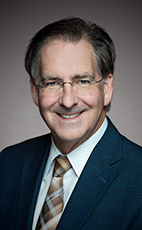
House of Commons photo

Crucial Fact

  • His favourite word was actually.

Last in Parliament April 2025, as NDP MP for Windsor West (Ontario)

Lost his last election, in 2025, with 28% of the vote.

Statements in the House

Citizenship of Canada Act November 7th, 2002

Mr. Speaker, it is a good question in the sense of the definition of the actual bill. There are a lot of discrepancies that can happen through its actual interpretation. It is a good point that has to be taken in mind. We have to have clarity with some of those issues. If they are not vetted through this process, it will lead to more confusion than we have seen through immigration, citizenship and the actual application process. It is something that has to be debated thoroughly with regard to the clear definitions of how things are constituted and how they will be applied. If that does not happen, the bill will fail again.

Citizenship of Canada Act November 7th, 2002

Mr. Speaker, my hon. colleague's question is a good one. It poses a philosophical challenge in terms of thinking about what has taken place over the last few months in Windsor.

I live on Elm and University, about a block away from the Detroit River. I can look down my street and see the Detroit River. It is a multicultural, working class neighbourhood.

What is interesting is that when I walk down the street to our beautiful waterfront and look across to Detroit, Michigan, one of the buildings I see is the Rosa Parks Tower. Rosa Parks, as we know, was someone who fought for civil liberties because of the experience of hate, racism, bigotry and all those different things.

I look at the towers standing on the Detroit waterfront. It is very empowering because they have been there for many years and they signify something very special.

Rosa Parks' commitment and her dedication to fighting for some of these issues are being challenged nowadays and it is by the same country which I think has forgotten that it is not about the colour of a person's skin. but it is about the content of an individual and his or her ability to participate, to be a functioning member. More important, it is about the belief in building a country in which one should not be judged by the colour of one's skin. Unfortunately, we are seeing that in Windsor. We see other groups and organizations that will be sucked into this vortex. It is very meanspirited. It is very disconcerting, the ability to do it.

I am an Ontarian, a Windsor resident. When the atrocities were committed by Timothy McVeigh in the Oklahoma bombing, he was from Michigan and I did not assume that anybody who came from Michigan was a terrorist. I did not assume that he represented the general population at large. I did not draw any conclusion or make any specific reference to that. I feel more of a sense of solidarity for fighting back against horrible people like that who create atrocities on all of us.

It is unfortunate what is happening right now at our border. It is not just the economic issue of people being able to go back and forth and being able to trade. There are social and cultural elements as well. We have a great symbiotic relationship with the city of Detroit which is only two miles across from Windsor in terms of the border. It is a very special relationship. I would like to see that relationship protected and enhanced.

We are seeing a wonderful revitalization of downtown Detroit. It has very special connotations for the whole nation. We play a good role on our side. However the current situation is making it very difficult and it is setting us back in many respects. More important, more people are fighting back on this issue and they will not give up because it is not about what one looks like, it is about who one is as a person.

Citizenship of Canada Act November 7th, 2002

Mr. Speaker, I am thankful for the opportunity to participate in this important discussion on Bill C-18. When we talk about citizenship, it is one of those inherent rights that is a privilege as well as an important process of involving oneself in society. People receive the opportunity to vote and receive a status that was granted to other people who have been here for many years, decades as well as generations. Citizenship is an inherent process that has to be taken seriously.

This bill is another attempt to improve the process and there are actually some improvements in the bill that the government should be commended for. I have some reservations with some other points and I want to discuss them now because this will be an important debate as we move along during this process.

The hon. member before me had mentioned some specific negative cases that are serious with regard to citizenship and immigration. However to give a balance in terms of what else is out there, we have recently seen many immigrants become citizens and contribute quite profoundly to the formation of this country not only in the past but even currently.

We can look at authors such as Rohinton Mistry, who is a nominee for the Giller prize. During his book tour he was recently harassed at the American border because of his ethnicity, despite the fact that he is a Canadian citizen. He is contributing quite profoundly to the arts, culture and economy of Canada and is a good example of bringing people forward who can contribute. Our own Governor General, for example, is someone who has become a Canadian citizen and is contributing quite well to the Canadian public discourse and service.

Those people cannot be forgotten. That whole process must be scrutinized very significantly. We are talking about a process where by we are building a country because our current birth rate is deficient in renewing itself in a healthy manner to sustain ourselves in terms of our quality of life, our economy, and the way that we can function in the world.

Canada's population has now reached 30 million people. Census data shows us that the main source of Canada's population growth between 1996 and 2001 was immigration. It is something that I have concerns about in terms of a nation. We must have a healthy policy to bring in new citizens and have the resources available because I believe other government policies are affecting our birth rate and ability to sustain ourselves.

A good example is the debate that recently took place with regard to student and youth issues in our country, They are having to go to school much longer in life. They are offset with significant financial burdens that have been profound and have developed at rates much higher than the rate of inflation and the cost of living. They have had to delay their marriages, families and other opportunities and that has contributed to some of the problems we have.

Youth these days often work two or three jobs to be able to sustain family development. That has had a result with regard to our population growth. Nevertheless, that is what makes Bill C-18 so important in terms of getting it right and renewing our numbers in this country.

One of the things that is important to recognize in Bill C-18 and has not been talked about very much in the discussions I have heard but raises some concern with me are the fees that are increasing. Working formerly at the Multicultural Council of Windsor and Essex County I have had the opportunity to work with refugees, landed immigrants, as well as new citizens. There is an increasing financial burden on those people coming into our country. It is taking a toll on their ability to live with dignity and, more importantly, to get on their feet, qualify for certain educational or training programs and get into the economy in a full capacity that is going to lead to their contribution to our country in a meaningful manner.

The fees for actual citizenship would be increasing. It would be $200 for an adult and $100 for children. There is no distinction. For example, a family consisting of two parents and two children would now pay $600 more. This is similar to some of the fees of the past, namely the head tax on landed immigrants. It is something that has been substantially added to the process where people must pay thereby creating another financial burden. It is like, “Welcome to Canada, you are now in debt”. That is a big problem because we must provide the opportunity for people to contribute back into society quickly and readily. Having a debt load will not encourage people to pursue the educational aspects necessary to be productive and invest in other options such as training or the things they need to be successful in our country.

Another issue that gives me some concern is the changing role of the commissioners. The decision making process is being taken from them. I would rather see that as opposed to a potential patronage appointment. Perhaps local communities could get involved in terms of selecting a commissioner who would be someone who is responsive to their community and has been involved there for many years. Some of the commissioners who are doing that now are actually from those backgrounds. I would like to see the ownership happen from the bottom up in terms of the community having access to the commissioner and being able to participate in that process.

Through my program I have seen youth come through and find training programs or go back to school. Eventually those with landed immigrant status got their citizenship. One of their proudest moments is to have the opportunity to be able to swear allegiance in the ceremony. To have some specific local connection is very important. Having the bottom up approach for the selection would be much more advantageous.

Another interesting aspect to the bill is the new oath. I will read the new oath for the general public so it understands what new citizens are saying with regard to their commitment to Canada. It states:

From this day forward, I pledge my loyalty and allegiance to Canada and Her Majesty Elizabeth the Second, Queen of Canada. I promise to respect our country’s rights and freedoms, to uphold our democratic values, to faithfully observe our laws and fulfil my duties and obligations as a Canadian citizen

Our country must ensure that it is not a rhetorical comment back, something that is not going to be met on the other side without the full support of our community and government. That is something that sadly enough has happened with some qualified people coming to our country who have the credentials that are necessary but are not allowed to practise their skills.

In Windsor we have many people who are physicians or engineers. They have a number of different professional credentials and they cannot practise their educational skills, qualifications and investments that they have made in themselves to be fully productive. When they take that oath the government should be mindful that it needs to provide the appropriate bridging mechanisms so that these people can be successful and also have a country that believes in them as much as they believe in their new country.

There is a new program called clear residency requirements. I have some reservations with regard to that process. There are different individuals and they have to spend three to six years here, but at the same time if they are students, visitors or temporary workers they only get a half day for every day they are in Canada. I have some reservations about that particular aspect of the program.

Students studying full time might become immersed in their studies. They become very involved. They are paying significant tuition. As well as that they are paying an advanced tuition if they are from outside the country. They can fall in love with this country. I know that has happened. One just has to go to the university and one will find people who have come here who truly fall in love with this country. They are dedicated full time students. They are involved and volunteering. Why are they getting a half day? I do not know why that was decided. Why not a quarter? Why not an eighth? Why not a full day? That is important when they are making a significant financial commitment to our country and it should be recognized. It is also a cultural and educational commitment.

I do not understand why half days are imposed on students. It really takes from the momentum of them graduating as, for example, Canadian citizens after spending three or four years getting an undergraduate degree and maybe a graduate degree after that. They would only be enhanced. It also takes away from the business argument. We have seen what is happening at our border right now where even Canadian citizens are being harassed by the United States because of their background and race.

Specific people who are being targeted have come to my office in Windsor. It is not right or fair for them to be targeted, because they are Canadian citizens.

I will use students as an example. They have gone through the programs and have met the education criteria and are ready to contribute. They might have the opportunity to do business elsewhere in terms of living in Windsor and working in Detroit. A lot of that actually develops, which is healthy for the Canadian economy because they are bringing in new wages and taxes, and they are advancing themselves.

Having Canadian citizenship is so important for them to be able to do that. I would like to see that advanced. It could actually help their business and development growth. The recent border problems really illustrate the need to have the foresight to protect people who invest in our country and contribute.

That situation in itself is really interesting. There are doctors, lawyers, and other people who go over just to visit family. They have lived here for 10 and 20 years and they are being fingerprinted and photographed. There are individuals whose family members have been detained for over two hours, and their young children sleep on the floor in the United States office, and they are not able to get back into Canada. They have done this when they wanted to get into the U.S. Then when they want to come back to Canada, they have to go through this process. I do not know how their fingerprints are going to change over a matter of hours. Nonetheless that has been happening.

We should really support those people who get this type of responsibility and make this oath to Canada. One of the reasons I feel so strongly about the residency concerns relates to the fact that we are going to lose opportunities for people because they will still be waiting with an unknown status. It is bad enough that the dual citizenship of Canada is not always respected right now, but it will be even worse for those who actually have a graduate degree, who have been paying taxes in Canada and who have been contributing to this country. They might be made more vulnerable because they happen to be students. I do not think that is right.

With regard to the rest of the bill, it does have some positive elements with regard to the opening up of second generation Canadian families born in other countries. We see a lot of that. Reconnecting the family unit is very positive. It is something in which we need to invest, in terms of making sure there is access for people to bring people forward who are going to contribute. They have the actual wherewithal and more important, they have the support not just within the extended family but also within the business community and this makes our communities strong.

Windsor has 94 different ethnic communities. That makes us the second most diverse area, outside of Toronto. It is a healthy environment with people supporting people. We need to recognize that having the family unit strengthened is a value that we have currently in Canada and it is one we want to extend as we develop the citizenship portfolio for people.

With regard to the actual bill itself, my concerns have been expressed. I look forward to further debate on it before making my personal decision about supporting the bill. There need to be some changes. There need to be some improvements. It is something that at least has been worked on. It has failed in the past but I am hopeful that this time we can work on some of these problems and accomplish some benefits.

We really do not have time to waste in the sense of making sure that our citizenship and immigration is something that thrives. Our other government policies certainly are making it difficult for Canadians to have a strong birth rate that will sustain our economy.

Border Security November 7th, 2002

Mr. Speaker, on September 25 the Prime Minister and the Premier of Ontario launched a 60-day process to determine the best use of $300 million to alleviate the border problems in Windsor. We looked forward to an open and accessible process that would have the best interests of the community in mind. That is not happening. The joint management committee will not hold a single public meeting. The integrity of the process is also in question.

Can the acting Prime Minister tell us if the Minister for International Cooperation has used her office to influence or interfere with the integrity of the process and will there be a public meeting before decisions are made?

Automobile Industry November 1st, 2002

Mr. Speaker, two weeks ago the Minister of Industry responded to my question on the need for an auto policy by saying he “convened a sector council”. That meeting was in June. His answer to how he was protecting one in seven Canadian jobs, he said not to worry, that he had talked to some people four months ago.

People are worried. In fact more than 20 Ontario mayors have called on the minister to meet with him to discuss a new auto policy. The mayors have joined the CAW and the big three and it seems that everybody is on side. In fact the list of those who do not understand seem to have dwindled to one, the industry minister himself.

Will the minister commit today to finally taking some real action and agree to meet with the mayors in December? Yes or no.

Canada Pension Plan October 23rd, 2002

Madam Speaker, sitting in between the two hon. members, it was much like watching a tennis match left and right. My neck is sore from the last five to ten minutes of debate, but at least it was lively.

I am thankful for the opportunity to talk about Bill C-3. I have some concerns with regard to the bill, as do my New Democratic colleagues. There are three main points I would like to talk about.

The first is the lack of rules with regard to pension funds and how they would be administered, monitored and where they would go. The second is that there does not seem to be a comprehensive business plan for such a large investment that is really in a public trust through the Canada pension plan and the historic relevance to Canadians. The third is just outright bad timing, looking at the market right now. If a person's house were on fire, the person would not rush the furniture back inside the house.

This is very bad timing. We have seen tremendous upheaval and losses in markets. They will be rushing public funds, suitcases full of Canadian taxpayers' money, into the fire and making them very vulnerable at a time when the market needs to straighten itself out.

The Canada pension plan is one of those pillars in Canada and in the free world with regard to securing some type of relevance and more important, some type of stability for one's working commitment and then having the ability to retire with security. It is about the ability for a person to pay for his or her housing, food and clothing and to participate in a meaningful social life once the person has completed his or her term of service in the workplace. That is something that is being put at risk with regard to this particular amendment.

That is one of the reasons the timing element is so critical. By 2012 there will be $120 billion to $150 billion that will be put into the basic domain and at risk. That is a concern because that growth is something that should be secured as opposed to potentially put at risk at this particular time.

Today we saw the release of an ethics package by the Deputy Prime Minister. Canadians are yearning for more ethical conduct in Parliament. As well they are looking for more ethical conduct in the business community. We have seen the recent scandals. A few examples are Enron, WorldCom and Arthur Andersen, where there has been clear void of ethics in terms of reporting their financial earnings, what their business plans have been and what their actual profits were. That is a real concern. That is no different from the ethics issue in Parliament.

Canadians feel really uncomfortable with the current conditions and the treatment by the business community in business practices that have cost them earnings that they and their families have worked for. They have put that in the trust of investment and they have not had returns but have had significant losses. I do not think there have been many people who invest in the market who have not been affected by some of these things. Some of it is poor ethical behaviour on behalf of corporations. They have boards of directors too and some of them may not have been aware of all the things that were happening with their prospective businesses.

That brings me to the appointment of the 12 member board. There does not seem to be a clear process with regard to the appointment being independent. It is going to be a patronage system. It is not going to be representative of the public trust, being the actual pensioners and their earnings, citizens or different types of representative organizations. They are going to be appointments. That is not very fair and that is not proper. More important, it is going to lead to some very questionable practices.

Even if the 12 members are selected in earnest, their decisions in terms of the financial investments could have ties with regard to patronage or government contracts, all of those things. Whether it is intentional or unintentional, it casts a cloud of concern or at least ill repute over the whole process. We need to make sure that the Canada pension plan is one that is above reproach.

Canadians want to feel comfortable that their pension and future are tied significantly to a process that is pure, pristine and proper and not one that can be evolved through patronage appointments and basically who the appointees supported and how they contributed. That is the potential element with regard to the process that is underway.

We have had in this last stock market year 14% to 33% losses where normally we would have had 8%. Once again the timing is bad. We know that there is volatility. We know it is not resolved.

We know that the United States is having a difficult time with its economy. The latest projections are that it will actually have to borrow money. It will be in a deficit and it will have to borrow money to give tax incentives back to its citizens. We know that the market might be connected toward its productivity in terms of Canada and that makes us more vulnerable.

One of the concerns we have is the 30% in foreign ownership and once again the lack of rules with regard to the process. I quote from the actual document:

Our legislation specifically prohibits us from engaging in any investment activities other than maximizing investment returns....The policy further states that we will not accept or reject investments based on non-investment criteria.

That is very disconcerting because we could have the potential of no screening of where the money in the funds goes. We could actually prop up businesses as well as products that are harmful to the objectives of the Canadian government and Canadian people, whether it be sweatshops, arms production or any of the child labour situations that we have seen evolve. There will not be that due process and the board will not focus on that either. That will not be a criteria.

If Canadians had the reverse happening to them, where we had other investors propping up investment opportunities in Canada that had significant economic and social impacts on our communities, we would not feel very comfortable about it. I think that role by Canada would be very shameful if we had situations evolve where we had business investments made on the backs of immoral or questionable practices just so that we could extract a couple of percentage points more out of the system.

With regard to the opportunities that are facing the country, the challenges also lead to opportunities. With some of the funds there could be more of a focus on the municipal bonds programs or the Ontario bonds program. I note they do not pay the same rates of return as other opportunities but there is one taxpayer and the fact is that if we do not achieve the full result from the actual investment in terms of maximizing profit with maximized return, we will have stability. There are plenty of infrastructure opportunities to build our economy and to build our business community through the bond system.

I know municipally we have always sold bonds and they have been sold out within a day or two. They present anything from 6% to 7% at times for the actual return which is solid in terms of the inflation rate. It also provides an opportunity for the municipality to retrieve long term vision and goals so that we are able to build society, a community and advance our future business plans as a people.

We have to keep that in mind because there is only one taxpayer. Perhaps in getting a sense of security we would lose a couple of points. We could save because we know that even in the last results the Canada Pension Plan Investment Board lost $1.5 billion on stocks, just from April to June. We know that the money could have been paid off through lending to municipal projects or provincial projects that were actually offering successful rates of return. It is actually a win-win.

There is a real problem with regard to the bill and the lack of public participation. We have a problem with regard to the actual reporting of the board. It has 12 members. We know that they will be selected by the minister and they are going to be above reproach.

We have a situation where the fund will be up to $150 billion by 2012 and there will have been only four board meetings accountable to the public by then, one every two years. We will have $150 billion potentially and the board will only have to report to Parliament and to the citizens of Canada four times. That is incredible. It is an incredible public trust on people who are appointed through a patronage system and I do not think it is proper. It is shameful because it puts this situation at risk.

Canadians are looking for more stability now. We have our situation with our health care, our pensions and with regard to deciding upon where we want to move forward with social planning. We do not want to put things further at risk. For that reason, I cannot support this bill. I believe it should be turned down by the government, especially in the time frame we have right now.

Automobile Industry October 21st, 2002

Mr. Speaker, the government sat and watched the Auto Pact die and the industry slide into crisis. The CAW, the big three and municipalities are calling for a federal auto policy. Last week Navistar Chatham announced the closure of its truck plant. It is moving to Mexico. At almost the same time a Windsor plant was proposed by DCX with a request for federal support. All the Minister of Industry can say is that our health care system is incentive enough, the health care system he and his government gutted.

Can the minister explain why he is so intent on screwing up our auto industry, just like he did our health care system?

Nuclear Safety and Control Act October 10th, 2002

Mr. Speaker, those were great points.

One of the biggest things with regard to this whole amendment is allowing people to escape responsibility and that is not right. One should not be able to escape responsibility. If one is going to invest in something, then one should own up to it with regard to getting a benefit but also be responsible at the end of the day for what it causes for everyone else.

Nuclear Safety and Control Act October 10th, 2002

Mr. Speaker, the member raised a couple of good points that we need to consider with regard to Kyoto.

It has often been described by most people as a baby step. It is important to recognize that Kyoto is just the beginning in terms of what we need to do to turn the planet around to be sustainable. Kyoto and the terminology that has been used to express it, the devastation that it would wreak upon our businesses, our communities, our lifestyles and all those different things, just shows the fear that has been propagated out there. It is not accurate. Kyoto is just a baby step in dealing with this.

Sure we could go down this path if we wanted to use green credits or something similar with regard to nuclear power. I do not think that is right. We should be moving to more sustainable energy and exporting that if we can through wind and other energy efforts. Conservation has not been talked about as something we need to do as a society.

Kyoto is just the start of things in terms of turning the planet around. If we want to use nuclear power as a way of being able to escape it in the sense of not doing our part, that would be wrong. I hope that our government would not head down that road. If it does create those additional byproducts that are so bad for our society and so bad for our environment and which would leave a legacy, and they are literally a legacy for other people to deal with, then that is wrong.

Kyoto can be an important start and we do not have to use nuclear energy as a way of doing that. That would be a terrible decision by our government. It would be a backhanded slap on Kyoto and not really deal with the issue in terms of creating the sustainable energy we need through products that are going to be a benefit for us in the long term and not let other people deal with it.

Nuclear Safety and Control Act October 10th, 2002

Mr. Speaker, I say to the member that I am sore as well from playing soccer yesterday. I had to stretch out several times this morning.

It is an important issue with regard to the costing of the whole process. It is unfortunate and a good example in terms of legislation and the lack of communication is that you could actually purchase and make a financial investment on a very important piece of property for yourself and your family's future and within an hour before it was finalized, your lawyer notified you of that. The lawyer did not catch it, or whatever happened. That is a very serious problem. We have run into this in our municipality a number of times and it has caused a lot of problems.

We have to look at the larger picture with regard to costing, with regard to opening up the window for the lenders. I still believe that you are investing in something and you are responsible for those investments. This bill weakens that. I really believe that you should have to have some type of connection to that. It is a very high risk business. It potentially comes with unlimited profits.

We do not know how much energy will cost in 10 years or 20 years. We know there are going to be shortages. We know there is going to be development in terms of world population. We are involved in exporting more energy resources to the United States and we actually have agreements that bind us to that.

We do not know what the potential profit will be. Hopefully we will have decent pricing, a decent environment and a fairer system at the end of the day that people can afford, but there is a great potential for huge profits to be made out of that. That is why I believe there still should be a connection there and it should be reinforced and not eroded.