Madam Speaker, as I mentioned, there is a tendency to identify and amplify the issues that divide us, rather than the issues that unite us. This should not have been brought here, in my personal view.

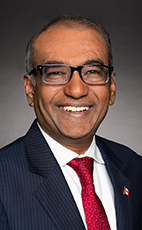 House of Commons photo
Won his last election, in 2021, with 45% of the vote.
Business of Supply May 10th, 2022
Madam Speaker, as I mentioned, there is a tendency to identify and amplify the issues that divide us, rather than the issues that unite us. This should not have been brought here, in my personal view.
Business of Supply May 10th, 2022
Madam Speaker, 80% of Canadians practise one religious faith or another. As I have said, this is more of a cultural thing, a tradition of the country's heritage that we share every morning.
Business of Supply May 10th, 2022
Madam Speaker, I will be sharing my time with the member for Kings—Hants.
I rise today to speak to the Bloc Québécois opposition day motion to stop the non-denominational prayer that we have at the beginning of each day in this House.
This month, the Angus Reid Institute, in partnership with Cardus, published a report that offers a comprehensive and first-of-its-kind look at the faith journeys of Canadians, not just among majority religious communities, but across the religious spectrum. Nineteen per cent of Canadians, or one in five, are classified as non-believers. However, four in five have some openness to God or spirituality. The cultural mosaic in Canada is ever-shifting. While those born in Canada continue to shift further into areligious identities, being raised in a religious tradition is common in Canada, with 72% saying that they grew up with religious teachings.
As a Hindu Canadian, I concur that Canadians who are raised in the Hindu faith tend more toward the privately faithful. With that said, the prayer that we have, in my view, is more a tradition that is part of the fabric of the society in our Christian majority Canada, and I support that we continue the current practice.
Many Hindu Canadians during Christmastime have lighted a Christmas tree in their homes. It does not mean that Hindus are practising Christianity; it is about embracing the culture and heritage of the society we live in. The prayer that we have every day, while reflective of the different religions embraced by Canadians, also represents the culture and heritage of our country.
Let us look at the practice of the prayer that we have from a historical perspective. Although the practice of reading a prayer at the start of each sitting was not codified in the Standing Orders until 1927, it has been part of the daily proceedings of the House since 1877. Much later, suggestions were made to rewrite or reword the prayer in a non-sectarian form. Until 1994, no major change to the form of the prayer was made, aside from references to royalty. At that time, the House concurred in a report recommending a new form of prayer, more reflective of the different religions embraced by Canadians. This prayer, which we use now, was read for the first time when the House met to open its proceedings on February 21, 1994.
Sir Gary Streeter, a member of Parliament in the United Kingdom, on a similar motion in the U.K. House of Commons in 2019, said:
The crux of the argument for abolishing Parliamentary Prayers is that by taking all references to religion and God out of politics and public life, we will then have a truly neutral public square. However, that would just be to replace one worldview and set of beliefs with another. As human beings, we all bring a set of beliefs about the world and the nature of human life to any debates around pursuing the public good. Secularists might argue that their worldview is the best on which to base society, but they cannot do so by claiming neutrality. Rather than striving for a ‘neutral’ public square, we should instead recognise that we are increasingly becoming a pluralistic society, where a multitude of different beliefs and worldviews coexist. In a pluralistic society, freedom of belief is vital, yet this is not achieved by forcing all references to religion and God in public life to be pushed to one side.... For those who do object, for whatever reason, there is no obligation to participate in the prayers.
In an article published in the Canadian Parliamentary Review in 2009, Martin Lanouette said:
...the form and content of the prayer recited in parliamentary legislatures is part of a debate that seeks to pit the special relationship each legislature has with its religious heritage, against the desire to adapt this heritage to contemporary cultural realities.
He went on to say:
So why does the need for prayer persist despite this secular storm and all the unending controversies? As stated in Marsh v. Chambers, traditions are often seen as “a part of the fabric of the society,” and at a time when contemporary societies are tending to become more diverse, the argument for tradition continues to occupy an important place in the collective imagination. A defensive reaction? Quite likely. A bastion of identity? Most definitely. All of which has not stopped many parliaments from wanting to take matters even further, not to weaken the “old” identity but to breathe new life into it.
He continued:
If it is to be practised, this ritual must be an act of recognition that focuses on uniting rather than dividing people. Simply eliminating the prayer is another option, but it is not a more impartial one, since the adherents, who have the same rights, will feel they are victims of discrimination as well.
There is a growing trend in our society to identify and amplify the things that divide us, rather than the things that unite us. The intolerance that is being propagated today by those on the extreme left of the political spectrum is the same intolerance that was the cornerstone of the extreme right. In the name of political correctness, voices are being shut down, books are being banned, and any view or opinion that deviates even an inch from the far-left ideology is immediately drowned out.
The practice of praying does not mean that the state is in bed with religion. None of the issues we discuss and debate and none of the legislation we pass here in any way or form connect any religion to the state. Let us continue the practice of the prayer we have out of respect to over 80% of Canadians who practise one religious faith or another.
As a politician, I go to temples, mosques, synagogues, churches, etcetera, but it does not mean I associate the state with religion. Since 2019, I have seen the Bloc Québécois opposition day motions, and never once have I seen them propose anything that is of importance to Canadians' economic realities. Today we are facing challenging times; the energy transition is going towards the battery, and Quebec and Canada could become leaders in the world in this technology. We have not seen the Bloc Québécois present any motion on anything that is of economic importance.
Asian Heritage Month May 9th, 2022
Mr. Speaker, Asian Heritage Month is an opportunity to recognize the contributions Canadians of Asian heritage have made and continue to make to the social, economic, political and cultural heritage of Canada.
I organized Asian Heritage Month celebrations on Parliament Hill yesterday, with about 500 people attending and performances from 10 diaspora groups. I would like to thank the volunteer team, led by my friend Karunakar Reddy Papala, fondly known as KK. The team included Bangladeshi-Canadian Shah Bahauddin, Cambodian-Canadian Vuthy Lay, Chinese-Canadian Alex He, Iranian-Canadian Alma Rahmani, Pakistani-Canadian Dr. Syed Aziz, Sri Lankan-Canadian Anura Ferdinand, Taiwanese-Canadian Tony Fan, Tamil-Canadian Sivaruban Sivalingam, Vietnamese-Canadian Can Le and also, Jessie Xue, Monica Gupta, Puneet Aggarwal, Reaz Zaman and Subir Paul Chowdhury.
Pakistani-Canadian Community Leaders May 2nd, 2022
Mr. Speaker, to all my Muslim brothers and sisters, Eid Mubarak.
I would like to congratulate Senator Salma Ataullahjan on being honoured by the president of Pakistan with one of the highest civilian honours, the Sitara-e-Pakistan, in recognition of her humanitarian work. She is the chair of the Standing Senate Committee on Human Rights and is working hard to help Afghan families desperately trying to come to Canada.
I would also like to recognize Dr. Anis Ur Rahman, Sadaf Ebrahim, Dr. Syed Aziz and Syed Kashif Alamdar of the Canada Pakistan Association. I also appreciate Faheem Affan, Iftkhar Mirza, Mashooda-Lubna Syed, Mobeen Khaja, Moinuddin Siddiqui, Muhammad Zulfiqar Bangash, Qamar Masood, Tawahar Rana and Uzma Khan. All these community leaders are working hard for the Pakistani-Canadian community and beyond in Ottawa. I would also like to recognize the important contributions the Pakistani community has made to the socio-economic development of Canada.
Hindu Heritage Month May 2nd, 2022
Madam Speaker, Hindu Canadians, like all other Canadians, stepped forward and helped. Hindu charitable institutions organized vaccination drives, organized food for the needy, and helped those in need who were struck by this pandemic.
Hindu Heritage Month May 2nd, 2022
Madam Speaker, there are several federal government programs that allow multicultural communities to celebrate various events. At Canadian Heritage, for example, I know there are funds for The Great India Festival, a three-day festival that is organized every year in Ottawa. Like many other kinds of heritage, the Indo-Canadian or Hindu heritage is also promoted. In addition, there is one specific program that every not-for-profit organization can use, which is the Canada summer jobs program, where students from the community can be employed to help organize the various events that are happening in their communities.
Hindu Heritage Month May 2nd, 2022
Madam Speaker, Quebec has always shown welcome to Hindu Canadians. In fact, less than two weeks ago, I was in Montreal celebrating a Hindu-Canadian festive event.
November is a holy month. Mid-October to mid-November is the time when major Hindu festivals, such as Diwali and Navratri, are celebrated, so we thought November would be an appropriate month for Hindu heritage to be celebrated in Canada.
Hindu Heritage Month May 2nd, 2022
Madam Speaker, Hindu heritage is adaptable. Wherever it goes, it adapts to the communities in which it resides. In the same way, Hindu Canadians, who have been coming to this wonderful country for more than 100 years, have adapted to the culture and heritage of Canada and Canadians. Just to give one example, it is very common to see Hindu-Canadian families lighting Christmas trees during Christmastime in Canada, and that is the beauty of Hindu Canadians.
Hindu Heritage Month May 2nd, 2022
moved:
That, in the opinion of the House, the government should recognize the contributions that Hindu Canadians have made to the socio-economic development of Canada, and their services to the Canadian society, the richness of Hindu Heritage and its vast contribution to the world of arts and science, astronomy to medicine, and its culture and traditions and the importance of educating and reflecting upon it for our future generations in Canada by declaring November, every year, Hindu Heritage Month.
Mr. Speaker, namaste. Namaskar. This is the Hindu greeting with palms held together and centred in front of the chest while bowing the head down slightly. It means “the divine in me bows to the divine in you”. It shows respect and humility.
Our wonderful country Canada is an ongoing successful story of a nation with extraordinary cultural, ethnic, linguistic and religious diversity among its residents. Hindus started arriving in Canada more than 100 years back. There are about 600,000 Hindu Canadians, and they arrived here from India, Sri Lanka, Nepal, other South Asian and Southeast Asian countries, African countries, Guyana, Trinidad and Tobago, other Caribbean countries and many other places.
Hindu Canadians have made and continue to make significant contributions to Canada’s socio-economic, political and cultural heritage as doctors, scientists, engineers, lawyers, business leaders, artists, academics, government officials, elected officials, etc. From building institutions to being philanthropists, Hindu Canadians have excelled in all services and sectors and in all walks of life.
This month, the Angus Reid Institute, in partnership with Cardus, published the results of a survey that offers a comprehensive and first-of-its-kind look at the faith journeys of Canadians across the religious spectrum. According to this survey, Canadians raised in the Hindu faith tend to be more privately faithful. They do not necessarily gather as formally and frequently, but nonetheless profess a strong personal connection to their religion. While for many Canadians of Hindu faith attending a temple is a less frequent activity, many have a shrine within their home. Finally, among the seven religious groups, Hinduism is one of only two that had positive views from Canadians in every religious faith group.
For over thousands of years, Hindus have contributed to mankind's deep knowledge of mathematics, including the invention of zero, architecture, medicine, astronomy, chemistry, navigation, metallurgy and engineering, just to name a few fields. Yoga and meditation are also Hindus' important contributions to world civilization.
On Hindu heritage, Hindus have an ancient, magnificent and robust inheritance, which they have received from numerous sources: our wisdom traditions, our religious rites and rituals, our literature, our many arts and crafts, our elders, our fairs and festivals and, above all, our many samskaras, or sacraments in our home. That heritage not only gives us a drishti, or world view, but defines our purusharthas, or aims of life, and equally defines our sanskriti, or culture. In short, Hindu heritage defines our dharma.
In a civilization that is so ancient, what strikes me is that it has not only an unbroken tradition of 5,000 years of recorded history, but also the plurality or diversity of our tradition. Even in the absence of a monolithic religious dispensation, we Hindus, whether in Canada or anywhere in the world, are connected by an invisible thread that binds us together. That is the strength of our Hindu heritage.
Our wisdom traditions, which start from the Vedas, flow into the Upanishads, or forest discourses, and are followed by our Puranas, or our songs and stories, are philosophically rich and form the foundation of our temple traditions. It is the same vast heritage that informs our costume and cuisine, our habits and behaviour and our arts and crafts.
Hindu heritage does not restrict itself to religious matters. We have a strong aesthetic foundation that leads to a celebration of saundarya, or what is beautiful. We celebrate beauty in our lives through stories and paintings, song and dance, colour and cuisine, festivals and many family events.
Though ancient, our heritage is alive and growing. It is open to influences from other civilizations and freely adapts and gives to whomever we come into contact with. Thus it is that, for us Hindus, Canada is a comforting and embracing home away from home.
Let me now very briefly touch on the Hinduism that is the oldest and one of the largest world religions. Hinduism is also known as sanatana dharma, or eternal natural law. Hindus believe in vasudhaiva kutumbakam: The world is one family. Hindus believe in the oneness of all living beings, everything in creation and the universe. Om is the most sacred sound and symbol of Hinduism. It is chanted aloud and is known as the sound of the universe, and it means universal consciousness.
The swastika is one of the most sacred symbols for Hindus. In Sanskrit, the word swastika means “that which brings good luck and well-being”. One of the oldest languages in the world, Sanskrit is the language of Hindu sacred texts.
While Hindus do not have one holy book, the vedas and Upanishads penned thousands of years ago teach core spiritual knowledge and philosophy. In addition, the Bhagavad Gita and Ramayana are the most loved sacred texts. The Bhagavad Gita teaches us that true knowledge is to see God in each soul. Hindus introduced the concept of ahimsa, non-violence, to the world.
I now go back to Hindu heritage. For many people in the world, cultural heritage refers primarily to tangible or material cultural heritage, such as archaeological sites, historical buildings and precious objects like sculptures, pottery and ornaments in museums. For them, they are what matter the most. There has always been an intangible or living cultural heritage underlying material manifestations that has not been promoted to the extent it deserves. This cultural knowledge is typically oral and is transmitted from elders to younger generations.
UNESCO, the United Nations Educational, Scientific and Cultural Organization, describes cultural awareness or cultural knowledge as what individuals, groups, communities or nations consider as an element of their identity that guides people to respect special values, attend special places, produce and utilize certain objects and manifest certain behaviours.
The intangible, or living, cultural heritage elements related to Hindu heritage that we need to preserve, celebrate and promote are, number one, oral traditions such as songs, proverbs, tales, legends, myths, epic poetry, dramatic performances, storytelling, etc. Katha is Hindu storytelling, performances of which are ritual events that involve storytellers who recite sacred texts, such as the Puranas or Ramayana, followed by comments.
Number two is performing arts, which cover theatre, vocal and instrumental music such as Carnatic and Hindustani music, as well as dances like Bharatanatyam, Kathak, Kathakali, Kuchipudi, Manipuri, Odissi and Mohiniattam.
Number three is social practices, rituals and festive events such as Diwali, Ugadi, Holi, Navratri and Vaisakhi, new year celebrations and traditional games, etc.
Number four is traditional knowledge, traditional cuisine and traditional medicines, etc.
Number five is traditional craftsmanship, which brings together numerous traditional arts in the fields of pottery, woodwork, metalwork, jewellery, textiles and leather work.
It also makes business sense to promote culture and heritage. The arts, culture and heritage sectors of the Canadian economy generate more than $57 billion and provide close to 673,000 jobs in sectors such as music, performing arts, heritage institutions, festivals and celebrations. The activities related to safeguarding Hindu heritage, as per the UNESCO definition, cover awareness-raising, capacity-building and education, inventory-taking, documentation, research, promotion, protection, preservation, revitalization and inscription. This cultural knowledge is typically oral and is transmitted from elders to the younger generations. It is very mobile, as it transcends borders and is adopted by other nations. While it keeps its core, it allows its peripheries to be modified according to the tastes of the time and following the surrounding communities' creativity.
The Hindu-Canadian community has talented individuals, experienced practitioners and creative artists, researchers, teachers and entrepreneurs who can help with these aspects of safeguarding Hindu heritage in Canada. We can have promotional activities such as organizing storytelling events, holding photo and video exhibitions, planning competitions, organizing performing arts events and releasing promotional material through media and online platforms. There are excellent capacities among us that need to be identified and employed.
With the recent census expected to be published next October, the population of Hindu-Canadians is expected to rise much beyond 600,000. Currently, there are more than 220,000 international students from India here in Canada and a majority of them are Hindus. With many of these students expected to become permanent residents and eventually citizens following their education, the number of Hindu-Canadians is expected to go higher.
According to the Pew Research Center, in the U.S. 77% of Hindu-American adults have a college degree and nearly 50% have a postgraduate degree. While this info is not available for Canada, the numbers are probably better here.
Hindu-Canadians are a peaceful and productive community and have contributed to the socio-economic development of Canada. They have also added to the richness of the multicultural fabric of our country. Many organizations and hundreds of individuals have expressed support for this motion. I will just name two or three: the Hindu Federation, the Coalition of Hindus of North America and the Canada India Foundation.
I conclude my speech by stating that making November Hindu heritage month across Canada would allow us to recognize, preserve, celebrate and promote Hindu heritage as defined by UNESCO's intangible or living cultural heritage. Proclaiming Hindu heritage month would also provide an opportunity to remember, celebrate and educate both current and future generations about Hindu-Canadians and the important role they have played, and continue to play, in communities across Canada.