Madam Speaker, it is quite boisterous in here. It is great to hear some lively debate about an issue that is probably one of the most important issues for our constituents, and that is health care.
It is great to see that the federal government has been working collaboratively with all provinces and territories to come to an agreement. An additional nearly $200 billion in funding will flow from the federal government to the provincial governments and territories. It will strengthen and improve access to, and equitability of, our health care system for all Canadians.
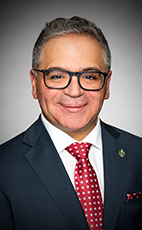
Usually, when I give a speech, I do not personalize it, because it is not about me, the member of Parliament for Vaughan—Woodbridge. It is about the residents back home. On health care, I want to share a personal story. I was born with a cleft lip. A derogatory term for a cleft lip or a cleft palate is harelip.
We grew up in Prince Rupert, a town in northern British Columbia. My parents were newcomers, like nearly everyone in Canada other than indigenous peoples. At that time, they were not wealthy and were very hard-working. My mom worked as a dietician at a hospital and then later on worked at a cannery in northern B.C. My dad was a pulp mill worker, a carpenter and a labourer.
I was born with a cleft lip, and I required a number of surgeries during the first 20 years of my life. Those surgeries did not take place in Prince Rupert. They took place in Vancouver. My mom would generally accompany me, and we would stay at a Ronald McDonald House or with family friends. I have memories of staying at a Ronald McDonald House in Vancouver 35 years ago.
The Canadian health care system was there for me. There were approximately seven surgeries during my lifetime, up to about 18 years of age. Cleft lip surgeries are not the most arduous, but there is discomfort, there is being put under and there is a hospital stay.
We never needed to pull out a credit card. My parents never had to worry about whether we had the money. They never had to worry whether they had to pay the mortgage, to put food on the table or to pay for their son's surgery. It speaks to the values that all 338 MPs inherently have with respect to our public health care system in Canada and that there is access for everyone. People do not need to worry about how much they make, where they are or who they are, because they have access. We need to maintain that.
We have gone through COVID. We know there are surgery backlogs and there are stresses on the system. I keep thinking back to those trips from Prince Rupert to Vancouver with my mother. We did not need to worry about the access and the equitability. I am thankful that my parents came to a country where that was provided for them and for our family. It is something that we all value and we need to work toward.
My mother worked her entire life. She is now in her early eighties and she needs a hip replacement. She has been on an urgent list in the province for approximately eight months, and we want to get that hip replacement done. We need to get rid of the backlogs. This agreement with the provinces and the territories is a very substantial step in removing those backlogs that were created because of a global pandemic, a once-in-a-hundred-year event.
It is important for us to thank every health care worker in our hospitals, doctors' offices and ambulance stations who are taking care of us. We need to understand that the government fundamentally believes that all Canadians must have access to health care that is independent, that is publicly funded, and where people can get a family doctor.
We need to believe in the principles of the Canada Health Act, that it ensures equitable and equal access to all individuals and that there is no two-tiered system. Canada's universal health care system is the pillar of our national identity. It is a pillar of my identity.
It represents Canadians' ongoing commitment to the values of equity, fairness and solidarity to ensure everyone has access to medically necessary health care services based on their health need and not on their ability or willingness to pay. The only card a Canadian should need to present when they seek medically necessary care is their provincial or territorial health card, not their credit card.
Our government has been vocal in supporting improvements in the health care systems, and yes, we need innovation to occur in our health care systems. In the city of Vaughan, we have a brand new $2-billion hospital, which was built over a number of years. It opened during COVID. The innovation that is demonstrated in that hospital is phenomenal. The quality of care that is offered is phenomenal. The people who work there are proud to work in that hospital. It is the first new hospital in Ontario in over 30 years. We need to continue assisting the provinces.
Our government has been vocal in supporting improvements in the health care system. We are firmly committed to a publicly funded system and the principle that everyone deserves access to quality, accessible and universal health care. Our health care system is evolving. We will continue to work closely with our provincial and territorial colleagues to ensure that it does so in a way that respects the principles of the Canada Health Act and the interests of all Canadians.
It is no secret that our health care system is facing challenges. We all hear it from our residents. We see it in the backlogs and in nurses being burnt out. We see it in not having enough family doctors. We need to fix it, and we are. The COVID-19 pandemic has not only brought to light the problems that existed previously in health care, but it has also exacerbated them. This is particularly true for diagnostic testing and surgeries, which are seeing record backlogs. There are very real problems, and Canadians expect their governments to work together to solve them. That is what we are doing, and that is what we have done with this agreement.
Our government is making historic investments in our public health care system. The federal government will increase health funding by nearly $200 billion over 10 years. This includes an additional $49 billion over 10 years. Those investments will support provincial and territorial efforts to modernize the health care system. They will also help to ensure that Canadians have timely access to family health services; shorter waits for treatments, diagnoses and surgeries; and more mental health and substance abuse services across the country.
The government will work with the provinces and territories to ensure those investments are used in the best interests of health care workers and patients, Canadians, in a way that represents and respects the principles of the Canada Health Act. Access to medically necessary services should always be based on health need and not on the ability or willingness to pay. To my New Democratic colleagues, the Canada health transfer has always been conditional on meeting the requirements of the act.
We take that requirement seriously. We have taken the necessary action every time we have seen patients being charged fees for medically necessary services, and we will continue to do so.
The Liberal government has been clear. Medically necessary health care must be covered by public health care insurance plans. If patients are charged inappropriately, the government will uphold the Canada Health Act and levy mandatory deductions to the Canada health transfer payments of provinces and territories that permit such charges. We levy these deductions to discourage the barrier to care that patient charges represent. No Canadian should have to choose between paying for groceries and paying for the medically necessary care that medicare is meant to provide.
Since 2015, we made $105 million in deductions for provinces that authorize patient charges for medically necessary services provided in private clinics, and we will continue to do so every time that happens.
For example, where provinces have not covered, or not fully covered, the cost of surgical abortion services, providing health care services in private clinics that lead to patient charges and the barriers to access they represent, this government has levied deductions to provincial health care transfer payments. Again, we must ensure these medically necessary health services are publicly covered.
I am proud to live in this country. My family chose this country, and Canada chose us. I was born with a cleft lip and, because we were here, we never had to worry about paying a bill and my parents never had to worry about me getting the treatment I needed.