
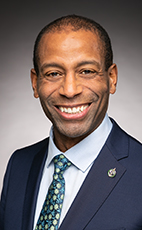
House of Commons photo

Track Greg

Your Say

Elsewhere

Crucial Fact

  • His favourite word is chair.

Liberal MP for Hull—Aylmer (Québec)

Won his last election, in 2025, with 62% of the vote.

Statements in the House

Election of Speaker May 26th, 2025

Mr. Chair, I recognize that we are gathered on the unceded traditional territory of the Anishinabe Algonquin people.

Since time immemorial, indigenous nations have gathered here to exchange ideas, share and work together. That is what Canadians expect of us here in the House of Commons. Today, a similar spirit brings us together. Some of us are here for the first time, while others have been here since 1984.

I was elected Speaker of the House during the second half of a minority Parliament. When I was elected, I promised to be a thoughtful and collaborative Speaker, who was at the service of parliamentarians.

In that Parliament, tempers ran high and co-operation was low. It was in that context that I learned the ropes of the job, often getting it right, and when I did not, putting in place measures to continually improve. To be frank, it would have been a difficult time for anyone in that role.

We find ourselves in a new minority Parliament. A new Parliament is a new beginning, but we do not have to start at the beginning. Although I continue to stand by my values of mutual respect between members, the business of Parliament must get done, with transparency, integrity and accountability and without gamesmanship. This is what Canadians expect from us.

In my first question period, I asked my colleagues to treat me like a new car: try not to get a dent on me on the first day. Well, I got one day. There are now a couple of dents, but I am still running. I am now a reliable car with experience. That is how I learned what all Speakers eventually discover: You do not become Speaker by just putting on the robes; you learn the role through experience.

Robes do not a Speaker make; it comes with experience. I already have that experience under my belt, and I want to put it to work for and to the benefit of the 45th Parliament.

Presiding over the debates of the House is the most visible part of the role. However, the Speaker's diplomatic role is just as important.

More than ever, Canada needs friendships around the world. From the early days of my Speakership, I insisted that Canada show solidarity with Ukraine, and I am proud to have organized an all-party parliamentary mission to Ukraine. During the long train ride into Ukraine under the cover of darkness with the protection of the Canadian Armed Forces, I was seated with my colleagues from the Conservatives, the Bloc, the NDP and the Liberals. Working together, we developed lasting friendships with the Ukrainians and strengthened their network of support in their time of need. This is another example of Parliament at its best.

It is more important than ever that Canada have strong friendships worldwide. I have forged friendships around the world to advance the interests of our Parliament. Among other things, this experience will contribute to the success of the G7 meeting that the Speaker of the House of Commons of Canada will host later this summer.

The Speaker plays another role right here. As CEO of more than 2,500 employees of the House of Commons, I support the services that underpin the rights and privileges of parliamentarians.

Under my speakership, money was well spent. We took steps never taken before. We started a new audit process. We implemented robust new security measures in and around Parliament Hill, in your constituencies, at your offices and at your homes. We did this so you and your family can feel safe while you do your job.

Given this wealth of experience, I am seeking your support for my re-election. I have the experience it takes to start making the necessary changes today.

This car has a few dents, but it also has character. The engine is strong, and I know the road. Let us go together.

Privilege December 17th, 2024

I am now ready to rule on the question of privilege raised on December 6 by the member for Thornhill concerning access to the parliamentary precinct.

In her intervention, the member alleged that a protest in the lobby of the Confederation Building on the morning of Tuesday, December 3 impeded her ability to access her parliamentary office and, more broadly, obstructed parliamentary business. She stated that, in some other instances, meetings had to be cancelled. Citing procedural authorities, previous rulings and committee reports on past incidents regarding access to the precinct, the member noted that such matters typically constitute prima facie breaches of privilege.

The member further argued that media reports on December 5 suggested that the members for Edmonton Strathcona, Hamilton Centre and Winnipeg Centre joined the protesters in the lobby of the building and were thereby complicit in preventing other members from accessing their offices. She suggested that this was an intentional obstruction of Parliament and could constitute contempt.

Other members intervened to provide their accounts of what transpired that morning, including the member for Battlefords—Lloydminster, who stated that her safety and her staff’s safety were jeopardized.

For their part, the members for Edmonton Strathcona, Hamilton Centre and Winnipeg Centre disputed the claims that they were involved in the organization of the protest. The member for New Westminster—Burnaby further noted that the question of privilege was raised several days after the events took place and therefore not at the earliest opportunity.

The Chair must first clearly state that the safety and security of members, staff and other visitors is always taken very seriously. Nobody should feel unsafe anywhere within the parliamentary precinct.

Upon hearing the concerns raised by the member for Thornhill, I immediately inquired with the Sergeant-at-Arms and the Parliamentary Protective Service, known as PPS, to ascertain the circumstances of the protest. Their account of events shows that, throughout the protest, the safety of individuals, including members, and the security of the precinct was never compromised. Furthermore, the appropriate level of resources, which were nonetheless significant, was deployed and the situation was resolved in a timely and peaceful manner.

In her submission, the member for Thornhill noted that media reports in the days following the incident led her to raise her question of privilege when she did, as they demonstrated an organized attempt to obstruct the business of Parliament. However, the Chair's view is that any obstruction to members, their staff and guests would have been apparent in the moment, regardless of what media reports would subsequently reveal. As a result, in raising her question on December 6, when the incident occurred on the morning of December 3, the Chair is not satisfied that the member raised the matter at the earliest opportunity. Nevertheless, the Chair still wishes to address this question of privilege by assessing the merits of the matter.

In the case before us, the Chair is being asked to determine if the events of December 3 impeded members in the discharge of their parliamentary duties. As stated in House of Commons Procedure and Practice, third edition, at page 108:

Over the years, Members have regularly brought to the attention of the House instances which they believed were attempts to obstruct, impede, interfere, intimidate or molest them, their staff or individuals who had some business with them or the House.

It further states on the same page:

Speakers have consistently upheld the right of the House to the services of its Members free from intimidation, obstruction and interference.

The incident was disruptive and stressful. It was indeed regrettable, for instance, that one member's guest cancelled his visit because of security concerns. It is nonetheless important to the Chair to reassure members that PPS followed the necessary protocols for addressing these types of situations. The PPS officers prioritize safety for all while allowing members to enter the building.

During the protest in the main entrance and lobby of the Confederation Building, members, staff and business visitors were redirected to enter the building through an alternate entrance while PPS officers dealt with the protest inside the building. Where warranted, PPS officers escorted members and their visitors to a secondary and secure door into the building.

In her submission, the member for Thornhill referred to previous cases where members were impeded in some way. Several examples involved a variety of events, such as protests or police security cordons that resulted in delays for members trying to access the precinct or the Chamber. The Chair would like to point out that breaches of privilege generally involved members being impeded in their access to a proceeding of the House or its committees. House of Commons Procedure and Practice, third edition, states at page 109:

In order to find a prima facie breach of privilege, the Speaker must be satisfied that there is evidence to support the Member’s claim that he or she has been impeded in the performance of his or her parliamentary functions and that the matter is directly related to a proceeding of Parliament.

In a ruling on a similar matter involving a sit-in in a minister’s office, coincidentally also in the Confederation Building, Speaker Milliken stated on March 25, 2011, at page 9246 of the Debates:

...in this particular case...there is little evidence to suggest that the staff of the minister were obstructed in the fulfillment of their duties.... In view of the very high threshold required in adjudicating such situations, in this circumstance the Chair cannot find that a prima facie question of privilege has arisen in this matter.

In the current case, while it was indeed disruptive, the Chair cannot conclude that members were prevented from discharging their parliamentary duties as concerns parliamentary proceedings. Accordingly, based on this high threshold, the Chair does not find the matter constitutes a prima facie question of privilege.

The Chair also wishes to address the allegations that members were involved in or assisted in organizing the protest. All three members named, while expressing sympathy for the cause of the cause of the protesters, categorically denied being involved in organizing the protest, stating that their interactions with the demonstrators were brief and unplanned. As is the custom of this place, the Chair takes members at their word.

That said, I would encourage all members to think twice before doing anything that could be construed as supporting a demonstration inside one of our parliamentary office buildings. While the grounds outside are open to the public and may be used for protests within certain guidelines, the buildings themselves are not public spaces and therefore, for obvious reasons, should not be used for this purpose. It is a very basic matter of security. While some members may be sympathetic to a cause and feel that a protest poses no risk to them, they should recognize that their colleagues may not feel the same way, and if the shoe were on the other foot with another cause in the future, their reaction might be very different.

I thank all members for their attention.

Privilege December 11th, 2024

I am now ready to rule on the question of privilege raised on November 29 by the member for London—Fanshawe concerning alleged intimidation during the proceedings of the House.

In her intervention, the member claimed that before and during the taking of the last recorded division on Thursday, November 28, the disorderly behaviour of many Conservative Party members reached an unacceptable level. She alleged that members were disruptive to the point where she and her colleagues could not hear their names being called by the table officers.

Furthermore, she indicated that her caucus had, prior to the vote, alerted the Chair and the Table to the possibility of intentional disruptions because of what she felt was inappropriate behaviour in the shared opposition lobby. This made it difficult for her to carry out her duties as the deputy House leader for the NDP and constituted a breach of privilege and even a contempt. The member described the behaviour of the Conservative Party members both in the House and in the lobby as unacceptable, toxic and designed to intimidate other members as they carried out their parliamentary duties.

The member for New Westminster—Burnaby weighed in to support the member's question of privilege. In addition to commenting on the lack of decorum during the vote, he alluded to what he considered as other objectionable behaviours by some Conservative Party members, whom he accused of being inebriated, and reminded the House that the party whips are responsible for ensuring a safe workplace that is free of harassment for members and employees who work with them.

Other members intervened on the matter, frequently with conflicting accounts of what occurred in the lobbies leading up to the vote, as well as on the floor of the House during the sitting and after adjournment. In particular, the House leader of the official opposition rose to fully deny the accusations made by the member for London—Fanshawe and the member for New Westminster—Burnaby. He detailed the events of the evening in question as he saw them, stating that it was the members of the New Democratic Party who acted in a harassing manner toward members and staff of the Conservative Party. He argued that if any contempt occurred, it was a result of the behaviour of New Democratic Party members, who stormed up the aisle to confront the Chair at the adjournment of the House and then approached the Conservative benches to confront some other members. He therefore requested that the member for London—Fanshawe withdraw her question of privilege.

The Chair will first deal with concerns about behaviour in the opposition lobby. As described in House of Commons Procedure and Practice, third edition, at page 295, and I quote:

Connected by doors to the Chamber, the lobbies are furnished with tables, armchairs and office equipment for Members' use. Members attending the sitting of the House use the lobbies to conduct business and are able to return to the Chamber at a moment's notice. The party Whips assign staff to work from the lobbies and pages are stationed in the lobbies to answer telephones and carry messages. The lobbies are not open to the public. Security staff control access to the lobbies in accordance with guidelines set by the Corporate Security Office after consultation with the Whips.

Whips and their staff have always ensured a harmonious cohabitation within the opposition lobby, a shared working space currently used by the three opposition parties as well as independent members. By tradition and convention, the lobbies have been viewed as a sort of sanctum that affords members and caucuses the needed privacy to plan and coordinate their work in the chamber. However, lobbies are not an extension of the House chamber, at least not in terms of its deliberative function. Ultimately, how lobbies operate and are regulated is an administrative matter under the purview of the Board of Internal Economy, as are other working spaces beyond the chamber.

On the issue of the consumption of alcohol within the parliamentary precinct, Speaker Regan addressed the matter in a ruling on a question of privilege on November 20, 2018, at page 23625 of the Debates:

Subsection 52.3 of the Parliament of Canada Act gives the board, not the Speaker, the legal authority to:

...act on all financial and administrative matters respecting

(a) the House of Commons, its premises and its staff; and

(b) the members of the House of Commons.

Accordingly, the right forum to raise such matters...remains the Board of Internal Economy.

The use of the lobbies and the behaviour of members and their staff using the lobbies is therefore a matter that should be brought to the Board of Internal Economy. To that end, I would encourage any member who is concerned about this to raise it with their representatives on the board so that it can be addressed there.

The whips of all parties also play a crucial role in the management of the lobbies. The Chair therefore strongly encourages them to look into this issue and work together in finding a suitable solution that all can adhere to. Indeed, the Chair has written earlier today to the whips of the opposition parties to this effect.

Concerning the behaviour of members in the House during the vote on Thursday, November 28, the excessive noise did indeed hamper members' ability to hear the clerks conducting the roll call. The Chair intervened midway through the vote to call the House to order.

I also made a statement the following morning, referring members to House of Commons Procedure and Practice, third edition, at page 643, which sets out the conduct expected during the taking of a vote, which includes not making any noise. In my statement of November 29, found at page 28,339 of Debates, I stated:

The Chair hopes this will serve as a good reminder to all members of the expectations in regard to decorum during divisions. I understand that some votes are the subject of strong disagreements, but it is still expected that all members comport themselves appropriately.

And so I remind the House again that when votes are being called, members are to remain respectful so that they can be conducted in an orderly fashion. I would add that the adjournment of the House should also happen in an orderly fashion and that approaching the Chair or the seats of one's colleagues to carry on arguments is not helpful or conducive to a respectful atmosphere. While the House had technically adjourned when such events took place on the night in question, the repercussions of these actions have a negative impact on the manner in which the House operates.

The member for London—Fanshawe also complained that, in addition to the noise, the pointed heckling was inappropriate and was received by many members as harassing or intimidating. As Chair, I wholeheartedly agree that the level of noise in the chamber during the last vote on November 28 was indeed outside of the acceptable range. The lack of decorum and noisy disruptions experienced that evening do not meet the expectations Canadians have of us.

The member for London—Fanshawe equated the events to interfering with her ability to carry out her parliamentary duties. While I understand the member's concerns, I cannot conclude that it resulted in any member not being able to vote or participate in proceedings.

Therefore, I cannot agree that the member was interfered with in the performance of her parliamentary duties. What happened that night was clearly a breach of decorum. I do not excuse this or seek to normalize it, but I am not aware of any precedents where incidents of this nature rose to matters of contempt or breaches of privilege.

I nonetheless take concerns about harassment and intimidation very seriously. While moments of strong disagreement and political tension are common in this place, there is still an expectation that we, as elected officials, treat each other with civility and respect. Apart from being a deliberative and law-making body, the House is also a workplace. In addition to members, employees of the House administration and staff from political parties themselves support within these august walls our parliamentary democracy. They are all entitled to a safe working environment at all times.

The Chair believes that these concerns warrant, at a minimum, a discussion between the whips. They, and in fact any member voluntarily seeking productive solutions to conflicts, may explore available support options provided by the House administration to help mediate this situation.

Before closing, I would like to point out that the Standing Committee on Procedure and House Affairs is currently conducting a study on the issue of harassment. This study arguably already provides the remedy the member for London—Fanshawe seeks, namely, referring the matter of harassment and intimidation to that committee. The counterpoints raised by the House leader for the official opposition could also fit within the committee's existing study.

Moving forward, as Speaker, I have strong expectations that the whips will address the matter in a serious and timely way. Of all the workplaces in Canada, the House of Commons, as the heart of our democracy, should serve as a role model. Members are passionate in defending their views, and this can bring vigorous debates in the House. However, when away from the cameras, we are all colleagues and we should all work together to ensure a productive and safe workplace for not only ourselves but also our staff and all those who support us in this great place.

Notwithstanding the seriousness of the matter raised, I cannot find that this constitutes a prima facie question of privilege.

I thank all members for their attention.

The hon. member for Regina—Qu'Appelle is rising on a point of order.

Points of Order December 10th, 2024

Colleagues, I am now ready to rule on a point of order raised by the Leader of the Government in the House on December 3, regarding the handling of certain oral questions.

During question period that day, the Chair ruled a number of questions out of order after determining that they did not relate to the government's administrative responsibility. After the question from the member for Davenport, the Chair recognized another member without letting the government respond. A similar situation arose on November 27, involving the member for Kingston and the Islands. In contrast, the Chair did allow the government to answer the questions of that kind when they were asked by the opposition.

According to the government House leader, this practice enables the government to respond to any question, if it so wishes, whether or not the question pertains to the government’s responsibilities and regardless of whether it was asked by the opposition or the governing party.

After the point of order, the Chair stated that a question that was not about the government’s responsibilities but was an attack on the government could give rise to a response from a minister, but that the opposite—that is, allowing a minister to respond to criticisms of the opposition parties—is problematic. The Chair would like to expand on the reasoning behind this interpretation.

As the member for Kingston and the Islands rightly noted when he spoke to the matter, question period is not reserved for opposition members alone. As House of Commons Procedure and Practice, third edition, explains on page 498, and I quote:

Any Member can ask a question, although the time is set aside almost exclusively for the opposition parties to confront the government and hold it accountable for its actions, and to highlight the perceived inadequacies of the government.

Accountability, through question period, is one of the means to the ends sought through the principle of responsible government, which is itself one of the cornerstones of our system of government. Therefore, the purpose of question period is to hold the government to account, not the opposition, within its areas of responsibility.

The Chair is mindful of wanting to preserve the nature and purposes of question period. The roles of opposition and government in this exercise should not be inverted. The opposition does not have to answer to the government.

Moreover, when the opposition asks a question, the government has an opportunity to respond and defend its position. It can also decide not to answer. However, when members of the governing party ask questions about the opposition, the latter does not have the same opportunity to defend its point of view.

A similar logic must also apply to questions one opposition party asks about another. This type of question is not normally in order, based on the above logic. As Speaker Milliken said in a decision rendered on June 14, 2010, at page 3778 of the Debates, and I quote:

the use of members’ […] preambles to questions to attack other members does not provide those targeted with an opportunity to respond or deal directly with such attacks.

In addition, I would encourage members to reread the Chair’s ruling of November 20, 2023. In that ruling, I addressed the need to draw a link to the government’s administrative responsibility. I also reminded members of the limited exceptions to the rule, which concern questions addressed to committee chairs or a representative of the Board of Internal Economy.

If members want to ensure their questions are in order and to get an answer from the government, they need to phrase them clearly and to quickly make a direct connection to the government’s administrative responsibility.

Finally, there is an obvious trend, on both sides of the House, of asking questions that have little or no connection with the government’s responsibilities. These questions often consist of attacks on the opposition parties. While a desire to question and criticize the other parties’ positions is natural, our proceedings offer other opportunities to do so. If we want question period to continue serving its fundamental purpose—namely, government accountability—we must ensure the questions are formulated with that purpose in mind.

As one of my predecessors, the member for Regina—Qu'Appelle, remarked in a ruling delivered on January 28, 2014, on page 2203 of the Debates, and I quote:

...the Speaker, as the servant of the House, can enforce only those practices and guidelines the House is willing to have enforced. Very often the particular circumstances of the moment dictate how far the Speaker can go without unduly limiting the freedom of speech of members.

But when content causes disorder, the Speaker must step in, all the while acting within the confines of our rules and practices.

Since poorly worded questions, at times, elicit rather intense reactions from all corners of the House, the Chair will be especially vigilant in ensuring that the preamble to questions and the questions themselves are linked to the government's administrative responsibility. It is much easier for the Chair when this link is clearly established with as few deviations as possible. This will enable members to eliminate the risk of being interrupted. I am convinced that members can make their arguments without breaching this vital principle. If members need advice on this, they can consult the table officers.

I thank all members for their attention.

Canada's Olympic and Paralympic Athletes December 4th, 2024

[Members and athletes sang the national anthem]

Ladies and gentlemen, athletes, good afternoon.

Welcome to the House of Commons.

Canadians across the country are proud of you. Everyone realizes the years of training, sacrifice and determination that it takes to become world-class athletes like you.

You are all champions and a source of inspiration for your fellow citizens, especially younger Canadians. Today is an opportunity for us to recognize your coaches and your families, as well as the mission staff, the Canadian Olympic Committee and the Canadian Paralympic Committee for their constant support.

Through your efforts, team Canada won 27 medals, including 9 gold medals, at the Olympic Games. That is not all. You won 29 medals, including 10 gold medals, at the Paralympic Games.

On behalf of all parliamentarians, I thank you for representing our country with such distinction. We are extremely proud of you. Once again, congratulations.

We are going to need a bigger parliament after the next Olympics to accommodate you all. Thank you for coming.

Pursuant to order made Thursday, November 7, the names of the Olympic and Paralympic athletes are deemed read and will be printed in the Debates of the House.

Canada's 2024 Olympic and Paralympic athletes:

Abigail Dent, Ana Laura Portuondo Isasi, Audrey Lamothe, Briana Scott, Caeli Mckay, Charity Williams, Claire Scheffel, Courtney Stott, Daniel Gu, Daniel Dearing, Emma Finlin, Emma O'Croinin, Emy Legault, Erin Attwell, Evan Dunfee, Fay Ebert, Florence Tremblay, François Cauchon, Javier Acevedo, Jazz Shukla, Jill Moffatt, Jonnie Newman, Kasia Gruchalla-Wesierski, Katie Vincent, Kelsey Mitchell, Kenzie Priddell, Madeline Price, Mariam Abdul-Rashid, Matt Berger, Maximilien Van Haaster, Maya Meschkuleit, Michael Foley, Michele Esercitato, Michelle Harrison, Molly Simpson, Nicholas Matveev, Olivia Lundman, Paige Crozon, Pamela Brind'Amour, Raphaelle Plante, Rebecca Smith, Riley Melanson, Sade McCreath, Samuel Zakutney, Sarah Mitton, Scarlett Finn, Shannon Westlake, Tye Ikeda, Zachary Clay, Abi Tripp, Alexander Elliot, Alison Levine, Anthony Bouchard, Arianna Hunsicker, Aurélie Rivard, Charles Moreau, Charlotte Bolton, Clémence Paré, Cody Caldwell, Danik Allard, Erica Scarff, Felicia Voss-Shafiq, Greg Stewart, Hannah Ouellette, Julia Hanes, Kate O'Brien, Kyle Tremblay, Marissa Papaconstantinou, Meghan Mahon, Michael Sametz, Nathan Clement, Nicolas Guy Turbide, Noah Vucsics, Peter Isherwood, Renee Foessel, Rio Kanda Kovac, Sabrina Duchesne, Sheriauna Haase, Stefan Daniel, Tamara Steeves, Tara Llanes, Tess Routliffe, Zachary Gingras, Jackie Boyle,

Aaron Brown, Aiyanna Stiverne, Alex Axon, Alex Baldoni, Alex Moore, Anicka Newell, Antonia Lewin-LaFrance, Avalon Wasteneys, Blake Broszus, Boady Santavy, Caileigh Filmer, Camille Carier Bergeron, Camryn Rogers, Connor Fitzpatrick, Cordano Russell, Craig Thorne, Duan Asemota, Ellie Black, Emily Bugeja, Fares Arfa, Georgia Lewin-LaFrance, Heather Bansley, Jacqueline Madogo, Jean-Simon Desgagnés, Jeremy Bagshaw, Jessica Sevick, Kate Current, Katherine Plouffe, Kelsey Wog, Kristina Walker, Lauren Gale, Lauriane Genest, Linda Morais, Lois Betteridge, Lucia Stafford, Margaret Mac Neil, Marie-Éloïse Leclair, Maude Charron, Michelle Russell, Naïma Moreira-Laliberté, Natalie Davison, Sarah Douglas, Shallon Olsen, Skylar Park, Sloan MacKenzie, Sophia Jensen, Sophiane Méthot, Sydney Payne, Thomas Fafard, Toshka Besharah, Tristan Jankovics, Tyler Mislawchuk, Virginie Chénier, Zoe Sherar, Allison Lang, Amanda Rummery, Amy Burk, Annie Fergusson, Ashlyn Renneberg, Austin Smeenk, Bianca Borgella, Blaise Mutware, Brianna Hennessy, Cindy Ouellet, Emma Van Dyk, Emma Reinke, Heidi Peters, Iulian Ciobanu, Jesse Zesseu, Jolan Wong, Katelyn Wright, Katie Cosgriffe, Keegan Gaunt, Mary Jibb, Michael Whitehead, Nicholas Bennett, Patrice Dagenais, Patrick Anderson, Priscilla Gagné, Reid Maxwell, Sarah Melenka, Shelby Newkirk, Whitney Bogart, Eliezer Adjibi, Kristen Siermachesky.

[And Canada’s 2024 Olympic and Paralympic athletes having left the Chamber:]

The committee will now rise.

Privilege December 3rd, 2024

I will invite members to please carry on their conversations outside so that all other members who wish to can hear this message, especially the member for Cowichan—Malahat—Langford.

The committee had reported earlier that same day, in its 14th report, that a witness had refused to answer questions, even after being formally ordered to do so. This was Ms. Lauren Chen, who appeared before the committee on November 5.

According to the member, the witness showed contempt for the committee and the House by refusing to answer. The member for Cowichan—Malahat—Langford asked the Chair to find a prima facie question of privilege so that he could, according to his notice, move a motion calling Ms. Chen to the bar of the House to receive an admonishment and answer questions.

The member for Avignon—La Mitis—Matane—Matapédia argued that this situation constituted a breach of privilege and even a contempt of the House. She noted that the witness refused to answer even the simplest questions and that these types of refusals are unfortunately becoming a trend. However, she did concede that Ms. Chen's refusal was based on the fact that she is facing a criminal investigation in the United States. This raises questions about the extent of the usual protections that a committee witness can expect from the cloak of parliamentary privilege. For that reason, the member suggested that the matter should be referred to the Standing Committee on Procedure and House Affairs.

The member for Kildonan—St. Paul contended that Ms. Chen’s refusal to answer the questions of committee members was contrary to the House committees’ well-established expectation to receive answers from witnesses. She emphasized that allowing witnesses to disregard committee questions hindered their ability to seek accountability from individuals appearing before them. She urged the Chair to ensure that Ms. Chen was held to account for her flagrant disregard for the House’s authority.

The parliamentary secretary to the government House leader also intervened. He stated that Ms. Chen’s reasons for not answering questions were based on her concerns about the risk of self-incrimination while under criminal investigation in the United States. He suggested that, while the House has the power to compel responses to members’ questions, the House needs to use its authority thoughtfully.

According to the parliamentary secretary, the Standing Committee on Procedure and House Affairs is the appropriate body for examining the circumstances and making recommendations to the House on a way to proceed. He also asserted that making a prima facie finding now would be premature and that both the Chair and the House should wait for the committee to report on the matter first.

Historically, the House has tended to view the refusal by witnesses to answer questions with great seriousness. Having reviewed the committee proceedings of November 5, 2024, and having also considered the committee's report, it is clear to the Chair that Ms. Chen repeatedly refused to provide answers to questions posed by committee members. She stated that her refusal stemmed from concerns about self-incrimination in relation to ongoing investigations and court proceedings in the United States.

As stated in House of Commons Procedure and Practice, third edition, at pages 1078 and 1079, and I quote:

Witnesses must answer all questions which the committee puts to them. A witness may object to a question asked by an individual committee member. However, if the committee agrees that the question be put to the witness, the witness is obliged to reply. On the other hand, members have been urged to display the “appropriate courtesy and fairness” when questioning witnesses. The actions of a witness who refuses to answer questions may be reported to the House.

While the Chair understands Ms. Chen's concerns about self-incrimination in the United States, it is not the Chair's role to rule on legal matters. My responsibility is to ensure that the House's authority is respected.

Accordingly, I am satisfied that this matter touches on parliamentary privilege, and I am prepared to find that the matter constitutes a prima facie question of privilege. However, in the case before us, the Chair is also obliged to consider other unusual factors, especially in light of the course of action the member for Cowichan—Malahat—Langford proposes to take.

There are limits on the House’s jurisdiction over an individual located outside of Canada. House of Commons Procedure and Practice, third edition, on page 981, in footnote 155, confirms that an order of the House to compel the attendance of a witness depends on the witness being in Canada. This is similar to a summons issued by a House committee. On the same page, it states:

The Standing Orders place no explicit limitation on this power. In theory, it applies to any person on Canadian soil.

Erskine May, 25th edition, in a section entitled “Witnesses from overseas”, states at page 977, “Committees sitting abroad cannot exercise a power formally to send for persons, papers and records. Nor are witnesses summoned from overseas to give evidence in the United Kingdom”. On the same page, in respect of foreign nationals, Erskine May states that the power to summon is unlimited as long as the individual is “present within the jurisdiction of Parliament”. To my knowledge, Ms. Chen is currently in the United States.

These procedural authorities point to a central truth about the House’s power to compel the attendance of an individual, namely, that in using this power, the House must ensure it has the means to guarantee the desired outcome it seeks.

The motion the member for Cowichan—Malahat—Langford appears to want to move would call for Ms. Chen to be found in contempt and be ordered to appear at the Bar. However, it may not be within the control of the House at this time to compel Ms. Chen’s presence before it. The situation very much leaves the Chair in a conundrum, as it does not serve the House’s interests to adopt orders it cannot enforce.

Accordingly, and as indicated already, I am prepared to find a prima facie case of privilege. I believe that, in the circumstances, the best course of action would be for the member for Cowichan—Malahat—Langford to move that the matter be referred to the Standing Committee on Procedure and House Affairs. This would enable the committee to properly consider the unique elements of this case and suggest an appropriate and timely course of action to the House that ensures its privileges are respected. It may also provide more general guidance for any witness in similar circumstances to Ms. Chen’s.

I would like to make one last point. The House is currently seized with two motions on different matters of privilege. Only after the proceedings on the two questions of privilege are adjourned or disposed of will the member be in a position to move his privilege motion. This will afford time for the member to consult the clerks at the table for advice before finalizing the wording of his motion.

Given the unanimity of the Standing Committee on Public Safety and National Security's report on this matter, it is the Chair's hope that members will be able to come to an agreement quickly as to how to best dispose of this motion and, if adopted, to allow the Standing Committee on Procedure and House Affairs to undertake its study expeditiously.

I thank all members for their attention.

Points of Order December 3rd, 2024

That is clearly debate. The Chair will come back on this matter.

To the matter that was raised by the hon. government House leader, as well as the member for Kingston and the Islands, the member for Davenport as well as the member for Battle River—Crowfoot, it is really important to recall that during Oral Questions, questions are to be addressed, of course, to the government, meaning to the minister or to a parliamentary secretary, regarding matters of the administrative nature of any government. The only exceptions are questions addressed to committee chairs regarding the agenda of a committee or to a representative of the Board of Internal Economy. It is not in order to ask questions of members of opposition parties, nor to ask the government to answer for positions taken by opposition parties.

I would like to remind all members that when they are preparing their questions, they clearly should take that into account. Members have been very good about having some preambles, or perhaps, at the very end, putting in a hook that relates to the administrative matters of government, or to a committee or to the Board of Internal Economy, and those questions are considered in order.

However, there are occasions when questions are determined to be out of order, and I allow the minister to respond, especially in cases where, and I will be very careful about this, the question contains criticisms of the government and I want to afford the government an opportunity to respond.

In the cases where questions from members of the governing party contain criticisms of opposition parties, without it being under the responsibility of the government, then allowing a response from the minister would only seem to compound that criticism without giving the opportunity for the party that is being criticized to respond.

That is the reason why we have these rules. That is the reason why it has been brought forward. I brought this forward last fall in a ruling to members. I will come back with a more detailed version of this, but I want to give members a quick top-line view on this matter.

Points of Order December 2nd, 2024

I am now prepared to rule on the point of order raised on November 21, 2024, by the member for La Prairie regarding the designation of the final four supply days for the period ending on December 10, 2024.

In his point of order, the member for La Prairie asked whether the Chair would intervene to designate the remaining opposition days in the hypothetical case that the two questions of privilege before the House remain under consideration through the end of the current supply period. The member said that the Standing Orders provide for four more opposition days this fall and that, in the past, the Chair has designated days to meet the requirements of the Standing Orders. He also raised the possibility of temporarily setting aside the questions of privilege if it is necessary for the making of appropriations.

In my statement of November 21, 2024, on the same topic, I encouraged the House leaders to discuss a solution that would enable the House to reconcile these various responsibilities. The discussions do not seem to have been productive. Although the government has designated three opposition days, including today's, the Chair notes that the House has been unable to take up the business of supply at the required time. The House remains in the situation described by the member for La Prairie.

The House is solely responsible for granting supplies to the Crown, as provided by Standing Order 80(1). To that end, at the start of each session, it establishes a continuing order of the day for the consideration of supply. That order, as House of Commons Procedure and Practice, third edition, explains at page 838, “remains on the agenda as an item of Government Orders and may be taken up at any time at the government’s discretion.”

In other words, the designation of the days allotted to the business of supply is normally a prerogative of the government, and this business is considered during Government Orders.

The House executes its supply responsibilities through a very specific mechanism, which is described in Standing Order 81. Adopting one or more appropriations bills granting sums to defray charges and expenses of the federal public administration is the final step of that process. For the current supply period, such a bill must be adopted by December 10. Under Standing Order 81(17), the Chair is required, no later than the last day of this period, to interrupt proceedings and put every question necessary to dispose of these appropriations.

That said, one principle of our parliamentary government is that members have the right to air grievances before considering the government's financial requirements. There exists a vital balance between grievances and supply, the former being considered on supply days. What is to be done if the government is unable to designate those days?

The member for La Prairie raised the Chair's role in this situation by citing an important precedent. On Thursday, March 22, 1990, a dispute between the government and the opposition prevented the last two opposition days that could be allotted for the supply period ending on March 26 from being designated. Consequently, on that day, Speaker Fraser designated Friday, March 23, and Monday, March 26, 1990, as opposition days. In a ruling rendered on March 26, 1990, on page 9759 of the Debates, he explained, and I quote:

The Standing Orders list the number of allotted days there will be in each supply period and where the Government has failed to designate sufficient days to meet the requirements of the Standing Orders, by attrition those days left in the period must become allotted days, when no other alternative is possible in order to comply with the Standing Orders.... [H]ence Friday and today had to become opposition days, whether specifically designated by the Government or not.

However, the House was not considering questions of privilege when Speaker Fraser had to rule on the issue.

In the statement of November 21, 2024, the Chair outlined the House's responsibility to grant supplies, in accordance with the specific mechanisms provided by the Standing Orders. The Chair also remarked that a privilege motion must take priority over all other orders of the day; still, this practice is not absolute. As we have seen on a few occasions this fall, the House may, through a special order or under a unique specific standing order, require a particular action to be taken at a particular time. For example, pursuant to Standing Order 66, the House resumed consideration of motions to concur in committee reports after debate on them had been adjourned, even though these motions were orders of the day.

In the same vein, the continuing order of the day for supply enables, and in fact the Standing Orders require, the House to dispose of supply matters by December 10, 2024. Despite the questions of privilege before the House, the Chair must conclude that the provisions of the Standing Orders governing the consideration of supply remain in effect. The Chair further concludes that the balance between the allotted days and the adoption of appropriations must be maintained and that, as a result, the remaining supply days must take place.

Since four supply days are yet to be designated and 48 hours’ notice is required for opposition motions, unless the House decides otherwise, the Chair declares that the last four sitting days in the current period, namely, Thursday, December 5, Friday, December 6, Monday, December 9, and Tuesday, December 10, 2024, will be allotted days.

During the sittings of Thursday, December 5; Friday, December 6; and Tuesday, December 10, consideration of the questions of privilege under Orders of the Day will resume once the House has finished the debates on the business of supply, if possible.

As for the sitting of Monday, December 9, the questions of privilege will be taken up at the start of the sitting and considered until Orders of the Day are called at noon.

I thank all members for their attention.

Decorum November 29th, 2024

I would like to make a brief statement concerning some events that transpired yesterday at the end of the sitting. Those present in person witnessed behaviours that went against the normal expectations in terms of decorum. The last vote, in particular, was characterized by disturbances; some members shouted and others made gestures, with the presumed objective of eliciting reactions. Some members were particularly unruly, and the Chair was obligated to intervene during the taking of the division to remind members to remain calm so that we could allow the clerks at the table to continue with the roll call.

As stated in House of Commons Procedure and Practice, third edition, at page 643, “During the taking of a vote, no Member is permitted to enter, leave or walk across the Chamber or to make any noise or disturbance from the time the Speaker begins to put the question until the results of the vote are announced.”

The Chair hopes this will serve as a good reminder to all members of the expectations in regard to decorum during divisions. I understand that some votes are the subject of strong disagreements, but it is still expected that all members comport themselves appropriately.

Finally, I also wish to take a few moments to address another situation that occurred after the vote. After the result was announced and Bill C-78 was adopted, I recognized the Leader of the Government in the House of Commons, who caught my eye on a point of order. I understand that the member for London—Fanshawe was also on her feet on a point of order, presumably in relation to the division that had just taken place. The government House Leader then moved that the House be adjourned. The motion was deemed adopted, with the result that our proceedings for the day ended.

Obviously, this prevented the member for London—Fanshawe from raising her concerns in a timely manner, and I apologize for this situation as I should have recognized her. That said, I am ready to hear her or one of her colleagues now, if she still wishes. Others might also want to intervene. I thank all members for their attention.

I see the hon. member for London—Fanshawe is rising on a point of order.

Business of Supply November 21st, 2024

We will resume.

The Chair would like to make a statement regarding the current supply period, ending December 10, 2024.

Since September 26, 2024, the House has been seized with privilege motions. As stated in Standing Order 48(1), “Whenever any matter of privilege arises, it shall be taken into consideration immediately.” Accordingly, any potential breach of privilege or contempt of the House must be examined without delay.

Our practices and traditions also give a privilege motion priority consideration over other orders of the day, based on the long-standing principle that for our House to carry out its work effectively and authoritatively, its rights and dignity must be upheld at all times.

House of Commons Procedure and Practice, third edition, explains at page 151:

A privilege motion once under debate has priority over all Orders of the Day including Government Orders and Private Members' Business. However, the debate does not interfere with Routine Proceedings, Statements by Members, Question Period, Royal Assent, deferred recorded divisions or the adjournment of the House.... Should debate on a privilege motion not be completed by the ordinary hour of daily adjournment, this item will take priority over all other Orders of the Day at the next sitting.

Members are now familiar with this principle.

The House also has an undoubted responsibility to grant supplies, which are the sole gift of the House to the Crown, as outlined in Standing Order 80(1). This is the reason estimates are tabled in the House periodically. On Monday, November 18, 2024, the President of the Treasury Board tabled the supplementary estimates (B) for the fiscal year ending March 31, 2025. The Standing Orders, notably Standing Order 81(17), prescribe a mechanism to dispose of those estimates no later than December 10.

In addition, the responsibility for the estimates must be balanced with another fundamental principle, that of allowing the opposition to present its grievances, through motions examined during supply days, before the House can adopt supplies. These days are commonly referred to as opposition days. Four more opposition days must be held during the supply period ending on December 10.

Without presupposing how or when the House will deal with its various questions of privilege, as we get closer to the end of the current supply period, the Chair wishes to encourage the House leaders to keep these various principles in mind. I am confident that they can find ways to reconcile these important responsibilities.

I thank all members for their attention.