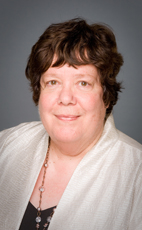
House of Commons photo

Crucial Fact

  • Her favourite word was debate.

Last in Parliament October 2015, as NDP MP for Vancouver East (B.C.)

Won her last election, in 2011, with 63% of the vote.

Statements in the House

Questions on the Order Paper January 27th, 2014

With regard to the Respect for Communities Act: (a) how many of the following were consulted in the development of the legislation, (i) health care providers, (ii) front-line service providers, (iii) medical research professionals specializing in addictions treatment, (iv) medical research professionals specializing in concurrent mental health and addictions treatment, (v) police departments, (vi) police officers; (b) of the organizations mentioned in the answer to (a), who from each organization was involved; (c) over what time period did the consultations take place; (d) which ministries were involved in the development of the legislation; and (e) from those ministries listed in the answer to (d), who from each ministry was consulted?

Status of Women December 6th, 2013

Mr. Speaker, the sad reality is that while rates of violent crimes are dropping, the rates of violence against women are not. Being tough on crime must also mean making a priority of protecting women and girls from violence.

Will the minister demonstrate her commitment to ending violence against women and support the motion from the member for Churchill for a national action plan to end violence against women?

Status of Women December 6th, 2013

Mr. Speaker, December 6 is a day of remembrance and action, and words must be backed up with a resolve to act.

Women continue to be victimized, facing violence at home, work and in their communities. We are still not doing enough to support safe environments for women escaping violence. The tragedy of the missing and murdered indigenous women has affected generations.

Will the minister listen to the victims, listen to their families and agree today to convene a national inquiry?

Status of Women December 6th, 2013

Mr. Speaker, the tragedy of l'École Polytechnique shocked us at the time and 24 years later continues to affect us. Today our thoughts are with the families of the women who lost their lives on December 6,1989, but we also remember that women continue to face violence in their workplaces and in their homes.

Can the minister tell the House what the government's plan is to eradicate violence against women in our communities?

Northwest Territories Devolution Act December 5th, 2013

Mr. Speaker, I certainly appreciate my colleague's raising her very thoughtful arguments, particularly as they pertain to indigenous people and their concerns about this bill.

It gives me the opportunity to stand in the House and reflect for a moment on the passing of Nelson Mandela, which we just heard about a few minutes ago. Even here today, as we are debating this bill, when we think of Nelson Mandela, we think of his enormous legacy for human rights and human dignity.

As parliamentarians, it is something that we uphold and honour. Even with this bill today, which is about indigenous rights, equality, and dignity, it is something we reflect on. I hope that we carry it forward as a legacy.

Northwest Territories Devolution Act December 5th, 2013

Mr. Speaker, I appreciate the thoughtful comments from my colleague, particularly what he has to say about the committee, when the bill goes to committee. For us in the NDP, we are working in good faith and we want to bring forward amendments at the committee that would improve the bill, particularly as it relates to the Mackenzie Valley agreement, which is one of the concerns first nations have spoken about.

Could the member comment about what happens at committee? My experience is that no matter what amendments are put forward, they are automatically turned down by the government. I hope this time around there will be some genuine dialogue that takes place and some work at the committee, where the Conservatives will be open to looking at amendments to improve the bill. That is what we are trying to do. We are not holding this up. This is a debate that is taking place today. It will go to committee and that is where the proper process should take place in terms of amendments.

Northwest Territories Devolution Act December 5th, 2013

Mr. Speaker, I thank my colleague from Joliette for her very thoughtful and intelligent comments on the bill.

Does she think the bill should be split because it would amend 42 different pieces of legislation, particularly the elements of the bill that would deal with the Mackenzie Valley agreement? We have a lot of concern about that and there is a proposal that we should look at splitting the bill to ensure there is proper examination of all of those aspects.

Would the member agree that it would be much better to have an examination if the bill were split?

Northwest Territories Devolution Act December 5th, 2013

Mr. Speaker, my hon. colleague is correct that under the agreement, the Government of the Northwest Territories will keep 50% of revenues collected from resource development on public land, but there is a maximum.

I do not know what that maximum is, but when that maximum is hit, the Government of Canada retains the remainder. Presumably this was something that came out of the negotiation. I was not at the table, so I am not privy to what the various positions were and whether this was a compromise.

When it gets to committee, this is one element of the bill that is very much worth examining to determine whether this maximum cut-off is something that should be reviewed and possibly changed in the future.

I would be very interested to hear what the position of the Government of the Northwest Territories is in what its sees as the future in revenues from resource development. It may have a longer range plan and it may be something we need to build into the bill to ensure its expectations for what devolution is are met.

There is a lot to look at in the bill and we will do that in a very forthright way when it gets to committee so this question can be answered.

Northwest Territories Devolution Act December 5th, 2013

Mr. Speaker, I welcome my hon. colleague from the government side to the debate. I hope he will go one step further and participate in the debate. Certainly questions and comments is one way, but there are opportunities to speak in the debate today for 10 or 20 minutes, and I hope the member will do that.

The member talked about efficiency and bureaucracy and said that the creation of this superboard was for efficiency and to eliminate bureaucracy. Efficiency does not necessarily mean that bigger is better.

The regional land and water boards were created by the Mulroney Conservative government to give aboriginal people a say over the development of lands and waters. There is a question about how eliminating these regional boards is going to serve their interests.

This is something we will follow up on in committee. I do not necessarily buy the argument about having a structure of subcommittees that do not have the same authority as the previous boards. The subcommittees would have to report back to the superboard and so they might be very limited in the scope they have. That is not necessarily a better way to go.

This will be a point of discussion and debate, I hope in the House and also in the committee because we do want to delve into this question a little more closely.

Northwest Territories Devolution Act December 5th, 2013

Mr. Speaker, my colleague from Joliette is correct. The question we have is why government members are not debating the bill. This is very much a basic process in the House of Commons.

I would like to ask government members why the government reserved control over appointments to the environmental review board and maintained control over the approval of licences. That is in this agreement. We would like to get an answer to that. Maybe we will be able to address this at committee.

To address my colleague's comments in debate at second reading, devolution is important for the people of the north. However, it cannot be a half-baked thing. Devolution means devolution. It means the right to exercise authority and power over decisions in that area. Yet there are elements of the bill before us today that still maintain the control of the federal government, such appointments to the environmental review board. Why would that not be done locally?

If there are reasons for that, we would like to hear them. However, we are not hearing anything. There is silence on the other side of the House. Therefore, I cannot answer the question, but it is a question we will keep asking, along with other questions, to ensure the agreement lives up to the expectations of the people in the north for devolution.