
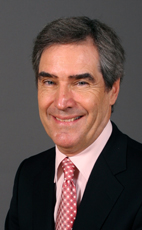
House of Commons photo

Crucial Fact

  • His favourite word was afghanistan.

Last in Parliament March 2011, as Liberal MP for Etobicoke—Lakeshore (Ontario)

Lost his last election, in 2011, with 35% of the vote.

Statements in the House

Pay Equity Task Force Recommendations Act October 29th, 2009

moved for leave to introduce Bill C-471, An Act respecting the implementation of the recommendations of the Pay Equity Task Force and amending another Act in consequence.

Mr. Speaker, I am pleased to introduce this bill that will recognize something that never should have been an issue: it is a human right to receive equal pay for work of equal value.

Earlier this year, the government hid an attack on the pay equity rights of women behind the stimulus measures in the budget . Doing so was wrong. It must be reversed, and this bill proposes to do just that. The bill repeals the measures in the budget that put pay equity on the bargaining table, because no human right should ever be on the bargaining table.

Women are not a left-wing fringe group. All Canadians, both men and women, deserve the full protection of their government. All Canadians deserve equality in their workplace.

Under this government, the gender gap is growing. We dropped from 4th place to 25th in the world. We should do better.

A Liberal government would implement in full the recommendations of the 2004 pay equity task force. We would set clear targets and we would meet them. Canadian women have waited too long for justice, and that is the purpose of this bill.

I truly hope that this bill will receive the support of the House, since we are working to fulfill our shared commitment to protect the human rights of all Canadians.

(Motions deemed adopted, bill read the first time and printed)

Health October 28th, 2009

Mr. Speaker, yesterday, the member for St. Paul's rose in this House and asked a serious question about H1N1. She was greeted with jeers and catcalls from the other side.

Could the Prime Minister explain how this disgraceful scene occurred, and is he now prepared to apologize?

Health October 28th, 2009

Mr. Speaker, the question was about public information. Canadian families are worried and uncertain about what information to believe.

The government's public information campaign has been negligent. The government spent more than $60 million on self-promotion, a fraction of that on promotion of public health information and now Canadians do not know what to believe.

Why did the Prime Minister make these choices and how can he justify them to the Canadian public?

Health October 28th, 2009

Mr. Speaker, people across the country are worried about H1N1.

The government should have given Canadians, well in advance, the information they need to make informed decisions. Instead, the government has spent $60 million to promote itself and a fraction of that to promote public health.

Can the Prime Minister explain to the House why he made those decisions?

Speaker of the House of Commons October 21st, 2009

Mr. Speaker, I rise to add a few words from this side of the House, in recognition of your public service and your work as Speaker of the House.

You have commanded the respect and affection of the whole House. Despite the divisions that are obvious in this chamber, I think it is easy for this side of the House to subscribe in its entirety to the kind words offered by the government House leader.

I want to add a few personal notes. One of the things that I noticed about your biography is that you began to subscribe to Hansard at the age of 16. In many other people this would be regarded as an alarming propensity, but that propensity has been only to the good of this House. Your knowledge, love and affection for the traditions of this House have guided you well and you obviously began your understanding of them at a very early age.

You left a very prestigious legal career to enter politics. You entered the House in 1988, defeating Flora MacDonald, the former member for Kingston and the Islands, who also commands universal respect.

You were elected Speaker of the House in 2001, and re-elected in 2004, 2006 and 2008.

As the government House leader said, it is an important fact that you were elected by members of the House, which is a very clear sign of the respect in which you are held.

Last week, you became Canada's longest-serving Speaker of the House.

Ten deciding votes have been cast by Speakers since 1867 and you, sir, have cast five of them, which is an extraordinary historical achievement.

I know that this side of the House would share with you one particular regret that in the gallery today there will not be the presence of one of your oldest friends, a man who loved the House as much as you did, Jerry Yanover. I am sure you will miss his presence in the gallery as much as we do.

You command the universal respect of the House for your rulings, for your judgment, but above all, for your sense of humour. All of us know that you combined a very particular equilibrium, eye-rolling disbelief at the follies and antics of this chamber, combined with a deep respect for its institutions and its traditions.

I salute you, Mr. Speaker; you do us all proud.

Government spending October 21st, 2009

Mr. Speaker, for once I agree with the minister. The figures are incontrovertible. I have another example. Sixty-six per cent of recreational infrastructure projects in this country have been allocated to Conservative ridings and the minister in charge directly opposite gets the lion's share of the projects.

Therefore, if people vote Conservative, they get the rink. A lot of Canadians think that is wrong. When will the Prime Minister begin to understand that it is wrong and will he put a stop to it?

Government spending October 21st, 2009

Mr. Speaker, yesterday, the Prime Minister admitted that it was not correct to put those logos on top of government cheques. However, that is not the only thing that was not correct.

There is overwhelming evidence of Conservative partisanship in this spending. I have one particularly shocking example. Over 90% of an accessibility fund destined for disabled Canadians went to Conservative ridings.

Is it not time that the Prime Minister admitted that is not correct either? When will he put a stop to it?

Government spending October 21st, 2009

Mr. Speaker, yesterday, the Prime Minister finally admitted that it had been a mistake to put Conservative Party logos on taxpayer cheques. But this unbelievable partisan spending is still going on. For example, 75% of the money from a training program for young unemployed workers is being spent in Conservative ridings.

Now that he has admitted he was wrong to put logos on the cheques, will the Prime Minister admit that this partisan spending needs to stop right now?

Infrastructure October 20th, 2009

Mr. Speaker, the Ethics Commissioner is now looking into this affair. It is an ethical matter.

The money the government is splashing around does not belong to the Conservative Party of Canada. It belongs to Canadian taxpayers and party logos have no place on government cheques.

Will the Prime Minister stop the logos on those cheques and will he admit that what the government did was simply wrong?

Infrastructure October 20th, 2009

Mr. Speaker, it is not an economic action plan. It is a plan to help the Conservatives.

Conservative MPs have now admitted that those cheques with the Conservative logos on them were designed and produced at taxpayers' expense by the Conservative caucus services, but yesterday the transport minister declared unequivocally that the Prime Minister was not aware of any of this and played no role. But the claim is unbelievable.

Will the Prime Minister now rise and admit what has been true all along, that his office is behind this scheme?