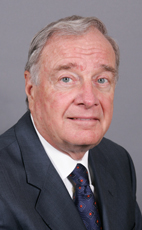
House of Commons photo

Crucial Fact

  • His favourite word was tax.

Last in Parliament September 2008, as Liberal MP for LaSalle—Émard (Québec)

Won his last election, in 2006, with 48% of the vote.

Statements in the House

Goods And Services Tax June 19th, 1996

Mr. Speaker, we discussed the GST issue yesterday. We also discussed other tax issues. It was a good discussion. There were differences of opinion, not only between the federal government and some of the provinces but also among the provinces themselves. That is quite normal.

The issue was put on the agenda of the finance ministers' meeting at the provinces' request, and it is there that it should be discussed.

Canada Pension Plan June 19th, 1996

Mr. Speaker, the hon. member asked a series of question and it is somewhat hard

to decipher exactly what he is driving at. I believe he is trying to address a very important problem.

There was discussion of the 20 per cent rule at the meeting. There were those who felt it should be waived, and others felt it should be maintained. Obviously this will be part of the ongoing discussion. The issue is whether there should be one set of rules for this fund and another set of rules for other pension funds. On the other side, of course, is the tremendous investment weight that this fund might have.

That is the only one of the many questions the member asked. I am sure he will ask the others subsequently and I will answer them at that time.

Canada Pension Plan June 19th, 1996

Mr. Speaker, this question was discussed at considerable length during the very valuable consultation process that was undertaken by the federal chairman of the consultation process, David Walker, as he went across the country.

It was discussed quite extensively yesterday with the finance ministers. There was general agreement that if such a fund were to be created, it would be managed best by a group of investment advisers on market principles at arm's length from the government.

Notional Input Credit June 13th, 1996

Mr. Speaker, as with everything else, the member has it exactly wrong. Under the previous regime when someone traded their car in they were taxed on the full price. Now as a result of this change they are taxed only on the differential. This is a major benefit to the consumer.

Taxation June 13th, 1996

Mr. Speaker, I was attempting to explain the Reform Party's tax policy. The difficulty the rest of the country has in understanding it is that the type of debate we have just heard is what happened at their convention.

The flat tax has been around for a long time. The Liberal Party looked at it. Some of our members were pioneers in it. A number of Republican Party candidates in the United States have dealt with it. They have consistently run into the same problems in that it is very difficult to come up with a flat tax which does not benefit the rich at the expense of the poor, or it is difficult to come up with one that does not have so many exemptions and such a great deal of complexity that it vitiates its very purpose.

The fact is that-

Taxation June 13th, 1996

I must say, Mr. Speaker, they are in particularly good voice.

Taxation June 13th, 1996

Mr. Speaker, the hon. member is asking me to comment on the tax policy of the Reform Party. I am afraid he is asking me to comment on the indecipherable but I will attempt to make some sense of what appeared at the Reform convention to be a great deal of incoherent and inconsistent meandering around the subject.

The flat tax has been with us for a long time. In fact a number of Liberal Party members have examined this issue in considerable depth. At the same time-

Taxation June 12th, 1996

Mr. Speaker, first of all, let the hon. member understand that on June 17 Sheila Copps will win an overwhelming majority.

Second, let the hon. member understand that his own party talked about ripping the heck out of the GST and scrapping it. Then, when the finance committee came to me, his own party recommended harmonization. His own party recommended broadening the base. His own party has flip-flopped back and forth on this issue more times than anybody can count.

The fundamental issue is why does this hon. member, after his convention at which they said they would adopt a more enlightened view, continue to expostulate the voices of extremism?

Taxation June 12th, 1996

Mr. Speaker, that is a used question. Because it is a used question, let me simply deal with the last part of the question, this constant reference to a bribe, this constant insult to Atlantic Canada.

It is really important to understand this is one country. It is not incumbent upon a member of any political party to stand up and insult one region of the country.

This is fundamental change that will benefit small business in Atlantic Canada. It is fundamental change that will benefit the consumers of Atlantic Canada. It will give Atlantic Canada a chance to basically get its business costs in line.

I do not think it is incumbent upon any member of the House to stand up and constantly insult a region of the country.

Taxation June 12th, 1996

Mr. Speaker, I think I can handle that.

At present small business has to maintain two sets of books, meet two sets of reporting dates and file two sets of forms. Most small businesses will say they are constantly tripping over tax auditors from either the federal government or provincial governments, which is why the Canadian Federation of Independent Business supports harmonization. The Canadian Association of Chartered Accountants has said it will save business over $500 million a year, which is in fact a modest assessment.

As far as consumers are concerned, with harmonization we will eliminate the cascading of taxes on each set, each stage of the production process. Provincial taxes are imposed; tax on tax on tax. This represents a disguised tax grab that is a penalty on jobs.

Consumers will benefit from lower prices, Canadians will benefit from lower prices and the economy will benefit from harmonization.