
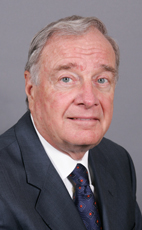
House of Commons photo

Crucial Fact

  • His favourite word was tax.

Last in Parliament September 2008, as Liberal MP for LaSalle—Émard (Québec)

Won his last election, in 2006, with 48% of the vote.

Statements in the House

Tax Loopholes February 21st, 1995

Mr. Speaker, we addressed tax loopholes in the last budget. In regard to the upcoming budget, I have indicated that this will be an important avenue to pursue.

Having said this, I shall answer the hon. member's second question. As you know, an old tradition in the House has it that the finance critic for the opposition asks the finance minister the date of the budget. Unfortunately, this tradition was put aside under the previous government and we are pleased to revive it.

I would like to answer the hon. member by saying that the budget will be brought down on Monday, February 27, at 4.30 p.m.

Once more bringing to life a tradition that existed in the House for a long time which the previous government had set aside, it is my pleasure to announce that the budget will be presented Monday, February 27, at 4.30 in the afternoon.

Interest Rates February 21st, 1995

Mr. Speaker, as the hon. member knows very well, we have established objectives with the Bank of Canada concerning inflation. This agreement has served Canada very well, and we intend to go on with this policy.

Having said this, I would like to congratulate the hon. member on his very clear questions.

Interest Rates February 21st, 1995

Yes, Mr. Speaker.

Interest Rates February 21st, 1995

Yes, Mr. Speaker.

Ways And Means February 17th, 1995

Mr. Speaker, pursuant to the provisions of Standing Order 83(1), I have the honour to lay upon the Table some explanatory notes and a Notice of Ways and Means Motion to amend the Income Tax Act.

This motion is part of the government's plan to raise, as of midnight, the excise tax on cigarettes sold at the retail level in Ontario and Quebec.

I ask that you designate an Order of the Day for the consideration of the said motion.

Taxation February 17th, 1995

Mr. Speaker, I commend the member and certain members on my side who continue in the pursuit of tax fairness. It brings a very important element to the debate.

I fully understand the member's question and think everything should be on the table. Obviously everything should be looked at, but I would say that one can make the distinction especially at a time when one is looking to small and medium sized business and to entrepreneurs to create jobs. We should recognize that income derived from a certain degree of risk may well be treated differently if we are going to create the capital in the country to create more jobs.

The Economy February 17th, 1995

Mr. Speaker, last spring when the House was sitting the members opposite kept standing up and saying we are not going to hit our target, will we bring in a new budget, that they are panic stricken and we have to do something. About every second day there was a new cry of gloom and doom from the other side.

At that time we said there was no necessity to bring in a new budget for this year because we were going to hit our targets. Now we are going to beat those targets by a great deal.

The hon. member is bringing in his budget next Tuesday. We all look forward to it. I find it a little difficult that he stands in this House and says that we must revise our budget, we must bring in a more credible budget when he has not even seen it.

I can understand the necessity of practising and rehearsing his lines for after we bring in the budget but I do not think he should do it publicly.

The Economy February 17th, 1995

Mr. Speaker, the government's target, 3 per cent of GDP, is approximately at the level at which the growth of the economy becomes greater than the growth of the debt. The debt to GDP ratio will begin to stabilize and then decline.

That is a very important target for a country. It is not a political target. It is an economic target. I am sure the member understands that. I am also sure the member understands when I say that it is an interim target that our ultimate target is to eliminate the deficit.

I am also sure the member will understand that a country does not only live by targets, that it lives by success. If I might, as of today the fact is Canada had its most impressive year ever for trade. I want to congratulate my colleagues. Merchandise exports, imports and the trade surplus over the year are at record levels. I congratulate the minister.

Social Policy February 17th, 1995

Mr. Speaker, we are in the next budget going to deal with all levels of government spending in all areas. There should be no doubt about this government's determination to break the back of the deficit. We are going to do that. We are going to do it fairly because fairness is the essence of Canadians

supporting a government's action in facing up to this burden. We are going to do it that way. Taxation may or may not be part of it.

The debate that I continue to have with hon. members opposite is the supposition that the current system is perfect, that there is no need for further fairness to be built in, that there is no need for further efficiency. That is wrong. The tax system must evolve. The tax system must be improved. We intend to make it happen.

In terms of job creation, 460,000-odd jobs have been created in this country. It is the best job creation record of any country in the G-7. I am damned proud of what we are doing.

Social Policy February 17th, 1995

Mr. Speaker, the answer is no.

If you read Moody's press release, it did not assign a cause for blame in terms of social spending. It looked at the overall financial condition of the federal government and the provinces.

There is no doubt as we approach the budget that it is going to be important that we cut government spending. It is going to be important that we cut government spending in each part of its operation.

I would remind the hon. member that most studies in this area have also indicated that short term cutting of social spending hurts people's health, their ability to be trained and their ability to get work in the long run. As a leading economist I am sure the hon. member would agree that would add to the deficit. That is the balance that we have to bring to this particular exercise.