
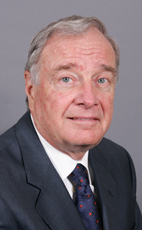
House of Commons photo

Crucial Fact

  • His favourite word was tax.

Last in Parliament September 2008, as Liberal MP for LaSalle—Émard (Québec)

Won his last election, in 2006, with 48% of the vote.

Statements in the House

Pre-Budget Conferences January 31st, 1994

Mr. Speaker, at these conferences, as would be expected, there were very different points of view, primarily because the institutes invited people not simply representing one very narrow point of view but all points of view. Obviously there were differences of opinion expressed on the panels and within the workshops. Therefore it would be impossible for anyone to square the circle and to simply do what everybody said.

What we did say very clearly was that we were listening, that we understood the common message, the common theme which is the desire to turn this economy around and give jobs back to the people. We said unequivocally that if we were not prepared to follow the suggestions made in any individual instance, we would indicate why that was the case because we take these consultations very, very seriously.

Taxation January 31st, 1994

Mr. Speaker, I am not sure whether I fully understood the gist of the question put by the hon. Leader of the Opposition. He seemed to be saying that the Bank of Canada should not release this information and should not try to express its views.

I think the Bank of Canada has the right to prepare these studies, and when it does, they should be published. However, as my hon. friend knows full well, we did not always agree with the Bank of Canada when we were in the Opposition, and I believe this study was prepared at that time.

Taxation January 31st, 1994

Mr. Speaker, our position has been very clear. Whether we are talking about different ways to close the loopholes in our tax system or about subsidies to corporations or individuals, the watch word is fairness. And that will be the purpose of this budget.

If the Bank of Canada's report contains some interesting points, we will certainly look at them. However, I believe I already answered the question last week when I referred to the Reform Party's program. I said that I felt their option, which is to cut subsidies and cut government spending on the elderly, was entirely unacceptable to us.

Taxation January 31st, 1994

Mr. Speaker, as the hon. member is aware, the report of the Bank of Canada was published on October 26, the day after the happy occasion of the federal election.

I can inform him that this was prepared under the aegis of the former government. We will read it. We will look at it. However, I can assure the Leader of the Opposition that we have no intention of doing anything at the expense of the senior citizens and the poor in this country.

International Maritime Organization January 27th, 1994

Mr. Speaker, I am told by my colleague the Solicitor General that we will certainly be dealing with that and I think that my preamble answers the question.

International Maritime Organization January 27th, 1994

Mr. Speaker, it does not help when you mess up your preamble, does it.

I will take the question as notice and I will certainly speak to the Minister of Foreign Affairs. I can assure the member that we are dedicated to reversing a great many Conservative decisions.

Government Expenditures January 27th, 1994

Mr. Speaker, we are talking about equity, making sure that one group of Canadians does not benefit more from the system and the services that this country provides than other groups of Canadians. We are trying to build fairness into the system. That is crucial.

I fail to understand the objection of the party opposite to that kind of fairness. However we are going to continue to do it despite the objectives of the party opposite.

In terms of the competitiveness of our system there is no doubt that our airlines, our farmers, the inputs to fertilizers, the interest rates that this country has had to bear over the last five years; there has been a great deal of unfairness in this country and that is why we were elected, to try and make that right.

Government Expenditures January 27th, 1994

Mr. Speaker, broadening the tax base and filling in the tax loopholes will simply remove inequities in the tax system and make it a great deal fairer. Then Canadians will be far more prepared to support it. That is what we are dealing with.

In terms of export sales we stated unequivocally in the red book that the ultimate aim of any government, certainly this one, must be to reduce taxes. But this party, as the Reform Party certainly claims to be, is also worried about the financial condition of the public finances of this country. We also know that unless we attack the deficit we are not going to get interest rates down. Unless we get interest rates down we are not going to have a competitive economy. If the member would like a lesson on the deficit I would be prepared to give it.

Government Expenditures January 27th, 1994

Mr. Speaker, the reference I made yesterday to savagery was to not only the motion made in this House but to the program put forward by members of the Reform Party during the election. They put forward a series of recommendations concerning old age pensions which they said would affect families above $54,000 but in fact affected families below $35,000, going down.

It is certainly not the case that we are reluctant to cut spending. We are very desirous of cutting spending and in fact we intend to do so. But it is precisely because we are not prepared to ignore the cause and the plight of laid-off workers that we are not going to cut spending the way the Reform Party would want us to do.

The Deficit January 26th, 1994

Mr. Speaker, first of all this government has definite deficit reduction targets. Second, the banks did not say that. Third, what the banks said is that they were waiting to see what was going to happen in the United States. Fourth, the differential between the bank rate and the prime rate today is not by historical standards out of line. Fifth, the fact is that as a result of what this government has done the Bank of Canada is now leading the trend down, not the federal banks.