
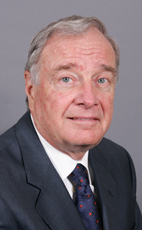
House of Commons photo

Crucial Fact

  • His favourite word was tax.

Last in Parliament September 2008, as Liberal MP for LaSalle—Émard (Québec)

Won his last election, in 2006, with 48% of the vote.

Statements in the House

Human Rights April 22nd, 2004

Mr. Speaker, I can assure the interim leader of the NDP that I intend to discuss a whole series of spiritual issues. The Dalai Lama himself declared that he was coming as a monk. These are subjects he wants to talk about.

That having been said—absolutely, the question of human rights must be brought up when one meets with any international leader, especially one with such broad influence as the Dalai Lama.

Human Rights April 22nd, 2004

Mr. Speaker, I think that the comments in the preamble by the interim leader of the NDP are very much to the point.

I absolutely believe that human rights are a spiritual issue as well as others. I certainly have no difficulty raising the issue of human rights with anybody, anywhere, at any time.

Sponsorship Program April 22nd, 2004

Mr. Speaker, I may have been a little confused as to the political party to which the Leader of the Opposition belongs or once belonged. He has belonged to so many political parties over his political career, but there is one thing on which he is actually right. He has never been a progressive Conservative.

Foreign Affairs April 22nd, 2004

Mr. Speaker, I would simply point out that I will be the first Canadian Prime Minister to meet with the Dalai Lama. I would ask the hon. member, who is a member of the Conservative Party, what advice he gave previous Tory prime ministers, Mr. Clark and Mr. Mulroney? Did he suggest to them that they meet with the Dalai Lama? Because if he did, they did not take his advice.

Foreign Affairs April 22nd, 2004

Mr. Speaker, as the Prime Minister of Canada, I will decide whom I will meet with and whom I will not meet with. I will decide where I will meet with them, and I will also decide the subjects that I want to address with them.

Foreign Affairs April 21st, 2004

Mr. Speaker, the difference between the two is very clear. What the Leader of the Opposition wanted to do was send our troops to Iraq during the war. That is exactly what he said on the Fox network in the United States.

What our government wants to do, what our Minister of National Defence wants to do, is send our troops to Haiti to secure and maintain peace. He wants to send our troops to Afghanistan to secure peace. Our Minister of National Defence wants Canada to help these countries build their institutions. There is a fundamental difference between—

Lobbyists April 21st, 2004

Mr. Speaker, as the Minister of Finance has just said, government policy is determined in cabinet and by cabinet.

There are outside consultants who may well advise on matters of communication and that kind of thing. There has been no lobbying by any firm of me as far as I am concerned.

I will say to the hon. member that there are outsiders who have certainly given us advice in terms of health care, to begin with, the hon. Roy Romanow.

Government Contracts April 21st, 2004

Mr. Speaker, in terms of a finance minister, myself at that time, who had some problem with numbers, let us go through some numbers.

We inherited a $42 billion deficit from that party and a debt to GDP ratio that was going through the roof. What is the net result? Today we are the only G-8 country not in deficit. We are the only one in surplus. I understand those numbers.

Government Contracts April 21st, 2004

Mr. Speaker, I affirm the facts as they in fact were.

The fact is that the contract was bid on in an open tender. It was administered and adjudicated by the Department of Public Works, not the Department of Finance.

Government Contracts April 21st, 2004

Actually, Mr. Speaker, the documents show nothing of the kind.

What in fact happened was that the first contract was a contract that the government inherited when we took office. It was a contract that had been awarded to the previous Conservative government and we simply continued with it.

Following that, there were two extensions because public works was going through a new procedure. It said that instead of having open bids, they would be extended. Then, at the end of 1994, there was a competitive bid which was won. That competitive bid was adjudicated and administered by public works.