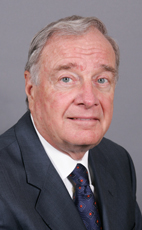
House of Commons photo

Crucial Fact

  • His favourite word was tax.

Last in Parliament September 2008, as Liberal MP for LaSalle—Émard (Québec)

Won his last election, in 2006, with 48% of the vote.

Statements in the House

Taxation February 27th, 2002

Yes, Mr. Speaker, we have, obviously as the hon. member knows, led on this file with the financial action task force and with IOSCO which is the international grouping of securities regulators. We have also had discussions with provincial authorities and we intend to continue them to exactly that end.

Airline Industry February 27th, 2002

Mr. Speaker, here in Canada—and in the United States as well—security taxes were imposed, which was very important in light of the events of September 11.

Now that the economy is starting to return to normal and air travel is starting to bounce back, we certainly intend to review the system again in the fall.

Airline Industry February 27th, 2002

Mr. Speaker, following the terrible events of September 11, there was a drop in air travel, and it was very important that the government act as quickly as possible to restore confidence, which we did.

It is our intention to study the effects, and certainly this fall, we will see if the entire system needs to be reviewed.

Airline Industry February 27th, 2002

Mr. Speaker, what the government sought to do and was asked to do was to make sure that confidence could be re-established following the terrible events on September 11.

The government has stated that in the fall there will be a complete review of the charge to see how low factors have been affected and to see exactly how much money is coming in versus the expenses going out. We have made that undertaking to members of the finance committee. We have made it in extensive discussions with members of our caucus and with the Minister of Transport, and we intend to carry through on that.

Airline Industry February 27th, 2002

Mr. Speaker, as I explained yesterday, the government brought the air security charge in reflecting the costs that were to be incurred. At the same time, in discussions with the Department of Transport, a number of airports in areas where those security charges or the services would not be required were exempt.

The fact is that there will be a revision of these charges when we see how low factors are which obviously will give us an opportunity to examine the whole situation.

Equalization Payments February 27th, 2002

Mr. Speaker, there are two kinds of changes, changes to methodology and changes in the order of things.

For example, this time the economic downturn in Canada has meant a drop in equalization payments for Quebec.

In the same vein, in 1999 Quebec received an unexpected cheque for $1.3 billion from the Canadian government.

Equalization Payments February 27th, 2002

Mr. Speaker, there has been no unilateral change. This change was made by Statistics Canada.

I have made an offer to the provinces, one accepted by Minister Marois, for their public servants to meet with Statistics Canada staff to discuss this. At the same time, we offered to spread the payments out over five years, if this discussion does lead to payments.

Taxation February 26th, 2002

Mr. Speaker, obviously every major company, and certainly including the banks, are audited by CCRA.

The fact is that we want to see Canadian institutions operating in Canada, earning profits in Canada, but also operating abroad. The fact is that they do. Those statements are all published.

Airline Industry February 26th, 2002

Mr. Speaker, number one, the government was facing an unprecedented situation and obviously had to respond. It was deemed necessary to ask those who were utilizing the services to do so.

However, if the hon. member will take a look at the map that was produced by the Department of Transport, he will see as an example that many northern airports are not covered by the tax, are exempted from the tax. In fact, the tax really applies where the security needs are greatest.

Money Laundering February 26th, 2002

Mr. Speaker, internationally this is a file which evolving. Canada is one of the leaders in dealing with IOSCO, the international organization of securities regulators. Canada is a leader with the financial action task force. Obviously the whole question of customer identification and how this is working is evolving from country to country.

We also understand that this cannot be done in only one nation which is why the Canadian leadership in this area, exhibited through the G-20 and the IMF at the meetings in Ottawa, has become so important. The fact is that Canada is a leader in this area.