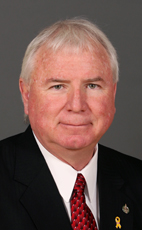
House of Commons photo

Crucial Fact

  • His favourite word was children.

Last in Parliament March 2011, as Conservative MP for Lethbridge (Alberta)

Won his last election, in 2008, with 67% of the vote.

Statements in the House

Question No. 27 February 4th, 2005

With respect to the proposed plan by Correctional Services Canada to institute a needle-swapping program to combat the spread of blood-borne diseases in prisons, what are: ( a ) the expected duration of this program; ( b ) the locations of any Correctional Services Canada institutions which will be involved in the program; ( c ) the expected short-term and long-term costs of the program; ( d ) the number of prisoners to be involved in the pilot program and in the main program to follow; ( e ) a summary of concerns directed to the Deputy Prime Minister and to the Minister of Public Safety and Emergency Preparedness from the unions representing prison guards and other prison workers regarding this program; and ( f ) the expected amounts of payments to private medical practitioners assisting in the establishment and maintenance of the program in Canadian prisons?

Supply February 3rd, 2005

Absolutely, I do Mr. Speaker. Whether one is in Peace River, Swift Current, Selkirk—Interlake or wherever one is in the country from coast to coast, it is the same message that we are hearing across the country. The message is not isolated and it is not a small issue. The urgency is there. Let us act.

Supply February 3rd, 2005

Mr. Speaker, I will provide one example to help explain what the minister has asked. A few months ago a producer was hauling grain to the elevator and when the spring advance was taken off, he was taking home 18¢ a bushel. He said that he was not even going to make his fuel payment by doing that because the advance, however much it was, was almost the total value of what he was receiving on his initial payment for the grain. His comment was that, regardless of what the advance was, the initial payment needed to be more. He needed to realize upfront more of the value of the crop that he was selling. The issue of the advances includes all of the tweaking that gets done and the options farmers have when they market their grain through the Board.

It has been stated here today that my party does not support the Canadian Wheat Board. We are against the monopoly of the Wheat Board. We have never ever advocated that the Wheat Board should not exist. We believe farmers should have the option of who they use to sell their wheat, malt and barley through.

Let us look at all of the things that have been done. I come back to the point that everything that has been done, all the talk, all the tweaking and all the options that have been put forward to producers to use as management tools as they go through their operations are not working to the extent that they need to in order to keep their operations viable. We have to go outside of the box entirely. We have to look at different ways of managing the system that is in place.

There is one thing that really surprised me. I have been a farmer for a short period of time. I have some farmland but I do not really consider myself a farmer. However it seemed to me that when I did not have much grain, I received a pretty good price for it but when I had a lot of grain, I did not receive much of a price for it. No matter what I would do, at the end of the year it is about the same. If I have a great crop, which I need almost every year now to make ends meet, the value is less. If I do not have a great crop, then there is lots of money for the bushels. Somewhere at some point in time we need to have a year where we get lots of bushels with higher prices. That just does not seem to happen too much in the agriculture community.

All of the things we have tried have failed to bring us to a point where the agriculture community has not lost money, an absolutely damning statistic that comes forward. We have to start making some really dramatic changes on how we think about this industry if we are going to stay, as Canada has been developed, an agricultural based country. The agriculture community built this country. It needs help and it needs help now.

Let us all work together and come up with some solutions. I think the one we have brought forward today is something we can do immediately to leave more money in the farmers' pockets.

Supply February 3rd, 2005

Mr. Speaker, we are here today debating a motion brought forward by the official opposition to deal with the requirements of CAIS to provide farmers upfront with some money to get involved. I want to switch a bit and bring forward some other issues that have been brought to my attention over the last number of months and deal with the grain and oilseed section of our agricultural community.

The facts are there for all of us to see. Over the last 30 years there has been a steady decline in returns to agriculture. Agriculture has gone from a high of approximately 30 years ago of over $4 billion in a year of returns to farmers at a time when the accumulated debt of the agriculture community was very small, to last year when the entire agriculture community actually lost money and the accumulated debt in the agriculture sector has become absolutely huge.

This indication of rising debt and lower returns clearly indicates that there is a problem, which has been going on for some time, and that nothing that has been brought forward to date has helped to reverse that.

I would like to mention the BSE issue. The BSE crisis in the cattle industry has taken hundreds of millions of dollars out of Canada and out of the pockets of primary producers and that is money that we will never get back. From the time the border opens to the time we get back to a normal cattle industry, it will be business as usual, but those lost revenues over the last two years are forever lost.

I want to mention the CFIA. CFIA officials gave us a briefing yesterday on their actions to date on the BSE investigations and trace outs. However I believe they must be very cautious in how they proceed. Every word they say is listened to by producers in Canada because it affects the markets. It is also listened to by producers across the border in the United States, producers working to keep the border closed. I indicated to CFIA officials yesterday that they should be very cautious in what they say and the timing of it.

This week the National Cattlemen's Beef Association is holding its annual meeting in San Antonio. It will be addressing the issue of opening the border to Canadian cattle on March 7. So far the NCBA has stayed on side and I hope it stays that way. It has been in Canada and has looked at our systems. It has been on our farms. It realizes what we have done up here as far as our feed ban is concerned, how we are processing our cattle, how we are tracing our cattle and the fact that our health regulations have been top notch, and therefore there is no scientific reason to keep the border closed. I hope it stays on science.

One of the issues that was brought to me, which I was not completely aware of beforehand, has to do with the Canadian Grain Commission. We are all familiar with the issue of bonding but the other issue of grading is the one I wish to get into.

When producers sell their grain through a licensed and bonded grain dealer, it is the responsibility of the Canadian Grain Commission to make sure that business has enough bonding in place to cover the exposure that the primary producer has when he sells his grain. That is not happening.

A couple of grain companies in my riding have gone broke and, as a result, the producer has been stuck for the value of his commodity. Recently some were paid 25¢ on the $1 for what they were owed. One-quarter of what they thought they had coming to them does not do it. This is just another problem facing producers. They felt they were covered with respect to this bonding issue because the Canadian Grain Commission was supposed to monitor it but they now find out they are not covered.

The other issue I want to mention is grading. I understand there is a difference in the way grain is being graded today as compared to the way it was traditionally done. This is called falling numbers, which actually deals with how wheat is processed and then baked into bread. As this transition takes place, somewhere in the middle the producer is stuck with a lower grade than his grain actually is. In some cases, we could be talking 80¢ to a $1 a bushel. In any operation that is a difference between making it and not making it. That issue needs to be addressed and can be addressed quite easily.

I understand the grain commission is looking at changing the way it bonds licensed grain sellers and buyers. That is a positive move but it has to be done quickly. The people who are presently being stuck by not getting their paycheques for their grain are out of luck. We should move quickly to change that so producers are protected.

On the grading issue, if a producer is losing revenue because of a grading change then that should be stopped immediately and the producer should automatically be given the highest grading possible.

Another issue I mentioned to the minister this morning was the issue of the European Union going back to heavily subsidizing its grain production. Two million tonnes of wheat will receive export subsidies, plus it will be giving subsidies for internal growth. That distorts production, distorts the world market and will further drive commodity prices down for our producers.

When these people come to us as members of Parliament expressing their concern that they do not see any way out of this issue, that is where they are. They have looked at all the options. They have looked at futures, at different commodities and at different farming practices. They have tried everything but returns to the agricultural community continue to decline. The numbers are there to indicate that is happening and nothing that has been done to date has helped to change that.

The other issue is the European Union and the U.S. making bilateral agreements between the two of them. If they continue to do that, this puts Canada out on the edge and not involved. The WTO's Doha round was one of the hopes that we had in the agriculture community, that if this did go through, if countries were forced to give up their export subsidies and their production distorting domestic subsidies then we would start to see some sanity come back to the grain market, but that is not happening. With the EU and the U.S. working against what is going on in the WTO, the chances of our producers seeing any more returns for their commodities is non-existent. Any hope that we had in that avenue as far as the WTO is concerned in my mind is gone because it is starting to fall apart.

Our government, our negotiators and the ag minister have to be very forceful when we are dealing with these big trade organizations so that we get what we need to keep our producers going. So far we have not done that. I think being more forceful at the negotiating table is a big part of where we need to go to help stabilize the industry.

The minister talked about the APF, the agricultural policy framework, and how that is supposed to help the agriculture community down the road. We have heard talk about repositioning the cattle industry. Discussions are ongoing and the parliamentary secretary has been across Canada to receive input. I see that as just more talk and that has not been delivering the results needed.

I believe the suggestion we brought forward today is a concrete step that can be taken to immediately put some infusion of cash into an area that is badly needed. It is the farmers' own money that we are saying should not be taken from them. The money should be left with them.

Some of these issues may seem trivial to many but they are not trivial to the six or seven young grain and oil seed farmers with whom I spoke. They were in the 40 to 50 year old range, and in our farming community those are young farmers. They told me that the revenue cap was exceeded by the CPR this year by some $300,000, and somewhere along the line the CPR has to give that money back and they have to pay a penalty on it, but it goes to the Western Grains Research Foundation. These folks told to me that that money should go back to the producers, and when they sell their grain, in order for them not to have an automatic deduction on their grain sales that goes to the grain research foundation, it is a negative option billing that exists. They have to notify the grain commissioner or the Canadian Wheat Board that they do not want to pay that, and if they do not notify them they pay it. These are not huge dollars but this is the point to which these people are trying to operate and the pennies they are chasing to keep them on the farm.

The other issue is the initial payment and trying to increase the initial payment from the Canadian Wheat Board when they sell their grain through the board. They want the payments to get out quicker and the percentages to be higher so they have more cash.

The producers are also worried about the freight charges. When anybody who sells grain on the Prairies through the Canadian Wheat Board receives that cheque and a deduction is made for the freight to get it to the coast, it takes over one- third of that cheque just to pay it. They are talking about the Crow rate again. The Crow rate is gone but maybe there is something else that we need to look at? Is there another way to keep more money where it belongs?

The producers are not asking for government programs or handouts. They are asking that they be allowed to keep more of what they have earned, that more of the value of the grain can end up in their pockets. The value of the grain certainly needs to be higher in order for this to be sustainable. Right now, if grain is selling for $3 a bushel, the producers are saying that they need more of that $3 in their pocket at the end of the sale so they can keep operating.

I look forward to the rest of the debate today and I appreciate the opportunity that the Leader of the Opposition and our agriculture critic has given the House to debate agriculture.

Supply February 3rd, 2005

Madam Speaker, I appreciate the opportunity to pose questions directly to the Minister of Agriculture.

The minister commented that producers deserve better. I firmly believe that. I do believe they deserve better than to see the gamesmanship from that side of the House today.

The minister said that this is all about politics. It is not all about politics. It is about people who are struggling trying to make a living in a fashion that historically has been part of the makeup of this country and which helped to develop Canada. People are struggling and are not able to do it.

It is about the six or seven young farmers who were in my office over the Christmas break who have absolutely nowhere left to go. Their incomes are declining. Their debt proportions are going up and they do not know how they will get through this crisis. They are looking for answers.

Our party has proposed part of a solution. It is not the total answer, but it is a positive step in the right direction and we want the government to consider that.

Whether there were previous negotiations or talks is irrelevant. Here it is; let us deal with it today.

The European Union has just announced that it will subsidize two million tonnes of wheat out of the EU. It is going back to what it has done in the past, which flies in the face of what the WTO negotiations have been trying to do. I would like to ask the minister directly, what does he plan to do about that specific issue, where the European Union is taking steps that are going to absolutely decimate the price of wheat and further reduce returns to our farmers?

Supply February 3rd, 2005

Madam Speaker, I want to thank my leader for bringing this debate to the House of Commons today and also the member for Haldimand—Norfolk, our agriculture critic.

The issue before us today has reached a crisis proportion. It is a timely motion where we as a nation, and the government should recognize this, have to come to the rescue of people on the family farm. To start that process, this motion is where it should be. The comments from the minister are completely unacceptable as far as questioning whether this should happen here today. This is exactly where it should happen and it should happen all day long. People in Canada better recognize there is a crisis.

The border is supposed to open on March 7, but that is the first step in a long process that will to be necessary to get our cattle industry back on stable footing. I would like to ask for Leader of the Opposition for his comments on what needs to be done in the next phase of this crisis.

Finance January 31st, 2005

Mr. Speaker, I was listening to my colleague's comments on the budget debate. He talked a bit about the infrastructure in provinces and municipalities; I know his background is in that area provincially.

One of the issues that has been brought forward by this party and by others is how to help fund municipal and provincial infrastructure. The issue that keeps coming forward is the partial rebate on the gasoline tax or fuel tax, whatever the wording is today. We have seen very little come forward from the government. I would like the member to expand on what his thoughts are as to how that should be structured and how the money should flow back to the municipalities and the provinces that need it.

Income Tax Act December 14th, 2004

Mr. Speaker, it is a pleasure to rise after passing the amendment. We have a Liberal sponsor and a seconder from the Conservative Party, and the Bloc has already indicated that its members will support the bill. I am sure the NDP will as well. The hon. member is indicating that.

This may very well become law. That is something, because in the last Parliament, the member for Malpeque had a private member's bill that did not make it to the floor of the House. I did have one. It was somewhat different from this, but it lost by three votes, 96 to 93. It was a sad day in the life of volunteer firefighters. However, we have come a long way since then. The cooperation that exists in the House with the present government will create a truly valuable piece of legislation and recognize a special group of people in Canada who truly do need recognizing.

The last time I spoke to this matter was when I had my bill before the House a couple of years ago. At that time I said there was a group of unselfish, dedicated Canadian men and women who lay down their lives on a volunteer basis every day for their fellow man and they needed to be recognized in a concrete way for what they gave to society as a whole. When we give to society as a whole, I believe it is society as a whole that should recognize that contribution.

Through the amendment to the tax code, that is exactly what will happen. Canadians in a general way will be able to recognize the contributions of volunteer firefighters and emergency responders.

I had an issue with the amendment that was brought forward. I tabled a bill earlier, but it is not in the rotation yet. The standards that I had were somewhat different from this, and the dollar value was different. The bill that was previously tabled by the member for Cape Breton—Canso was also somewhat different. To do the best for the firefighters and emergency responders, we have agreed to meet in the middle. That was a major step to making this happen today. I know there is a long way to go. I hope the government will last long enough to get this through. I am almost tempted to ask for the motion to see it through all stages at this point, but I am not sure that would happen. I do not want to jeopardize the bill in any way.

The preamble of my bill states that the deduction should apply to income from any source. I know that is the intent of the mover of the bill on the government side of the House. I want to ensure that point is taken.

This was a situation I found myself in when I was a volunteer firefighter. I was a volunteer firefighter for 17 years. We did not draw an hourly wage when we were practising or firefighting, so we had no income. There was a tax deduction at that time of $500 based on the income that we earned as volunteers. However, that aspect of the bill says that it applies to any income from any source. Therefore, it can be used on income from a person's regular job.

That will truly be a benefit to volunteer firefighters, emergency responders and their families. Speaking from experience, when one is a volunteer firefighter, it is a family issue. When there was a call, I would roll out of bed. It could be 3 a.m and 32° below zero outside. Most of the time when I got out to the driveway, my car was started. I do not know who did that, but I think it was my wife. She would go out ahead of me to get things rolling. The stress and the angst that exist in that atmosphere, when we are out protecting other people's property and lives, is shared throughout the family.

I am grateful to have been the co-sponsor the bill and to get up to speak to the amendment which was passed.

The member for Cape Breton—Canso spent some time in western Canada, and he learned a few things there. However, he went back to his roots in Cape Breton, and that is from where he is promoting the bill.

It is truly a national issue. The last time I dealt with this, I sent out letters to every fire department in Canada. The response I got back was encouraging. One thing I tried to point out was fire departments and rescue teams were having trouble attracting volunteers and retaining them. The amount of training it takes in this day and age to fight the type of modern chemicals and building materials is incredible. The amount of training it takes to be an EMT and to go out in ambulances is incredible, and it takes a huge amount of dedication.

We have said that if a person puts in hours training or on actual duty, those hours combined should be applied toward the tax deduction.

I want to read one letter I received from a firefighter the last time that we debated this. This comes from the village of Nobleford from Marvin VandenHoek. He is on the Nobleford volunteer fire department and he sums it up pretty well. He said:

I would just briefly like to express our support for [at that time] Bill C-325 regarding the amendment to the deductions that can be claimed by volunteer emergency services personnel. As a member of a small town fire department, I know first hand how much we do to provide this service to our community. Although we do it primarily because we enjoy it, it takes a tremendous amount of time and dedication to keep everything operating smoothly. There is no such thing as doing a half job in this service. People are depending on us and often trust us with their lives. Also, because the service is becoming more and more complex, it is becoming increasingly difficult to recruit new members. We need ways to encourage people to join. Therefore since we are, in essence, providing a public service free of charge, I sincerely believe that the government of Canada should be doing everything in its power to enable us to continue.

That pretty much sums up my feelings on this issue. I think it is something that Canadians in general need to recognize.

Regarding the issue of the cost to the treasury for this, there were different numbers thrown around last time. I disagreed with the numbers that the government came up with as to how many volunteers would qualify and what it would cost. We do not know how many will meet the criteria of the bill. We do not know what tax bracket most of them are in, so we have no way of quantifying that. However, if we look, in comparison on the other side of the ledger, at the value of the service they provide this country free of charge, it is absolutely astronomical.

The emergency responders is only one sector of volunteerism in the country. My colleague alluded to the fact that this is not putting down any of the other volunteer work that goes on in Canada. Without them, the country would grind to a halt. People are out there day after day supporting the Heart and Stroke fund, the Kidney Foundation, juvenile diabetes, all these issues. These people do a tremendous job.

If we can get this aspect through, I believe a vast number of Canadians will be safer in their homes. They will be protected by people who not only have the dedication and the heart to do that job, but they have the wherewithal to do it. They will have the proper training and equipment.

Volunteer firefighters in every one of our ridings raise funds for all kinds of things. People in my town of Picture Butte have raised funds to buy a Zamboni for the skating rink. They have raised funds to buy their own trucks and equipment such as the jaws of life. All that fundraising went on within the community. Whenever people in the community have a project they want help with, the first stop is at the volunteer fire department to get that association onside. They know it has the ability, the desire and the understanding of what it takes to make a strong community, by working together and looking out for each other. The firefighters get out and do those jobs.

I am very pleased with what has happened tonight. I know we will be hearing more on this from the government. I encourage the government to support this initiative. It is doable.

My friend from the Bloc asked about the procedures that it would take to get this done. They are already in place. All the organizations keep track of time and their members. They know how many hours are put in by each individual. If those are given to the municipality or the association in charge, it is a simple thing for it to issue certificates and put them in with their tax rolls. It is not a complex issue, and it is very much needed.

I look forward to moving on this. It would be nice if we could move through all stages tonight, but I do not think we will push for that. When this comes back for second reading, and I believe this feeling of support exists throughout the House, maybe at that time we could ask for a motion that would see the bill go through all stages immediately.

Air Transportation Security December 13th, 2004

Mr. Speaker, the minister's officials themselves indicated the focus of their investigation would be centred on the possibility of airport workers having ties to organized crime.

With the RCMP now investigating 73 cases, could the minister tell us what parameters the department used when it decided to call in the RCMP? Could he also tell us in what positions the workers involved in these security breaches were working, where they were employed and are they now off the job site?

Air Transportation Security December 13th, 2004

Mr. Speaker, the lack of diligence by the government has, in the words of the Auditor General, created a serious threat to security at our airports.

Let us look at the facts. As early as last March the Auditor General warned that airport employees could have ties to organized crime. Then airport shields and badges went missing. Now 73 cases of suspicious clearances given to airport workers are deemed serious enough to be forwarded to the RCMP.

Why has the minister allowed this dangerous combination of security breaches to occur?