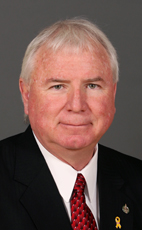
House of Commons photo

Crucial Fact

  • His favourite word was children.

Last in Parliament March 2011, as Conservative MP for Lethbridge (Alberta)

Won his last election, in 2008, with 67% of the vote.

Statements in the House

Tobacco Act October 8th, 1998

Mr. Speaker, yes there is. It is obvious from the stats, and it is especially young girls. It is all part of the strategy that has been put in place to attract certain sectors of our society to smoke. We have seen this increase recently.

This legislation should be implemented as quickly as possible. Had the five year phase-in program started a year ago, we would have been into it. We should not have the phase-in period. There is no firm date established by the government as to when that five years will start. It is important that we start as soon as we can.

Tobacco Act October 8th, 1998

Mr. Speaker, something that will probably not happen is for us to stand in this place and congratulate the government on this.

I made the point previously. If we are going to be serious about the health situation, if we want to be the big leaders in the world, and the government claims it is, then let us get serious about it. Let us not say that we are going to have a five year phase-in period. From when? It should have started years ago. It should be in effect right now.

Maybe it is the most progressive bill, but it is progressing further and further down the line. If the government wants to be the guardian of all that is righteous, it should start doing that right now.

Tobacco Act October 8th, 1998

Mr. Speaker, I might have alluded to that somewhat in my presentation. When we first saw this legislation come through we felt that this would stop the advertising. As we got into it, we realized that there was a phase-in period. The time when it will start has not been set.

We need to move quickly. Every day that goes by is a day lost to stop this practice. We should do it, but we should it now. This phase-in time is not necessary. If we are serious about protecting young people, then let us get serious and do it.

Tobacco Act October 8th, 1998

Mr. Speaker, I thank the hon. member for Elk Island. It is a dangerous substance. We can call it whatever we wish, but the proof is in that it does cause disease. It causes all kinds of problems, lung problems and cancer. I believe most of the product is labelled today to indicate that smoking cause lungs cancer.

On one hand to label the product and try to discourage the use of it but on the other hand to allow glitzy advertising through any means possible to get the word out that it is there and is to be used is a conflict.

The hon. member is right. We say it is a dangerous product and label it as such because it contains all things that will hurt people. There are warnings on the packages that pregnant women should not smoke and that it will cause lung cancer. Then let us realize that and not allow advertising of a dangerous product.

Tobacco Act October 8th, 1998

Mr. Speaker, it is a pleasure to rise today after the recent exchange. It is nice to have a minister in the House. He is looking rather relaxed and cool these days. We have not been after him very much, but that too will change. He can obviously pose a question as well. It was nice to see that.

We are here to talk about Bill C-42, the bill to amend the Tobacco Act. It provides a five year phased in transition period toward a prohibition of tobacco sponsorship promotion.

My constituents in Lethbridge have talked to me about the bill. They are concerned with keeping harmful products, particularly tobacco, away from youth. I received a number of letters, phone calls and visits to my office indicating that we have to keep our kids away from this stuff.

Tobacco comes in many forms. Chewing tobacco has become popular. When I think back to when I was a youth I smoked for a number of years. I do not smoke now. I have not smoked for 12 or 15 years. Some days around here I am about half an hour away from starting again, but I hope I never do.

I still remember the flashy full colour ads on the back of magazines and billboards such as the Marlboro man. More and more the advertising was scoped to youth. Tobacco companies saw where their future was and they targeted them.

At first glance when the bill was introduced we felt it was good, that the bill would restrict advertising to young people and help protect the youth of Canada. As we started to study it and see the phase in part of it and the fact that there is no firm date to start, it began to lose some of its lustre.

The fact remains that tobacco companies are huge, powerful forces in the world. They have lots of money. They can crank up advertising agencies across North America to target whomever they wish.

I think it has been said that advertising on Formula One race cars is one of the most highly visible places in the world to advertise. It attracts young people. The fact that the bill was introduced was great, but on the one hand the government is trying to show that it cares about health and about young people and on the other hand is still taking tax money from the sale of tobacco.

The government has slowed down the process so that it could keep the revenue flow going while still looking like it is championing this act. As originally intended it was good and it would have done what we wanted. Slowly it has looked to us like the government is dragging its feet and will not move on this.

I have talked with people in convenience stores and corner markets who sell cigarettes. They do not have a problem with any legislation. Some good legislation has been brought in so that they cannot sell tobacco to minors. The other day a person indicated that it was an offence if young people asked for the price of cigarettes and it was given.

Lots of things have been done. To do that on one end and still allow the phase in time for advertising just does not add up. If we are serious about keeping these products away from our young people and if we are serious about the health of Canadians, let us start as soon as we can. Let us not extend this phase in program and let us do the job.

Regarding education, the minister said that $100 million over the next period of time would be spent to educate young people on the hazards of smoking. The hon. member who spoke before me referred to the personal tragedy he saw because of cigarette smoking in his family. I think we can relate to that. We have all had family, friends or neighbours who have suffered because of it.

Smoking is an addiction and something not to expose our children to, but it is a product that can be legally bought when someone becomes 18. I guess there are ways of getting them before then. To allow the advertising, to encourage it to happen, is wrong. We should work very hard in our approach to changing that.

The Reform Party certainly would support protection for youth from being targeted for tobacco products. We would encourage the government to have another look at it and to implement its policies as quickly as it can.

There is the whole public relations aspect of what is happening whereby the government has legislation before us that would keep tobacco out of the hands of children. It is making a lot of noise about the subject, but it is taking a long time to implement it. In the meantime it is still reaping benefits from the sale of tobacco. We would like to see this aspect changed.

If the minister were serious about the legislation, he would put it into motion. Let us not move the deadline to start implementation further and further away. Let us get it into law now.

Regarding the whole sponsorship agreement, advertising can be targeted to any sector of society. We can target young people. We can target the baby boomers, whomever we wish. There are ways to poll people to find out what people are interested in. The agencies can design advertising to do that.

As far as adults are concerned, if I choose to start smoking tomorrow, who will stop me besides my own personal thoughts? However we have to help our young people today realize that smoking is causing problems.

I go to quite a few rodeo events during the summer and I see young people with a round can of chewing tobacco in their back pocket. It gets to become a trademark: if you have one of those you are macho. Where does the idea come from that chewing tobacco is cool? It comes from advertising. We saw a few years ago the different forms in which this product was packaged to appeal to young people.

Let us have a picture of a cancerous lip or a young man or woman with throat cancer or stomach cancer from this stuff. Let us make them aware that aside from the glorified side that is advertised and portrayed there is a side that is dangerous and can harm them.

I reiterate that if the legislation moves forward and prohibits advertising directed at youth the answer would be to do it quickly. The phased in program leaves it open to interpretation. While the government is holding off from implementing the legislation it continues to reap the benefits of tobacco sales. Let us stop that aspect of it. Let us truly target advertising directed at young people and get on with the bill.

Corporal Graeme Cumming September 30th, 1998

Mr. Speaker, Corporal Graeme Cumming, a 37-year old member of the RCMP who lived in Lethbridge, was killed in a horrific traffic accident on August 12, 1998. A young truck driver, Daniel Entz, also lost his life.

Corporal Cumming's funeral was in Lethbridge on August 18. Hundreds of police and peace officers from all across Canada and the world joined his wife, Marina, also an RCMP officer in Lethbridge, and friends at the solemn occasion.

Corporal Graeme Cumming was an outstanding police officer, an honourable member of his community, a wonderful husband and a loyal citizen of our country. He left all the communities he served better places for having known and experienced his dedication. He will be sadly missed by all who knew him, who worked with him and who had contact with him.

The death of Corporal Cumming underscores the courage and bravery of those whose job it is to serve and protect Canadians wherever they may be.

I ask the House to join with me in remembering Corporal Graeme Cumming. He was a man of great faith and conviction. He will be missed.

Environment September 25th, 1998

Mr. Speaker, a memorandum of agreement. We have been asking for action on this issue for five years. This government has used rhetoric. It has wasted millions of dollars and has no plan to clean it up. We want a plan and the people of Cape Breton want a plan. When will this action take place and in what form will it be?

Environment September 25th, 1998

Mr. Speaker, this week a report prepared for Health Canada was released and it had dire indications in it or drastic consequences for the good people of Cape Breton.

According to the report, Sydney residents have the highest cancer rate in Canada and no small wonder because in their backyards they have the worst toxic mess in North America and possibly in the world.

My question is for the Minister of Environment. Will she promise the people of Cape Breton suffering from the effects of the toxic mess the resources needed to clean up this disaster?

Supply June 8th, 1998

Mr. Speaker, it is unfortunate that these things are mentioned in that tone. I do not think it was the Leader of the Opposition who had the radio program. I think it was his father. He is very proud of that, as his father was and as I am sure his children are.

After I was elected and before I came to Ottawa to be sworn in a constituent asked me in my office what I felt the most important part of my job was as a member of parliament. I told him I felt the most important thing I could do was represent the wishes of my constituents. I still believe that. He said that I was wrong. He said that the most important thing I would do as a member of parliament is create responsible legislation, legislation that all our constituents will have to live under. He told me I must do it with a great deal of thought and a great deal of preparation.

I really took that to heart and it did somewhat alter my priorities. It made me more aware of how important this part of our lives is, being in the House, working on and preparing legislation for the citizens of Canada to live by.

The fact remains that I am elected and I represent the people of my constituency and the people of Canada. When I help to make a law or when I support a law I am adding their voice to that law. We must never lose the ability as legislators to prepare laws for the people of Canada. If we feel or see it happening that the judges of this land instead of interpreting and enforcing laws are reading in items and changing the intent, we have to protect against that.

If something in a law is not doing what it is supposed to do then we should bring it back to this House for debate. That is all we are trying to get to today. All this other ranting and raving about whatever is not getting to the point.

The lesson well learned from a constituent was that law making is very important and it is a big part of this job.

Supply June 8th, 1998

Mr. Speaker, it is a pleasure to rise today on behalf of the constituents of Lethbridge to speak to this motion.

The motion before is to stop federal legislation from being altered by judicial rulings.

It is not limited to the specific issue of spouse. Rather, this motion has ramifications beyond that decision taken by the courts in the Rosenberg case.

It is imperative that this House examine in depth the implications of allowing the courts free rein over the rewriting of laws, which is over and above the mandate subscribed to them through democratic procedure.

By not appealing the Rosenberg decision, we are allowing the courts to create public policy. I remind this House that the judiciary is not an elected body

When we as members of Parliament are elected by our constituents, we are elected on the basis of our platform, our individual accomplishments in our communities and our dedication to our constituents to uphold the democratic rule of this country.

The fundamental role of writing law lies with the legislature. As duly elected representatives, we are accountable to the people of this country and to the will of the people. The motion before us today is to appeal the Rosenberg decision because it violates the democratic rule of parliamentary supremacy and supports the controversial notion of judicial activism.

This Liberal government has remained conveniently silent on the role of parliament and judicial activism. When judges start acting like law makers, they have exceeded their legal authority and their intended mandate.

When will the government appeal a decision saturated with judicial activism and uphold the laws of this country? It is imperative that the legislature create and write laws as dictated by the will of the public. The will of the public has yet to be heard.

The silence of the Liberal government speaks volumes. This government has until June 22 to appeal this blatant example of judicial activism.

Not appealing this recent decision can only be interpreted as approving this action. If the Liberal government supports the direction of the Rosenberg decision, it should still appeal the decision and follow the correct channels if it wants to change the definition of spouse.

Regardless of personal beliefs, one way or another, the essence of this argument is founded in democracy. Either someone respects the tradition of parliamentary supremacy or they do not. If the Liberal government wants to rewrite laws in order to include same sex spouses, that is for the legislature and not for the judiciary to decide. This could not be more clear.

I urge my colleagues to rethink the strategy of leaving legislative decisions in the hands of unelected officials. If the will of the people dictates a change to the current definition of spouse, the proper channel must be followed in order to change the laws of this country. The ramifications of not appealing a judge made law are enormous.

Is this an example of the gradual erosion of the very democratic principles that have been upheld in this great country since Confederation? Is this Liberal government prepared to take a back seat to law makers while unelected judges rewrite laws without any adherence to democratic tradition?

Will this Liberal government ever have the fortitude to stand up to the judiciary and lay down the law once and for all? I am sure every member of parliament realizes just how politically difficult such a decision can be.

After examining the issue, we could choose to bury our heads in the sand and refuse to address these difficult questions or we can appeal the decision and return the issue into the hands of the legislatures of this country.

When our constituents voted us in, they did so on the premise that we would uphold the democratic principles of Canada. If the government does not act to appeal the Rosenberg decision, we will not be upholding democracy. We will be encouraging a judicial activism free for all.

A government that refuses to tackle this difficult task while in office is just not doing its job. We made a solemn promise to our constituents when we were sworn into parliament. Accountability is crucial.

When Canadians voted us in, they entrusted us to deal with improving on Canada's existing laws and to rewrite laws when and where necessary. Yes, there will be very difficult decisions to make along the way but these decisions must be made. They must be made in accordance with the rules and principles of democracy.

What this Liberal government will be doing if it chooses to silently support this action is ignoring proper democratic procedure and opting for the easy way out.

Yes, we will have vastly different opinions in this House on this issue of the definition of spouse. Yes, the debate will be full of conflicting opinions and beliefs, and it has been. Yes, it is politically awkward and yes, the debate will filter down to the constituency level. It is a debate that must occur in parliament, even if it is politically inconvenient.

We were elected to deal with the simple and the tough issues all the same. It is a debate that must be held in the central legislature of this country. We owe it to our constituents to uphold our roles as law makers. It is imperative that this Liberal government take a leadership role and stop shipping awkward political questions to the judiciary for decisions.

We must heed similar warnings coming from judges themselves. Justice John McClung of the Alberta Court of Appeal is on record as saying:

We judges are now permitted, sparingly, to correct legislative excess, but we should remain co-servants with the law makers in the business of representative government and we should never allow ourselves to evolve into their second guessing surrogates. Yet judges seem to be moving, incrementally but steadily, from the role of parliamentary defenders to that of its nemesis.

Straight from the mouth of the judiciary we have been warned by the courts themselves. Consider this judicial notice for the legislature to gets its priorities in order and get back to legislating the affairs of this country.

If we do not appeal decisions that are blatant examples of judicial activism we are sending a clear message to judges that they can go ahead and act like law makers instead of concentrating on their roles as the interpreters of laws.

The citizens of this country do not elect their judges to make laws. That is what they elect us to do. That is precisely why this Liberal government must respect the democratic principles of this country and limit the far reaching effects of judges making laws.

I urge the government and all political parties in this House to say no to judge made law and to put the issue to debate in the House where law making is supposed to originate. I call on the government to openly state its position and return issues of public concern to the forum for which debate is intended.

Difficult or not, we must maintain and uphold the democratic principles of this country and put a cap on law making from unelected judges. It is within this Liberal government's power to do so and I urge it to adhere to the legal principles of this country. The government has until June 22 to act responsibly.