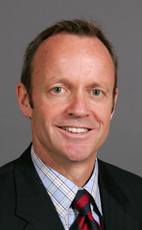
House of Commons photo

Crucial Fact

  • His favourite word was rcmp.

Last in Parliament March 2011, as Conservative MP for Okanagan—Coquihalla (B.C.)

Won his last election, in 2008, with 58% of the vote.

Statements in the House

Access to Information April 21st, 2010

Mr. Speaker, unfortunately, my colleague does not have all the facts. The government receives more than 40,000 requests for access to information a year. We respond to most of those requests within 30 days. Roughly 10% or 12% of requests take more than 120 days to be dealt with and we want to speed up the process.

Information Technology April 20th, 2010

Mr. Speaker, as I have already said, this is an important issue. We appreciate the observations by the Auditor General. I have in fact met with her and Treasury Board officials have met with her officials.

We have given instruction to all departments, even though some are already advanced in this work as the Auditor General noted, that we want them to complete their plans on aging information technology. When they do that and bring them forward with the timeline we have given them, we will then look at the overall amount that is needed and the types of technologies needed so we can keep our systems working well.

Information Technology April 20th, 2010

Mr. Speaker, we appreciate the work of the Office of the Auditor General. We have looked at these reports and have met with the Auditor General.

She has observed that a number of departments have made advances on their information technology plans and others have not. We have given instructions that we want all departments to bring forward their plans for dealing with information technology and to do it within a certain time limit. From there we will be able to take an overall view of what needs to be done and how much it will cost.

Business of Supply April 20th, 2010

Mr. Speaker, I agree with my hon. colleague on the point he has made.

I believe that particular principle is coincidental with the principle of representation by population. It was addressed in a very good judgment written by Justice Beverley McLachlin before she was appointed to the Supreme Court of Canada; in fact she was in the court of British Columbia at the time.

The subject of strict interpretation of representation by population was brought before her. Her judgment said that is the basic principle by which we operate, but she also talked about the uniqueness, size, breadth and distribution of population in Canada itself. She said that the goal must first be representation by population but then there is some room to allow for a difference in number of voters within a particular constituency to reflect some of the unique qualities of Canada.

As to some of the remarks my friend made relating to the Arctic, certainly that judgment would have some bearing on them and would need to be taken into consideration.

Business of Supply April 20th, 2010

Mr. Speaker, I want to thank my colleague for his kind words on the progress I am making in French, but I have another problem.

My colleague is telling us that Bloc members still reflect the will of the people in Quebec. I wonder why they oppose our bill that sets mandatory sentences for criminals who commit very serious crimes or reoffend. I wonder why they are against our bill to introduce mandatory sentences for criminals who commit crimes against children.

Does he think he is representing the majority opinion in Quebec? It is the same about this. I am convinced that Quebec citizens want to keep the 75 members they are guaranteed in the House of Commons.

Business of Supply April 20th, 2010

Mr. Speaker, today we are discussing the Bloc Québécois motion to preserve the number of members Quebec currently has in the House of Commons. I would like to point out that the motion has already been rejected by the people of Quebec. In addition, our constitution already guarantees Quebec 75 members of Parliament, regardless of the province’s population.

We have tabled another bill, with the Constitution, that will give more seats to provinces in which the population has increased. For free citizens, the principle of representation by population is fundamental. It is absolutely fundamental for democracies the world over.

My friend opposite said that this is a principle in a normal country but not Canada. What exactly is a normal country? He implied that Canada is not normal, and that is an entirely different debate.

It is important to recognize that our democratic system is supported by other countries. It is the foundation for any country that wishes to be considered democratic.

Many of my colleagues on this side of the House have debated this issue. Once I have finished, I will give the floor to the member for Edmonton Centre, with whom I am sharing my time because it is important to hear what Alberta and British Columbia, where my riding is located, have to say.

For years, we have witnessed dramatic population growth, especially in Ontario, Alberta and British Columbia. Our Constitution therefore requires that the number of members be increased. Those are the facts. The principle in Canada is representation by population, but it is not perfect. It does not apply perfectly in all constituencies.

Several years ago, a Supreme Court judge, the Honourable Beverley McLachlin, ruled that it was not essential to have the same number of people in every constituency, but that the principle of representation by population was paramount.

To reflect population growth in British Columbia, Alberta and Ontario, our bill gives those provinces another seven, five and 18 seats respectively.

At the same time, we are going to continue to extend our support, so that Quebec has 75 MPs, regardless of its population. The system that we support gives more weight to Quebec MPs, because even if the population in their ridings is somewhat less than in other regions of the country, they will continue to hold a minimum of 75 seats.

There is another interesting thing about the Bloc's request. That request was rejected in 1992, during the debate on the Charlottetown accord. Indeed, the issue of Quebec holding 25% of the seats in the House was included in the Charlottetown accord, but 55% of Quebeckers voted against the accord. Since then, no individual or organization from Quebec has approached the House of Commons to get this 25% level, which had been rejected in 1992. Even the National Assembly does not support the idea.

Therefore, why do Bloc members want to support something which was rejected by Quebec itself, by the citizens of Quebec? Today, even the National Assembly does not support this request. This is because a majority of Quebeckers understand that there are constitutional guarantees to ensure they have a minimum number of MPs. This is why it is very important to support our bill on democratic representation, which will result in an increase in the number of seats for those provinces whose population is growing. It is very simple.

We do not understand why Bloc members want something that could reduce Quebec's current representation. According to our numbers, Quebec will have more seats, possibly two, even with the guarantee of a minimum level. So, Quebeckers will continue to have a guaranteed presence here in the future. Quebec's representation in the House will have more weight. Indeed, its population is smaller, but the province will have more seats. We support that.

This is why I am urging my colleagues to support our bill to add seats based on the population, and to also support a constitutional guarantee to ensure that the province of Quebec keeps 75 MPs, regardless of its population. This is how we support Quebec. The Bloc's proposal does not work and it does not reflect the will of Quebeckers and Canadians.

Public Service April 19th, 2010

Mr. Speaker, the only skating that is going on here is by the member opposite.

On the issue of ensuring that the widows and spouses of those who have been lost in the brave fight in Afghanistan have regulations in place so that they can move into an area of preferential treatment related to job-seeking, that will be in place this coming month.

On the issue of the Parliamentary Budget Officer, if there is information that he wants he just needs to ask for it and I will do my best to get it to him.

Ethics April 19th, 2010

Mr. Speaker, I repeat with pleasure that if they want official documents, figures, or something else that they are missing, they can call me, send me a letter or make a request. If I can, I will immediately try to send them the figures they are looking for.

Ethics April 19th, 2010

Mr. Speaker, the government is very open regarding its accounts and the budget. If they want figures, they can submit a written request, and I will try, if I can, to send the documents they are looking for.

Public Service April 19th, 2010

Mr. Speaker, other than the brave soldiers themselves who perish in the course of action, nobody has suffered more than spouses and their families. It is for that reason we agree. As a matter of fact, we have always supported that spouses should have this preferential treatment. Officials are working with the Public Service Commission and we expect to see these regulations fully implemented in May.