
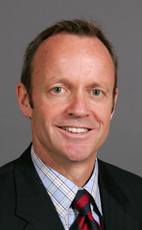
House of Commons photo

Crucial Fact

  • His favourite word was rcmp.

Last in Parliament March 2011, as Conservative MP for Okanagan—Coquihalla (B.C.)

Won his last election, in 2008, with 58% of the vote.

Statements in the House

The Economy February 21st, 2001

Mr. Speaker, we have been trying to give him that consensus for days and days now, and he is not listening.

Here is another quote from Mr. Drummond, his former senior adviser: “The economic assumptions underpinning the October update now seem decidedly optimistic”. He is saying these are not realistic plans.

I want to assure the finance minister that we are not blaming the downturn on him. We are not doing that. He had nothing to do with it, just like he had nothing to do with the upturn.

I am trying to impress upon him that this is an important issue. Canadians want a financial plan to know how to lessen the impact of an economic downturn. When will he table it, not some vague promise of spring?

The Economy February 21st, 2001

Mr. Speaker, along with the official opposition others are also expressing concern about the government's financial plan no longer being in touch with the changing economy.

I would like to quote from the chief economist at the TD Bank. He is also the former assistant deputy minister of finance. He said of the finance minister's economic update that “the October 2000 economic statement and budget update is now outdated”.

A vague commitment from the finance minister about some update some time in the spring just will not cut it. If the finance minister is not prepared to listen to concerned Canadians, to the markets, to people in business or to the official opposition, will he at least listen to his former top adviser and now a chief economist and table a budget and do it soon?

The Economy February 20th, 2001

Mr. Speaker, the minister well knows that the ratio of taxes vis-à-vis the GDP is 43% in Canada and 31% in the United States. He should keep that in mind.

I thought the Minister of Finance was being sincere yesterday in asking for our suggestions. Today, I do not know. Can he at least assure workers that his economic statement will announce a cut in EI contributions from $2.25 to $2?

The Economy February 20th, 2001

Mr. Speaker, since he will not indicate that he will help low income workers, will the minister take a look at the corporate tax rates because our corporate taxes, our business taxes, are higher than the average of countries with which we trade at the OECD?

Will he accelerate his indicated reduction of those taxes, the 28% to 21% reduction, to reflect his confidence in the economy?

The Economy February 20th, 2001

Mr. Speaker, we are asking the questions here. That is why we need to see that financial update. Since he will not do anything—

The Economy February 20th, 2001

Mr. Speaker, on Friday the Deputy Prime Minister admitted after weeks of denial that we are into an economic downturn. Yesterday the finance minister admitted after some denial that we need a financial update and that he will be bringing one in. I am encouraged by that because overcoming denial is the first step on the road to recovery.

Because the Minister of Finance asked for our suggestions, in his mini budget he said that he would lower some marginal rates but would not increase either personal exemptions or spousal exemptions. Will he do that to take thousands of low income workers off from paying any federal income tax at all?

The Economy February 19th, 2001

Mr. Speaker, the Prime Minister's spanking obviously still has him startled.

The federal Liberals are out of touch with reality. Job offers are down 2.2%, 43% of manufacturers are anticipating a slowdown and thousands of workers have lost their jobs.

Everywhere in the country people are adjusting to the new economic realities. Why does the government refuse to do the same?

The Economy February 19th, 2001

Mr. Speaker, it is noisy over there. Who let the dogs out?

It is incumbent upon a government to plan for both the good times and the bad times. The only planning we have seen from the government is a stale-dated mini budget last fall based on rosy predictions which even their resident economist, the now member for Markham, said could lead into a deficit because of their increased spending.

Why will the government not table a budget to deal with the uncertainties and to show clear steps of actions to reduce the impact. Table the budget.

The Economy February 19th, 2001

Yes, Mr. Speaker. At 3.30 this afternoon I will be addressing that in a news conference complete with charts and very specific steps of action. He should come on out.

Some call it a slowdown and some call it reduced demand from outside the United States. It is incumbent upon governments to plan,—

The Economy February 19th, 2001

Mr. Speaker, the official opposition, the markets and most economists have been saying for some time that we are going into a downturn. The federal Liberals have been in constant denial about that, just whistling that we should not worry and be happy.

On Friday in the House the Deputy Prime Minister agreed with the official opposition. He said “The Canadian and U.S. economies are headed to a slowdown”.

If the Deputy Prime Minister agrees that we are headed toward a slowdown, why is the government not putting into place clear, precise steps of action to reduce the impact of that slowdown on Canadians?