Agreed.
(Motion agreed to, bill read the third time and passed)

House of Commons Hansard #229 of the 36th Parliament, 1st Session. (The original version is on Parliament's site.) The word of the day was records.
Criminal Records ActGovernment Orders
12:15 p.m.
Some hon. members
Agreed.
(Motion agreed to, bill read the third time and passed)
Carriage By Air ActGovernment Orders
May 14th, 1999 / 12:20 p.m.
Saint-Laurent—Cartierville Québec
Liberal

Stéphane Dion Liberalfor the Minister of Transport
moved that Bill S-23, an act to amend the Carriage by Air Act to give effect to a protocol to amend the convention for the unification of certain rules relating to international carriage by air and to give effect to the convention, supplementary to the Warsaw convention, for the unification of certain rules relating to international carriage by air performed by a person other than the contracting carrier, be read the second time and referred to a committee.
Carriage By Air ActGovernment Orders
12:20 p.m.
Liberal

Mauril Bélanger Liberal Ottawa—Vanier, ON
Mr. Speaker, I rise on a point of order, and if it is out of order I am sure you will tell me. I was hoping that you would seek unanimous consent, and I expect you would find it, to deal with all stages of Bill C-64 at the report stage and third reading without debate. Would you seek unanimous consent to do that before we proceed with Bill S-23?
Carriage By Air ActGovernment Orders
12:20 p.m.
The Deputy Speaker
Is there unanimous consent to proceed with Bill C-64 at all stages now?
Carriage By Air ActGovernment Orders
12:20 p.m.
Some hon. members
Agreed.
Carriage By Air ActGovernment Orders
12:20 p.m.
An hon. member
No.
Carriage By Air ActGovernment Orders
12:20 p.m.
The Deputy Speaker
We will proceed then with the consideration of Bill S-23.
Carriage By Air ActGovernment Orders
12:20 p.m.
Thunder Bay—Atikokan Ontario
Liberal
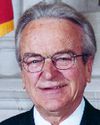
Stan Dromisky LiberalParliamentary Secretary to Minister of Transport
Mr. Speaker, I am certainly very pleased to rise today to bring to the attention of my hon. colleagues the short but very important Bill S-23 which was considered and passed by the Senate earlier in March.
My hon. colleagues will recall that parliament recently dealt with legislation pertaining to marine liability in the form of Bill S-4. With the introduction of Bill S-23, we are proposing to move in the area of air carrier liability.
Bill S-23 amends the Carriage by Air Act so that Canada can join other states in legally recognizing two major international instruments dealing with matters relating to air carrier liability such as Montreal Protocol No. 4 which relates to cargo and the Guadalajara convention which clarifies the coverage of the Warsaw convention.
These two documents update and modernize elements of the Warsaw convention, which sets out the legal rights and responsibilities of the carrier, passengers and shippers in relation to international air transportation. They will be annexed to the legislation as schedules IV and V.
The Carriage by Air Act was first enacted in 1947 to give the federal government the authority to have Canada accede to the Warsaw convention, which had been signed in 1929.
The act was amended in 1963 to authorize the federal government to implement The Hague protocol, which amended and updated the Warsaw convention to take into account the evolution in the requirements of airline carriage in the 25 years following its signature.
What we are seeking with this bill is essentially the same as in 1963: additions to the Carriage by Air Act which will enhance and clarify air carrier liability coverage and simplify documentary requirements.
The unification of law relating to the international carriage by air, in particular the unification of law relating to liability, has been of vital importance for the harmonious management of international air transport. Without such unification, complex conflicts of laws would arise and the settlement of claims would be unpredictable, very costly, time consuming, and possibly uninsurable. Furthermore, conflicts of jurisdiction could arise which would further aggravate the settlement of liability claims.
This uniformity remains a significant contributor to the facilitation of international air transportation in that the conditions for the carriage of passengers, baggage and cargo are to a large degree similar on international flights.
In this regard the Warsaw convention has been hailed and recognized as the one international private law conventions that has managed to unify the legal systems of some 140 states party to it.
However, on the international scene it has long been recognized that the 1929 Warsaw convention requires change to modernize it so as to provide a wider mandated protection for passengers, for carriers and for shippers. Montreal Protocol No. 4 and the Guadalajara convention were developed to do just that.
Montreal Protocol No. 4 amends the liability regime as it applies to cargo by providing stricter carrier liability and establishing unbreakable limits. It also simplifies the cargo documentation requirements and authorizes the electronic transmission of information. This transmission of cargo information, using means other than the traditional multicopy air waybill, can provide significant cost savings to carriers and to shippers.
It has become extremely important that Canada act quickly to accede to this protocol as it came into effect in June 1998 when the minimum number of 30 states had ratified it. More specifically, the protocol was ratified by the United States in late 1998 and came into effect in that country on March 4 of this year.
This means that until Canada has been able to deposit its own ratification documents and the protocol has come into effect in Canada, our carriers and our shippers will be at a competitive disadvantage vis-à-vis their U.S. counterparts.
The Guadalajara convention clarifies the relationship between passengers and shippers on the one hand and carriers on the other. The convention extends the rules of the Warsaw liability regime to the carrier actually performing the carriage when it is not the same as the carrier with which the passenger or shipper has contracted.
This sharing of the liability between contracting and operating carrier, when they are not the same, has become increasingly important as international carriers, such as both Air Canada and Canadian Airlines, joined together in global commercial alliances.
Extensive consultations were conducted by Transport Canada. It was determined that both Montreal Protocol No. 4 and the Guadalajara convention have the unanimous support of the Canadian aviation industry as well as all the aviation related organizations in Canada.
Notably, the airlines are very anxious for Canada to act quickly, particularly now that Montreal Protocol No. 4 is in force and applies in many countries.
In addition to industry consultations, 23 federal departments and agencies were consulted, including justice, finance, foreign affairs, national defence and the Canadian Transportation Agency. All departments expressed support for or raised absolutely no concerns regarding the adoption by Canada of these two very important instruments.
It is imperative, hon. members, that we ensure that Canadian carriers, travellers and shippers have the benefit of an international legal regime that better reflects the realities of today's aviation industry.
I believe we should move quickly to adopt this short but extremely important bill. To delay would be to increase the length of time our carriers will be at a competitive disadvantage.
Carriage By Air ActGovernment Orders
12:25 p.m.
Reform
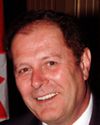
Bill Gilmour Reform Nanaimo—Alberni, BC
Mr. Speaker, the Reform Party basically agrees with the bill. It is very technical. As the parliamentary secretary stated, the amendments will implement the Montreal Protocol No. 4 of 1975 and the Guadalajara supplementary convention, 1961.
The international agreements amend and supplement respectively the Warsaw convention of 1929 and the unification of certain rules relating to international carriage by air of 1955, which are part of Canada's Carriage by Air Act. The 1929 and 1955 agreements establish documentary requirements and liability regimes for international air transportation.
As I said initially, this is a fairly technical bill and, in some ways, a housekeeping bill. The Reform Party agrees with its implementation, but we strongly disagree with the method by which it arrived in the House. It came from the Senate.
All of us in the House account to our constituents. At the next election, they will tell us whether they agree or disagree with us. That is democracy. This is the House that the bill should have come from, not the Senate. The Senate is unaccountable and not representative. In our view, all bills should originate in the lower House and then go on to the Senate.
To summarize, we agree with the bill but we strongly disagree with the method and the route by which the bill has arrived in the House.
Carriage By Air ActGovernment Orders
12:30 p.m.
Bloc
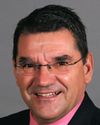
Michel Guimond Bloc Beauport—Montmorency—Orléans, QC
Mr. Speaker, the name of my riding is quite long, but it truly represents the many sub-regions I have the honour to represent here, in Ottawa, since 1993.
I have 40 minutes to speak on this issue pursuant to parliamentary procedure, but since it is Friday afternoon, I know that many of my hon. colleagues are looking forward to heading back to their ridings.
I must point out that, even if parliament is not sitting next week, unlike what many people might suggest, members of parliament will not be on holiday. We will be in recess. I want to make a non-partisan comment. I believe that, next week, none of my 301 colleagues in this House will be on holiday. We all have work waiting for us at our riding offices, people to meet and companies to visit.
Unfortunately, some reporters are suggesting that members of parliament will take some time off. The people close to members of parliament know that, yes, we do take some time off sometimes, because we are human after all. But next week, from May 17 to 24, the 301 members of parliament will not be on holiday. We will be in recess and working in our respective ridings. I wanted to make this non-partisan comment because of the great respect I have for the House of Commons as a parliamentary institution.
The rules of procedure allow me to speak for 40 minutes, but I will not use all the time I am allowed, especially since, as my Reform colleague rightly pointed out earlier, Bill S-23 is mostly a technical bill aimed at implementing two international conventions. One can hardly be against this type of bill.
However, like the Reform member, I too want to deplore the fact that the government has chosen, once again, to let this bill be brought in through the other house, the name of which I cannot mention. Members know that the Senate cannot be mentioned by name in the House, and that is why I must refer to it as the other house.
The government has 155 elected members, which is a majority. Since it was elected to govern, it could very well have introduced this bill through the usual channel. What is disturbing to opposition members is that, if one reads Hansard from the years 1984 to 1993, it shows that the Liberals criticized the Conservative government of Brian Mulroney for using such a procedure. Now that they are in office, they are doing exactly the same thing.
That is why the members of the Bloc Quebecois had the opportunity to say during the campaigns leading to the 1993 and the June 2, 1997 elections—and we will have the opportunity to say it again during the next election campaign—that Liberals and Conservatives are all the same. When they sit in opposition, they criticize the government, and when they take office, they act in the exact same way as the government they criticized.
It is disturbing to see that the government has chosen to introduce this bill in a house made up of non-elected members.
I want to underline the terrific work being done by my hon. colleague from Regina—Qu'Appelle and by the Liberal member from Sarnia—Lambton, who are campaigning to have the Senate abolished. Through their work, they want to ensure that the decisions are taken by democratically elected parliamentarians.
As far as we MPs are concerned, the people can replace us every four or five years. We are not appointed for partisan or political reasons or because we are government cronies.
We often hear about former ministers in the National Assembly who were appointed to the Senate by the current Prime Minister and who are receiving their pension from the National Assembly.
We could also mention Ross Fitzpatrick, the Liberal bagman from western Canada, who was appointed to the Senate by the current Prime Minister and who sits on the board of directors of Canadian Airlines and is lobbying for this company. We could come up with many more names like these.
We could talk about people who were appointed under the Mulroney government, like Senator Pierre Claude Nolin, the chief Conservative organizer in Quebec during the 1988 election campaign, who was appointed to the Senate at age 39.
My point here is simply to raise public awareness and make you realize, Mr. Speaker, as I am sure you are by now, given the way you seem to be hanging on to my every word, that we will be asking the government in the future to continue to use—
Carriage By Air ActGovernment Orders
12:35 p.m.
Liberal

Mac Harb Liberal Ottawa Centre, ON
Mr. Speaker, I rise on a point of order.
I am sure it was not my colleague's intention to name the other place. Usually members do not name the other place in this House because both Houses are different from one another.
Carriage By Air ActGovernment Orders
12:35 p.m.
Bloc
Michel Guimond Bloc Beauport—Montmorency—Orléans, QC
Mr. Speaker, to respond to the point of order raised by the member who interrupted me, I will say that I have been talking about the other House since the beginning of my speech. I did not say the other place. I am being careful not to mention the Senate by name. I have been talking about the other House, but we will not get into this any further.
Carriage By Air ActGovernment Orders
12:35 p.m.
Liberal
Mac Harb Liberal Ottawa Centre, ON
Mr. Speaker, I rise on a point of order. My colleague knows full well that he is not supposed to mention the Senate in the House. If he wants to say the other place that is fine, but he should not name it by name. The member knows that.
Carriage By Air ActGovernment Orders
12:35 p.m.
Bloc
Michel Guimond Bloc Beauport—Montmorency—Orléans, QC
Mr. Speaker, this bill is aimed at giving effect, in Canadian law, to international treaties ratified by Canada. To do so, this bill amends the Carriage by Air Act to implement the Montreal Protocol No. 4 and the Guadalajara Supplementary Convention.
These two international agreements amend and supplement the Warsaw Convention for the Unification of Certain Rules Relating to International Carriage by Air, which establishes the documentary requirements and liability regime for international air transportation.
Montreal Protocol No. 4 simplifies cargo documentation, authorizes its transmission by electronic means, and amends the cargo liability regime. The Guadalajara Supplementary Convention extends the rules of the Warsaw Convention to carriage performed by a carrier other than the one with whom the passenger or shipper entered into a contract.
I agree, this topic is quite dry and technical.
I find it regrettable that the leader of the government is eating an apple in this House. We are not allowed to name the Senate, but what about eating apples in the House? The member for Glengarry—Prescott—Russell is eating an apple.
I would not want to show disrespect for this member. We can see he is looking after his health, and finds it important to eat apples. I would have preferred him not to do so here in this House, for a degree of decorum is required.
In conclusion, Montreal Protocol No. 4, which came into force in June of 1998, took effect in the United States last March 4. In other words, until Canada implements it, American carriers and shippers have an advantage over their Canadian competitors, because they can use the electronic transmission of air waybills for cargo, which is far less costly.
This means that countries applying these international conventions will have a certain advantage over those that do not. This is, therefore, a bill which is in the interests of Canada and Quebec, and one which represents a needed change as commercial exchanges continue to grow.
We would like to point out that these agreements were signed under the auspices of the Montreal based International Civil Aviation Organization.
For all these reasons our party supports this bill, and encourages the government to see that it is passed as quickly as possible, if this can be done.
Carriage By Air ActGovernment Orders
12:40 p.m.
NDP
Lorne Nystrom NDP Qu'Appelle, SK
Mr. Speaker, at the outset I want to say that I am splitting my time with the hon. member for Churchill River.
This bill is called Bill S-23. For people watching today, bills come here called C which means Commons. Some are called S which means they originated in the Senate rather than the House of Commons.
I object to having a bill originating in what we call the other place. The other place is not elected, it is not democratic and it is not accountable to the Canadian people.
I see the minister, who is the government House leader across the way, hanging on to the curtain in the back. I would like to know from him why more and more bills are originating in the other place. I can see him shaking his head but I cannot hear what he is saying. Now he is scurrying out the back door.
Carriage By Air ActGovernment Orders
12:40 p.m.
The Acting Speaker (Mr. McClelland)
I do not wish to interrupt but it would certainly not be fair to suggest that the government House leader was scurrying out. He is making a very dignified exit.
Carriage By Air ActGovernment Orders
12:40 p.m.
NDP
Lorne Nystrom NDP Qu'Appelle, SK
He did not scurry or crawl but he did make an exit. Maybe he will come back in again after he has a bowl of soup or something.
I want to raise this very serious question because this bill originated in the other place. In the last poll I have seen, the other place has the support of about 5% of the Canadian people. Five per cent of the Canadian people support the existing Senate, support the structure of the other place.
There is a great debate in the country as to whether or not it should be abolished or reformed. Of the remaining 95% of the Canadian people, they are roughly divided equally between reforming the other place and electing it in some way, and just abolishing it and getting rid of it. That is the debate.
It seems very strange that the government across the way would originate a bill in a place that is not elected, not accountable and has the support of 5% of the Canadian people. I do not know another democracy in the world that would legitimize the other place by originating a bill in the other place when it is not elected.
We are not talking about a board, or a commission or an agency. We are talking about a legislative body that can initiate legislation to change the laws of the country. I think that is a serious democratic issue in a modern-day parliamentary democracy.
Mr. Speaker, I see you sitting in your chair looking pretty sad yourself when you start reflecting on the state of democracy in the country. I am also pretty sad to see the government doing this time and time again.
The Canadian people do not support that institution. Ninety-five per cent of Canadians are saying that they do not support the existing institution of the Senate. Yet the government time and time again will go there to initiate legislation. That is fundamentally wrong. I would like to see government members stand up and defend why they do this.
There is one minister in the House now who is listening very carefully to this debate. We have time this afternoon for him to get up and respond as to why they insist on doing this. The time has come for us to have a serious debate about electoral and parliamentary democracy and how to make this institution more meaningful.
I knew the government House leader many years ago. I remember in 1968 when I was first elected he was working in the House. The turnout in that election campaign was about 80% of the population. In the last election campaign it went down to about 67%. More and more people are giving up on the electoral system. They are losing confidence in the electoral system. More and more people are cynical of politicians and the political process.
One reason is that we have a legislative body that initiates legislation. It is not elected, not accountable and not democratic. We cannot get back at those people. If a Reform member from British Columbia or an NDP member from Regina does something people do not like, every three, four or five years the people can say no. I experienced that in 1993 when I lost the seat of Yorkton—Melville in Saskatchewan.
What can we do about a senator? There is nothing that can be done about someone in the other place, short of their being convicted for some serious criminal activity and being forced out by their colleagues. There was one who was living in Mexico for a long period of time. He had to resign under the pressure of public opinion. Short of that, there is no way of holding those people accountable and keeping their feet to the fire.
There are members in the other place who do not live in their home provinces and hardly ever go back to them. They do not go to meet their people. Some of them have even lived outside of the country. They draw a salary and expenses roughly equivalent to those of a member of parliament. They travel the world. People think they are like American senators so the red carpet is rolled out for them. That is the kind of institution we tolerate. We spend $50 million a year of taxpayers' money funding the other place.
Think of the homeless people under a bridge a few blocks from Parliament Hill who could use a few thousand dollars for public housing. Think of the money we could put into training and skills to put people to work. Think of the farmers we talked about in question period today who are now on a suicide watch because they do not have money to pay their bills. Yet we pay those people in the other place, who have no obligations whatsoever in terms of accountability, $50 million. And the government across the way initiates legislation in the other place.
I hope the government House leader will rise to his feet and explain to us how in the name of modern democracy he can tolerate such a situation. I can say that the Canadian people do not tolerate it. Only 5% of them support the other place, yet we have a government that ignores the wishes of 95% of the Canadian people. My oh my, once in power how they change their minds and how they change their hearts.
I hope the minister across the way will answer the questions on behalf of the people of this country.
Carriage By Air ActGovernment Orders
12:45 p.m.
Reform

Jay Hill Reform Prince George—Peace River, BC
Mr. Speaker, I listened very intently to the words of my hon. colleague.
I think that everyone in Canada, certainly everyone in this place, is well aware that our two parties share the same sentiment toward the inappropriateness of the present structure of the other place. Where we differ is that my hon. colleague's party chooses to support the abolishment of the senate, while the Reform Party of Canada supports a triple E senate. I wear the triple E pin very proudly. I still support the concept that we need an equal, effective and elected senate.
I agree with my hon. colleague that the vast majority of Canadians do not believe the Senate as it is presently structured serves any useful purpose. It is a patronage haven for the old parties. With the dictatorial system we have in the House and the way in which the present government operates by ramming through legislation with closure, I ask my colleague how would we have a check and balance without having an elected, effective and regional Senate?
Carriage By Air ActGovernment Orders
12:50 p.m.
NDP
Lorne Nystrom NDP Qu'Appelle, SK
Mr. Speaker, I do not believe the triple E idea is ever going to happen. We would need an amendment to the Constitution and the unanimous consent of all provinces along with the federal parliament in order to do that. I do not think we are ever going to get Quebec to agree to have the same number of senators as Prince Edward Island, let alone Ontario having the same number of senators as New Brunswick. If we did get that agreement the powers would be so weak and ineffective it would not matter if we had a Senate in the first place. It comes right down to the fact that this is never going to happen.
I do not think we need a second elected body in terms of bureaucracy and the many more politicians who would be funded. The amount involved would be greater than the $50 million we see today. This would invite gridlock between the two Houses.
In answer to the member's question, we need to bring accountability into the House of Commons. We need to bring the review process into the House of Commons by reforming and democratizing this place.
The powers of the Prime Minister's Office and the Privy Council Office have to be reduced. These questions were raised in the House today by the Reform Party and I certainly agree. The appointment of justices and the appointment of senior people in the government should have a parliamentary and democratic review as is done in most countries around the world.
Our parliamentary committees should be stronger and have more independence where legislation can be initiated. We should have fewer confidence votes in the House of Commons. All kinds of bills go through this place that should not be confidence bills. Parliamentarians should be able to vote their own line and express their own point of view. That should be done.
I also believe that we should have fixed election dates, fixed dates for budgets and fixed dates for throne speeches. This would again take power away from the government and away from the Prime Minister and the executive.
Why do I say that? I say it because we need big democracy in this country. There have only been two elections since 1921 where a majority of the people voted for a majority government and those were the governments of Mackenzie King in 1945 and John Diefenbaker in 1958. Every other time a majority has been elected by a minority of the people. This Liberal government has the support of 38% of the Canadian people, yet it has had a majority for five years. I think that is wrong without accountability built into this place.
We should be looking at modernizing our electoral system by bringing in a mix of proportional representation so the vote of the people is reflected by the composition of the House. We are now one of only two or three countries in the world without a mix of PR. We are not a modern electoral democracy and the minister across the way knows this.
Even Britain, the mother of parliaments, has a mix of PR in the Scottish assembly and the Welsh assembly. In the election after the next, it will be brought into the United Kingdom parliament itself. There is an election taking place now for the European parliament where every member from Great Britain is being elected through PR, through regional constituencies.
Those are things which we should be looking at. Every other country in the world has modernized its electoral system. We can do it in Canada as well.
Carriage By Air ActGovernment Orders
12:50 p.m.
NDP
Rick Laliberte NDP Churchill River, SK
Mr. Speaker, Bill S-23 is an act to amend the Carriage by Air Act. There are opportunities to improve air transportation in this country and not only by this act. I will put forward a challenge on this in a very short while.
Air transportation in this country has evolved to become a major component of our way of life and the way we do our business. We will all be travelling back to our constituencies during the upcoming recess and a vast majority of us will depend upon air transportation to get us home.
Air is the only form of transportation to access communities in certain regions of this vast country of ours. Air transportation moves the basic necessities of life such as food and other cargo into isolated and remote areas. These isolated and remote areas depend upon good service from air carriers, but if these services are not available, then good sound legislation is of utmost importance.
The modernizing of our Carriage by Air Act is long overdue. The last update was in 1964, almost 40 years ago. There has been a lot of developments in the air transportation industry since then. There has hardly been any development on the issue of a passengers bill of rights.
In the old bills, and it was adopted in this one, only $35 could be assured for luggage and cargo loss. I had not realized this until I read the bill. A few years ago I had a carry on bag with sound equipment and photography equipment in it. Somebody walked off with it at the next stopover. When we arrived at our destination, my bag was missing. I had $1,300 of equipment missing and the offer made to me was $35. I could never figure out where the $35 came from. It comes from the Guadalajara convention of 1961.
There are international agreements that bind our nations, such as the 1988 Montreal protocol. All Canada is doing with Bill S-23 is modernizing and updating it to its international standards.
The challenge I want to place before the House and the government is that we have a Canadian passengers bill of rights.
We hear of recent developments on the news and in the media about the Americans. Our neighbours to the south are just as dependent on air transportation as we are, going between the east and west coasts. In the Swissair disaster, the victims' families were protected under the American passengers bill of rights.
We wonder what kind of protection we have as passengers, and what protection our families have, when looking at disasters that have hit our airports and airlines in recent years. Our situation forces us to use air transportation. Other situations loom before us in terms of a passengers bill of rights.
A snowstorm hit eastern Canada this past winter. Passengers were inconvenienced and left stranded in Canadian airports. Toronto was a prime example. Passengers were the last to know of any developments in the weather or decisions being made by the air carriers regarding the rescheduling of flights or arrangements for overnight accommodation. We saw pictures of passengers sleeping on benches in the airports. There were stories of lost cargo and luggage. This is a challenge for the government to look at a sound and safe passenger bill of rights.
A new territory was born on April 1. We hear stories that the entire territory does not have any highways to connect any of its communities unless it is winter travel by snow machine or dog team. They depend on air transportation.
The primary air transportation responsibility is highlighted in this bill. People switch from one airline to another. They may end up on six different airlines to reach their destination because of the huge explosion of other air transportation systems after deregulation of air transportation in the country.
We have to look at protection and who is responsible. It is highlighted in the bill that the primary air carrier will be responsible for passengers rights, whatever limited rights there are in the act. It does not matter whether passengers transfer flights. As long as the first air carrier on the ticket is listed, that is who is responsible for the passengers rights.
We support Bill S-23 and the updating of the Carriage by Air Act. It is an international standard act. I must repeat that we need a Canadian bill of rights for passengers, for our citizens and for visitors whom we wholeheartedly welcome into the country, as we just recently did with the Kosovar refugees. Tourists drive the economy of many regions of the country, especially during the spring and summer.
I wish everyone safe travel this weekend. I welcome and wish all passengers and refugees who have come to our country safe travel.
Carriage By Air ActGovernment Orders
1 p.m.
Progressive Conservative

Charlie Power Progressive Conservative St. John's West, NL
Mr. Speaker, on behalf of our transportation critic from Cumberland—Colchester I will take a few moments to speak to Bill S-23, which we will be supporting. Like the member who just spoke, I would like to see discussion on some other things, such as a Canadian bill of rights for passengers.
The region of Canada I come from is Newfoundland and Labrador. I would love to get a chance to discuss in the House the cost of airfare in this country, in particular the cost of regional airfare. The cost of airfare in Newfoundland is a significant prohibiter to travel. There are significant problems for the tourism industry. For many individuals who have to travel on crisis calls, the regional costs of airfare are absolutely shameful. Someday we may get a chance to discuss these issues in the House.
Today I will read a few notes on behalf of our critic which address Bill S-23. It is a bill regarding air transport that ratifies amendments to the Warsaw convention on international carriage by air. More specifically, Bill S-23 takes the form of amendments to the Carriage by Air Act by implementing Montreal Protocol No. 4 and the Guadalajara supplementary convention.
The Warsaw convention was signed in 1929. It assigns liability to the air carrier and provides for maximum liability in the event of death or injury of a passenger and loss of baggage or freight. In addition, the convention authorizes the passenger or shipper to enter into a contract in order to improve the terms of that liability.
Canada gave effect to the Warsaw convention in June 1947 by passing the Carriage by Air Act. This act has been amended from time to time to reflect new international agreements relating to the conduct of the international airline industry. The Montreal Protocol and the Guadalajara convention are the most recent of these new international agreements and parliament has been asked to ratify them through this piece of legislation which is now before the House of Commons.
Bill S-23 makes some housekeeping amendments to the Carriage by Air Act. Clarity is provided through definitions at the beginning of the act. The text, in keeping with modern legislative practice, has been rendered gender neutral, and a formula is provided for the establishment of international currency conversions. The Montreal Protocol and the Guadalajara convention are dealt with in schedules IV and V and are referred to accordingly in this act.
Montreal Protocol No. 4 amends the liability regime for cargo with stricter carrier liability and with maximum limits. It provides that a carrier is liable for damages to cargo to the limits of the liability but only after those damages have been established. As a result, the carrier cannot escape liability by taking all necessary precautions and cannot be assessed damages beyond the maximum limit even in the event of gross negligence.
This protocol, signed in 1975, only came into effect in 1998 when the requisite number of 30 states had deposited their instruments of ratification. This protocol came into effect in the United States in March of this year and thus puts U.S. carriers at a competitive advantage over Canadian carriers. It is therefore imperative that Canada ratify this protocol as soon as possible so that our air carriers can remain competitive in what is an increasingly competitive industry.
The Guadalajara convention in schedule V was first signed in 1961. It clarifies the relationship between passengers and shippers on the one hand and air carriers on the other. It is already widely in force and it clarifies the application of the Warsaw convention to situations where the contract of carriage was made by a carrier that did not actually perform some or all of the carriage by air. In short, it distinguishes between the contracting company and the carrier actually performing the carriage and sets out varying liabilities for each. This fills a gap that results from modern practice where one airline issues the ticket and another airline does all or part of the actual flight in question.
The Warsaw convention is thus made to apply to the contracting carrier throughout the journey and to the actual carrier during those parts of the journey that it actually carries. A claimant may sue either, but the aggregate of damages is limited to the amounts established by the Warsaw convention.
Bill S-23 enjoys the support of the Air Transport Association of Canada, a body representing all of the major airlines and many of the cargo operators, regional carriers and small airlines as well. The industry regards this legislation as long overdue and essential for the modernization and commercial viability of Canadian commercial aviation.
In conclusion, the PC Party supports the bill and urges its quick passage.
Carriage By Air ActGovernment Orders
1:05 p.m.
The Acting Speaker (Mr. McClelland)
Is the House ready for the question?
Carriage By Air ActGovernment Orders
1:05 p.m.
Some hon. members
Question.
Carriage By Air ActGovernment Orders
1:05 p.m.
The Acting Speaker (Mr. McClelland)
Is it the pleasure of the House to adopt the motion?
Carriage By Air ActGovernment Orders
1:05 p.m.
Some hon. members
Agreed.
(Motion agreed to, bill read the second time and referred to a committee)