
No, Mr. Speaker, taking.
House of Commons Hansard #91 of the 36th Parliament, 2nd Session. (The original version is on Parliament's site.) The word of the day was park.

House of Commons Hansard #91 of the 36th Parliament, 2nd Session. (The original version is on Parliament's site.) The word of the day was park.
Employment InsuranceOral Question Period
11:25 a.m.
NDP
Employment InsuranceOral Question Period
11:25 a.m.
The Speaker
It was taking, of course. I misunderstood.
Employment InsuranceOral Question Period
11:25 a.m.
Windsor West Ontario
Liberal

Herb Gray LiberalDeputy Prime Minister
Mr. Speaker, I will be happy to take the hon. member's comments as a representation, in spite of the tone.
I suggest to my hon. friend that he should leave the fight of the byelection on the hustings, where his party is obviously not doing very well or he would not have brought this up in the House today.
HealthOral Question Period
11:25 a.m.
Progressive Conservative
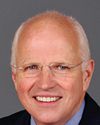
Greg Thompson Progressive Conservative Charlotte, NB
Mr. Speaker, the government is often accused of not honouring the five principles of the Canada Health Act. Is it not time that the minister came up with a sixth principle? I think it would avoid some of the problems we have experienced in the country over the last number of years. The sixth principle would be predictable long term funding. It is something that is missing in the system and I think it would address many of the problems we are experiencing in the country today.
HealthOral Question Period
11:25 a.m.
Etobicoke Centre Ontario
Liberal

Allan Rock LiberalMinister of Health
Mr. Speaker, over the course of the last four budgets the government has increased by fully 25% the amount of cash transferred to the provinces for health.
Let me raise a point which is particularly important for this question from this party. In the least election campaign the Progressive Conservative Party, along with the Reform as it was then known, suggested we transfer all of the money to the provinces solely by tax points, with no cash, thus depriving the Government of Canada of any influence or moral authority to enforce the Canada Health Act.
We reject the Tory approach and the Reform approach to financing. We will continue to do it the right way.
HealthOral Question Period
11:25 a.m.
Progressive Conservative
Greg Thompson Progressive Conservative Charlotte, NB
Mr. Speaker, that is nonsense. It started out at a 50:50 ratio. Now it is down to 85:15, with the provinces paying 85 cents on the dollar. This is truly hypocritical of the minister, because he—
HealthOral Question Period
11:30 a.m.
The Speaker
Once again I would ask members to stay away from words like hypocritical.
HealthOral Question Period
11:30 a.m.
Progressive Conservative
Greg Thompson Progressive Conservative Charlotte, NB
Mr. Speaker, the minister knows full well that that is nonsense. Comparing our position to that of the Reform or the UA is complete nonsense.
We support the five principles of health care and suggest that we need that sixth principle to avoid the problems he has inflicted on the Canadian health care system.
Will the minister act or take—
HealthOral Question Period
11:30 a.m.
The Speaker
The hon. Minister of Health.
HealthOral Question Period
11:30 a.m.
Etobicoke Centre Ontario
Liberal
Allan Rock LiberalMinister of Health
Mr. Speaker, unfortunately the facts do not support the member's assertion.
The leader of that party supported the Alberta government in bill 11. That is the approach they take toward public medicare. In the last election campaign the Tory party proposed replacing the CHST by transferring tax points to the provinces and territories. That would end the role of the Government of Canada in ensuring compliance with the principles of the Canada Health Act.
That party's position, and the position of the Reformers, was rejected by the Canadian people with very good reason.
IndustryOral Question Period
11:30 a.m.
Reform

Charlie Penson Reform Peace River, AB
Mr. Speaker, SpaceBridge Networks Corporation, a high tech firm created by industry giants Newbridge and COM DEV International, received a $2 million grant from Industry Canada.
However, a SpaceBridge executive admitted in the Globe and Mail that the real purpose of the government's TPC grant was not so much to fund R and D, but to allow the company to start up without diluting its shareholder equity.
Why does the minister think that taxpayer money should be used as a substitute for the normal practice of raising venture capital in the private sector?
IndustryOral Question Period
11:30 a.m.
Ottawa South Ontario
Liberal
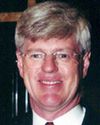
John Manley LiberalMinister of Industry
Mr. Speaker, I would like to congratulate the member on putting his first question to me as industry critic.
I would like to point out to him that the technology partnerships program does not give grants, so the premise of his question is totally wrong.
The EconomyOral Question Period
11:30 a.m.
Reform

Ken Epp Reform Elk Island, AB
Mr. Speaker, the government seems to have endless money to spend on mismanaged grants at HRDC, mindless dead rabbit art displays, and endless politically motivated boondoggles.
One of the people in my riding told me that they would much rather have an MRI machine in the hospital than a fountain in the Prime Minister's riding.
When will the government correct its priorities, provide adequate funding for health care, get the debt and interest payments down, and give some real tax relief?
The EconomyOral Question Period
11:30 a.m.
Ottawa South Ontario
Liberal
John Manley LiberalMinister of Industry
Mr. Speaker, the hon. member will know that support for tourism infrastructure is one of the things that the Harris government proposed to do in its budget this past week, making hundreds of millions of dollars available to support locally supported projects such as the fountain in Shawinigan.
If the Alliance party has a problem with that, it may want to contact Mr. Long quickly and let him know that Mr. Harris is on the wrong track.
Transfer PaymentsOral Question Period
11:30 a.m.
Bloc
Odina Desrochers Bloc Lotbinière, QC
Mr. Speaker, Tom Kent is a former deputy minister under the government of Lester B. Pearson. His actions are said to have marked Canadian social policies, particularly health policies.
Yesterday, Mr. Kent said before a Senate committee that the main threat to our health system was the federal government itself.
Does the Minister of Health agree with Mr. Kent that this government violated the commitment made by the federal government in the sixties by making drastic cuts to transfer payments, since 1995?
Transfer PaymentsOral Question Period
11:30 a.m.
LaSalle—Émard Québec
Liberal

Paul Martin LiberalMinister of Finance
Mr. Speaker, the hon. member must know that in each of the last four budgets we have increased transfers to the provinces.
In last year's budget, we increased those payments by $11.5 billion, over a four year period. This year, we increased them again. The increase for the past two years is over 25%.
Transfer PaymentsOral Question Period
11:30 a.m.
Some hon. members
Oh, oh.
Transfer PaymentsOral Question Period
11:30 a.m.
Liberal
Paul Martin Liberal LaSalle—Émard, QC
Moreover, we invested money in research and development, in transition funds and in the whole information sector. We are in the process of achieving—
Transfer PaymentsOral Question Period
11:30 a.m.
Some hon. members
Oh, oh.
Transfer PaymentsOral Question Period
11:30 a.m.
The Speaker
I would ask hon. members to please keep their voices down, because we want to listen to the minister's reply. He has some time left if he wishes to add something. Otherwise, I will hear the hon. member for Lotbinière.
Transfer PaymentsOral Question Period
11:30 a.m.
Bloc
Odina Desrochers Bloc Lotbinière, QC
Mr. Speaker, the government is constantly trying to include tax points in the contribution for health to create a smokescreen.
Will the minister finally agree with Mr. Kent that this is a “stupid” argument that it does not make “any sense”?
Transfer PaymentsOral Question Period
11:35 a.m.
LaSalle—Émard Québec
Liberal
Paul Martin LiberalMinister of Finance
Mr. Speaker, it is the hon. member who is not making any sense. Again, the transfer of tax points by the Canadian government was at the request of the provinces.
Mr. Miller, who was Ontario's treasurer, asked that the full transfer be in the form of tax points, because he was well aware that these points would increase in value much more than cash transfers.
We went 50-50, because we wanted to accommodate the provinces. But we were well aware that it also takes money to maintain the Canadian government's position and we will continue to maintain that position.
Aboriginal AffairsOral Question Period
May 5th, 2000 / 11:35 a.m.
Reform

John Williams Reform St. Albert, AB
Mr. Speaker, with every page we turn it is waste, it is mismanagement and it is incompetence everywhere. According to the auditor general's recent report, the Department of Indian Affairs and Northern Development is spending up to $65,000 per special needs student and does not even know if the money is being spent on the students.
Why is the Department of Indian Affairs and Northern Development so incompetent and so poorly managed that it does not care about ripping off the taxpayer and especially does not seem to care about educating the students under its responsibility?
Aboriginal AffairsOral Question Period
11:35 a.m.
Provencher Manitoba
Liberal
David Iftody LiberalParliamentary Secretary to Minister of Indian Affairs and Northern Development
Mr. Speaker, the Government of Canada takes the education of Indian children very seriously. The questions raised by the hon. member are quite inappropriate. The facts speak for themselves.
The truth is that under this administration over the last seven years more first nations people have gone to university than was the case prior to that and we have every intention of keeping that up.
Grain TransportationOral Question Period
11:35 a.m.
Reform

Lee Morrison Reform Cypress Hills—Grasslands, SK
Mr. Speaker, it is tough to be at the bottom of the food chain. Just ask a rabbit or a western farmer.
The recently announced increase in grain freight rates will add $1.45 a tonne to farmers' surging costs. The CTA is not at fault. It just crunches the numbers mandated by parliament. The government is to blame for not acting on the recommendations of two very costly reports.
Will the Minister of Transport get his act together before August 1 and implement the revenue cap recommended in the Kroeger report?