As is our practice on Wednesday we will now sing O Canada, and we will be led by the hon. member for Souris—Moose Mountain.
[Editor's Note: Members sang the national anthem]

House of Commons Hansard #48 of the 37th Parliament, 2nd Session. (The original version is on Parliament's site.) The word of the day was iraq.
2 p.m.
The Speaker
As is our practice on Wednesday we will now sing O Canada, and we will be led by the hon. member for Souris—Moose Mountain.
[Editor's Note: Members sang the national anthem]
Lebanese New Year's LeveeStatements By Members
2 p.m.
Liberal
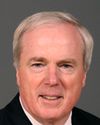
Shawn Murphy Liberal Hillsborough, PE
Mr. Speaker, I rise today to congratulate all organizers of the annual Lebanese New Year's Levee, which was organized by the Charlottetown Lebanese community and held at the Delta Prince Edward on Saturday, January 11.
The evening's festivities included Lebanese cuisine, Lebanese music, Lebanese dancing and an excellent address on Lebanese culture presented by Dr. Abdallah Obeid, the Director of Arabic Studies at the University of Ottawa.
The event was attended by approximately 500 people, including the Lieutenant Governor of Prince Edward Island, the Premier of Prince Edward Island, and the Mayor of the City of Charlottetown.
The Lebanese have had a long and rich history in the greater Charlottetown area, going back in excess of 100 years. The original immigrants from Lebanon, and their descendants, have contributed much to the culture of the community of Charlottetown and the economy of Prince Edward Island.
On behalf of the House I wish to salute this community and the organizers of this event.
Queen's Jubilee MedalStatements By Members
2 p.m.
Canadian Alliance
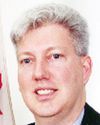
Grant McNally Canadian Alliance Dewdney—Alouette, BC
Mr. Speaker, before the Christmas break I had the honour to present a number of deserving constituents from my riding of Dewdney—Alouette with the Queen's Golden Jubilee Medal, recognizing their outstanding achievements, and contribution to our communities and to our country.
The recipients included: Dr. Jack Freeman, Wesley Johnson, Mayor Sylvia Pranger and Ella Pretty from the Agassiz and Harrison Hot Springs area; Linnea Battel, Terry Gidda, Bill Harris, Victor Hollister, Eleanor Lobb and Catherine Marcellus from the Mission area; and Lorraine Bates, Crystal Boser, Tom Cameron, Lola Chapman, Carl Durksen, Bernice Gehring, Chief Peter James, Sheila Nickols, Mike Suddaby and Bonnie Telep from the Maple Ridge and Pitt Meadows area.
On behalf of the people of Dewdney—Alouette, we thank each one of them for their endless hours of service that help to make our communities a better place to live.
International Year of FreshwaterStatements By Members
2 p.m.
Liberal
Yolande Thibeault Liberal Saint-Lambert, QC
Mr. Speaker, on December 12, 2002, the United Nations General Assembly proclaimed 2003 as the International Year of Freshwater.
This decision is in keeping with the commitments made by the international community, including Canada, at the 2000 Millennium Summit, and at the World Summit on Sustainable Development in Johannesburg in 2002. Heads of state from around the world had agreed to halve by 2015 the proportion of people without access to or the means to access safe drinking water and basic sanitation.
If these goals are not reached, fatal diseases will continue to spread and cause devastation, the earth's environment will continue to decay and food security will be compromised, with the risks of instability that can result. Of course, water-related problems are more acute in the developing world, but developed countries are not safe either.
During the International Year of Freshwater, I am convinced that Canada will do its part to protect the planet's precious freshwater resources, which are essential to our survival and to sustainable development in the 21st century.
Peter Gzowski Internship ProgramStatements By Members
2:05 p.m.
Liberal
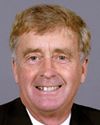
Peter Adams Liberal Peterborough, ON
Mr. Speaker, I am pleased that CBC Radio has honoured the memory of Peter Gzowski by establishing the Peter Gzowski internships. Peter was chancellor of Trent University.
The internships will provide training in broadcast opportunities for final year students at Trent University in Peterborough, Simon Fraser University in British Columbia, Memorial University in St. John's, and McGill University in Montreal.
Peter would have greatly appreciated a memorial of this type, which will open the doors of his profession for young people. Students interested in the Peter Gzowski internship program should contact one of the universities mentioned or visit the website at www.cbc.ca/gzowskiinternships.
Samuel ClarkStatements By Members
2:05 p.m.
Liberal
Andy Savoy Liberal Tobique—Mactaquac, NB
Mr. Speaker, last Thursday, on behalf of the Minister of Veterans Affairs, I had the privilege of presenting the minister's commendation to a most distinguished veteran of the second world war, Mr. Samuel Ervin Clark, a resident of Woodstock, New Brunswick.
Mr. Clark served overseas with the 1st Canadian Division. Beyond his dedicated service to his country, Mr. Clark chose to continue to contribute to the cause of veterans and to their community ever since his return from the war and throughout his golden years.
Mr. Clark is an outstanding example of someone who has devoted much of his life to the well-being of others. Though legally blind Mr. Clark has been managing the Woodstock Veterans Home for 39 years without any remuneration. His dedication to his fellow veterans and their families bears witness to a lifetime commitment to comrades in need and to his remarkable generosity of spirit.
Mr. Clark is most worthy of this honour. His continued efforts to assist veterans have set an example for all Canadians. It is my pleasure to recognize him for serving his country and his community with such devotion.
Member for LaSalle—ÉmardStatements By Members
2:05 p.m.
Canadian Alliance
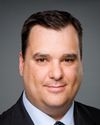
James Moore Canadian Alliance Port Moody—Coquitlam—Port Coquitlam, BC
Mr. Speaker, the member for LaSalle—Émard sees himself as the next Prime Minister. He wanted to participate in the debate on the bill to reform rules on financing of political parties.
However, he condemned the Bloc Quebecois in English in the National Post while supporting its political legitimacy in French on CKAC radio in Montreal. I think that, for Canadians and Quebeckers, a bilingual message is the same in French and English, and not two conflicting messages, like those we heard from the former Minister of Finance.
The member for LaSalle—Émard sees himself as our next Prime Minister so he wants to talk about the campaign finance bill. But he denounced the political legitimacy of the Bloc Québécois in English to the National Post while supporting its legitimacy on Montreal's French language CKAC radio.
For me a real bilingual message is the same in both official languages. National leadership demands consistent national messages in both official languages like this statement, and not the language games played by the former Liberal finance minister.
Film IndustryStatements By Members
2:05 p.m.
Liberal

Hedy Fry Liberal Vancouver Centre, BC
Mr. Speaker, last year the Canadian film industry accounted for over $5 billion in revenue and 134,000 jobs. In British Columbia alone this meant an economic impact of $2.8 billion and 25,000 jobs, ranking B.C. third in production after L.A. and New York.
Today, this industry faces a crisis that put 50% of film union members out of work in B.C. The cause? Primarily the loss of the foreign film investment deferral and an inadequate tax credit replacement. At the same time Australia and Ireland have created enhanced tax incentives for which even our own low Canadian dollar cannot compensate. The industry has been working on practical solutions which are before the Minister of Finance.
I urge our federal government to put in place the long term tax incentives that will improve Canada's competitiveness in this very mobile but important international industry.
Lafarge CanadaStatements By Members
2:05 p.m.
Bloc
Robert Lanctôt Bloc Châteauguay, QC
Mr. Speaker, I would like to congratulate the managers at Lafarge Canada in my riding on receiving, jointly with Longueuil, an innovation award at the 12th Annual Technology Awards Gala of the Association de recherche industrielle du Québec.
Lafarge Canada developed a new method involving the use of ash from incinerated wastewater sludge in an industrial cement powder production process.
Through this innovation, more than 10,000 tonnes of ash can be recycled, which will result in savings of $150,000 over this three-year project.
This innovation by Lafarge, located in Saint-Constant, provides a clean solution for the ash residue from the incineration of sludge at wastewater treatment plants.
We believe this new technology from Quebec will soon be used around the world.
Order of CanadaStatements By Members
2:10 p.m.
Liberal

Nancy Karetak-Lindell Liberal Nunavut, NU
Mr. Speaker, I would like to congratulate the four Nunavummiut just awarded the Order of Canada.
Zacharias Kunuk of Igloolik is honoured for his outstanding work in preserving Inuit culture and tradition, and sharing it with the world. His film Atanarjuat is an international success.
Tagak Curley of Rankin Inlet, founding president of the Inuit Tapirisat of Canada, now known as Inuit Tapiriit Kanatami, and negotiator of the Nunavut land claim, is honoured for his dedication to the economic and political development of the north.
Helen Maksagak of Cambridge Bay is honoured for her community work. As Commissioner of the Northwest Territories and then of Nunavut, Helen performed her official duties with grace and dignity.
Elisapee Ootova of Pond Inlet created an Inuktitut dictionary and co-authored an encyclopedia of Inuit traditional knowledge.
All four have made the world a better place and are role models for all of us.
Brian BakerStatements By Members
2:10 p.m.
Canadian Alliance
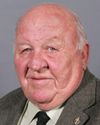
Myron Thompson Canadian Alliance Wild Rose, AB
Mr. Speaker, I am pleased to start this year off by paying tribute to a real hero from my riding of Wild Rose. Brian Michael Baker received the Medal of Bravery from the Governor General on December 9, 2002, due to his efforts on November 4, 2000, when he was struck by a car while escorting a woman to her stranded vehicle during a blinding snowstorm in Crossfield, Alberta.
When the tow truck arrived to pull the woman's car away from the median, Mr. Baker volunteered to escort her from his rescue van at the side of the four lane highway back to her abandoned vehicle. With visibility hampered by the blizzard he feared for the woman's safety and instructed her to hold on to his arm.
They were halfway across the road when they found themselves directly in the path of a car travelling through the snow squall at excessive speed for the road conditions. Without hesitation and regard for his own safety, Mr. Baker pushed the woman out of harm's way. In a split second he took the full impact and was thrown several metres. As a result of his valiant efforts Mr. Baker suffered multiple serious injuries.
LiteracyStatements By Members
2:10 p.m.
Liberal
Claude Duplain Liberal Portneuf, QC
Mr. Speaker, I am pleased to highlight the participation of Human Resources Development Canada’s National Literacy Secretariat in the implementation of three projects in the very beautiful riding of Charlevoix.
In Baie-Saint-Paul, the Charlevoix literacy training service will receive $20,000 to develop an information kit on social intervention for staff who work with students who suffer from psychosocial problems.
In Forestville, Plaisir de lire will receive $18,000 to launch a literacy awareness campaign on the North Shore.
In Baie-Comeau, the Maison Alpha ABC Côte-Nord will receive $9,518 to prepare audio report cards for parents who are functionally illiterate.
These three examples demonstrate the determination of the Government of Canada to give all our fellow citizens the tools to full realize their abilities.
Foreign AffairsStatements By Members
2:10 p.m.
NDP
Svend Robinson NDP Burnaby—Douglas, BC
Mr. Speaker, last night I and many Canadians watched in horror as George Bush made clear his intention to wage war on the people of Iraq. At the same time he announced that the U.S. is pushing ahead with a dangerous new star wars missile defence system.
Today we learned that the Liberal government is sending officials to the United States this week to look at a possible role for Canada in this dangerous scheme. Will the Liberals really let George Bush put nuclear weapons on Canadian territory as part of this dangerous scheme?
It is time the Liberal government finally took a stand on these two grave threats to world peace. The Liberal foreign minister meets tomorrow with U.S. Secretary of State Colin Powell. I urge him to give a loud and clear message from the people of Canada that Canada will not participate in a war on the people of Iraq under any circumstances, and Canada will have nothing to do with the U.S. missile defence scheme. No contracts and no missile sites.
Finally, MPs should be allowed to have a vote, not a debate but a vote, on this most fundamental of issues.
St. Lawrence PilotsStatements By Members
2:10 p.m.
Bloc
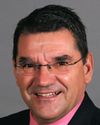
Michel Guimond Bloc Beauport—Montmorency—Côte-De- Beaupré—Île-D'Orléans, QC
Mr. Speaker, today I would like to pay tribute to a group of real professionals, the pilots of the St. Lawrence River.
The importance of the role played by the St. Lawrence pilots is indisputable. Thanks to their mastery of the specifics of the St. Lawrence, many disasters—environmental, economic and social—have been avoided.
The forefathers of today's St. Lawrence pilots often exposed themselves to great risks in exploring its various bays. The narrow waters of our river, where ships are subjected to constantly changing constraints and natural conditions, absolutely require the presence of these navigational professionals.
They have at last been officially recognized by the Historic Sites and Monuments Board of Canada, and will now be commemorated by a plaque in the Musée de la mer, at the Pointe-au-Père lighthouse, in the Lower St. Lawrence.
The Bloc Quebecois joins with me in expressing, on behalf of all Quebeckers, our most sincere gratitude for the excellent work that has been done and continues to be done by our St. Lawrence pilots. Imagine how many nautical miles have been navigated since the time of Abraham Martin, in 1634.
Economic DevelopmentStatements By Members
2:15 p.m.
Liberal
Diane St-Jacques Liberal Shefford, QC
Mr. Speaker, more than a hundred mayors, municipal councillors and economic development officers from the Eastern Townships and the Montérégie are in Ottawa today to attend a seminar organized by my colleague, the member for Brome—Missisquoi.
They are taking part in information sessions on subjects relating to government programs. I thank them for responding to this invitation in such large numbers.
Their presence confirms their concerns and interest in developing new tools and opportunities for their cities or areas.
The information they will receive today will certainly be of use to businesses and organizations in a number of municipalities.
In closing, I extend my greetings to the mayors and councillors from the riding of Shefford, as well as those from surrounding ridings. I hope they will have a profitable day and thank them for their support and excellent cooperation.
National Drinking Water StandardsStatements By Members
2:15 p.m.
Progressive Conservative
John Herron Progressive Conservative Fundy Royal, NB
Mr. Speaker, Canada is essentially the only industrialized country without national drinking water standards. Two years have passed since the majority of members of the House supported a Progressive Conservative motion to ensure that Canada has national, enforceable drinking water standards enshrined in a safe water act.
Two years have come and gone since the Liberal government promised to act on enforcing safe drinking water standards. Today I will introduce a private member's bill that provides for the establishment of national standards for safe drinking water. In a letter received from the Minister of Health in September, she stated that the responsibility for drinking water does not rest solely in the hands of the federal government.
We agree, however the Canadian Water and Wastewater Association believes strongly, as Canadians do, that the federal government has an important and critical role in the preservation of safe drinking water across the country. Even the Minister of Health must believe this as well.
Provincial and territorial jurisdiction must be recognized and this is done in this private member's bill. We need to have standards for safe drinking water that are legislated and made legally binding. Let this bill serve as a catalyst, a reminder for us to--
Report of the Privacy CommissionerStatements By Members
2:15 p.m.
The Speaker
Order, please. I have the honour to lay upon the table the 2001-02 report of the privacy commissioner.
This report is deemed to have been permanently referred to the Standing Committee on Justice and Human Rights.
IraqOral Question Period
January 29th, 2003 / 2:15 p.m.
Calgary Southwest Alberta
Canadian Alliance
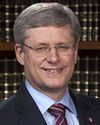
Stephen Harper Canadian AllianceLeader of the Opposition
Mr. Speaker, in 1998 the Prime Minister said:
Make no mistake, Saddam's behaviour to date indicates that he will not honour diplomatic solutions so long as they are not accompanied by a threat of intervention. The least sign of weakness or hesitation on our part will be interpreted as incitement...We believe that Canada cannot stand on the sidelines in such a moment...Canada will be counted.
Does the Prime Minister still hold to this opinion?
IraqOral Question Period
2:15 p.m.
Saint-Maurice Québec
Liberal
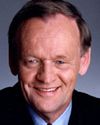
Jean Chrétien LiberalPrime Minister
Yes, Mr. Speaker, and it is why we were asking from the beginning that there would be a very clear resolution at the Security Council. That became 1441. It is very clear that if he does not oblige and abide by the rules of the Security Council Saddam Hussein will face very severe consequences for his misjudgment.
IraqOral Question Period
2:15 p.m.
Calgary Southwest Alberta
Canadian Alliance
Stephen Harper Canadian AllianceLeader of the Opposition
Mr. Speaker, let me return to the Prime Minister's quote. He said:
The least sign of weakness or hesitation...will be interpreted as incitement.
The Prime Minister himself and his government have been waffling consistently on what to do in the past few weeks. He said:
We believe that Canada cannot stand on the sidelines in such a moment...Canada will be counted.
What precisely is the government doing and what is the Prime Minister doing to send the message that Canada is determined and will be counted and act with its allies?
IraqOral Question Period
2:15 p.m.
Saint-Maurice Québec
Liberal
Jean Chrétien LiberalPrime Minister
Mr. Speaker, we have been working for a long time to make sure that the United Nations will give the message to Saddam Hussein. We have worked to have a resolution so that the people of the world will be together in telling Saddam Hussein that he has to disarm.
The goal is to disarm Saddam Hussein. We are all united in the United Nations to ask him to do that. Otherwise he will have to pay the price.
IraqOral Question Period
2:15 p.m.
Calgary Southwest Alberta
Canadian Alliance
Stephen Harper Canadian AllianceLeader of the Opposition
Mr. Speaker, let me go to a more precise question.
Both Australia and Great Britain have stated that Saddam Hussein is in material breach of United Nations resolution 1441. As well, evidence is mounting that Saddam is blocking the work of the UN inspectors team as required by the resolution. It states that without compliance there will be severe consequences.
Does the Prime Minister today believe that Saddam Hussein is or is not in compliance with resolution 1441?
IraqOral Question Period
2:20 p.m.
Saint-Maurice Québec
Liberal
Jean Chrétien LiberalPrime Minister
Mr. Speaker, there are two elements that are very important to keep in mind. The President of the United States yesterday said that next week on the fifth, Wednesday, Mr. Powell will be in front of the Security Council and he will table evidence. We are waiting to see what is that proof, and if they have it, good. It will be good for the people to know. As well, there is Mr. Blix, who will make another report on February 14.
IraqOral Question Period
2:20 p.m.
Canadian Alliance
Stockwell Day Canadian Alliance Okanagan—Coquihalla, BC
That is another non-response, Mr. Speaker.
The allied forces have stated with good reason and with good evidence that they do not believe Saddam Hussein is complying with the United Nations. This multilateral coalition of nations is determined to increase the pressure on Saddam Hussein to respect the United Nations. They are deploying military forces to the region. Great Britain, Australia, the Czech Republic, the United States and others believe pre-deployment is important to ensure Saddam's compliance.
Why does the Prime Minister not agree with our allies?
IraqOral Question Period
2:20 p.m.
Saint-Maurice Québec
Liberal
Jean Chrétien LiberalPrime Minister
Because, Mr. Speaker, we have a very clear policy. We have said that we have to follow the process of the Security Council and the United Nations. We were the first ones to start to ask about it and we are following à la lettre, as we say in French, the process. The process will be the testimony of Mr. Powell next week and the second report of Mr. Blix, and we will advise when we have these two testimonies.