Oh, oh!
House of Commons Hansard #6 of the 39th Parliament, 2nd Session. (The original version is on Parliament's site.) The word of the day was seniors.

House of Commons Hansard #6 of the 39th Parliament, 2nd Session. (The original version is on Parliament's site.) The word of the day was seniors.
Aboriginal AffairsOral Questions
2:40 p.m.
Some hon. members
Oh, oh!
Aboriginal AffairsOral Questions
2:40 p.m.
Liberal
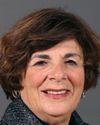
Anita Neville Liberal Winnipeg South Centre, MB
Mr. Speaker, according to the Assembly of First Nations, overcrowding in first nations--
Aboriginal AffairsOral Questions
2:40 p.m.
Some hon. members
Oh, oh!
Aboriginal AffairsOral Questions
2:40 p.m.
Liberal
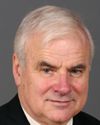
The Speaker Liberal Peter Milliken
Order. The hon. member for Winnipeg South Centre has the floor. We do not want to have a yelling match. The hon. member has the floor and we will hear her question.
Aboriginal AffairsOral Questions
2:40 p.m.
Liberal
Anita Neville Liberal Winnipeg South Centre, MB
The apology should come from over there, Mr. Speaker.
According to the Assembly of First Nations, overcrowding in first nations homes is almost double the Canadian rate. Aboriginal peoples are living in homes without hot or even cold running water or flush toilets. Does the government not think it is a human rights issue?
The government's approach to the UN declaration is the same as its approach to housing for aboriginal Canadians. It is meanspirited. Is this what the government thinks is a shining example for the world to follow?
Aboriginal AffairsOral Questions
2:40 p.m.
Chilliwack—Fraser Canyon B.C.
Conservative

Chuck Strahl ConservativeMinister of Indian Affairs and Northern Development and Federal Interlocutor for Métis and Non-Status Indians
Mr. Speaker, I know what a shining example is to follow and that is to allow first nations to have the same rights as the member opposite who just raised that question. It is to have the same rights. In the last Parliament, we introduced legislation to do that. For 90 days that party over there held up that legislation and would not let it through.
It is time for first nations to have human rights. It is time they were covered by the Canadian Human Rights Act. We expect that member and the rest of those people over there to support human rights for first nations. The time has come.
Anti-terrorism ActOral Questions
October 23rd, 2007 / 2:40 p.m.
Conservative
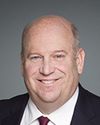
Dean Allison Conservative Niagara West—Glanbrook, ON
Mr. Speaker, today in the Senate the Minister of Justice will be introducing legislation to reinstate important anti-terrorism provisions of the Anti-terrorism Act.
It is important that we have at our disposal all the tools we need to ensure the security of Canadians.
Can the minister tell the House why he has chosen to introduce the bill in the Senate as opposed to this House?
Anti-terrorism ActOral Questions
2:40 p.m.
Niagara Falls Ontario
Conservative

Rob Nicholson ConservativeMinister of Justice and Attorney General of Canada
Mr. Speaker, the government is committed as part of its anti-terrorism strategy to reintroducing these two fundamental provisions to the Anti-terrorism Act. We may remember that these were the provisions turned down by the opposition last year, but we are committed to giving law enforcement agencies the tools they need to fight terrorism in this country.
I know that the justice committee is going to be very busy this fall, so I think it is very appropriate that this be introduced in the Senate. The bottom line is that we will not give up the fight against terrorism in this country.
Security CertificatesOral Questions
2:40 p.m.
NDP

Penny Priddy NDP Surrey North, BC
Mr. Speaker, eight months after security certificates were struck down by the Supreme Court, the Conservatives are taking another shot at it, but tinkering with a fundamentally flawed idea is not going to make it any better. If a person plots a terrorist attack in Canada, he or she should be tried, convicted, and jailed in Canada, not suddenly deported to another country.
Why is the government choosing to fight terrorism with the Immigration and Refugee Protection Act and not the Criminal Code of Canada?
Security CertificatesOral Questions
2:40 p.m.
Okanagan—Coquihalla B.C.
Conservative

Stockwell Day ConservativeMinister of Public Safety
Mr. Speaker, we are collectively astonished at the lack of understanding the member has just demonstrated. The Minister of Justice has been very clear about the ATA provisions. They have nothing to do with deportation.
If she wants to try to readjust and make the question a little more direct, with common sense, maybe we could handle it. People are deported when they are deemed to be inadmissible to come into this country. We are certainly going to maintain that particular process.
Security CertificatesOral Questions
2:45 p.m.
NDP
Penny Priddy NDP Surrey North, BC
Mr. Speaker, security certificates are also a serious violation of our rights and freedoms. Yesterday the Conservatives tabled special advocate legislation, but the public safety committee heard extensive testimony earlier this year that the system has serious problems in places such as New Zealand and the United Kingdom.
The minister knows this, so why is the minister proposing something that we already know does not work in other countries?
Security CertificatesOral Questions
2:45 p.m.
Okanagan—Coquihalla B.C.
Conservative
Stockwell Day ConservativeMinister of Public Safety
Mr. Speaker, there is the issue of security certificates, which we dealt with yesterday, and there is the area of the provisions in the Anti-terrorism Act, which the Minister of Justice is dealing with today.
The particular provisions we dealt with yesterday were at the request of the Supreme Court. We have followed those very carefully. We have drafted the legislation very carefully. It is not precisely as the information from other countries. As a matter of fact, we have looked at other countries to make sure that what we have done is going to meet the demands of the Supreme Court.
We are also pleased that the Liberals have indicated, at least thus far, that they are going to support us on this.
Canada Elections ActOral Questions
2:45 p.m.
Liberal
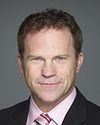
Scott Simms Liberal Bonavista—Gander—Grand Falls—Windsor, NL
Mr. Speaker, changes to the Canada Elections Act have resulted in more than one million rural Canadians losing the right to vote in the next election. Twenty-five per cent of voters in Newfoundland and Labrador, 30% in Saskatchewan, 30% in the Northwest Territories and a whopping 80% in Nunavut will lose their right to vote.
What will the government do to fix this?
Canada Elections ActOral Questions
2:45 p.m.
York—Simcoe Ontario
Conservative
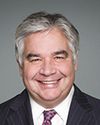
Peter Van Loan ConservativeLeader of the Government in the House of Commons and Minister for Democratic Reform
Mr. Speaker, the question raised by the member is a legitimate and serious question. We are of course concerned. We want to ensure that everybody's right to vote is protected.
I have had an opportunity to discuss this matter with the Chief Electoral Officer of Canada. I am confident that, should we have an electoral event before we can correct it in another fashion, he is prepared to use his adaptation power to ensure that no Canadian loses the right to vote.
Canada Elections ActOral Questions
2:45 p.m.
Liberal
Scott Simms Liberal Bonavista—Gander—Grand Falls—Windsor, NL
Mr. Speaker, I would like to accentuate the point. I thank the hon. minister for his response, but the government and indeed this Parliament have a responsibility to fix this. All Canadians have the right to vote. It is unacceptable to have such a large portion of the population unable to vote because of a glitch in the amended elections act.
Rural Canadians do deserve better. This is a serious issue.
Canada Elections ActOral Questions
2:45 p.m.
York—Simcoe Ontario
Conservative
Peter Van Loan ConservativeLeader of the Government in the House of Commons and Minister for Democratic Reform
Mr. Speaker, for the benefit of members of the House who may not be familiar with the situation, the issue is one of addresses that are post office boxes where there are no municipal addresses for individuals. In an effort to put through Bill C-31, all parties in this House supported amendments to tighten up the identification--
Canada Elections ActOral Questions
2:45 p.m.
An hon. member
No.
Canada Elections ActOral Questions
2:45 p.m.
Conservative
Peter Van Loan Conservative York—Simcoe, ON
All parties but for the NDP, I should add. That is fair.
They supported elements to ensure that we had integrity in the electoral process. This element was missed. I suspect that all parties will want to enthusiastically support efforts to correct this deficiency. In any event, we are confident that if there is an electoral event on the horizon no one will lose the right to vote.
Lumber IndustryOral Questions
2:45 p.m.
Liberal

Navdeep Bains Liberal Mississauga—Brampton South, ON
Mr. Speaker, we recently learned that Nova Scotia is poised to become the latest victim in the flawed softwood lumber agreement.
It was bad enough that the Conservative government left $1 billion in the hands of the U.S. government and its lobbyists. It was bad enough that it negotiated higher duties and quotas for Canadian companies. Now it has become apparent that the forestry program initiated by any provincial government will be sued by the United States.
Will the minister tell us whose side he is on and whose interest he represents?
Lumber IndustryOral Questions
2:45 p.m.
Vancouver Kingsway B.C.
Conservative

David Emerson ConservativeMinister of International Trade and Minister for the Pacific Gateway and the Vancouver-Whistler Olympics
Mr. Speaker, the hon. member should be congratulating the government for putting in place the softwood lumber agreement because what he is pointing to is the very protectionist group that repeatedly, for years and decades, brought actions under chapter 19 of NAFTA against the Canadian industry. Those allegations were always unfounded.
The allegations that are being made today are unfounded but the softwood lumber agreement protects our industry against trade actions of that kind in addition to putting over $5 billion back in the pockets of Canadian companies.
Lumber IndustryOral Questions
2:45 p.m.
Liberal
Navdeep Bains Liberal Mississauga—Brampton South, ON
Mr. Speaker, we cannot trust the minister and we cannot trust the government. We have an industry in crisis and thousands of jobs on the line and the minister decided to leave $1 billion with the United States.
In the absence of federal leadership, any provincial government that tries to work with the forestry industry has come to the harsh realization that it needs to vet its forestry policies with Washington.
The minister has compromised our sovereignty. Why has he put the jobs of American lobbyists ahead of hard-working Canadians?
Lumber IndustryOral Questions
2:50 p.m.
Vancouver Kingsway B.C.
Conservative
David Emerson ConservativeMinister of International Trade and Minister for the Pacific Gateway and the Vancouver-Whistler Olympics
Mr. Speaker, a number of major forest companies out there today would probably be in bankruptcy were it not for the timely refund under the softwood lumber agreement.
The provisions in the softwood lumber agreement are far better, far more flexible and protect Canadian forest policies much better than anything that party could have ever achieved.
Human ResourcesOral Questions
2:50 p.m.
Bloc
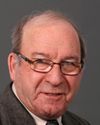
Yvon Lévesque Bloc Abitibi—Baie-James—Nunavik—Eeyou, QC
Mr. Speaker, unemployment is reaching record highs in the Nord-du-Québec region but the Breakwater mining company has applied to Citizenship and Immigration Canada for 47 permits in order to recruit workers abroad, although unemployed forestry workers are available.
How can the minister justify issuing these 47 permits when the unemployment rate is so high and workers in the area are asking for nothing more than to be employed and receive the necessary training?
Human ResourcesOral Questions
2:50 p.m.
Medicine Hat Alberta
Conservative

Monte Solberg ConservativeMinister of Human Resources and Social Development
Mr. Speaker, when we make judgments regarding temporary foreign worker permits, these judgments are made on the basis of labour market surveys. The fact is that in Quebec, up to July, 70,000 new jobs had been created.
Thousands and thousands of jobs are available through the province. We are enjoying some of the most outstanding labour market growth in the history of the country, including in Quebec.
I want to quote from an economist from the Laurentian Bank who said, “Not only is the quantity [of jobs] there, but the quality is there too”. He was referring to 70,000 jobs, mostly in hospitality, retail and construction, sending the jobless rate to a record low in July.
Employment InsuranceOral Questions
2:50 p.m.
Bloc
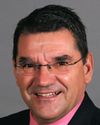
Michel Guimond Bloc Montmorency—Charlevoix—Haute-Côte-Nord, QC
Mr. Speaker, seasonal workers in 21 regions of Canada will miss out on five weeks of employment insurance benefits if the government does nothing. In fact, the current pilot project will come to an end on December 9.
In June 2006, the then Minister of Human Resources and Social Development granted an initial extension.
Will the Minister of Human Resources and Social Development make this pilot project a permanent measure to help get seasonal workers out of the black hole they find themselves in year after year?