Mr. Speaker, the budget will be presented in the spring, as is the usual practice for this House and this government.
Furthermore, it is no secret that this government will cut taxes for all Canadian citizens.

House of Commons Hansard #6 of the 39th Parliament, 2nd Session. (The original version is on Parliament's site.) The word of the day was seniors.
Budget StatementOral Questions
2:25 p.m.
Calgary Southwest Alberta
Conservative
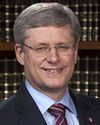
Stephen Harper ConservativePrime Minister
Mr. Speaker, the budget will be presented in the spring, as is the usual practice for this House and this government.
Furthermore, it is no secret that this government will cut taxes for all Canadian citizens.
Budget StatementOral Questions
2:25 p.m.
NDP

Jack Layton NDP Toronto—Danforth, ON
Mr. Speaker, we know that big corporate tax cuts are not going to fix the housing crisis, that is for sure. They are not going to repair the crumbling infrastructure of our cities, that is for sure. They are not going to close the prosperity gap that is affecting hard-working families or help anybody else.
The fact is, with unprecedented surpluses, the Prime Minister should be investing in the needs of working families, not giving big corporations more tax cuts. They have enough already.
Will the Prime Minister understand this basic proposition and start working for working families, yes or no?
Budget StatementOral Questions
2:25 p.m.
Calgary Southwest Alberta
Conservative
Stephen Harper ConservativePrime Minister
Mr. Speaker, what this government understands, unlike the NDP, is they do not want the government to spend Canada into oblivion. What they expect the government to do is use its surpluses to pay down debt, to invest in key programs and also to reduce taxes. We intend to pursue all those priorities.
Government AppointmentsOral Questions
2:25 p.m.
Liberal
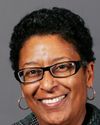
Marlene Jennings Liberal Notre-Dame-de-Grâce—Lachine, QC
Mr. Speaker, yesterday we asked if five participants in the Conservative $1.2 million election scam were rewarded with federal jobs, but the list does not stop there.
Neil Drabkin is now chief of staff to the public safety minister and Howard Bruce is now on the Transportation Appeal Tribunal. Both these men and the ministers who hired them were named in the election scam.
Are Canadians supposed to believe that this is just a coincidence?
Government AppointmentsOral Questions
2:25 p.m.
York—Simcoe Ontario
Conservative
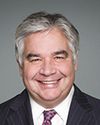
Peter Van Loan ConservativeLeader of the Government in the House of Commons and Minister for Democratic Reform
Mr. Speaker, it is the same answer as before. There has been no change. We always follow the law. We have in the past and we will in the future.
Government AppointmentsOral Questions
2:25 p.m.
Liberal
Marlene Jennings Liberal Notre-Dame-de-Grâce—Lachine, QC
Mr. Speaker, that is not the opinion of Elections Canada. These are serious matters. These men channelled $60,000 through the “in-and-out” scheme and were appointed to important posts.
Andrew House, Conservative candidate in Halifax is currently the Director of communications for the Minister of Canadian Heritage, Status of Women and Official Languages. He will stand as a Conservative candidate again. The minister and her employee participated in the “in-and-out” scheme.
Are we to believe that this is just another coincidence?
Government AppointmentsOral Questions
2:30 p.m.
York—Simcoe Ontario
Conservative
Peter Van Loan ConservativeLeader of the Government in the House of Commons and Minister for Democratic Reform
Mr. Speaker, the hon. member has her facts wrong. She has her conclusions wrong. We followed the law. We followed the election financing law. In fact, our practices are similar to those of other parties.
Government AppointmentsOral Questions
2:30 p.m.
Liberal
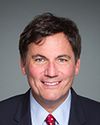
Dominic LeBlanc Liberal Beauséjour, NB
Mr. Speaker, when it comes to the abuse of our electoral system, the Prime Minister refuses to come clean.
We know the key architect of this electoral laundromat is Mike Donison, the former executive director of the Conservative Party. Instead of being punished for his role in that scheme, Mr. Donison was rewarded with a job in the government House leader's office. He is being paid by the same taxpayers he is found to have tried to rip off.
My question is very simple. Will Mr. Donison step aside until Elections Canada decides what punishment should be administered?
Government AppointmentsOral Questions
2:30 p.m.
York—Simcoe Ontario
Conservative
Peter Van Loan ConservativeLeader of the Government in the House of Commons and Minister for Democratic Reform
Mr. Speaker, what is punishing is that the Liberals still have nothing to talk about, so I am left with the same answer. Our election financing activities are entirely legal. We look carefully at the act, we follow the act and we will do so in the future.
Government AppointmentsOral Questions
2:30 p.m.
Liberal
Dominic LeBlanc Liberal Beauséjour, NB
Mr. Speaker, the minister seems to be the only person who still believes that answer. The architect of this election scandal is none other than Mike Donison, former Executive Director of the Conservative Party. Rather than being punished for his involvement in the scandal, Mr. Donison was rewarded with a job in the minister's office which is being paid for by the very taxpayers he tried to dupe.
The question is simple. Will the government act responsibly and remove Mr. Donison from his position until Elections Canada decides what his punishment will be?
Government AppointmentsOral Questions
2:30 p.m.
York—Simcoe Ontario
Conservative
Peter Van Loan ConservativeLeader of the Government in the House of Commons and Minister for Democratic Reform
Mr. Speaker, the answer is the same. All our financing activities follow the law.
However, it is interesting that the Liberal Party thought so much of its leader's stirring response, his alternate throne speech this weekend, that I have not heard a single question on it yet.
Status of WomenOral Questions
2:30 p.m.
Bloc

Nicole Demers Bloc Laval, QC
Mr. Speaker, the minister responsible for Status of Women made some mean comments when she was threatening and blackmailing women's groups.
Michèle Asselin, the president of the Fédération des femmes du Québec, is right to wonder whether the minister's intention is to muzzle women by threatening to take away financial support.
Will the minister admit that her blackmailing is harmful and will she apologize to all women for her comments which, face it, were disparaging and insulting?
Status of WomenOral Questions
2:30 p.m.
Louis-Saint-Laurent Québec
Conservative

Josée Verner ConservativeMinister of Canadian Heritage
Mr. Speaker, the right to criticize the policies of a government is fundamental to our democracy. Every person has the right to express their opinion. The government has a responsibility to set the record straight and defend its initiatives.
The hon. member for Westmount is asking for an apology, but I think she is the one who should apologize for voting against our 2007 budget, when we granted additional funding for women.
Status of WomenOral Questions
2:30 p.m.
Bloc
Nicole Demers Bloc Laval, QC
Mr. Speaker, the minister responsible for seniors in Quebec made comments similar to those by the minister responsible for the status of women when she said, “We give you money and you do nothing but complain.”
Instead of chattering on about inappropriate comments, will the minister follow the Quebec minister's example and apologize to women?
Status of WomenOral Questions
2:30 p.m.
Louis-Saint-Laurent Québec
Conservative
Josée Verner ConservativeMinister of Canadian Heritage
Mr. Speaker, it is the hon. Bloc member who should apologize. She knows full well that our government has an excellent record when it comes to women's rights. We have increased the budget for Status of Women Canada's programming by 42%. But the hon. Bloc member says nothing about that. The real difference between our government and the Bloc Québécois is that while we can increase the budget for women, the only thing the Bloc can do is increase the volume on the microphone.
International TradeOral Questions
2:30 p.m.
Bloc

Serge Cardin Bloc Sherbrooke, QC
Mr. Speaker, the Minister of International Trade is currently negotiating free trade agreements with 28 countries. Canada has a trade deficit with these countries, in particular with South Korea.
How can the minister rush into signing a free trade agreement while ignoring the study released by the CAW this morning, which shows that more than 30,000 jobs could be lost in Canada, including 8,000 in Quebec? Should saving these jobs not be a major concern for the minister?
International TradeOral Questions
2:35 p.m.
Vancouver Kingsway B.C.
Conservative
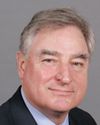
David Emerson ConservativeMinister of International Trade and Minister for the Pacific Gateway and the Vancouver-Whistler Olympics
Mr. Speaker, the government is fully committed to free and open markets and to providing Canadian companies with access to foreign markets. Without free trade, the Canadian economy would be in much tougher shape than it is today.
Yes, we are negotiating with Korea. No, we do not have a free trade agreement yet with Korea. I can assure the hon. member that the government would not enter into a free trade agreement with Korea or any other country unless there were substantial benefits to Canada.
Manufacturing IndustryOral Questions
2:35 p.m.
Bloc

Paule Brunelle Bloc Trois-Rivières, QC
Mr. Speaker, the Governor of the Bank of Canada said that the Canadian dollar's climb is unjustified. He merely said what everyone knows: while Alberta is enjoying the oil and gas boom, the manufacturing industry in Quebec and Ontario is struggling.
Of the 22 recommendations made by the Standing Committee on Industry, Science and Technology, the government has implemented only one of them, and only partially.
What is the minister waiting for to introduce refundable tax credits and loan guarantees, and to make significant federal investments in research and development? These are all measures that could help the manufacturing industry in a concrete way.
Manufacturing IndustryOral Questions
2:35 p.m.
Whitby—Oshawa Ontario
Conservative
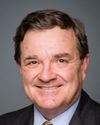
Jim Flaherty ConservativeMinister of Finance
Mr. Speaker, there is no question about it. The Canadian dollar is showing strength, in part reflecting the great strength of the Canadian economy. After 21 months of Conservative government, we have a very strong economy.
We have the lowest unemployment rate in 33 years. We have the largest number of Canadians in the history of Canada working in Canada, both men and women. It is a strong economy.
AfghanistanOral Questions
October 23rd, 2007 / 2:35 p.m.
Liberal
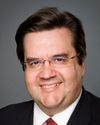
Denis Coderre Liberal Bourassa, QC
Mr. Speaker, it is another day and another crisis of accountability for the ethically challenged government. Private U.S. security firms operating in combat zones have raised some very serious questions about whether or not NATO countries can be held accountable by local authorities if laws are broken.
The government has signed a contract to pay Saladin Security in Afghanistan, but Canadians have no way of knowing who will be held responsible if something goes wrong. Why? Because the contract is being kept secret. When will the government stop its pattern of secrecy and table the contract?
AfghanistanOral Questions
2:35 p.m.
Central Nova Nova Scotia
Conservative

Peter MacKay ConservativeMinister of National Defence and Minister of the Atlantic Canada Opportunities Agency
First, Mr. Speaker, clearly it is not a secret. The hon. member read about it in the paper today, so it is not a secret.
As we have seen on a number of other occasions, private security firms have been used from time to time depending on the issue and on the type of training required. That is standard practice. It has happened under the previous government.
We are very judicious when we enter into these contracts.
AfghanistanOral Questions
2:35 p.m.
Liberal
Denis Coderre Liberal Bourassa, QC
Mr. Speaker, this government is prepared to commit our soldiers to combat missions until 2011, but it has to hire a mercenary company to protect our embassy in Kabul.
One might wonder why the Conservative government is associated with Saladin Security, a company of mercenaries specifically known for certain clandestine operations. This is not clear.
Why are the Conservatives interested in hiring mercenaries? Why can our soldiers not protect our embassy and its staff?
AfghanistanOral Questions
2:35 p.m.
Beauce Québec
Conservative

Maxime Bernier ConservativeMinister of Foreign Affairs
Mr. Speaker, my hon. colleague is alleging facts that are simply not true.
The reality is this: we have a contract system and we use it. We have followed all the procedures. We are following the same procedures in all embassies, both in that country and around the world.
The hon. member for Bourassa is trying to distort reality. But the reality is simple: our government has standards and procedures that it follows for all embassies in all countries.
Aboriginal AffairsOral Questions
2:35 p.m.
Liberal
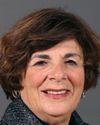
Anita Neville Liberal Winnipeg South Centre, MB
Mr. Speaker, the United Nations High Commissioner for Human Rights said the government's position against the UN declaration on the rights of indigenous people is incomprehensible and an astonishing reversal of Liberal efforts to support the declaration.
Like an astrologer, the Prime Minister claims to be guided by the North Star. Will he admit that on this issue he is indeed like the North Star: cold, unmovable, distant and not too bright?
Aboriginal AffairsOral Questions
2:40 p.m.
Chilliwack—Fraser Canyon B.C.
Conservative

Chuck Strahl ConservativeMinister of Indian Affairs and Northern Development and Federal Interlocutor for Métis and Non-Status Indians
Mr. Speaker, we know exactly what that member thinks about human rights for first nations.
After 30 years of waiting for first nations to have human rights like anyone else, like the hon. member has, do we know what she said in committee when the Liberals delayed this bill in the last Parliament? She said that they have “waited 30 years, what difference does a number of months more make...”, six months, ten months, a year, I do not see what the difference is.
The difference is that it is time first nations had human rights on reserve and we are going to deliver that to them.