The hon. member for Skeena—Bulkley Valley.
House of Commons Hansard #166 of the 39th Parliament, 1st Session. (The original version is on Parliament's site.) The word of the day was scotia.

House of Commons Hansard #166 of the 39th Parliament, 1st Session. (The original version is on Parliament's site.) The word of the day was scotia.
International TradeOral Questions
2:45 p.m.
Liberal
British Columbia Flood MitigationOral Questions
2:45 p.m.
NDP

Nathan Cullen NDP Skeena—Bulkley Valley, BC
Mr. Speaker, the people of northern British Columbia are deeply worried as the flood waters rise. States of emergency have been called right across the northwest. As gas stations and grocery stores run out of food, literally thousands of people have been stranded.
All across the region volunteers and emergency workers have been doing their part and helping out neighbours. Will the Minister of Public Safety do his part and commit to doing everything within his power to reassure the people of my region? Will he also commit to joining me in a tour across the northwest to see the disaster at first hand and to properly understand its scope and magnitude?
British Columbia Flood MitigationOral Questions
2:45 p.m.
Okanagan—Coquihalla B.C.
Conservative

Stockwell Day ConservativeMinister of Public Safety
Mr. Speaker, we can give great assurance to the people not only in my hon. colleague's region but other regions of B.C. who are threatened with these floods. The level of cooperation between municipal, provincial and federal levels frankly has been very impressive to see in the weeks and months preceding what we knew was going to be a very difficult flood season.
I anticipate that within the next 40 hours I will be in British Columbia with some of my colleagues touring some of those areas. I will check with my colleague to see if he is available within the next 48 or so hours in the areas that I am going to be touring.
British Columbia Flood MitigationOral Questions
2:45 p.m.
NDP

Peter Julian NDP Burnaby—New Westminster, BC
Mr. Speaker, southern B.C. is facing similar threats. In my riding, residents of the Westminster Quay, Queensborough and Big Bend areas are increasingly anxious as the flood waters rise and they prepare for evacuation.
We have had little federal investment in flood control, just last minute insufficient funding, but flood damage is not insurable for residents. Communities need support and the government has to quickly do more. Will the minister commit today to immediate federal aid to homeowners and businesses in the path of the Fraser River flood waters and commit to long term funding to prevent future flooding?
British Columbia Flood MitigationOral Questions
2:45 p.m.
Okanagan—Coquihalla B.C.
Conservative
Stockwell Day ConservativeMinister of Public Safety
Mr. Speaker, perhaps my hon. colleague could consult with his colleague, who just asked me a far more reasonable question.
History and the recent record will show that the commitment of $16 million, which was exactly the amount requested by the province of British Columbia to assist in building up the dike system along that river, was granted in unprecedented time by this government, as were dollars for the dredging operations and for the debris trap in the Lower Mainland.
No flooding there has occurred yet, but there are programs in place.
Atlantic AccordOral Questions
2:45 p.m.
Liberal

Mark Eyking Liberal Sydney—Victoria, NS
Mr. Speaker, in March 2005 the current Minister of Fisheries and Oceans said about the Atlantic accords, “You cannot ever turn your back on your province on an important issue like this”. It seems the principled stand he flirted with at that time is a distance memory.
How can he and the whipping, flipping, hiring and firing minister from Nova Scotia explain why they turned their backs on their provinces when they voted against the accord two nights ago?
Atlantic AccordOral Questions
2:45 p.m.
Whitby—Oshawa Ontario
Conservative
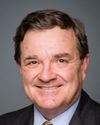
Jim Flaherty ConservativeMinister of Finance
Mr. Speaker, the question comes from a member of a party that says there is no fiscal imbalance in Canada. Budget 2007 addresses the issue of fiscal imbalance in Canada. I would have thought the member opposite would welcome the fact that this budget provides the province of Nova Scotia with massive benefits, $2.4 billion in restoring fiscal balance in the province.
Why is the member opposite opposed to $1.3 billion under the new equalization system, $130 million in offshore accord offsets, $600—
Atlantic AccordOral Questions
2:50 p.m.
Liberal
Atlantic AccordOral Questions
2:50 p.m.
Independent

Bill Casey Independent Cumberland—Colchester—Musquodoboit Valley, NS
Mr. Speaker, I am glad the Minister of Finance brought up the equalization payments. Every day he stands in the House and says that Nova Scotia and Newfoundland and Labrador can have the new formula and the old accord, but that is not accurate.
I know the minister will want to be accurate. I would like him to acknowledge his own amendments to the Atlantic accord, the 12 paragraphs of amendments in sections 80, 81 and 82 that amend it and the 6 paragraphs that amend the John Hamm agreement of 2005.
I would like the minister to acknowledge his own five amendments and refer to this from now on as the amended Atlantic accord.
Atlantic AccordOral Questions
2:50 p.m.
Whitby—Oshawa Ontario
Conservative
Jim Flaherty ConservativeMinister of Finance
The Atlantic accord with the provinces of Nova Scotia and Newfoundland and Labrador is the same now as it was before, Mr. Speaker. There is a choice to be made.
There is also, as I was saying, $277 million for the Canada social transfer, $73 million for infrastructure, $24.2 million for the patient wait times guarantee, all for the province of Nova Scotia.
As the member for Cumberland—Colchester—Musquodoboit Valley said to the Truro Daily News, “I have never seen a budget that has had more in it for the people of my riding than this one does”.
The BudgetOral Questions
2:50 p.m.
Liberal
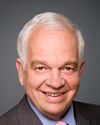
John McCallum Liberal Markham—Unionville, ON
Mr. Speaker, economists and analysts almost always couch their budget commentary in moderate, respectful language. Why did such normally polite people use the following words in describing this year's budget: “unbelievable”, “worst in 35 years”, “stupid”, “clueless”, “insane”, “idiotic”, “nut job”?
Is Canada suffering from a contagious attack of rudeness from economists, or does this extreme language reflect an extremely incompetent Minister of Finance?
The BudgetOral Questions
2:50 p.m.
Whitby—Oshawa Ontario
Conservative
Jim Flaherty ConservativeMinister of Finance
Mr. Speaker, I think the friendly question from the member opposite is called a lob question.
That is the member who travels to Paris, France to tell the people of the world that the Liberal Party wants to raise the GST. That is the president of the save the GST club and now raise the GST, a massive tax grab, more than $10 billion, from Canadians that the Liberal Party intends to do, according to the member for Markham—Unionville.
The BudgetOral Questions
2:50 p.m.
Liberal
John McCallum Liberal Markham—Unionville, ON
Mr. Speaker, he got it all wrong, but that is not surprising. He never gets anything right.
The problem goes beyond competence. The minister raised income tax, but keeps saying he cut it. He said that he would not tax income trusts and then did just that. He made solemn commitments to three provinces and then reneged on them all.
Canadians are a kind and forgiving people who might show some sympathy to a minister who is honestly out of his depth. However, how will Canadians react to a minister who is less than honestly out of his depth?
The BudgetOral Questions
2:50 p.m.
Whitby—Oshawa Ontario
Conservative
Jim Flaherty ConservativeMinister of Finance
Mr. Speaker, since this government was elected, more than 450,000 new jobs have been created in Canada. More than 70% of them are full time jobs. We have the lowest unemployment rate in 33 years—
The BudgetOral Questions
2:50 p.m.
Some hon. members
Oh, oh!
The BudgetOral Questions
2:50 p.m.
Liberal

The Speaker Liberal Peter Milliken
Order, please. We cannot waste time. The Minister of Finance has the floor. We will have some order so we can hear his answer.
The BudgetOral Questions
2:50 p.m.
Conservative
Jim Flaherty Conservative Whitby—Oshawa, ON
Mr. Speaker, we know the members opposite want bad economic times for Canada, but we have brought good economic times for Canada, tax reductions over three years of almost $40 billion, including personal tax reductions in the area of $25 billion. No wonder we have the strongest economic fundamentals, our country of Canada, in the G-7.
HealthOral Questions
2:50 p.m.
Bloc

Carole Freeman Bloc Châteauguay—Saint-Constant, QC
Mr. Speaker, last July 25, the Conservative government announced that victims of hepatitis C infected before January 1986 and after July 1990 would be compensated as soon as possible, subject to the approval of the provincial courts. Ten months later, the victims are still waiting and are calling for a settlement to be made as quickly as possible.
Could the Minister of Health tell us if he intends to set up an emergency fund to pay some of the victims most affected by hepatitis C?
HealthOral Questions
2:55 p.m.
Charleswood—St. James—Assiniboia Manitoba
Conservative
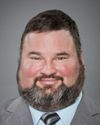
Steven Fletcher ConservativeParliamentary Secretary to the Minister of Health
Mr. Speaker, there is no dispute that the previous meanspirited government denied compensation for those hepatitis victims, tainted blood victims.
The Conservative government has fulfilled its commitment to compensate the pre-1986 and post-1990 tainted blood victims. We put in $1 billion toward this fund. The victims will be receiving that money shortly after the courts have approved the agreement.
TelecommunicationsOral Questions
June 7th, 2007 / 2:55 p.m.
Bloc

Jean-Yves Roy Bloc Haute-Gaspésie—La Mitis—Matane—Matapédia, QC
Mr. Speaker, the regional conference of elected officials in the Bas-St-Laurent area is opposed to the deregulation of local telephone service, which penalizes all rural inhabitants. What is absurd is that price increases will only affect rural and not urban areas.
Does the Minister of Industry realize that his decision to deregulate the telephone services sector will slow down or even compromise regional development rather than foster it?
TelecommunicationsOral Questions
2:55 p.m.
Oshawa Ontario
Conservative

Colin Carrie ConservativeParliamentary Secretary to the Minister of Industry
Mr. Speaker, the CRTC has decided to update its price cap framework. I remind the hon. member that the government will continue to put consumers first, and we always put consumers first. We have ensured that the CRTC will continue to regulate in areas where there is little competition.
Because the decision was made by the CRTC, it can be appealed within 90 days. Therefore, it would be inappropriate for me to comment at this time.
British Columbia Flood MitigationOral Questions
2:55 p.m.
Liberal

Hedy Fry Liberal Vancouver Centre, BC
Mr. Speaker, British Columbians have been under flood warning all spring. The upper Fraser has flooded. Evacuation is under way. The Lower Mainland is next.
The Minister of Agriculture, who represents the region, ignored the municipalities' pleas for funding all year. Federal funding, promised only three weeks ago, was too little, too late. The government gutted the Liberal new deal for cities, which could have paid for the diking borne by cash-strapped provinces.
Will the Prime Minister commit immediately to a special fund to help these municipalities with the costs of their infrastructure rebuilding?
British Columbia Flood MitigationOral Questions
2:55 p.m.
Okanagan—Coquihalla B.C.
Conservative
Stockwell Day ConservativeMinister of Public Safety
Mr. Speaker, as I said just a few moments ago, we had a request not long ago from the province of British Columbia. It was estimating it would be about $33 million to reinforce the diking system along that area. It was also asking for assistance with dredging.
In an unprecedented move, because of the hard work of MPs from that area, the request was put together. The funds are in place and delivered. I want to congratulate the first responders and the others who are working so hard in these areas right now.
The member should get tuned in. She was not even on the file while our members were out there checking it out and helping people at the local level.
Senate Tenure LegislationOral Questions
2:55 p.m.
Conservative

Scott Reid Conservative Lanark—Frontenac—Lennox and Addington, ON
Mr. Speaker, a year ago our government introduced Bill S-4, which would limit the terms of senators to eight years. All Canadians, except Liberal senators, apparently agree that the current 45 year maximum term for unelected senators is just not acceptable.
Yesterday, however, Liberal senators decided to hold Bill S-4 hostage, unless and until the government referred the bill to the Supreme Court, even though Canada's top constitutional experts and a previous Senate committee studying the issue have already deemed Bill S-4 to be fully constitutional.
Could the Minister for Democratic Reform update the House on this new development?
Senate Tenure LegislationOral Questions
2:55 p.m.
York—Simcoe Ontario
Conservative
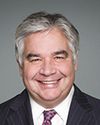
Peter Van Loan ConservativeLeader of the Government in the House of Commons and Minister for Democratic Reform
Mr. Speaker, let me be very clear, the Senate has no constitutional authority to refer a bill to the Supreme Court of Canada. In fact, it is exceeding its constitutional authority by refusing to deal with government business in this fashion.
The Liberal Red Chamber has an obligation to do its job and consider government business. The actions of unelected, unaccountable Liberal senators represents a dangerous grasp for power that is clearly extra-constitutional.
This alarming development must be halted. I hope the Liberal leader will instruct his senators to abandon this dangerous attack on Canada's Constitution and tell them to do their job of dealing with legislation.