Debates of June 10th, 2008
House of Commons Hansard #109 of the 39th Parliament, 2nd Session. (The original version is on Parliament's site.) The word of the day was tobacco.
Topics
- Question Period
- Nisga'a Final Agreement
- Westbank First Nations Self-government Agreement
- Government Response to Petitions
- Committees of the House
- Canada Pension Plan and Old Age Security Act
- Canada Labour Code
- Committees of the House
- Business of the House
- Points of Order
- Committees of the House
- Petitions
- Questions on the Order Paper
- Food and Drugs Act
- Canadian Forces
- Portuguese Canadians
- Income Tax Act
- Phone Companies
- Myra Canyon
- Immigration
- The Environment
- Michelle Bachelet
- The Environment
- M. Evenchick Jewellery Inc.
- Leader of the Liberal Party of Canada
- Food and Drugs Act
- Aboriginal Affairs
- Laval Transit Authority
- Aboriginal Affairs
- The Environment
- Patricia Ann Boname
- Aboriginal Affairs
- Gasoline Prices
- Regional Economic Development
- Gasoline Prices
- Regional Economic Development
- Public Safety
- Justice
- Omar Khadr
- Foreign Affairs
- The Environment
- National Defence
- Ethics
- Justice
- Trade
- Citizenship and Immigration
- The Environment
- Income Tax Act
- Fisheries and Oceans
- Search and Rescue
- Agriculture and Agri-Food
- Equalization Payments
- Canada Elections Act
- Committees of the House
- Afghanistan
- Private Members' Business
- Food and Drugs Act
- Income Tax Act
Aboriginal Affairs
Oral Questions
2:20 p.m.
Saint-Laurent—Cartierville
Québec
Liberal
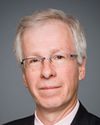
Stéphane Dion Leader of the Opposition
Mr. Speaker, I am sure that everyone here knows that the member for Churchill is right. Now we want to know why the government is refusing, and we want the Prime Minister to change his mind. The only reason he gave for refusing to allow aboriginal leaders to address the House was tradition. Canada has made plenty of mistakes in the name of tradition.
Aboriginals have waited 95 years. Why will the Prime Minister not give them 30 minutes in the House?
Aboriginal Affairs
Oral Questions
2:20 p.m.
Calgary Southwest
Alberta
Conservative
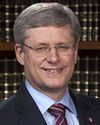
Stephen Harper Prime Minister
Mr. Speaker, we received numerous suggestions and recommendations from various individuals and organizations. We have chosen a process that respects precedents. The House of Commons has agreed to the terms of the apology. I hope that the Liberal Party, which has not yet apologized, will apologize tomorrow alongside the government.
Aboriginal Affairs
Oral Questions
2:20 p.m.
Saint-Laurent—Cartierville
Québec
Liberal
Stéphane Dion Leader of the Opposition
Mr. Speaker, we certainly will reiterate our apology, as the world hopefully will, but the issue here is to be sure that tomorrow's ceremony will be respectful and the answer by the Prime Minister is not appropriate.
There is a problem. Why will the Prime Minister not make sure that the aboriginal leaders receive today the text of the apology to allow them the time to prepare their responses? Their responses will be key in the future of our relationship with the aboriginal peoples.
Out of respect, will the Prime Minister provide the aboriginal leaders with the text today?
Aboriginal Affairs
Oral Questions
2:25 p.m.
Calgary Southwest
Alberta
Conservative
Stephen Harper Prime Minister
Mr. Speaker, I spoke with Chief Fontaine about this subject last week.
The apology will be delivered tomorrow. I hope the apology will be shared by all parties of this House. I think we all have a responsibility to unite and to make this message clear.
In terms of the acceptance, there are thousands of hearts and minds that will be at different stages of acceptance, but I hope we will begin the process of healing and reconciliation.
Gasoline Prices
Oral Questions
June 10th, 2008 / 2:25 p.m.
Bloc
Gilles Duceppe Laurier—Sainte-Marie, QC
Mr. Speaker, while gasoline prices set new records day after day, the oil companies continue to rake in huge profits. Meanwhile, the government feeds us its usual line—we have to rely on market forces—while handing out $1.2 billion in tax breaks to oil companies.
Why does the Prime Minister prefer to help his friends, the oil companies, rather than encouraging a reduction in our oil dependency as every government should?
Gasoline Prices
Oral Questions
2:25 p.m.
Calgary Southwest
Alberta
Conservative
Stephen Harper Prime Minister
Mr. Speaker, the leader of the Bloc knows that gasoline prices are determined by international market forces, and also affected by taxes imposed by certain governments in Canada, and not by subsidies to the oil industry. This government eliminated those subsidies in the 2007 budget and the Bloc Leader supported those measures.
Gasoline Prices
Oral Questions
2:25 p.m.
Bloc
Gilles Duceppe Laurier—Sainte-Marie, QC
Mr. Speaker, the budget contains $1.2 billion in tax breaks, and they are there in black and white. He has the means to take action to help our citizens reduce their dependency on oil. For example, rather than using the entire surplus to pay down the debt, he could have immediately paid up to 5¢ per litre of the excise tax to municipalities. They in turn could have used this money to reduce the cost of public transit, as Laval has done.
Why is the Prime Minister not taking action when he has the means to do so?
Gasoline Prices
Oral Questions
2:25 p.m.
Calgary Southwest
Alberta
Conservative
Stephen Harper Prime Minister
Mr. Speaker, I mentioned that market forces, together with taxes imposed by certain governments, determine prices. It is up to the Competition Bureau to ensure that the rules of the market are respected.
I must also mention that it was the government that reduced the GST to lower the price of gasoline and all goods and services. Unfortunately, the Bloc Québécois voted with the Liberals against these reductions and in favour of the Liberals' tax and environmental policies.
Regional Economic Development
Oral Questions
2:25 p.m.
Bloc
Jean-Yves Roy Haute-Gaspésie—La Mitis—Matane—Matapédia, QC
Mr. Speaker, today, Quebec's Minister of Economic Development, Innovation and Export Trade, the mayor of Quebec City and the president of PÔLE Québec Chaudière-Appalaches are holding a press conference to condemn the decision by the Minister of the Economic Development Agency of Canada for the Regions of Quebec to stop funding non-profit organizations such as PÔLE. Yet this organization has an impressive track record: tight management, 12 major structuring projects and 10,000 specialized jobs.
Will the minister be humble enough to admit he made a mistake and restore funding for these organizations, which are vital to regional development in Quebec?
Regional Economic Development
Oral Questions
2:25 p.m.
Jonquière—Alma
Québec
Conservative
Jean-Pierre Blackburn Minister of Labour and Minister of the Economic Development Agency of Canada for the Regions of Quebec
Mr. Speaker, this same party was opposed to the creation of the Economic Development Agency of Canada for the Regions of Quebec. This same party said that it was a waste of time and energy for the federal government to contribute to regional economic development in Quebec. We beg to differ. That is why those members are always in opposition and will never achieve anything.
That said, where are we at? Economic organizations approached the department to pay their operating costs forever. Those days are over. We are going to support one-off projects.
Regional Economic Development
Oral Questions
2:25 p.m.
Bloc
Jean-Yves Roy Haute-Gaspésie—La Mitis—Matane—Matapédia, QC
Mr. Speaker, this minister is forever telling us that he has a budget of only $200 million. What he is not saying is that his budget was $394 million last year. It is shrinking.
Is it not true that the real reason he has cut funding is that since he is unable to defend his budget in cabinet, he is reduced to diverting funds earmarked for regional development to projects chosen because they will benefit the Conservatives come election time?
Regional Economic Development
Oral Questions
2:30 p.m.
Jonquière—Alma
Québec
Conservative
Jean-Pierre Blackburn Minister of Labour and Minister of the Economic Development Agency of Canada for the Regions of Quebec
Mr. Speaker, if the hon. member knew what to make of the numbers and knew how the economic development department works, he would know that much of the money is allocated to firms and that our department manages that money for others.
We have an envelope of $200 million this year, which is largely the same as in previous years.
We are going to continue to support the economic development of all regions of Quebec. Thanks to the decisions we are making, we will be able to free up funds for a whole host of projects in many regions of Quebec.
Gasoline Prices
Oral Questions
2:30 p.m.
NDP
Jack Layton Toronto—Danforth, ON
Mr. Speaker, the price of gas has gone up to $1.50, and people are very angry about indecent prices and indecent profits. When gas was 50¢ per litre, Petro-Canada was making $100 million in profits.
At 73¢ a litre, Husky Oil made $546 million in a year.
With gas at well over $1 a litre now and climbing, Imperial Oil has just reported $681 million in profit in a single quarter.
With Congress and Senator Obama going after big oil, why is the Prime Minister, with the help of the so-called opposition, giving them tax cuts?
Gasoline Prices
Oral Questions
2:30 p.m.
Calgary Southwest
Alberta
Conservative
Stephen Harper Prime Minister
Once again, Mr. Speaker, obviously with the exception of taxes imposed by various governments, it is world markets that actually set oil prices. The fact of the matter is, of course, that the Competition Bureau is in place to make sure the rules of the marketplace are respected.
I have to point out that this government has given no special tax break to the oil companies. We have in fact cut taxes for all Canadian businesses and all Canadian families.
Gasoline Prices
Oral Questions
2:30 p.m.
NDP
Jack Layton Toronto—Danforth, ON
Yes, Mr. Speaker, and the biggest profiteers get the most from that tax cut that just went through.
It is not just Congress and Senator Obama that are taking on big oil and its unprecedented profits. Both the United Kingdom and Italy are doing the same. With many oil companies operating both in the U.S. and in Canada, some kind of coordinated approach would seem to make some sense here, so that we can get at the question of transforming our energy system and invest in green solutions. That is what Canadians want to see.
If the Prime Minister does not have the intestinal fortitude to take on big oil, will he at least stop sending subsidies to the tar sands?