Mr. Speaker, I appreciate the opportunity to present this question of privilege before the House of Commons. I will not take an inordinate amount of time, but I believe it is important to get the facts on the table. I hope that you will consider the merit of the case I am putting forward.
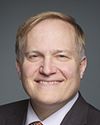
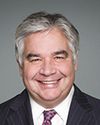
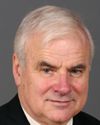
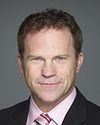
I am asking you to find a prima facie question of privilege based on the extraordinary events that took place at the Standing Committee on International Trade. I believe the violations were so egregious that they have pre-empted these facts from being reported to the House. I believe that there has been a fundamental obstruction of my rights as well as the rights of my colleagues, the members for Saint-Maurice—Champlain and Rimouski-Neigette—Témiscouata—Les Basques.
These violations occurred at the 20th meeting of the Standing Committee on International Trade on June 1, 2010 during its review of Bill C-2 and its related procedural motions, which were submitted by the members for Saint-Maurice—Champlain and South Shore—St. Margaret's.
The meeting was held in camera at first. The in camera status was removed at around 4:30 p.m., shortly after the committee started clause-by-clause review of the bill, and the public meeting lasted until the meeting ended at 11:30 p.m. that evening. The chair did not notify members of the committee as to the move to a public meeting.
My fundamental privileges, as well as the privileges of my colleagues, were violated, mostly under the cover of in camera meeting status as well as, in part, during the primary stages of the clause-by-clause review of Bill C-2. While I cannot elaborate on the specifics, as everyone can understand, I will present you, Mr. Speaker, with sufficient information to make my case.
I have never in my six years as an elected MP experienced such a gross, brutal, systematic, and outrageous violation of my fundamental rights as a parliamentarian. The following facts are on the most important of these violations.
First is the violation of my right to speak. From 3:30 p.m. to the early stages of clause-by-clause consideration, I was, along with my colleagues from Saint-Maurice—Champlain and Rimouski-Neigette—Témiscouata—Les Basques, unable to carry out my duties as a parliamentarian.
The chair and the majority members of the committee maintained in camera status by arbitrarily failing to debate and vote on the motion submitted by the member of Saint-Maurice—Champlain, with proper and orderly 48-hour notice, requesting that the meeting be open to the public. The chair then imposed a vote on the motion submitted by the member for South Shore—St. Margaret's without allowing any debate on this motion, which imposed a shutdown of public hearings and a six-hour cap on the clause-by-clause consideration of Bill C-2.
This brings me to the second important violation, a systematic refusal of the chair to allow me or my colleagues to intervene on points of order to speak against the breaking of procedural, traditional, and ethical rules of conduct. Given that the chair had the support of the majority of the members of the committee, I was unable to challenge his decision, which breached my privilege, and I was unable to request that the committee present a report on the question to the House. That is why I am bringing it forward today.
That brings me to the third point. Faced with a situation in which I could not speak, I asked for the opinion of the clerk. This is, as we know, the committee's principal adviser. I am quoting from O'Brien and Bosc, which states that the committee's principal adviser “provides advice to all members of the committee”.
On this clear violation of procedural rules and Standing Orders, the chair systematically and repeatedly denied me access to the clerk of the committee, thus effectively and completely censuring my speech as well as my democratic right to participation in the committee.
In sum, these three points raise a fourth fundamental question that is at the heart of our democratic institutions. What do we do in a situation when minority members have been denied their right to speak and their right to access critical procedural resources to function as effective parliamentarians?
Virtually every written and unwritten rule has been trampled upon. This clearly constitutes an abuse of the rights bestowed upon the committee by Parliament, and as such, is contempt against the House, I submit.
While I know that it has been tradition for the Speaker not to get into a matter that should be dealt with in the committee and that it was up to the committee to decide whether what occurred through its chair was within parliamentary practices, there are exceptions to the rule, and I believe that this is one of them. I am referring, for example, to the landmark ruling by Speaker Fraser on March 25, 1990 in which he acknowledged that he might have to rule on a committee-related issue in a very serious and special circumstance.
This is a matter that goes way beyond committee business. It deals with the abuse by the majority in the committee of the privileges bestowed on it by the House. In our parliamentary democracy, nothing could justify the violation of the sacred right to speech. The abuse of in camera privileges to conceal the trampling of democratic rules and traditions and to hide the truth sets a dangerous precedent for our parliamentary institutions and traditions.
I am going to quote very briefly a paragraph from both Speaker Fraser and from you, Mr. Speaker, that indicates the importance of the matter.
Speaker Fraser ruled on Tuesday, April 14, 1987 and stated the following:
It is essential to our democratic system that controversial issues should be debated at reasonable length so that every reasonable opportunity shall be available to hear the arguments pro and con and that reasonable delaying tactics should be permissible to enable opponents of a measure to enlist public support for their point of view. Sooner or later every issue must be decided and the decision will be taken by a majority. Rules of procedure protect both the minority and the majority. They are designed to allow the full expression of views on both sides of an issue. They provide the Opposition with a means to delay a decision. They also provide the majority with a means of limiting debate in order to arrive at a decision. This is the kind of balance essential to the procedure of a democratic assembly. Our rules were certainly never designed to permit the total frustration of one side or the other, the total stagnation of debate, or the total paralysis of the system.
I submit that in this case that balance was far from being observed.
Finally, I would like to quote you, Mr. Speaker, in a decision on March 14, 2008, when you said, in part:
I do not think it is overly dramatic to say that many of our committees are suffering from a dysfunctional virus that, if allowed to propagate unchecked, risks preventing members from fulfilling the mandate given to them by their constituents.
You quoted at that time, Mr. Speaker, House of Commons Procedure and Practice at page 210:
...it remains true that parliamentary procedure is intended to ensure that there is a balance between the government's need to get its business through the House, and the opposition's responsibility to debate that business without completely immobilizing the proceedings of the House.
You continued, Mr. Speaker, saying:
The Speaker must remain ever mindful of the first principles of our parliamentary tradition which Bourinot described thus: To protect the minority and restrain the improvidence and tyranny of the majority, to secure the transaction of public business in a decent and orderly manner—
There is no doubt in my mind that the events of June 1 bring truth to your prediction, Mr. Speaker, back in 2008, that if the dysfunctional virus of committees and this dysfunctional virus of the time is allowed to propagate unchecked, that risk of preventing members from fulfilling the mandate given to them by their constituents is essentially being brought to bear.
In this case, I believe very clearly that this prediction has come true. The member for Saint-Maurice—Champlain, the member for Rimouski-Neigette—Témiscouata—Les Basques, and I were prevented from fulfilling the mandate that was given to us by our constituents.
In conclusion, I ask that this be allowed to go before the procedure and House affairs committee. There I will be seeking a remedy on these issues. The misuse of in camera status to circumvent the fundamental rules and traditions of Parliament that protect parliamentary privilege cannot be tolerated, for it has the potential to seriously censor the legitimate democratic participation of elected members who are in a minority situation.