Safe and Regulated Sports Betting Act

An Act to amend the Criminal Code (sports betting)

This bill is from the 43rd Parliament, 2nd session, which ended in August 2021.

Sponsor

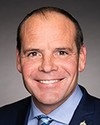
Kevin Waugh  Conservative

Introduced as a private member’s bill.

Status

This bill has received Royal Assent and is now law.

Summary

This is from the published bill.

This enactment amends paragraph 207(4)‍(b) of the Criminal Code to make it lawful for the government of a province, or a person or entity licensed by the Lieutenant Governor in Council of that province, to conduct and manage a lottery scheme in the province that involves betting on a race — other than a horse-race — or fight, or on a single sport event or athletic contest.

Similar bills

C-218 (43rd Parliament, 1st session) Safe and Regulated Sports Betting Act
C-221 (42nd Parliament, 1st session) Safe and Regulated Sports Betting Act
C-290 (41st Parliament, 2nd session) An Act to amend the Criminal Code (sports betting)
C-627 (40th Parliament, 3rd session) An Act to amend the Criminal Code (sports betting)

Elsewhere

All sorts of information on this bill is available at LEGISinfo, an excellent resource from Parliament. You can also read the full text of the bill.

Bill numbers are reused for different bills each new session. Perhaps you were looking for one of these other C-218s:

C-218 (2025) An Act to amend the Criminal Code (medical assistance in dying)
C-218 (2021) An Act to amend the Excise Tax Act (psychotherapy services)
C-218 (2016) Railway Noise and Vibration Control Act

Votes

Feb. 17, 2021 Passed 2nd reading of Bill C-218, An Act to amend the Criminal Code (sports betting)

National Framework on Sports Betting Advertising ActPrivate Members' Business

April 15th, 2026 / 6:35 p.m.


See context

Liberal

Marianne Dandurand Liberal Compton—Stanstead, QC

Mr. Speaker, I rise today in support of Bill S‑211, an act respecting a national framework on sports betting advertising. This bill responds to very real concerns that have become apparent since sports betting became legalized.

My colleagues will agree that sport has a unique ability to bring people together. As a Quebecker, I grew up with the fierce rivalries and historic victories of the Montreal Canadiens. Last fall, we saw Canadians from across the country rally behind the Toronto Blue Jays during their incredible playoff run. This summer, the world will gather in Canada to celebrate the love of soccer during the FIFA World Cup.

Canadians know that sports betting advertising has become ubiquitous in sports broadcasts. No matter the sport, viewers are bombarded with ads encouraging them to get in on the action by placing a bet. Canadians of all ages are exposed to these advertisements. When a child sees their favourite athlete associated with a betting platform, it sends a clear message: Betting is part of sport. This kind of message exacerbates or even creates gambling problems among both vulnerable groups and children. It can also seriously impact the mental health of Canadians and, ultimately, the integrity of sport in Canada.

I believe it is our duty to take action to reduce these risks for the benefit of all Canadians, young and old. Bill S-211 is an excellent step towards preserving the integrity of Canada's sporting culture and Canadians' mental health in the face of sports betting advertising. It is up to us, as MPs, to ensure that this bill can bring about the positive change that lies at the heart of its objectives.

During the previous Parliament, the House passed Bill C‑218, the Safe and Regulated Sports Betting Act, which was introduced by the Conservative member for Saskatoon South. The bill amended the Criminal Code to enable the provinces and territories to manage betting on races, fights and single sport events in their jurisdiction. Prior to the passage of Bill C‑218, Canadians participated in illegal betting, with no consumer protection, on offshore betting sites or with black market bookmakers with ties to organized crime. These illegal practices funnelled money out of Canadian communities and into the pockets of criminals. That money was not reinvested in communities, as is the case with revenue from legitimate, regulated lotteries.

Ontario is currently the only province that allows private gaming operators, through an agency called iGaming Ontario. Gaming companies are aggressively purchasing advertising slots on regional and national sports broadcasts. As a result, these ads are now being seen across the country, not just in Ontario.

The volume and prevalence of sports betting advertising may increase the risks for Canadians who participate in it. The role that advertising plays in influencing gambling is problematic. Studying effective measures to reduce these risks is an important issue that deserves our attention.

It is estimated that viewers watching sports see roughly three gambling ads per minute. That is on television. There are more than 19.3 million active online gamblers in Canada, making it one of the fastest-growing sectors. However, despite the fact that a regulatory framework for legalized sports betting was introduced in Bill C-218, Canada ranks eighth in the world in terms of money spent on offshore gambling, totalling approximately $4 billion per year. We need to better understand how these dynamics affect public health in order to implement measures that will reduce social harm and protect the most vulnerable from problem gambling.

This advertising is seen by sports fans of all ages, including children, as I mentioned earlier. Its pervasiveness during events, especially during sports broadcasts, makes it seem like a natural extension of the game. We know that most adults realize that these are sports-themed commercial ventures. Most of them remember a time when betting on sports was a crime, but the same cannot be said for the teenagers or children watching games with their parents. For young fans growing up in an age when their favourite athletes are appearing in ads for betting platforms, bets and contests on the sidelines of games have become a central feature of the sports experience.

Research has established a correlation between gambling advertising exposure, a more positive attitude toward gambling, increased gambling intention and increased gambling behaviour. The greater the exposure, the greater the risk of harm, in terms of both frequency and severity, especially among children, young adults and vulnerable individuals.

However, it is not just young people who are at risk. Older adults with mental health challenges or problems, such as cognitive decline, are also at increased risk of developing a gambling addiction. There is some evidence that suggests there is a link between exposure to advertising and the severity or intensity of gambling problems and other challenges. Regardless of our views on the place that sports betting should have in our society, we must recognize our responsibility to reduce the harms associated with activities like sports betting advertising, especially for vulnerable people.

Bill S-211 requires the federal government to establish a national framework to regulate sports betting advertising, provide tools for the prevention and identification of problem gambling, and support those affected by the harmful effects of gambling.

Responsible sports betting can have a place in our culture alongside a framework for informed and responsible gambling. Betting can be structured so that money is reinvested in our communities, rather than being siphoned off by criminals. It can be regulated so that vulnerable individuals and their loved ones do not face the very real health risks and other harms associated with gambling. We have an opportunity here to address this issue responsibly before sports betting is normalized through advertising in a way that fails to account for the risks associated with this activity.

Given the issues surrounding sports betting, and given the potential impact on children, young people, older people and vulnerable groups, I believe it is essential to address the issue of sports betting advertising which, as I mentioned earlier, has become ubiquitous. This bill will enable us to put up safeguards and provide information to help protect vulnerable groups, to have funds to reinvest in our communities and to ensure that sport remains a force that continues to unite our country.

We will be able to watch the 2026 FIFA World Cup together, safe in the knowledge that we are protecting our constituents.

National Framework on Sports Betting Advertising ActPrivate Members' Business

April 15th, 2026 / 6:25 p.m.


See context

Conservative

Kevin Waugh Conservative Saskatoon South, SK

Mr. Speaker, I am pleased to stand in the House today to speak to Bill S-211, an act respecting a national framework on sports betting advertising.

This Senate bill, as we all know, seeks to develop a framework to regulate sports betting advertising in this country and set national standards for the prevention of risk for persons negatively impacted. It also provides for the Canadian Radio-television and Telecommunications Commission, better known as the CRTC, to review its regulations and policies to reduce the incidence of harms resulting from sports betting advertising.

Let me speak to the heart of the matter. I spoke in the House in November 2020 in support of my private member's bill, Bill C-218, an act to amend the Criminal Code, single game sports betting. In that speech, I addressed the elephant in the room, which was problem gambling and addictions. As it stood at that time, there was absolutely no consumer protection or support built into the illegal sports betting systems for those struggling with gambling addictions resulting from illegal or offshore markets.

I want to remind everyone that the bill simply removed the federal restrictions, allowing provinces and territories the right to take over the single sports betting market, stemming the illegal offshore market, and to collect the tax, the profits, to use provincially instead of letting the money go to the offshore conglomerates.

In my province of Saskatchewan, I think the province has done a good job. It has shared the money with sports, recreation and culture. Alberta has done the same. Now, they are going to set up a heritage fund. Each province and territory makes its own decisions.

The bill provided provinces and territories with the ability to regulate and collect revenue, which could be used to fund mental health programs, research and addiction treatment, and it had widespread support from the provinces and territories. I should add that in the House the day we voted, the vote was 303 to 15. All parties were involved.

As members know, the regulation and administration of gambling has fallen directly in the purview of the provinces and territories since the 1985 federal agreement that transferred the rights to gaming to the provinces and territories. However, that does not preclude us from considering a federal framework in the interest of protecting vulnerable Canadians.

I am of an age to remember gambling in the shadows. It was the Irish Sweepstakes tickets. They were sold illegally in this country. I remember going into a room and someone would say to me, “Come here, I have these Irish Sweepstakes tickets.” That was back in the 1970s and 1980s.

Today, we cannot walk a block without seeing a Lotto 649 or Lotto Max sign lit up in neon. Confectioneries, gas stations, drugstores and grocery stores all have a huge variety of scratch tickets to choose from that are shiny and colourful, right in front of our eyes. If someone wins a free play, they are rewarded with flashing lights and called a winner. Everybody in the store can hear it.

Do members remember the five-minute television segments where the lottery numbers were drawn live while millions sat watching with their ticket or tickets in hand? These forms of advertising and promotion have been unchecked for decades. The television commercials, in my opinion, preyed upon vulnerable and desperate people. Anyone can buy a ticket today for a hospital home lottery, potentially winning a home, but what are the odds? The commercials seen today show a beautiful landscape and a lifestyle that most can only imagine.

In my estimation, fifty-fifty draws are the new fundraising technique. Young people are now coming door to door selling fifty-fifty tickets. We can scan the code, select how many tickets we want and then pay. We have seen the Toronto Blue Jays, especially this past year with their remarkable playoff run, reaching unheard of payouts with their fifty-fifty. Tens of millions of dollars have been raised.

It is the same thing in Western Canada with the Edmonton Oilers. They have a very successful fifty-fifty, as do a lot of teams in this country. I noticed that the Vancouver Canucks had a front page ad for a guaranteed super jackpot of $1 million in this Saturday's Vancouver Sun newspaper. We have all seen the advertising during a live game. It is non-stop, with networks even promoting the sale of tickets several times during a game.

Gaming has been around forever. This did not just start with my bill, Bill C-218. Gaming has been present for decades in this country, sometimes disguised as entertainment or as charity. Sports betting advertising, though, took the promotion to an all-time extreme. I feel that some provinces have dealt correctly with advertising, provinces such as B.C., Manitoba and Saskatchewan. I have talked to them about their concerns and about a framework. They all agree they would listen to a framework. Others, like Ontario and Alberta, want to see it wide, wide open. I have also talked to them about what they would like to see if a framework is in the offering.

We have seen advertising on NHL jerseys. We have seen professional players doing advertising about responsible gaming. There is no national consensus about how to manage the national advertising on sports. As a former sports broadcaster, I have to admit I was surprised at the barrage of ads that were running during the sporting events since the passage of Bill C-218 in 2020. The networks, which were starved for a new source of advertising revenue, in my opinion, exploited this golden opportunity to flood the airwaves with ads. What was always an accepted practice prior to the passage of Bill C-218 quickly became an avalanche of targeted, even predatory, and excessive advertising. It came at us from all sides, and I think the public was simply blindsided.

This has put the spotlight, unfortunately, on sports betting advertising, which we are here today to talk about with Bill S-211. I am supportive of putting a spotlight on addictions. I am very supportive of putting guardrails in place to protect the most vulnerable among us. However, let us not be short-sighted. This issue did not begin with sports betting ads, and it goes way beyond the sports betting ads. If we are going to take an honest look at the harms caused by gambling advertising, we must, I believe, consider all forms, like the lottos, the fifty-fifty, the hospital home lotteries and many more.

It has been five years since my bill, Bill C-218, passed, and every province and territorial jurisdiction is renewing their agreements this year with their gaming companies. I have spoken to a number of provincial counterparts about sports betting and their vision going forward. First off, I want to give a shout-out to the many provincial governments that did an exceptional job in writing their legislation for advertising. I have looked over their legislation, and for the most part, I think they got it right. They are dealing with advertising around school zones and dealing with minors, event hosting agreements, etc. It is very thoughtful and insightful legislation.

The issue of sports betting advertising lies with the rights holders of the broadcasting companies. It is expensive now when they buy the properties of the NHL, baseball, NFL and so on. It is tough to recoup their investment, so when the gaming companies saw this opportunity to exploit the market to the broadcasting companies, they were in desperate need of revenue. Let us be honest. This is why the Senate has targeted sports betting advertising. We are not the only jurisdiction in the world rethinking new ways to improve safety.

It has been 40-plus years since the federal government handed over gaming authority to the provinces. Therefore, it is time that we sit down and have a discussion about the framework.

National Framework on Sports Betting Advertising ActPrivate Members' Business

April 15th, 2026 / 6:15 p.m.


See context

Taiaiako'n—Parkdale—High Park Ontario

Liberal

Karim Bardeesy LiberalParliamentary Secretary to the Minister of Industry

Mr. Speaker, I really appreciate the opportunity to speak to the bill, which is the least we can do to tackle this emerging scourge in our public life, in the lives of our kids and teens and young adults, this scourge that affects and has the risk of tainting some of the most joyous activities that we take part in as a country.

It has now been five years since Bill C-218, which allows provinces and territories, through their conduct and managing responsibilities, to enable single sports betting.

Where are we now? What has happened in those five years? We have seen a massive expansion in sports betting and betting generally, gambling generally, enabled by some very potent online tools. Here are some examples of what is happening. I am going to focus my remarks especially on sports betting and the advertising components of that because I think that is the nub of the issue that is emerging at this point in time and that is causing so much public concern. It is a quiet concern at the moment, in households, in high schools, in university and college campuses, but it is starting to spread. We are starting to see the evidence of a real damaging phenomenon, which is being aided and abetted by ubiquitous advertising for online sports betting.

This is maybe a propitious time to have this conversation. We are about to have the NHL playoffs, in which three Canadian teams will be participating. We are about to enjoy and be one of the co-hosts of the FIFA championship. These are fundamentally positive experiences that unify and bring together millions of people around the world, millions of Canadians, especially young Canadians. It is especially pernicious that it is the joy of those activities that is subject to the advertising lure, not the activity itself but the betting on those activities, which I think really demands action.

Where are we in the last five years? Here is some information on young people and their online betting habits. According to a joint report by Greo Evidence Insights, the Canadian Centre on Substance Use and Addiction and Mental Health Research Canada, Canadians who reported betting online in 2024 were 45 times more likely to qualify as problem gamblers than those who played the lottery exclusively. It is the toxic combination of the online tools that are available, plus the advertising lure and the great appeal of a fundamental activity that is joyous, that is resulting in some of these concerning trends.

Here is some more information from a study last month in Ontario: “The rate of young men contacting Ontario's mental health helpline for gambling-related problems has increased by more than 300 per cent after the province allowed private online gambling....The study further found that between the dawn of online gambling privatization in April 2022 and August of last year, the number of active player accounts per 100,000 people aged 15 or older increased from roughly 2,160 to more than 7,300, a 239 per cent increase.”

The stories that come out are sometimes told anonymously and sometimes told in hushed tones. There was a recent Maclean’s article about the growth of online betting and online sports betting in particular, and it very well captures how it is online sports advertising that is part of the key lure. This is a story about an anonymized man named Phil.

I quote from the Maclean's story: “Phil was a fantasy football fan and, suddenly, when he researched players and teams on TSN and other sites, his screen was covered with ads for betting platforms like FanDuel and DraftKings. His friends, with whom he’d dabbled in sports betting, were all switching to the apps. It was more exciting. They could bet not just on wins and losses—”

This was the original idea of the single sports betting.

“—but all sorts of in-game happenings: the number of touchdowns or goals, how many catches a specific player got, a coin flip. They could also bet on obscure sports, like Ping-Pong. Over the next few months, they devoted more of their time and money to betting.”

We know that online advertising. especially for online sports betting, has historically used celebrity likenesses. We are familiar with the use of Wayne Gretzky and Connor McDavid.

The Maclean's article continues: “One analysis by CBC Marketplace and the University of Bristol found that sports viewers in Ontario spent an average of 22 per cent of each game looking at gambling ads in some form, with the vast majority plastered directly on the court, play surface or rink itself. In one Raptors-Bulls broadcast, nearly 40 per cent of the game had sports-betting ads somewhere in frame.”

Sports are joyous activities. They are activities we want our children to participate in. These are people and teams we identify to our children as heroes. At the same time, we are potentially subjecting them to one of the most insidious forms of addiction, which can empty their pocketbooks and destroy their families. They are specifically targeted to young men through algorithmic means and various forms of targeting.

This is something the House cannot allow to stand. I appreciate the concerns of my colleague opposite about jurisdictional issues, but the evidence is too strong. The choice that Parliament made five years ago has, yes, resulted in the growth of an industry, but at that time, we did not have the technological power to identify and lure people in this way.

I want to share a news article from today's New York Times about a police chief in New Haven, Connecticut, who resigned abruptly after his deputies saw red flags, including missing money. He has pleaded not guilty to embezzling city money to gamble on sports. In December, he asked one of his lieutenants for a $500 loan. He took money that was to pay informants and left behind an IOU note.

Three of his deputies confronted him in January. When they gathered in his office, he explained that he was addicted to gambling. The deputies were confused. They had never seen him gambling, one said, according to an arrest warrant. The gentleman tapped his phone on a conference table and said, “It's on the app.” In a year, he had wagered about $4.46 million on DraftKings and FanDuel accounts, according to investigators. His career is over. His life is in shatters.

It is, again, the toxic combination of new technologies and the advertising that is leading to this. These are things we invite our kids to participate in. There is a toxic combination of new technologies and new marketplaces that the choice of the House five years ago opened up. It has resulted in a tsunami of advertising, celebrity figures and others to all be exposed, including outside provinces in which these marketplaces exist.

For instance, although Ontario runs the largest privatized electronic gaming marketplace, young people in provinces outside Ontario also have the potential to be exposed. We need to protect all young people and ourselves from this. We need to preserve and hold as sacred as possible the rituals and passions that make sports beautiful.

With respect to public health spaces, when it comes to online gambling and the prospect of it having an addictive quality, people conjure up restrictions on tobacco and alcohol advertising. Indeed, that is useful guidance. However, this is an even more pernicious issue, because when it comes to advertising gambling or advertising tobacco, we know that these are known vices. Sports is not a vice. Sports is a beautiful thing. We want more participation in sports. We want our young people to actually be inspired by their female and male sports heroes in professional leagues.

It is quite concerning to see the alignment in some cases between sports betting companies, the advertisers, the leagues and the teams, but we can do something about it. We can address the online advertising marketplace and other advertising marketplaces that lure people in.

A few months ago, Jim Bradley, an important person in my life and in the lives of many people in Ontario, passed away. The member for St. Catharines eulogized him very well in a member statement around the time of his passing. Jim Bradley was a lifelong defender of public health and a lifelong opponent of the expansion of gambling. The House has made a decision to honour Jim Bradley, to honour the young people we want to protect and to honour all people who are at risk of this kind of pernicious pull into an activity which can be controlled in a safe way but is not, because of the advertising and the very specific connections through online luring into unrestricted gambling on sports.

This is something we can do. The least we can do right now in the House is to pass the bill, send it to committee and give it the consideration it deserves as we take on this scourge.

Similarities Between Bill C-2 and Bill C-12Points of OrderGovernment Orders

February 23rd, 2026 / 4:40 p.m.


See context

Winnipeg North Manitoba

Liberal

Kevin Lamoureux LiberalParliamentary Secretary to the Leader of the Government in the House of Commons

Mr. Speaker, I am rising to respond to two points of order raised in the previous sitting week by the member for Saanich—Gulf Islands and the member for Leeds—Grenville—Thousand Islands—Rideau Lakes with respect to the consideration of Bill C-2, the strong borders act, in the context of Bill C-12, the strengthening Canada's immigration system and borders act.

Both members allege that Bill C-2 cannot proceed, on the basis that Bill C-12, which has been passed by the House, represents a similar question.

As the member for Leeds—Grenville—Thousand Islands—Rideau Lakes stated in his intervention, with respect to the rule governing a similar question:

This rule is dependent upon the principle which forbids the same question from being decided in the House twice within the same session. Although two similar or identical motions or bills may appear in the Notice Paper, only one motion or one bill may be proceeded with. Thus, if a decision is taken by the House on the first bill [or motion]...then the other similar or identical...[motion] may not be proceeded with.

However, this does not address what constitutes a substantially similar question.

On February 18, 2021, the Speaker ruled on this matter in the case of Bill C-13 and Bill C-218. He stated:

This makes clear that if...[both] bills are similar, without being substantially...[similar], both may be placed on notice, introduced and given first reading, and both could even be debated at second reading, provided that the House has not taken a decision with respect to either of them.

He went on to state:

In adopting Bill C-218 at second reading, the House has agreed to the principle of the bill and consequently has agreed to repealing the portion of the Criminal Code that deals with sports betting.... In fact, the Chair notes that other avenues would be open to the House to achieve those same ends, such as through amendments proposed to Bill C-218 during the committee's study. As a consequence, the Chair has difficulty seeing how the House could now move forward with Bill C-13 after it has adopted the larger principle of repealing the very portion of the Criminal Code that Bill C-13 seeks to amend.

This is the clearest ruling that identifies what constitutes a substantially similar question. The precedent just mentioned, however, is not in any way analogous to the situation with Bill C-12 and Bill C-2. Bill C-12 has a much narrower scope than Bill C-2.

In fact, of the parts contained in Bill C-2, the following parts were not included in Bill C-12.

Part 4 amends the Canada Post Corporation Act to permit the demand, seizure, detention or retention of anything in the course of post only in accordance with an act of Parliament. It also amends the act to expand the Canada Post Corporation’s authority to open mail in certain circumstances to include the authority to open letters.

Part 11 amends the Proceeds of Crime (Money Laundering) and Terrorist Financing Act to prohibit certain entities from accepting cash deposits from third parties and certain persons or entities from accepting cash payments, donations or deposits of $10,000 or more.

Part 14 modernizes certain provisions respecting the timely gathering and production of data and information during an investigation. It amends the Criminal Code to, among other things, facilitate access to basic information that will assist in the investigation of federal offences through an information demand or a judicial production order to persons who provide services to the public. It also amends the Canadian Security Intelligence Service Act to facilitate access to basic information that will assist the Canadian Security Intelligence Service in the performance of its duties and functions under section 12 or 16 of that act through information demands given to persons or entities that provide services to the public.

Part 15 of Bill C-2 enacts the Supporting Authorized Access to Information Act, which establishes a framework for ensuring that electronic service providers can facilitate the exercise, by authorized persons, of authorities to access information conferred under the Criminal Code or the Canadian Security Intelligence Service Act.

Part 16 amends the Proceeds of Crime (Money Laundering) and Terrorist Financing Act to permit a person or entity referred to in section 5 of that act to collect and use an individual's personal information where the information is disclosed to the person or entity by a government department, institution or agency or law enforcement agency, and the collection and use are for the purpose of detecting or deterring money laundering, terrorist activity financing or sanctions evasion or for a consistent purpose.

Members, and the Speaker, will note that there are many more elements and, by virtue of these additional measures, a much broader scope in Bill C-2. Since Bill C-2 has not come to a vote at second reading, there is no procedural obstacle to the progression of Bill C-12 in the House. I will return to this issue in a few moments.

Moreover, the rule that governs what constitutes a substantially similar bill or motion is that the motion or bill must seek to accomplish the same objective by the same means. This is the basis of the Speaker's ruling on February 18, 2021, on sports betting.

Since Bill C-2 and Bill C-12 do not seek to accomplish the same objectives by the same means, the rule governing substantially similar bills does not apply. If this rule was as strict as the member for Saanich—Gulf Islands and the member for Leeds—Grenville—Thousand Islands—Rideau Lakes allege, then it would have been impossible for the House to consider 15 opposition day motions from the Conservative Party on the carbon tax in the previous Parliament. Alas, the rule is not interpreted in the manner they suggest.

Bill C-2 and Bill C-12 do contain some similar elements, but there is a great deal of difference in their composition. Therefore, the question on either of these two bills would be a substantially different question upon which the House would make decisions.

There have been points of order in the past that the same question rule applied where it clearly did not. For example, some budget implementation bills contained items of Private Members' Business that had been voted on at second reading. This did not prevent the budget bills from advancing.

In conclusion, the substantially similar question rule has been applied by Speakers with restraint and has only been invoked in specific situations where the two items were substantially similar in the objectives they sought to achieve in a very similar, if not identical, manner.

National Framework on Sports Betting Advertising ActPrivate Members' Business

February 12th, 2026 / 6:35 p.m.


See context

Liberal

Lisa Hepfner Liberal Hamilton Mountain, ON

Mr. Speaker, I am truly honoured to have the opportunity to speak in favour of Bill S-211 today, an act respecting a national framework on sports betting, for many of the reasons we have heard already this evening.

I am not someone who spends a lot of time watching professional sports, I will admit, but they are often on my TV when I am home with my family, and even I have noticed that sports betting ads are ubiquitous. It has become a topic of conversation in our house that people are not just watching sports anymore; they are participating with their money. They can bet on the next play of the football game they are watching or how many points a professional baseball player might make. Every few minutes, there is an ad encouraging Canadians to gamble, because watching sports seems to no longer be enough of an experience in itself.

Our sports, sports figures and teams are part of our national identity. Sports have long brought Canadians together, and now Canadians have to navigate endless gambling advertisements in order to watch a game or a competition. For many people, this presents a risky temptation.

Back in the early 2000s, when I was a journalist, I got to know a prominent Hamilton man who lost his career due to a gambling addiction. We spoke at length about this, and he introduced me to some of the men he had met at Gamblers Anonymous. All of them were people who had important careers until they lost everything due to their gambling addictions, including a lawyer who was supposed to be appointed to the Superior Court bench the same day that police were raiding his offices to find evidence that he had stolen money from clients to fuel his gambling addiction.

We did a whole long TV series about this, and these people told me how difficult it was to resist when they were routinely bombarded by advertising that compelled them to keep spending money at casinos and other gambling venues. Remember, this was back in the early 2000s. It was before the tsunami of social media and the avalanche of betting sites we have available online today.

Today the world is different. We know this. It is not just adults in the prime of their careers who are falling into destitution and despair due to addictive behaviours. Elderly people, vulnerable people and people susceptible to mental and physical harms are all being bombarded with the same sports advertising. Today children are glued to their devices. They are watching sports and, inevitably, are fed a constant stream of sports betting advertising. Gambling has become normalized as a part of sports. This is what our children are learning as they grow up.

I chair the permanent Standing Committee on Canadian Heritage. We recently completed a study on the impacts of social media on young people, and we heard that many online applications used by children encourage addictive behaviour. The gamification of everything means that our kids are becoming addicted to their favourite vice earlier and earlier in life. They are learning how to become addicts.

We heard this testimony from several witnesses. For example, Maude Bonenfant, the Canada Research Chair in Gaming, Technologies and Society and a professor at the Université du Québec à Montréal, told us that platforms use games of chance and money. They use gambling as a strategy to keep users engaged as long as possible, and the line between video games and gambling is becoming increasingly blurred, so video games are becoming more like gambling. There is more betting within video games, and the algorithms are increasingly sophisticated, with the aim of keeping kids immersed in online content through gambling.

Michael Cooper from Mental Health Research Canada told us that one addictive behaviour can be a catalyst for another addictive behaviour. For example, people who spend more than six hours online are more than twice as likely to be at high risk for alcohol and cannabis abuse and a host of other addictions. The same is true for gambling. This normalizing of gambling in everyday life can mean, according to Cooper, that our ability to regulate ourselves in the face of temptation is broken.

Today, we are inundated with enticements to gamble, particularly in sports. Bill S-211 is a first step in preserving the integrity of the sports culture in Canada, but it is also about preserving the mental health of Canadians.

Our colleague from Waterloo and other members have spoken about the former Bill C-218, the Safe and Regulated Sports Betting Act. This was something Parliament brought and became law in 2021, because before that, all we had was black-market bookies with ties to criminal organizations.

The bill was an attempt to put the industry under the purview of the provinces so that it had greater oversight. However, today, only Ontario in Canada authorizes third party gambling operators, as we have heard several times tonight, and sports betting operators have taken full advantage. They have purchased oodles of ad space on regional and national broadcasts, particularly on sports channels during sporting events. Some estimates say that we are subjected to three gambling ads every minute while we are watching sports on TV. We now see sports betting ads even when we are watching live. They appear on athletes' jerseys and on the boards around the ice rinks.

In Canada today, we have more than 19 million active online gamblers. This is one of our fastest-growing industries. Canada rates eighth in the world for the most money spent on gambling, about $4 billion every year.

Also, as I impressed upon this chamber earlier, children, teens and vulnerable people are also watching these games. They are talking about the experience the next day with their friends and their community. Do we really want them to think of gambling as a normal part of taking in a sporting activity, or even that a person has not really experienced a game if they have not put some money down on an outcome or player? We need to deeply consider whether we want important, healthy Canadian cultural institutions to be intertwined with the often harmful habit of gambling.

Research shows that the more we are exposed to gambling ads, the more positive our attitude becomes toward gambling, intentions to gamble become greater and gambling activities increase. The Canadian Centre on Substance Use and Addiction found that almost one in four young people who bet online reported harms due to gambling behaviour, and that online sports betting is associated with double the risk of gambling harms compared to other forms of gambling. Also, sports betting advertising is four times more appealing to children than adults.

I learned a lot about the significant impacts that problem gamblers face when I did that news series 25 years ago: impacts on their own health, on their mental health and on their well-being, and equal impacts on their family and their loved ones. Problem gamblers are four times more likely to have anxiety and depression, and seven times as likely to have planned suicide in the past 12 months. Excessive advertising can exacerbate all of these issues, as I heard from problem gamblers, and that was a quarter century ago, long before the onslaught of the advertising we face today. Researchers say that there is a possibility of a connection between the extent of exposure to advertising and the intensity of the gambling addiction.

Bill S-211 asks the federal government to establish a national framework, regulate sports betting advertising, provide tools for the prevention and diagnosis of gambling and support those who are impacted by a harmful gambling addiction.

Canadians agree that something should be done. In 2024, a poll by Maru Group found that most Canadians have a negative attitude toward gambling ads: 75% say that we need to protect children and youth from gambling ads, 66% say that those commercials should not be allowed during live broadcasts and 59% believe in a national ban on this type of advertising. When we pair gambling with the broadcast of a game, we normalize sports betting as an integral part of the sport experience. It is not.

I will leave members with words from Bruce Kidd, a retired professor of sports policy. He wrote an article in The Globe and Mail on February 7, in which he established that about four million Canadians, the population of about Alberta, are at risk of a gambling addiction. He said:

Think about multiples of the number of people who watch a Blue Jays game in Rogers Stadium. And then think about their families. If we fail to pass Bill S-211, those will be the numbers of...people we’ll have abandoned to the careless greed of the advertisers who think they’re doing their part by saying over and over again—and disingenuously, of course—“Please gamble responsibly.”

National Framework on Sports Betting Advertising ActPrivate Members' Business

February 12th, 2026 / 5:50 p.m.


See context

Liberal

Bardish Chagger Liberal Waterloo, ON

moved that Bill S-211, An Act respecting a national framework on sports betting advertising, be read the second time and referred to a committee.

Mr. Speaker, I rise today to speak to second reading of Bill S-211, an act respecting a national framework on sports betting advertising.

I would like to begin by thanking Senator Marty Deacon for her dedication in crafting the bill, alongside her colleagues in the Senate, who unanimously voted to send the bill forward to us in the House. Senator Deacon is a Canadian who has coached and led teams from the grassroots to the Olympics, the Commonwealth Games and the Pan American Games. She, like many members of the House, has witnessed first-hand what the power of sport and the opportunity of sport can be.

Sports betting is legal in Canada, yet constituents in Waterloo, as well as constituents across multiple provinces and territories, have shared concerns regarding the abundance of advertisements, which now often overshadow the sport itself.

I have witnessed the joy of young people being given very basic equipment and facilities that allow them to learn and lead through sport. This is what sport should be. However, we are hearing directly from Canadians that the lines are being blurred. This is a problem we all bear some responsibility for. I include myself in this, as I voted in the 43rd Parliament for Bill C-218, an act to amend the Criminal Code regarding sports betting.

Members will recall that, in 2021, Parliament passed Bill C-218, which amended the Criminal Code by removing the long-standing prohibition on betting on the outcomes of “a race...or fight, or on a single sport event or athletic contest.” It removed one line from the Criminal Code that referred to single sports betting. This, in effect, permitted provinces to allow for single sports betting in their own jurisdiction.

It is interesting that the ads we see that permeate every phone and television screen across the country are all from Ontario, the one province, for now, where private companies are allowed to operate and advertise. To date, every other province or territory allows for single sports betting only through its own lottery corporation, yet I and my colleagues have heard from our constituents from coast to coast to coast that they are growing tired of and increasingly concerned by seeing advertisements pushing sports betting. Sending the bill to committee for a thorough and thoughtful study would go a long way in trying to make this right.

I would like to thank my friend and colleague, the hon. member for Etobicoke—Lakeshore, for seconding the bill. I also appreciate that Bill S-211 has been joint-seconded by many colleagues spanning three political parties and seven provinces and one territory. I and many colleagues are eager to respond to the growing concerns of constituents and to determine the correct framework forward.

I will just give a reminder that less than five years ago, to gamble meant leaving one's home and going, most likely, to a casino. I will elaborate on this a little bit later.

Many other countries, such as the U.K., Australia and Germany, have implemented similar policies to some degree. Italy has banned ads outright. Admittedly, for all these jurisdictions it remains a work in progress, but the takeaway is that other jurisdictions are at least doing something about it. Why are they? It is because they legalized sports betting well before we did, and they are reckoning with the outcomes. We have the benefit of foresight here. We can see where this is heading, and we cannot stand by and let our country and its citizens steer straight toward that iceberg by doing nothing.

Gambling is not a benign form of entertainment for everyone. For a significant number of Canadians, gambling is addictive, with consequences that extend well beyond the individual to families, workplaces and communities. Problem gambling is associated with financial distress, mental health challenges, relationship breakdowns, and, in severe cases, self-harm.

Sports betting is a unique and distinct form of gambling. Its abuse is deeply intertwined with users' love of sports: an activity that is rooted in community, identity and shared passion but that masks the true nature of the harm.

Sports bettors often develop a perceived personal connection to the athletes and teams they wager on. This familiarity can create a false sense of expertise and control, leading individuals to believe they can outsmart the game and heightening their risk of larger financial losses and addiction at higher rates.

Sports betting is widely perceived as socially acceptable, even celebratory. It is framed as a way for fans to connect over their shared love of sports, making its abuse more persuasive than in traditional forms of gambling. As a result, the social acceptance, encouragement and normalization of sports betting significantly downplay its serious risks and set it apart from how other forms of traditional gambling are understood.

The digital era has expanded access to sports gambling-related harm in an unprecedented manner. Whereas individuals once had to physically travel to a casino or other betting venue, today this access follows users around, with virtual betting sites existing in the user's pocket. The sort of addiction we have with our phones and social media, which we have all been guilty of at one time or another, applies directly to gambling habits as well.

An article that was shared with me, from the American Institute for Boys and Men, states:

Beyond easier access, much of the increase in online gambling is due to the fact that gambling companies have engineered their games to be ever more difficult to resist. They feature the same behavioral nudges and dopamine delivery mechanisms as social media platforms. These are not your grandparents’ slot machines.

Every part of a gambling app is designed to be fun, easy to use and hard to quit. After a cursory age-verification process...bettors can deposit money as easily as buying anything else online. The apps have their own version of the endless scroll, with a constantly updating menu of things to bet on.

...“Imagine being a gambling addict and always having a slot machine in your pocket except you also need that slot machine to stay in touch with friends [and] family, to get jobs and contact co-workers, for banking, for navigation.”

The list goes on.

Online expansion of sports gambling promotion has made access to abuse easier, while the consequences feel less severe.

Public safety is a top priority for the Government of Canada. The health and safety of Canadians is, at minimum, a shared responsibility. Canada has long recognized that addictive products require a different regulatory approach. Tobacco, alcohol, cannabis and vaping products are all legal but are not treated as ordinary consumer goods. Their advertising is restricted, and their promotion and regulation are grounded in a public framework that prioritizes harm reduction, particularly for young, vulnerable people. These harms have all been treated with a national coordinated approach that has been shown to be effective.

June 29, 2026, will mark the fifth anniversary of legalizing sports betting in Canada. Enough time has now passed since the expansion for its impacts to become increasingly visible. A recent report released this past November by the Canadian Centre on Substance Use and Addiction found that 9.1% of Canadians are classified as experiencing problem gambling. The people most affected by problem gambling harms were those who engaged primarily in online gambling, specifically young men aged 18 to 29.

The mental health harms associated with problem gambling are profound. People experiencing problem gambling were four times more likely to report anxiety and depression, four times more likely to have thought about suicide, and seven times more likely to have made a suicide plan in the past year. These findings make clear that gambling-related harm is not limited to financial loss but also constitutes a serious and growing public concern.

It is vital to recognize that national gambling statistics include only people above the age of 18. This is because research is limited to individuals who are legally permitted to gamble. Therefore, current national data does not reflect minors engaging in online sports betting, but we know that these youth exist, through the abundant sharing of stories and lived experiences that I and many colleagues are encountering.

Through consultations with the Canadian Society of Addiction Medicine, my team met with clinicians and pediatricians who work directly with impacted youth. These frontline professionals reported a growing number of children and adolescents presenting with harms related to online sports gambling. These clinicians reported treating children as young as 13 years old for severe problem gambling related to online betting.

In these cases, the consequences extended beyond the individual child, placing significant emotional and financial strain on families and creating serious disruptions within the home. Pediatrician and youth mental health advocate Dr. Shawn Kelly shared that his own seven-year-old child asked about sports betting terminology after being exposed to gambling advertisements during a televised sports event in their own home. As a result, sports programming is no longer permitted in their household.

These are only a few of the accounts heard from constituents spanning the country that make clear that youth exposure to online gambling is not hypothetical; it is already producing real and harmful impacts, underscoring the urgent need for stronger protections regarding persuasive media advertisements.

When gambling-related harms occur, families are often left to carry the burden. Parents and siblings must cope with the emotional strain, financial stress and breakdowns in trust that can follow a loved one's gambling addiction.

What is especially painful for many families is the way this issue has begun to intrude on one of the few remaining shared family activities, which is watching sports together. For too many households, sports have shifted from a source of connection and joy to a source of anxiety and blatant annoyance.

The volume of betting advertisements has been so abrasive during sports games that in 2024, on average, betting ads occupied up to 21% of advertisements during broadcast games in Canada. Its proliferation across all marketing forums is overshadowing the purpose of the game itself, which is to build community around cheering a team on.

On that note, I must say, in the Olympics, go team Canada.

Ways and Means Motion No. 19—Speaker's RulingPoints of OrderRoutine Proceedings

December 12th, 2023 / 3:30 p.m.


See context

The Speaker Greg Fergus

I am now ready to provide the House with an explanatory ruling on the admissibility of Ways and Means Motion No. 19. On November 29, 2023, I ruled that the order for consideration of the motion, and the subsequent bill based thereon, be allowed to proceed further.

On November 28, 2023, the House leader of the official opposition challenged the admissibility of the motion. He pointed out that Bill C-318, an act to amend the Employment Insurance Act and the Canada Labour Code (adoptive and intended parents), and Bill C-323, an act to amend the Excise Tax Act (mental health services), both currently in committee, were substantially the same as provisions covered in Ways and Means Motion No. 19, tabled earlier that day.

Concurrence in a ways and means motion constitutes an order to bring in a bill based on the provisions of the motion. This is indeed what happened with the subsequent introduction of Bill C-59, an act to implement certain provisions of the fall economic statement tabled in Parliament on November 21, 2023 and certain provisions of the budget tabled in Parliament on March 28, 2023.

The House leader argued that the two private members’ bills had already been the subject of decisions of the House at second reading. The ways and means motion and Bill C-59 would violate a procedural concept, the rule of anticipation, which he described as the “same question rule”. Quoting from House of Commons Procedure and Practice, third edition, at page 568, the member seemed to suggest that a ways and means motion could not anticipate a matter already standing on the Order Paper and which was contained in another form of proceeding. He asserted that Bill C-318 and Bill C-323 were more effective tools to accomplish the desired intent than Ways and Means Motion No. 19. As such, both these bills should have priority over the motion.

He also cited precedents in relation to bills that could or could not proceed further, based on the fundamental principle that the same question cannot be decided twice within a session.

The member further suggested that Ways and Means Motion No. 19 be put in abeyance pending the outcome of Bill C-318 and Bill C-323, based on the rule of anticipation.

For his part, the parliamentary secretary to the government House leader countered that further consideration of Ways and Means Motion No. 19, as well as subsequent proceedings on an associated bill, was in order. He referenced past precedents about similar bills. He made the point that the provisions in Ways and Means Motion No. 19 contained numerous elements that are not found in Bill C-318 and Bill C-323, which indicates that the principle and scope of the ways and means motion are broader than what is found in either of the bills. As such, Ways and Means Motion No. 19, and the bill based thereon, constituted different questions.

In his intervention, the House leader of the official opposition quoted from page 568 of House of Commons Procedure and Practice, third edition, on the rule of anticipation. The Chair would like to read, from the same page, prior to the quoted passage. It states:

The moving of a motion was formerly subject to the ancient “rule of anticipation” which is no longer strictly observed.

Further down on the same page it says, “While the rule of anticipation is part of the Standing Orders in the British House of Commons, it has never been so in the Canadian House of Commons. Furthermore, references to past attempts to apply this British rule to Canadian practice are inconclusive.”

Even though the notion of anticipation is described in our procedural authorities, and the expression is sometimes colloquially used in points of order and even some past rulings dealing with similar items, it is indeed a very difficult concept to apply in our context.

Establishing a hierarchy between bills and motions, or between categories of bills, and giving precedence to some, may prove difficult, except in very specific cases, detailed in House of Commons Procedure and Practice. Bills and motions are different by nature and achieve different ends.

What the Chair is seized with in reviewing the current matter is the rule forbidding the same question from being decided twice in the same session. It is different from the concept of anticipation and, in the view of the Chair, the one that should apply.

In his submission, the House leader of the official opposition cited various recent precedents, and the Chair thinks it pertinent to describe some of their procedural subtleties.

The first example, from the last Parliament, pertained to two bills not identical, but substantially similar: Bill C-218, an act to amend the Criminal Code regarding sports betting, a private members' bill, and Bill C-13, an act to amend the Criminal Code regarding single event sport betting, a government bill. Both were at second reading and both were very short bills touching the same section of the Criminal Code.

By adopting Bill C‑218 at second reading, the House had agreed to the larger principle of repealing the very portion of the Criminal Code that Bill C‑13 also sought to amend. This sequencing left the House with a situation where Bill C‑13 could not move forward as long as Bill C‑218 continued its course.

The second example, from earlier this session, described a budget implementation bill, Bill C-19, and a votable private members’ bill amending the Criminal Code regarding the promotion of anti-Semitism, Bill C-250. The latter, introduced on February 9, 2022, contained provisions that were subsequently included in Bill C-19, introduced on April 28, 2022. However, of the two bills, the government bill was the first to be adopted at second reading and referred to committee. One of the key differences was that the two bills were not substantially identical. Bill C-19 was much broader in scope than Bill C-250. By agreeing to Bill C-19, the House de facto agreed with the principles presented in C-250. No decision having yet been made on Bill C-250, the Chair ordered that it be held as pending business until such time as royal assent be granted to Bill C-19.

Finally, the member referenced rulings dealing with two votable Private Members’ Business items, Bill C-243, an act respecting the elimination of the use of forced labour and child labour in supply chains, and Bill S-211, an act to enact the Fighting Against Forced Labour and Child Labour in Supply Chains Act and to amend the Customs Tariff. The two bills had the same objective and only one was allowed to proceed further. The Chair indicated at the time that the case involved an unusual set of circumstances, since normally one of them could have been designated as non-votable by the Subcommittee on Private Members’ Business had the sequence of events been different.

The House leader's main argument hinged on the question of whether provisions contained in Ways and Means Motion No. 19 and therefore Bill C-59 are similar or identical to Bills C-318 and C-323.

Bills C‑318 and C‑323 have been both read a second time and referred to committee, while no decision has yet been made on Bill C‑59. An exhaustive review of its provisions shows that it does contain some similar provisions found in the two aforementioned private members' bills. However, Bill C‑59 cannot be described as substantially similar or identical to them.

Its scope is vastly broader, containing many more elements than what is included in Bills C-318 and C-323, including taxation legislation and provisions requiring a royal recommendation

The bills are similar in part, but are not substantially the same. The principles of Bill C-318 and Bill C-323, as adopted at second reading, are indeed included in the broader Bill C-59, but the reverse is not true. Therefore, the decision the House will take on Bill C-59 will not be the same. Accordingly, there is no procedural reason to stop the bill from continuing its journey through the legislative process.

To be clear, when a government bill and a private member's bill or when two private members' bills are substantially similar, only one of them may proceed and be voted on. Once one of the two has passed second reading, a decision cannot be taken on the other within the same session. Where bills are only similar in part, the effect of adopting one might have a different impact on the other depending on their principle, scope and, of course, which bill is adopted first.

I note that the House leader of the official opposition rose earlier today on a different point of order considering the application of Standing Order 69.1 to Bill C-59. I wish to inform the member and the House that I am reviewing the matter closely and I do intend to come back with a ruling in a timely manner.

Nonetheless, for the time being, the Chair sees no reason to rule that Bill C-59 be put in abeyance. As for the two Private Members' Business items currently in committee, it seems premature for the Chair to intervene at this time.

I thank all members for their attention.

Ways and Means Motion No. 19Points of OrderGovernment Orders

November 30th, 2023 / 4:20 p.m.


See context

Winnipeg North Manitoba

Liberal

Kevin Lamoureux LiberalParliamentary Secretary to the Leader of the Government in the House of Commons

Madam Speaker, the second point of order is a little more detailed.

I rise to respond to a point of order raised on Tuesday, November 28, by the member for Regina—Qu'Appelle respecting the inadmissibility of the notice of Ways and Means Motion No. 19 and two items of Private Members' Business.

The crux of the argument by the member opposite is on the principle of a bill at second reading stage. This is the heart of the argument. I would humbly point to the purpose of the second reading debate and the vote at that stage, which is on the principle of the bill.

Before I get into the specific matters involved in the member's argument, I would like to remind my colleagues across the aisle of what a debate and vote on the principle of a bill entails.

Members of the House know that our Standing Orders and practices derive from those of Westminster. If a member would like to look into how debates at Westminster are handled at the second reading stage, they might be surprised. The British House of Commons has 650 members, yet the debate on any government bill at the second reading stage very rarely exceeds one sitting day.

Now I will go to the specific argument raised by my colleague across the way. The two bills in question that are subject to certain provisions containing Ways and Means Motion No. 19 are Bill C-318, an act to amend the Employment Insurance Act, and Bill C-323, an act to amend the Excise Tax Act (mental health services).

With respect to the first item, Bill C-318 requires a royal recommendation which would govern the entire scheme of a new employment insurance benefit for adoptive parents. As a result, the bill cannot come to a vote at third reading in the absence of a royal recommendation provided by a minister of the Crown.

The bill was drafted by employees of the law clerk's office who would have notified the sponsor of this requirement. While I would not want to speculate on the intentions of the member who sponsored this bill, there is little doubt that the member knew this bill would not pass without royal recommendation.

As a result of a ministerial mandate commitment to bring forward an employment insurance benefit for adoptive parents with an accompanying royal recommendation, the government has brought forward this measure for consideration of the House in a manner that raises no procedural obstacle to providing this important benefit for Canadians. It is the sole prerogative of the executive to authorize new and distinct spending from the consolidated revenue fund, and that is what is proposed in the bill that would implement the measures contained in Ways and Means Motion No. 19.

Now I will go to the point of a similar question. The example my colleague raised with respect to the Speaker's ruling on February 18, 2021, concerns Bill C-13 and Bill C-218 respecting single sports betting. Both bills contain the same principle, that being to allow certain forms of single sports betting. The approaches contained in Bill C-13 and Bill C-218 were slightly different, but achieved the same purpose. As a result, and rightly so, the Speaker ruled that the bills were substantially similar and ruled that Bill C-13 not be proceeded with.

The situation with Bill C-13 and Bill C-218 bears no resemblance to the situation currently before the House, and the member opposite has been again helpful in making my argument. The member cites the situation with Bill C-19 and Bill C-250 concerning Holocaust denial.

The case with this situation, and the case currently before the House, is instructional for the question faced by the Speaker, which is whether the principle of the questions on the second reading of Bill C-318 and Bill C-323, and the question on Ways and Means Motion No. 19, are the same.

The answer is categorically no. The question on both Ways and Means Motion No. 19 and the question should Ways and Means Motion No. 19 be adopted on the implementing of a bill are vastly different. The questions at second reading on Bill C-318 and Bill C-323 are specific questions on the principle of measures contained in those private members' bills.

The question on Ways and Means Motion No. 19 and the question at second reading on the bill to implement those measures is much broader. As the member stated in his intervention yesterday, Ways and Means Motion No. 19 contains many measures announced in the 2023 budget as well as in the fall economic statement. While the measures to implement the fall economic statement are thematically linked to the issue of affordability, they contain many measures to address the affordability challenges facing Canadians. As a result, the question at second reading on implementing legislation is a very different question for the House to consider.

In conclusion, while there have been precedents respecting similar questions on similar bills which propose a scheme for a specific issue, namely Bill C-13 and Bill C-218, this and other precedents do not in any way suggest that the questions at second reading on Bill C-323 and Bill C-318 in any way resemble the question on Ways and Means Motion No. 19 and the question at second reading on the implementing bill for the measures contained in the 2023 budget and the fall economic statement.

Ways and Means Motion No. 19Points of OrderGovernment Orders

November 28th, 2023 / 5:15 p.m.


See context

Conservative

Andrew Scheer Conservative Regina—Qu'Appelle, SK

Madam Speaker, I am rising on a point of order challenging the admissibility of Ways and Means Motion No. 19 concerning the fall economic statement implementation bill, which was tabled earlier today by the Deputy Prime Minister. It is my submission that the motion offends the rule against anticipation, sometimes also known as the “same question rule”. That rule is described on page 568 of House of Commons Procedure and Practice, which reads as follows:

The rule is dependent on the principle which forbids the same question from being decided twice within the same session. It does not apply, however, to similar or identical motions or bills which appear on the Notice Paper prior to debate. The rule of anticipation becomes operative only when one of two similar motions on the Order Paper is actually proceeded with. For example, two bills similar in substance will be allowed to stand on the Order Paper but only one may be moved and disposed of. If a decision is taken on the first bill (for example, to defeat the bill or advance it through a stage in the legislative process), then the other may not be proceeded with...If the first bill is withdrawn (by unanimous consent, often after debate has started), then the second may be proceeded with.

The rule against anticipation has been building a significant number of precedents in the past few years in light of the NDP-Liberal government's growing pattern of stealing common-sense Conservative private members' bills to add to their own legislative agenda. While our authorities suggest that such points of order should be raised only when the second question is actually proposed from the Chair, I recognize that in light of Ways and Means Motion No. 19 being an omnibus proposal, exceeding 500 pages in length, you, Madam Speaker, might appreciate having the evening to reflect on the issues I am about to discuss before the government intends to call it for consideration tomorrow.

In the present case, Ways and Means Motion No. 19 includes provisions that the House has already adopted in principle at second reading through two private members' bills.

On September 20, the House passed second reading Bill C-318, an act to amend the Employment Insurance Act and the Canada Labour Code, sponsored by the Conservative hon. member for Battlefords—Lloydminster. The summary printed on the inside cover of the bill reads:

This enactment amends the Employment Insurance Act to introduce a new type of special benefits: an attachment benefit of 15 weeks for adoptive parents and parents of children conceived through surrogacy. It also amends the Canada Labour Code to extend parental leave accordingly.

Last week's fall economic statement on pages 43 and 42 states that:

The 2023 Fall Economic Statement proposes to introduce a new 15-week shareable EI adoption...Surrogate parents will also be eligible for this benefit.

The 2023 Fall Economic Statement also proposes to make amendments to the Employment Insurance Act, as well as corresponding changes to the Canada Labour Code, to ensure that workers in federally regulated industries have the job protection they need while receiving the EI adoption benefit.

Those provisions appear as clauses 342 to 365 of Ways and Means Motion No. 19. While the legislative language used varies, the ultimate policy objective and therefore the principle of the matter remains the same as a close examination of the two passages I quoted reveals.

The second private member's bill stolen by the government this week is Bill C-323, an act to amend the Excise Tax Act, mental health services, sponsored by the Conservative member for Cumberland—Colchester, which the House passed at second reading on September 27. My colleague's bill would amend sections 1 and 7 of part II of schedule V of the Excise Tax Act to exempt psychotherapy and mental health counselling from GST. Clause 137 of Ways and Means Motion No. 19 would do the exact same thing, except that the government refers to “counselling therapy” instead of Bill C-323's “mental health counselling”. That is, I would submit, a distinction without a difference.

Indeed, I would draw the Chair's attention to clause 144 of Ways and Means Motion No. 19 that makes coordinating provisions if each is enacted, which demonstrates the government also sees these as identical measures, but what is especially galling is subclause 144(5), “For greater certainty, if this Act receives royal asset then the other Act [Bill C-323] is deemed never to have produced its effects.” The government would prefer to toss my colleague's important bill down the memory hole. That is just shameful.

Your predecessor, on February 18, 2021, at page 4256 of the Debates, ruled that government Bill C-13 could not be proceeded with further following the House's adoption of Bill C-218, citing the rule against anticipation. In so ruling, the Chair said:

The House is now placed in an unusual situation where a decision was made on one of two very similar bills standing on the Order Paper.

The Chair recognizes that both bills are not identical; they are, however, substantially similar as they both amend the exact same provision of the Criminal Code for similar purposes....

Consequently, as long as Bill C-218 follows its course through the legislative process during this session, Bill C-13 may not be proceeded with.

As for the technical differences between those two bills, the Speaker offered a common-sense solution to reconcile them: “the Chair notes that other avenues would be open to the House to achieve those same ends, such as through amendments proposed to Bill C-218 during the committee's study.”

I would respectfully submit that if the government has any concerns about the drafting of Bill C-318 or Bill C-323, the solution is to bring amendments to committee, not to bigfoot them by throwing them into an omnibus budget bill, but that is exactly what happened here. It is what happened last year when Bill C-250, sponsored by the hon. member for Saskatoon—Grasswood, was scooped up by the government and placed in Bill C-19, a budget implementation bill.

In a May 11, 2022, ruling at page 5123 of the Debates, the Deputy Speaker held:

Bill C-19 was adopted at second reading and referred to the Standing Committee on Finance yesterday. The House is now placed in a situation where a decision was made on one of the two bills that contain very similar provisions....

The Chair recognizes that these bills are not identical, as Bill C-19 is much broader in scope and contains other provisions related to the implementation of the budget.

However, in adopting Bill C-19 at second reading, the House has also agreed to the principle of that bill, and consequently, has agreed, among other things, to amend section 319 of the Criminal Code dealing with hate propaganda. As I explained a few moments ago, these are provisions substantially similar to the ones contained in Bill C-250.

Therefore, the question for the Chair is, should Bill C-250 be allowed to proceed further in the legislative process at this time? In the Chair's opinion, it should not be allowed. The House should not face a situation where the same question can be cited twice within the same session, unless the House's intention is to rescind or revoke the decision.

In the case of Bill C-250, the Deputy Speaker directed that it be held as pending business until the final fate of Bill C-19 could be determined. On September 20, 2022, your predecessor ordered Bill C-250 to be discharged and dropped from the Order Paper, given that Bill C-19 had by then received royal assent. A similar pair of rulings occurred on June 6, 2022, and May 11, 2023, in respect of Bill C-243 in light of its overlap with Senate Bill S-211.

While these rulings are all quite recent, they were not novel. Speaker Michener, on March 13, 1959, at page 238 of the Journals, reached the same conclusion for managing this sort of legislative traffic jam:

Thus I have come to the conclusion that this bill must stand, as well as the other bill in the same terms, or at least in terms for exactly the same purpose, until the bill which was first moved has been disposed of either by being withdrawn, which would open the door for one of these other bills to proceed, or by way of being approved, which would automatically dispose of these bills because the House would not vote twice on the same subject matter any more than it would debate the same subject matter twice.

Standing Order 94(1) empowers and directs the Speaker to, “make all arrangements necessary to ensure the orderly conduct of Private Members’ Business”. That standing order, I would submit, behooves you to safeguard the process of Private Members' Business as much as possible by drawing a firm and bright line for the government to stop poaching common-sense Conservative bills and claiming them as their own.

One final consideration I want to place before the Chair is one that did not arise in the context of the pairs of bills and the precedents I have cited. We are dealing here with a ways and means motion, not a bill. Bosc and Gagnon, at page 568, explain the relevance of this distinction in the role against anticipation:

According to this rule, which applied to other proceedings as well as to motions, a motion could not anticipate a matter which was standing on the Order Paper for further discussion, whether as a bill or a motion, and which was contained in a more effective form of proceeding.

The associated footnote points readers to other authorities for a fuller explanation, such as the U.K.'s Erskine May. That book's 25th edition, at paragraph 20.13, explains:

...a matter must not be anticipated if contained in a more effective form of proceeding than the proceeding by which it was sought to be anticipated, but it might be anticipated if contained in an equally or less effective form. A bill or other order of the day is more effective than a motion....

This principle was explained matter-of-factly by Speaker Casgrain on February 24, 1936, at page 68 of the Journals: “A Bill has the right-of-way and cannot be sidetracked by a Motion.”

In the circumstances, if the precedents and procedural authorities of this House are to be applied consistently, Ways and Means Motion No. 19 must be put into abeyance pending the outcome of Bill C-318 and Bill C-323. I would urge you, Madam Speaker, to so rule.

Sports BettingStatements By Members

May 13th, 2021 / 2:10 p.m.


See context

Conservative

Chris Lewis Conservative Essex, ON

Mr. Speaker, as members know, the single-event sports betting bill, Bill C-218, is currently before the Senate. I value the vital role our senators play in reviewing bills passed by the House and rise today on behalf of the tourism sector and its workers to appeal to senators to pass this legislation quickly. This bill received all-party support in the House, which is quite an achievement.

The tourism industry has been hit hard by the COVID pandemic. To recover, it will need Parliament's full support. Bill C-218 would secure well-paying jobs and give the tourism industry a much needed boost. I look forward to its swift passage in the Senate. I would also like the thank my Conservative colleague, the MP for Saskatoon—Grasswood, for introducing the legislation.

Tourism is a significant driver in my riding's local economy. Passage of this bill would be welcome news back home.

Finally, what an honour it is to stand in the House on behalf of the people of Essex.

Justice and Human RightsCommittees of the HouseRoutine Proceedings

March 26th, 2021 / 12:10 p.m.


See context

Liberal

Iqra Khalid Liberal Mississauga—Erin Mills, ON

Madam Speaker, I have the honour today to present, in both official languages, the eighth report of the Standing Committee on Justice and Human Rights in relation to Bill C-218, an act to amend the Criminal Code regarding sports betting.

The committee has studied the bill and has decided to report the bill back to the House with amendment.

Single Event Sports BettingStatements by Members

February 19th, 2021 / 11:15 a.m.


See context

NDP

Brian Masse NDP Windsor West, ON

Madam Speaker, yet again I rise in the chamber to discuss single event sports betting, as the chamber voted overwhelmingly in favour of Bill C-218, which would permit each province to determine how to regulate legal betting so revenues can flow, jobs can be created and the billions of dollars feeding organized crime, bookies and offshore operators can end. The bill was originally proposed by NDP MP Joe Comartin, and later me, and I was pleased to withdraw it to permit the member for Saskatoon—Grasswood to join the efforts, and he has done good work.

This decades-plus adventure has been an exhilarating tale. Indeed, it passed in the House before dying in the Senate, but now some members, including the Prime Minister, have changed their vote. That is not a weakness, but a strength, speaking to the urgency of fixing the problem. Among the drama has been the recent government bill, Bill C-13, introduced with some doing victory laps, with chest thumping, high-fives and slapping backs, yet the government scuttled its own efforts, having never brought it to the floor for debate. Ironically, I defended the government, as I think the Minister of Justice deserves credit for drafting good legislation.

As we go forward, I want to thank the members who supported the bill, including unanimously from the NDP, the Bloc and the Green Party, and the Liberals and Conservatives who did not. I remain open to helping to work on this issue.

I thank David Cassidy and Ken Lewenza from Unifor 44, Mayor Dilkens, and Eddie Francis, Rakesh Naidu and Matt Marchand for being on this journey.

Criminal Code—Speaker's RulingPoints of OrderOral Questions

February 18th, 2021 / 3:15 p.m.


See context

The Speaker Anthony Rota

Following the order raised earlier today, I would like to make a statement on Bill C-13, an act to amend the Criminal Code with regard to single-event sports betting and its similarity to Bill C-218, an act to amend the Criminal Code with regard to sports betting, standing in the name of the member for Saskatoon—Grasswood. As members are aware, both bills seek to amend the same provision of the Criminal Code as it relates to single sports betting.

While Bill C-13 was introduced in the House on November 26, 2020, and has yet to be called for debate by the government, the general provisions surrounding single sports betting have in fact not only been debated in the House during consideration of Bill C-218, but a decision was made yesterday by the House on the general principle of allowing all single sports betting, and the bill was referred to the Standing Committee on Justice and Human Rights. The House is now placed in an unusual situation where a decision was made on one of two very similar bills standing on the Order Paper.

The Chair recognizes that both bills are not identical; they are, however, substantially similar as they both amend the exact same provision of the Criminal Code for similar purposes.

Both Bill C-218 and Bill C-13 seek to amend the same paragraph of the Criminal Code as it pertains to sports betting. Bill C-218 repeals paragraph 207(4)(b) of the Criminal Code in its entirety, to make it lawful to conduct and manage a lottery scheme that involves betting on a race, a fight or a single sporting event. As for Bill C-13, it conserves the paragraph, but seeks to amend it to make single sports betting lawful, except for bets on a horse race.

The rule of anticipation, which prohibits the same question from being decided twice by the House within the same session, is explained in the following manner at page 568 of House of Commons Procedure and Practice, third edition:

The rule of anticipation becomes operative only when one of two similar motions on the Order Paper is actually proceeded with. For example, two bills similar in substance will be allowed to stand on the Order Paper but only one may be moved and disposed of. If a decision is taken of the first bill (for example, to defeat the bill or advance it through a stage in the legislative process), then the other may not be proceeded with.

This makes clear that if two bills are similar, without being substantially the same, both may be placed on notice, introduced and given first reading, and both could even be debated at second reading, provided that the House has not taken a decision with respect to either of them.

Given the decision of the House yesterday afternoon, the question therefore before the House is, following the adoption of Bill C-218 at second reading, should Bill C-13 be permitted to proceed further in the legislative process?

In adopting Bill C-218 at second reading, the House has agreed to the principle of the bill and consequently has agreed to repealing the portion of the Criminal Code that deals with sports betting. While there are examples where the House has repealed sections of an act already amended by another bill adopted by the House in the same session, this is not exactly the situation before us today. Instead, since Bill C-218 seeks to completely repeal paragraph 207(4)(b) of the Criminal Code, it seems to the Chair that it would not be possible for Bill C-13 to continue in the legislative process, as it would seek to amend a paragraph of the Criminal Code that would no longer exist upon adoption of Bill C-218. In fact, the Chair notes that other avenues would be open to the House to achieve those same ends, such as through amendments proposed to Bill C-218 during the committee's study. As a consequence, the Chair has difficulty seeing how the House could now move forward with Bill C-13 after it has adopted the larger principle of repealing the very portion of the Criminal Code that Bill C-13 seeks to amend.

Consequently, as long as Bill C-218 follows its course through the legislative process during this session, Bill C-13 may not be proceeded with. As was mentioned during the intervention yesterday, as well as previously by the member for Saskatoon—Grasswood, members who wish to further review or amend the provisions included in Bill C-218 should follow the proceedings and take part in discussions during the hearings of the Standing Committee on Justice and Human Rights.

I thank all members for their attention.

Criminal CodePoints of OrderGovernment Orders

February 18th, 2021 / 1:50 p.m.


See context

NDP

Brian Masse NDP Windsor West, ON

Mr. Speaker, I rise on a point of order. I would like to provide input on a decision that was asked of the Speaker earlier today. I will make my intervention short, and I thank the Speaker for the indulgence.

I rise today to provide input on a matter that was raised by the member for Kingston and the Islands this morning and further discussed by the official opposition House leader. I would like to discuss the significant and meaningful difference between Bill C-218 and Bill C-13.

First, the member for Kingston and the Islands, when he spoke in the House on Wednesday, February 17, stated:

We also proposed to engage the provinces, territories, indigenous communities and organizations that have expressed an interest in discussing how gambling is regulated. We believe Bill C-13 is substantively different from Bill C-218, as it includes a horse racing provision and achieves its objectives through different means.

I agree with this statement. The government member is correct and is stating the facts. The bills are substantially different. This was found in an analysis conducted by the subject matter experts at the Library of Parliament in a section of a research report comparing Bill C-13 and Bill C-218.

The report looks at how Bill C-218 would repeal paragraph 207(4)(b) of the Criminal Code in its entirety. The consequence would appear to be that betting on a single sport event or athlete contest would then be permitted, since those activities would no longer be excluded from the definition of “lottery scheme”, but so would be betting on other types of activities referred to in that paragraph, notably all types of races.

By way of contrast, Bill C-13 would amend paragraph 207(4)(b), rather than repealing it, so that the following activities would continue not to be permitted lottery schemes: “bookmaking, pool selling or the making or recording of bets, including bets made through the agency of a pool or pari-mutuel system, on any horse-race”.

In other words, Bill C-13 would continue to exclude betting on horse racing as a type of lottery scheme the provinces could engage in. The governmental materials issued on Bill C-13 confirm the explanation that the regulation of single event sports betting would be up to the discretion of each province and territory, with the exception of horse racing, which would remain regulated and supervised by the Canadian Pari-Mutuel Agency.

As the experts have pointed out, there are very significant differences in both bills.

Next I would like to discuss the process. The place to decide which of these significantly different bills merits further progress is in a relevant committee, which would examine both bills in detail, hear from stakeholders and make considered determinations. The committee would then vote on these bills and resolve which one should proceed to third reading.

I trust the legislative process of the House. The procedures, evaluations and safeguards are built-in. We should trust it and allow members to carry out their duties as legislators, which will result in the most robust and thorough bill.

It is unfortunate, Mr. Speaker, you have been put in this situation. This mismanagement of Bill C-13 has caused delays. It has been debated constantly, and taken on and off the calendar, which has created confusion and concern, and has led to these unnecessary circumstances.

Business workers and communities have been waiting long enough to have this substantial issue addressed. I have had the privilege of being a member of this chamber since 2002. During all these years, I have witnessed that the tradition of the House, when it is uncertain, is for the Speaker to allow the debate and the process to continue. I hope we can uphold this time-honoured practice.

I appreciate the indulgence of the House today in allowing me to speak to this issue. I did not want to want to intervene in the momentum of the debate today, but I had to, given what the government has done.

Criminal CodePoints of OrderGovernment Orders

February 18th, 2021 / 12:45 p.m.


See context

Conservative

Gérard Deltell Conservative Louis-Saint-Laurent, QC

Mr. Speaker, yesterday the government asked for unanimous consent to withdraw Bill C-13, which is still on the Order Paper, at second reading.

This request was made in response to Bill C-218 being passed at second reading. Since both bills propose similar amendments to the Criminal Code, it makes sense to withdraw one bill and move forward with the other.

Unanimous consent was denied, which means that not all members agreed.

A point of order was raised today to ask the Speaker to rule on the matter of the rule of anticipation, which forbids the same question from being decided twice within the same session. While Bosc and Gagnon supports this argument, it also claims, “past attempts to apply this British rule to Canadian practice are inconclusive.”

The sponsor of Bill C-218 has indicated to the Speaker and to me that he wants to weigh in on this important point of order since it involves his bill. He plans to do so as soon as the House resumes tomorrow.

Bill C-13 cannot be called for debate today since, as we know, opposition motions on allotted days take precedence over all other business. In addition, except for today, the government has the prerogative to schedule this bill any day it wants, and last I looked, it has other bills to debate, including the bill to implement the economic statement, normally a priority bill for a government.

Mr. Speaker, I urge you to respect the member's right to defend his bill and make his own representations regarding the rule of anticipation before you make your ruling on this matter.