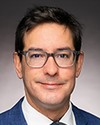
An Act to amend the Customs Act and the Customs Tariff (forced labour and child labour)

Sponsor

Simon-Pierre Savard-Tremblay  Bloc

Introduced as a private member’s bill. (These don’t often become law.)

Status

Outside the Order of Precedence (a private member's bill that hasn't yet won the draw that determines which private member's bills can be debated), as of Oct. 21, 2025

Subscribe to a feed (what's a feed?) of speeches and votes in the House related to Bill C-251.

Summary

This is from the published bill.

This enactment amends the Customs Act to require customs officers to detain certain goods until they are satisfied that the goods are not goods the importation of which is prohibited. It also amends the Customs Tariff to establish a presumption that goods from certain areas or entities were mined, manufactured or produced wholly or in part by forced labour or child labour.

Elsewhere

All sorts of information on this bill is available at LEGISinfo, an excellent resource from Parliament. You can also read the full text of the bill.

Bill numbers are reused for different bills each new session. Perhaps you were looking for one of these other C-251s:

C-251 (2022) Conservation of Fish Stocks and Management of Pinnipeds Act
C-251 (2020) VIA Rail Canada Act
C-251 (2016) Ban on Shark Fin Importation Act
C-251 (2013) An Act to amend the Excise Tax Act (no GST on reading materials)

Canada-Indonesia Comprehensive Economic Partnership Agreement Implementation ActGovernment Orders

March 11th, 2026 / 4:50 p.m.


See context

Bloc

Simon-Pierre Savard-Tremblay Bloc Saint-Hyacinthe—Bagot—Acton, QC

Mr. Speaker, I am pleased to rise in the House today to speak about the proposed trade agreement with Indonesia. Indeed, everyone is talking about diversifying markets and partners these days. There is a lot of talk about this. It is an idea that has become quite popular just in the past year. I wonder why that is.

We are in favour of free trade, but not at any cost. I will come back to that shortly as I dissect the agreement. It is like how people are always talking about returning to a rules-based international order. Rules are all well and good. We need rules. We cannot live in total chaos. However, it always depends on what rule we are talking about. Not every rule is legitimate in its own right either.

The same goes for free trade. It is an economic principle that, when properly defined, applied and regulated, can have very positive outcomes, particularly for a small economy like Quebec's. It allows Quebec to become part of a large market and to have access to many partners.

However, it is important to be mindful of certain types of free trade agreements, like the ones signed in the 1990s, which grew at lightning speed during the glory years of globalization, if we may call it that, during most of the aggressive years of neo-liberalism. During that time, free trade was incorrectly taken to mean regulatory agreements that imposed the sovereignty of multinationals on specific communities and states. I will come back to that shortly.

I want to start with some positive remarks about this agreement. As the member for Saint‑Hyacinthe—Bagot—Acton, I am delighted by what is in this agreement. The city of Saint‑Hyacinthe is the agri-food processing capital of Canada. Of course, the rest of the riding, like the Maskoutains and Acton regions, are highly agricultural as well. I am pleased to see that this agreement will be good for our farmers. The agreement talks a lot about grain. It will be excellent for that.

I am also pleased that I managed to get two amendments adopted. In fact, the only two amendments to the agreement implementation bill were mine. I used exactly the same formula that I got adopted a few years ago in the agreement with Ukraine. The minister responsible for the agreement must submit an annual report on the human rights situation in the partner country and the conduct of Canadian companies there, so that we can get a yearly update. That is one of the two amendments.

I also had the other amendment adopted in relation to the agreement with the United Kingdom. We will discuss this again tomorrow. This amendment provides for a three-year review to ensure that, if we commit to something like this, we can re-examine it. I think it is quite reasonable to put the agreement on the table after three years, carefully review it and look at the results. That seems quite reasonable to me.

That is known as sweetening the pill. Now let us talk about the less attractive aspects of this agreement. Unfortunately, it is an agreement from another era. Honestly, I do not understand why Canada, which always claims to be a progressive country, continues to sign and negotiate such agreements.

Let us start with the process. We are accustomed to this, because this is a monarchy and, once again, there is no transparency with regard to parliamentarians and the provinces. This agreement is completely opaque, as are all such negotiations. We often hear from senior officials and negotiators who say that they have spoken with their Quebec counterparts. Forgive me for doubting that there was any real consultation. Forgive me for thinking that it is more of a fait accompli. There is nothing, absolutely nothing, in the Canadian Constitution that says that, if a province is against the implementation of an agreement, then it can withdraw from that agreement. There is nothing comparable to Belgian federalism, for example, where if one region of Belgium opposes something in an agreement, then the entire country does not sign it. That is true federalism that respects its member regions. We have nothing like that here.

There is also nothing that allows a province to say that it will send its own negotiators and representatives to negotiating tables abroad, because it wants to have a distinct voice and make its voice heard in such discussions. There is nothing in the Canadian Constitution that guarantees that, either.

Of course, transparency is just as elusive for parliamentarians. We are parliamentarians. We are elected by the people through a democratic process. We have constituents, people who give us a mandate to stand up for certain positions, values and interests. Why, then, are we kept out of the loop and given so little say in something as important as agreements with other countries?

On the surface, these agreements seem highly complex. In reality, their effects are anything but abstract; their impact on daily life is highly palpable. Why are we kept so far out of the loop?

In many other approaches used around the world, the opposite happens: Parliamentarians are involved, they take part in debates early in the process during which their thoughts on the issues are sought out even before the negotiators are called in. These parliamentarians are asked whether they want certain things to be pushed for and whether they are flexible on certain mattters. Nothing like that happens in Canada.

What happens here is so different that it reaches absurd levels. I have been a member of the committee since 2019, and we have even been asked to study an agreement without having the text in front of us. That shows just how much of a joke Canada is when it comes to trade negotiations. The shocking lack of transparency is nothing but a big monarchical joke.

Furthermore, there is no law requiring a minimum waiting period. Agreements can be thousands of pages long and written in complex legal language, and there is no law or obligation requiring a fixed waiting period between the time the agreement is announced and the time it is presented to Parliament. Theoretically, this could happen the very next day, when absolutely no one would have had time to read the agreement, analyze it and understand its ins and outs. We know that the devil is often in the details. The devil is often in the misplaced commas in a bill.

The problem is that the agreement has already been signed. We have no say in the matter. Then we debate a bill to implement the agreement. We debate a bill to implement the agreement, not the agreement itself, so we cannot change or amend anything. When I propose amendments to such bills, one of the first things the committee chair tells me is that the amendments are inadmissible because they would alter the intent of the bill or because they would incur additional costs that were not initially provided for in the bill. I find it extremely unfortunate and detrimental that there is not more consideration for the democratic power of parliaments when it comes to debating something as important as this.

Now, let us talk about the substance of the agreement. This agreement is problematic on several levels. First, there is the issue of investor-state dispute settlement. Again, I do not understand. Canada loses a lot of lawsuits and a lot of money. There is a case currently under way because Quebec abandoned the GNL Québec project in Saguenay. As a result, we are being sued by the American company. How is it that Canada is still signing agreements that allow this to happen?

These clauses began to gain popularity with the North American Free Trade Agreement, or NAFTA, but they are no longer part of North American free trade. Even the agreement that brought this into being on a global scale no longer includes it.

However, Canada's official position is still that it supports the right of multinationals to take governments to court if laws, measures or policies adopted by said government could harm a foreign investor's profits. It is that right to profit that elevates multinationals to the status of sovereign powers.

This can happen if, for example, a country decides to adopt health measures related to the environment and public property. Mexico was sued for taxing soft drinks. Australia was sued for placing restrictions on smoking. One country in the Middle East, I think it was Egypt, raised the minimum wage and was sued by a multinational corporation. Why is Ottawa still signing agreements that allow this?

The UN has published reports on this. One came from the United Nations Conference on Trade and Development, or UNCTAD. It is a bit dated. I think it was published in 2013.

It shows that, in 60% of cases, multinationals managed to thwart the democratic will of governments either entirely, by winning lawsuits against the state, or partially, by settling out of court.

Canada supports a complete surrender of political sovereignty every time it negotiates and pushes for investor-state dispute settlement, which is an unfair, outrageous and undemocratic mechanism. I gladly voted against that clause in the bill implementing the Canada-Indonesia Comprehensive Economic Partnership Agreement when we studied it at the Standing Committee on International Trade. In the end, I did not vote against the agreement. We passed it. I was the one who asked for it to be passed on division, but I still voted against that clause of the bill.

The other issue is human rights. Indonesia is not a model country in this regard, particularly when it comes to workers' rights. We know that there are certain regions where there is violence, where there are warlords, where there is a lot of unrest. I introduced Bill C-251, which is modelled on the American system, which works. The Canadian model does not work when it comes to screening out goods produced by forced labour. All in all, Canada has seized and kept about five shipments, if I am not mistaken. There were others that were seized but later released in most cases. Some were returned to the importer.

In some cases, shipments rejected at the U.S. border because the Americans suspect they contain products made with forced labour are simply sent to Canada afterwards. Canada stupidly takes them in. It is that easy. That is Canada's reputation. That is a serious problem, is it not? My esteemed colleagues are so right to be proud when they sing the national anthem on Wednesdays. There is a reason I do not enter the House at that time. That is Canada's reputation. It is tough.

Canada is unable to come up with a proper model, but all we have to do is copy the model of our neighbour to the south, which works. That would also help the Americans trust us more on this matter. Of course, a free trade agreement and lower tariffs on foreign products mean that more products will be coming in. In the case of the United Kingdom, which we will be talking about tomorrow, I am not too worried about forced labour. In the case of Indonesia, however, I am more worried. However, the agreement remains silent on this issue.

It is also silent on the environment. We heard from the Minister of International Trade, who said there was a chapter on the environment. Yes, there is a chapter, but it contains no principles, no mechanisms or rules, nothing binding, nothing meaty. The minister told us that it would open up a conversation on the environment as it relates to trade. I ran out of time, but I would have liked to ask him what happened with previous agreements that included chapters on the environment. What conversation followed? Were there additional results? If we take the Canada-United States-Mexico Agreement from six years ago, or the agreement with Ukraine from two years ago, was there any follow-up on them? It is all fine and good to say that there is a chapter on the environment, but what purpose does it serve?

In the case of Indonesia and Canada, we know that Canada is going to send its problematic products, its toxic products, to parts of the world like Indonesia allegedly for “recycling”. Some people may say that having some parts of the world generate wealth this way is normal, that these countries increase their GDP by taking care of toxic waste, for example. However, although these countries might see an immediate rise in their GDP, the hidden costs are troubling, quite apart from the environmental aspect. We need only consider water tables. Workers who handle this waste will end up with health problems. These countries pay an economic cost, especially in relation to their health care systems. These workers are going to need care. Something will have to be done with them. Water tables will have to be decontaminated. Sending them potentially toxic waste and products for recycling does nothing for these countries. I am also talking about plastic waste, since Canada's plastic waste is sent to Indonesia.

I will now address the specific case of Canadian mining companies, particularly Baru Gold, a so-called Canadian mining company. I say “so-called” because Canada and its mining companies have a lackluster reputation.

I went to Colombia and Chile and heard stories of private security firms shooting people at point-blank range and stories of people being evicted. Projects are being promised to the people there. Companies get support at first because they promise jobs, but in the end, they bring in their own workers and do not even hire locals. I have heard of cases of air pollution and water poisoning.

For example, Baru Gold mines for gold on Sangihe Island in Indonesia. I mentioned Canadian mining companies earlier, but whether it is accurate to call them that is open to debate, because Canada is a flag of convenience. More than half of the world's mining companies are Canadian. That alone should set off alarm bells. All a company needs is a post office box in Canada to claim to be Canadian. This allows these companies to benefit from the Toronto Stock Exchange. It allows them to enjoy tax benefits, speculative advantages and more. There are no consequences whatsoever.

If the Indonesian government tells a company that it is not interested in this Canadian mining project, the investor-state dispute settlement mechanism, or ISDS, that I was talking about earlier would suddenly allow the company to sue Indonesia. That is what Canada is supporting. This so-called human rights leader is supporting that through the ISDS mechanism.

My colleagues might argue that there is an ombudsperson. The ombudsperson can receive complaints if a mining company or any Canadian company behaves badly abroad. It is a joke, and the ombudsperson position has been vacant for a year anyway. Nobody has occupied this position for a year. The ombudsperson does not even have the power to call witnesses as part of the investigations. The ombudsperson does not have the power to compel the production of documents as part of the investigations. That does not look good. It is simply an empty shell that the Trudeau government decided to create to partially appease the civil society groups that were advocating for some form of accountability for companies abroad. It is useless because it is an empty shell.

In any case, since the position has been vacant for a year, I would not be surprised to see this government abolish it in the near future. I do not want that, because even though it does not amount to much, it is better to have something than nothing.

This is also the same government that shirked its obligation to introduce a bill on forced labour by the end of the year. This was a promise it made in the March 2023 and March 2024 budgets. Those two years have come and gone, and we have not seen this bill, nor was it mentioned at all in the 2025 budget. After breaking the promise for two years in a row, the government simply stopped making it. I have to say, the Chinese are going to love that, so there is that, too. That must have been the reason. That explains it. I would not be surprised if it were dropped entirely.

To wrap up my speech, I would say yes to free trade, yes to trade in general. However, I still find it extremely sad to see Canada continue to negotiate agreements that are outdated, that do not include any human rights or environmental obligations and that continue to elevate multinational corporations to the status of sovereign powers. This is unworthy of a country that claims to be progressive and a champion of human rights.

Diversification, however necessary it may be, does not excuse everything. I hope the situation will soon be rectified.


Canada-Indonesia Comprehensive Economic Partnership Agreement Implementation ActGovernment Orders

January 28th, 2026 / 5:30 p.m.


See context

Bloc

Andréanne Larouche Bloc Shefford, QC

Mr. Speaker, I travelled to Washington in 2023 with a delegation of Uyghurs to meet with American elected officials and speak with them about this law.

This was mentioned earlier, but Canada has managed to intercept just one single container. We keep using this example because it is striking to see just how much we need a law that has a lot more teeth. This shows that it is not incompatible to propose tougher measures to combat forced labour, as proposed in our Bill C-251. It is not unreasonable in a context where this is what American elected officials are calling for. It is actually quite positive at a time when we are trying to dialogue with them on good treaty and international trade practices.

Talking about human rights is not a bad thing. My colleague's bill is a great example of that. It directly responds to a request from American elected officials, who urged us to be more proactive and to intercept a lot more goods made with forced labour in order to ensure that our products are completely untainted.

I would like to hear my colleague's thoughts on that.

Canada-Indonesia Comprehensive Economic Partnership Agreement Implementation ActGovernment Orders

January 28th, 2026 / 5:25 p.m.


See context

Bloc

Simon-Pierre Savard-Tremblay Bloc Saint-Hyacinthe—Bagot—Acton, QC

Mr. Speaker, I spoke about it for about 20 minutes already. I do not know what else I could say.

Let us move away from the agreement, and I will talk in general terms about what we need. I want to come back to my bill, C‑251. Hopefully, if it does come back to the House, the Conservatives will support it. That would be much appreciated. It would also allow us to regain the trust of the Americans, since we would have a piece of legislation that is common or similar across North America. I think that would go over very well. I have often talked about it with U.S. elected officials, who told me that it was a good idea and that they hoped it would pass.

Aside from that, I think we need a real ombudsperson. I have always felt that having the Canadian Ombudsperson for Responsible Enterprise is not enough. My preference is for a truly independent commission of inquiry that does not just wait for complaints.

However, if the current ombudsperson, since one already exists, could at least have the power to compel witnesses to testify and documents to be produced, we would have a tool that actually has teeth.

Canada-Indonesia Comprehensive Economic Partnership Agreement Implementation ActGovernment Orders

January 28th, 2026 / 5:05 p.m.


See context

Bloc

Simon-Pierre Savard-Tremblay Bloc Saint-Hyacinthe—Bagot—Acton, QC

Mr. Speaker, I want to say hello to all my colleagues. Please excuse my hoarse voice. I seem to have caught a cold, probably from partying too hard over the holidays. My energy levels are still not back to normal, and neither is my voice. In any case, I am happy to be here. It lifts my spirits. I want to wish everyone a happy new year, although it is getting rather late to say that.

Today, we are talking about a bill to implement a new economic and trade agreement with Indonesia. I will start with the good before moving on to the bad.

Indonesia is a very large market. This bill provides a good opportunity for Quebec companies in a business environment that would be more stable and predictable, as is generally guaranteed by most agreements. It would support long-term investment and export development. The expansion of trade with Southeast Asia is also a great opportunity for green technologies, but not at any cost. I will talk about that in a moment. It is a good market. Of course, it will never replace the United States, which is something we will continue to point out. There is no easy fix.

It reminds me a little of that Indo-Pacific strategy that was announced with great fanfare a few years ago. I attended the briefing at the time, and later I asked a question. I said that Pierre Eliott Trudeau had announced a strategy, that Jean Chrétien had announced a strategy and that Stephen Harper had announced a strategy. Now it was Justin Trudeau's turn. I asked how this time would be any different. The answer I got was that there really would be a strategy this time and that we needed to have faith. A few months later, however, we found out that the Indo-Pacific strategy would be going ahead without India, because relations had broken down and negotiations had stalled. It was an Indo-Pacific strategy without India. My colleagues may make of that what they will.

However, we cannot say no to a good thing. We cannot be against the idea of an agreement with Indonesia in principle. I say “in principle” because we are very uncertain about supporting this all the way through. I will talk about our reservations.

I am going to start by talking about the method. It is nothing new: Parliament does not debate the actual agreement; it debates an implementation bill. Parliament passes laws according to a well-established process that involves conducting a detailed study in committee and holding public hearings. However, Parliament is largely excluded from the treaty-making process. Members will recall that the Bloc Québécois introduced Bill C-228, which was rejected about an hour or two before this debate right now. It is almost as though the parliamentarians here are unwilling to do their job as parliamentarians, and that is absolutely shameful. It amounts to saying that it is a lot easier to hand off all responsibility to the executive, let it do what it wants, engage in negotiations and then ratify the agreement. Ultimately, we will end up debating and studying it for the first time during the negotiation process, which is extremely secretive. In the end, debating and amending a bill allows little opportunity to change much of what is in the agreement.

We are mere elected representatives of the people. Let us not forget that Canada is a monarchy. We are mere elected representatives of the people sent here to argue positions and raise points. There are things we would like agreements to include, things we would prefer they not include, and things we would like to advance on, but our wishes neither count nor matter, so they get pushed aside. I thank all my Bloc Québécois colleagues for voting in favour of this bill. I also want to thank the two Conservatives who voted for our bill earlier.

What is even more worrisome now is the human rights situation in Indonesia, particularly with respect to goods being produced for the Canadian market. The agreement will primarily benefit mining companies and the fossil fuel industry, and it puts respect for human rights and sustainable industrial development on the back burner.

I also have to mention the notorious investor-state dispute settlement mechanisms, which I talk about every time this comes up, and I will come back to this point a little later. This agreement includes such a mechanism, and it serves as a bit of right to profit for multinationals. It gives them the right to sue the governments where they invest if they feel that their profits have been adversely affected. It allows them to be treated as true sovereign powers and to take states and governments to court. It allows a multinational corporation to effectively override the democratic will of elected officials who may have adopted a policy that, according to that multinational, would undermine its right to profit. There are plenty of examples, each more scandalous than the last. When this mechanism was removed from CUSMA, we thought that Canada had finally entered the 21st century, that it had finally listened to common sense. However, as we saw with the bill that was on the agenda earlier, parliamentarians here like to shirk their responsibilities.

As a result, they are still quite capable of living with the fact that multinationals are overturning their decisions, even if it means that it is becoming increasingly difficult for governments to legislate on issues relating to social justice, the environment, labour conditions and public health.

According to a report from the United Nations Conference on Trade and Development dating from 2013, which does not take into account disputes initiated since then, 42% of cases were decided in favour of the state while 31% were in favour of the business. The remaining cases were settled. That means that, in 58% of cases, the claimants managed to completely or partially force the political leadership to backtrack.

Moreover, this quantitative data ignores an aspect that cannot be calculated: the pressure this puts on people responsible for establishing policy proactively. They might hesitate to pursue certain things for fear of being sued. There is clearly a deterrent effect in these mechanisms. Moreover, these disputes are very lucrative for large international law firms.

We have always opposed that, and I will continue to oppose it at committee. I do that all the time. Even when I vote in favour of certain trade agreements, I always vote against provisions that allow for investor-state dispute settlement under local law. After the committee reviews the bill being considered in the House, then I will decide whether I am ultimately for or against it. However, in either case, I will definitely vote against investor-state dispute settlement. I can give my word on that.

After all, Indonesia is a relatively poor country. Foreign investors should not be able to use the free trade agreement to dictate their will under threat of legal action. This would undermine the sovereignty of Indonesians, who already have so few rights. We will continue to oppose having this mechanism included in the agreement. If it were to be removed, we would undoubtedly be more favourable to the bill when it reaches the final stage.

Let us also talk about rights. During consultations on the agreement, working groups pointed out the prevalence of forced labour and human rights violations in Indonesian supply chains. They encouraged the government to include strong protections for workers, indigenous communities and the environment. Unfortunately, there is nothing about that in the agreement. There are no guarantees and no binding protections. The agreement even reverses the progress made on labour protections obtained by workers in some recent agreements, including the agreement with Ukraine. The only amendment that was retained in the agreement with Ukraine was mine. We were told that this needed to be monitored more closely, but that overall it was a real step forward.

However, after the Prime Minister signed agreements with Qatar and China, it became clear that human rights are not one of his top priorities. That is not the case for us. Human rights are important to us and we are committed to standing up for these values. The preamble of the agreement is totally ridiculous because it basically says that these are principles, period.

Indonesia is the largest manufacturing economy in Southeast Asia. The manufacturing economy accounts for more than 20% of its GDP. The manufacturing industry has really been a major part of Indonesia's modern economy. Unfortunately, Indonesia has gotten richer at the expense of human rights. That is putting it mildly. Although the Indonesian government requires all industries to comply with child labour laws, it has been reported that approximately 1.01 million children were involved in child labour in 2023. This is important and it must be taken into account. That will be coming our way before long.

There are many layers and subcontractors in the supply chains, which makes traceability challenging. This often makes it difficult to know the conditions under which certain products, like clothing, are manufactured.

There is no longer any doubt that the people who work in clothes manufacturing in Southeast Asia, particularly in Indonesia—whether they are involved in cutting, sewing or bonding—often work in dangerous conditions for poverty wages, without any social safety net and without a formal contract. These workers are often exposed to harmful chemicals and unsafe work environments.

That danger is also evident in the leather tanning industry. Workers, often migrants, handle hides and hazardous chemicals and are exposed to significant health risks, particularly from the chromium compounds used in tanning.

The rights of migrant workers, especially women, remain vulnerable in Indonesia. The United Nations Committee on the Protection of the Rights of All Migrant Workers and Members of their Families has indicated that 70% of migrant workers in Indonesia are women and it has emphasized the need for measures to protect these women from harassment and exploitation. The committee learned that these women are frequently victims of abuse and that those employed in the fishing industry, often in irregular situations, are particularly vulnerable to human trafficking.

If Canada is looking to increase imports of clothing, fishery products and leather from Indonesia, it is imperative that we strengthen worker protections and ensure that our fundamental values are upheld, particularly with regard to human rights, so that our trade is not conducted at the expense of ethics.

That is why I introduced Bill C-251, which essentially copies the American model that works quite well, whereas Canada has almost never seized anything in its entire history. The burden of proof is reversed, and when entities, regions or companies are presumed to be using forced labour, the onus is on the importer to prove otherwise. It works. It has proven its worth. Canada's model, which relies entirely on the goodwill of customs officers, does not work.

Twice, in the March 2023 budget and in the March 2024 budget, we read verbatim that such legislation was going to be introduced by the end of the year, whether it was 2023 or 2024. As far as I know, it is now 2026 and we have not seen anything yet. I should mention that it was not spoken of again in budget 2025, although I imagine that has nothing to do with the Prime Minister's kowtowing to China's dictatorship. There is probably no connection; it must be me who is crazy. In any case, we are going to have to get moving on that. In due course, I hope the House will pass this bill.

I also want to talk about palm oil. Palm oil is already being imported into Canada. It is the most widely consumed vegetable oil in the world. Indonesia is a major palm oil producer. Palm oil imports into Canada are increasing at a startling rate. However, the production process is associated with a real environmental and human cost. Huge swaths of tropical forests are being destroyed, often by burning, to make way for plantations, resulting in a massive loss of biodiversity and threatening iconic species such as orangutans. This deforestation also contributes to air pollution and climate change. In terms of the social impact, the expansion of plantations, often carried out under the direction of warlords, frequently occurs at the expense of local and indigenous communities, in a context of abusive working conditions, exploitation and sometimes forced labour.

This agreement severely exacerbates the situation by stimulating the production and export of palm oil, without imposing any serious requirements, even though this would have been the perfect opportunity to do so. Some folks might wonder what I am talking about and whether this problem is really serious. The European Union created a panel on EU measures concerning palm oil and biofuels from Indonesia to address issues surrounding the production and import of these products into Canada. I think that shows the situation is quite serious.

It is also important to discuss any additional harms we might be causing there. Canada produces a large amount of plastic waste every year, but only a small portion of it is actually recycled here. A significant portion of what we think of as being recycled ends up in foreign countries for processing, particularly in the United States or Southeast Asia, including Indonesia, where recycling infrastructure cannot handle these kinds of volumes. Some of this waste, which is often hard to recycle and mixed with garbage, ends up in landfills or is burned in open air pits, polluting the local environment and exposing communities to health and environmental risks. Activists and experts argue that continuing to export plastic waste to countries that are not equipped to process it is not a sustainable solution. In addition, this goes against Canada's so-called targets for reducing plastic pollution and violates the principles of international law regarding waste management.

I also want to talk about mining and conflicts between mining investors and governments. Canada, incidentally, is a haven for mining companies. Canada is a flag of convenience, because these mining companies are often not actually Canadian at all. They are simply registered here. All they need is a post office box to be able to benefit from the advantages of the TSX. That is why most of the world's mining companies are registered here, because it gives them advantages.

Conflicts between mining investors and governments often begin as conflicts between investors and local communities, which are initially displaced from their lands or suffer environmental degradation, such as contaminated drinking water. I have seen this happen in Colombia and Chile. I have spoken with people who have been affected by air pollution, water pollution, the use of private security firms that have fired point-blank at locals. There are a number of documented cases today. We also know that in many of these cases, investigations revealed that Canadian embassies had an official line of pro-mining diplomacy, always supporting these companies. It is all well and good to go and talk about human rights in Davos in front of a bunch of people wearing shiny shoes and $2,000 suits, but we should really be taking concrete action on this, too.

These disputes are often caused or exacerbated by a lack of adequate consultation on the project. In Indonesia, the community on the small island of Sangihe is a case in point. This community has long been fighting to prevent the Canadian company Baru Gold from starting industrial gold mining operations. If the community succeeds in stopping the project, but the agreement is ratified in Canada and Indonesia, the company would have the option of suing Indonesia for lost profits. On what grounds? On the grounds of the investor-state dispute settlement I mentioned earlier. Is that not a wonderful thing? Well, that is what Canada is defending.

The current reconfiguration of trade partnerships and supply chains calls for severe and strict requirements for ethical consistency: no economic ties should be maintained with suppliers or states involved in human exploitation or trafficking, particularly to the detriment of the Uyghur and Tibetan peoples, in the case of China. Of course, we will never cut off economic ties with the regions that are affected, but we must nevertheless be firm with the states that are in charge.

Lastly, we also have to bear in mind that Quebec and the provinces are responsible for implementing the provisions of treaties within their areas of jurisdiction. The Bloc Québécois demands respect for this sovereignty. Quebec has its own Indo-Pacific strategy—which pre-dates Canada's, if I am not mistaken—that aims to support Quebec exporters and attract foreign direct investors from that part of the world.

Yes, we are in favour of trade. The Bloc Québécois is the natural successor and supporter of the independence movement that was among the first to advocate for free trade with the United States in the 1980s. Free trade gave us a chance to breathe, to escape the confines of the Canadian market. We are still in favour of it, provided, of course, that the products we get are untainted by human rights abuses.

Canada-Indonesia Comprehensive Economic Partnership Agreement Implementation ActGovernment Orders

January 28th, 2026 / 5 p.m.


See context

Bloc

Andréanne Larouche Bloc Shefford, QC

Mr. Speaker, in my previous question, I reminded the House that the Bloc Québécois is very committed to addressing these international trade issues.

My colleague from Jonquière introduced Bill C-228, which aimed to establish a committee to discuss these treaties here in the House, to negotiate international agreements.

I would like to come back to that because my colleague from Saint-Hyacinthe—Bagot—Acton also introduced Bill C-251, which seeks to ensure that the goods we import are free from the taint of modern slavery and human trafficking. I am part of a group that discusses this issue, and we have learned that, unfortunately, in 2026, many women and children are still in forced labour situations. There are many risks.

What does my colleague think about our bill?

Budget 2025 Implementation Act, No. 1Government Orders

November 27th, 2025 / 11:35 a.m.


See context

Bloc

Alexis Brunelle-Duceppe Bloc Lac-Saint-Jean, QC

Madam Speaker, I want to thank my colleague for his speech, which was thorough and to the point as always.

We have talked a lot about things in this budget that are not good for ordinary people. For example, we talked about the $100 billion in tax credits that are still being given to the oil and gas industry, even though it logs record-breaking profits year after year.

That said, there is one thing that was in the last two budgets but is not in this one: a plan to pass legislation on forced labour and child labour. There is nothing in this budget about the government's intentions in that regard. That was one good intention the government had back when it truly cared about human rights.

On behalf of the Bloc Québécois, the member for Saint-Hyacinthe—Bagot—Acton introduced Bill C‑251, which would reverse the burden of proof in cases of forced labour and child labour. Do the Conservatives agree that we absolutely have to pass this bill and that we have to do the government's job because it is incapable of doing it?

Budget 2025 Implementation Act, No. 1Government Orders

November 20th, 2025 / 11:15 a.m.


See context

Bloc

Alexis Brunelle-Duceppe Bloc Lac-Saint-Jean, QC

Mr. Speaker, I would like to ask a rather pointed question about something that is not in the budget or in Bill C‑15, and that is the government's intention to legislate on forced labour and child labour.

In the two previous budgets, the government stated its intention to legislate on this issue, but, at a time when the Prime Minister is trying to thaw relations with China, there is no mention of it in the budget at all. I find that rather fascinating.

The Bloc Québécois introduced Bill C‑251, which seeks to reverse the burden of proof so that it is up to importers, rather than customs officers, to prove that their products are not made with forced labour.

I would like to know whether the Conservatives will support the Bloc Québécois's bill. I would also like to know whether my colleague thinks that the government should just take the Bloc's bill and introduce it as a government bill.

International TradeOral Questions

November 4th, 2025 / 2:35 p.m.


See context

Bloc

Simon-Pierre Savard-Tremblay Bloc Saint-Hyacinthe—Bagot—Acton, QC

Mr. Speaker, as the Prime Minister returns from a mission to Asia, let us not forget that China trades heavily in products made using forced labour, including child labour. Canada's economic diversification must never be achieved through modern-day slavery and by violating human rights. The Bloc Québécois introduced Bill C-251 to block imports from regions suspected of using modern slavery, unless the seller can prove that they do not profit from forced labour or child labour.

Will the government support our bill?