Safe Social Media Act

An Act to enact the Digital Safety Act and the Digital Safety Commission of Canada Act and to make consequential amendments to other Acts

Sponsor

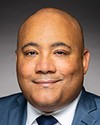
Marc Miller  Liberal

Status

In committee (House), as of Oct. 29, 2026

Subscribe to a feed (what's a feed?) of speeches and votes in the House related to Bill C-34.

Summary

This is from the published bill. The Library of Parliament has also written a full legislative summary of the bill.

Part 1 enacts the Digital Safety Act , whose purpose is, among other things, to promote the safety of persons in Canada, particularly children, reduce harms caused to them as a result of harmful content online and ensure that the operators of regulated social media services, regulated chatbot services and other regulated online services are transparent and accountable with respect to their duties under that Act.
That Act, among other things,
(a) imposes on the operators of regulated services
(i) a duty to act responsibly in respect of the regulated social media services that they operate, including by implementing measures that are adequate to mitigate the risk that users will be exposed to harmful content on the services, by providing tools to users to enable them to block other users and flag harmful content and by labelling synthetic content,
(ii) a duty to act responsibly in respect of the regulated chatbot services that they operate, including by implementing measures that are adequate to mitigate the risk that the chatbot will communicate harmful content to a user, measures to ensure intervention in crisis situations and measures that are adequate to mitigate the risk that the chatbot will engage in certain harmful behaviours,
(iii) a duty to protect children in respect of all of the regulated services that they operate by integrating into those services design features that are set out in the regulations, by implementing minimum-age restrictions for accessing pornographic content on regulated services, and, if provided for by regulations, by implementing minimum-age restrictions for being able to have an account with, or being otherwise registered with, regulated social media services,
(iv) a duty, in respect of the regulated social media services that they operate, to make inaccessible to persons in Canada, in certain circumstances, content on that service that sexually victimizes a child or revictimizes a survivor and intimate content communicated without consent, and
(v) a duty to be transparent in respect of all of the regulated services that they operate, including by submitting a digital safety plan to the Digital Safety Commission of Canada to assist it in determining whether an operator is complying with its duties under that Act;
(b) authorizes the Governor in Council to make regulations to make the operators of other online services subject to the duty to protect children and the duty to be transparent;
(c) provides that persons in Canada may make a complaint to the Digital Safety Commission of Canada that content on a regulated social media service is content that sexually victimizes a child or revictimizes a survivor or intimate content communicated without consent and authorizes the Commission to make an order requiring the operator of the service to make that content inaccessible to persons in Canada if the person making the complaint has used their best efforts to seek recourse from the operator of the service under that Act; and
(d) provides that persons in Canada may make submissions to the Digital Safety Commission of Canada respecting the measures taken by the operator of a regulated service to comply with its duties under that Act.
Part 2 enacts the Digital Safety Commission of Canada Act , which establishes the Digital Safety Commission of Canada, which has powers, duties and functions under the Digital Safety Act . The Part also makes consequential amendments to other Acts.

Elsewhere

All sorts of information on this bill is available at LEGISinfo, an excellent resource from Parliament. You can also read the full text of the bill.

Bill numbers are reused for different bills each new session. Perhaps you were looking for one of these other C-34s:

C-34 (2022) Law National Security Review of Investments Modernization Act
C-34 (2021) Law Appropriation Act No. 3, 2021-22
C-34 (2016) An Act to amend the Public Service Labour Relations Act and other Acts
C-34 (2014) Law Tla'amin Final Agreement Act

Debate Summary

line drawing of robot

This is a computer-generated summary of the speeches below. Usually it’s accurate, but every now and then it’ll contain inaccuracies or total fabrications.

Bill C-34 would set safety, transparency and content-removal duties for regulated social media and AI chatbot services, restrict social media accounts for children under 16 unless safeguards qualify for an exemption, and establish an independent commission to oversee compliance and penalties.

Liberal

  • Supports Bill C-34: The Liberal caucus supports the safe social media act as an urgent response to online harms, particularly those affecting children, and urges Parliament to advance the bill.
  • Platform accountability: The bill shifts responsibility from families to social media and chatbot companies, requiring them to assess and reduce risks, build safety into services, act on serious harmful content and publish safety plans.
  • Protecting children: The bill requires age-appropriate safeguards and generally prevents children under 16 from holding social media accounts, while allowing exemptions for platforms that demonstrate adequate protections.
  • Independent oversight and safeguards: An independent digital safety commission would oversee compliance, investigate complaints and impose penalties. Liberals also stress that implementation must protect privacy and freedom of expression and be informed by expert and youth input.

Conservative

  • Protect children online: Conservatives support protecting children from online exploitation, harmful content and addictive design, and want technology companies held accountable for risks their platforms create.
  • Empower parents: They argue that legislation should give parents practical, accessible tools and support their authority, rather than replacing parents with government decision-makers.
  • Scrutinize the framework: They question whether vague duties, future regulations and exemptions will deliver effective safeguards, and seek scrutiny of age restrictions, platform coverage and enforcement, including gaming and messaging services.
  • Protect rights and privacy: They warn that age checks and a powerful new commission could threaten privacy, civil liberties and lawful expression, and demand clear limits, oversight and accountability.

Bloc

  • Supports urgent action: The Bloc supports Bill C-34’s principle and urgent efforts to protect young people from harmful online content, while recognizing that the bill still requires substantial discussion and improvement.
  • Hold platforms accountable: The Bloc calls for binding duties requiring platforms to protect minors and address harmful content, and for rules informed by evidence, research and the risks posed by attention-capturing algorithms.
  • Consider youth access limits: Members remain open to age-based restrictions, including a ban, but stress that options must be examined carefully and adjusted in light of evidence about effectiveness.
  • Respect Quebec's jurisdiction: The Bloc supports the bill’s safety objectives but insists committee study must respect Quebec and provincial jurisdiction; it objects to Ottawa acting alone and seeks flexibility for Quebec’s distinct approach.

Green

  • Supports moving the bill forward: May supports Bill C-34 at second reading and wants it sent to committee, while stressing that she is not fully enthusiastic and wants the legislation improved.
  • Protect children online: She points to constituents’ concerns about screen time, children’s safety and artificial intelligence, and says online harms can damage mental health and contribute to a crisis among young people.
  • Strengthen corporate accountability: May argues that the proposed $10-million maximum penalty is only a cost of doing business. She wants stronger consequences, including strict liability and personal liability for corporate directors, to protect children.
  • Address bill’s uncertainties: She identifies vague regulations and broad powers for the proposed commission as major flaws, and urges committee study and amendments to build a workable law with public consensus.
Was this summary helpful and accurate?

Safe Social Media ActGovernment Orders

October 28th, 2026 / 8:40 p.m.

Liberal

Leslie Church Liberal Toronto—St. Paul's, ON

Madam Speaker, I have heard those concerns raised, but where I come down on this issue is believing we need action today. We need a commission that is going to be flexible, that is going to be able to adapt to the way technology is changing in front of our eyes right now. If we wait to get that just perfect, if we wait to hammer out all of those details, the technology, the platforms will continue to move and there will be gaps we do not anticipate today that are going to be on our children's screens tomorrow. This is why this framework is necessary, and we are not alone in the world in pursuing this course. There are countries across the EU, across the G7 and G20 that are pursuing this as well, that are looking towards this type of framework. We are on the right track.

Safe Social Media ActGovernment Orders

October 28th, 2026 / 8:40 p.m.

Taiaiako'n—Parkdale—High Park Ontario

Liberal

Karim Bardeesy LiberalParliamentary Secretary to the Minister of Industry

Madam Speaker, I listened with great interest to my colleague's speech; she has so much commitment and expertise on this issue. I am wondering if she could expound on a point she made in her speech around the inability or the unwillingness of companies that have been faced with these issues, the research in front of them and the increasingly concerning effects being caused by their technologies. I wonder if she can describe in fuller detail what it is that is preventing them from acting and why government action is necessary.

Safe Social Media ActGovernment Orders

October 28th, 2026 / 8:40 p.m.

Liberal

Leslie Church Liberal Toronto—St. Paul's, ON

Madam Speaker, over the last 15, nearly 20 years that we have been living in a digital world, from YouTube to the iPhone to the social media that we know today, such as Facebook and Twitter. Platforms have been evolving. What we do know consistently is that they have been evolving and growing in a way that is designed to create attention, that is designed to create addiction, that is designed to create clicks and likes. Platforms know this. We have had variations of this debate at different times in the last 15 years. For things like figuring out how to take down content quickly, we know that many of these companies have had to stand up thousands of employees to do that work, but they are shirking their responsibilities to do it quickly and to address all the different types of harmful content that we know they know are out there.

Safe Social Media ActGovernment Orders

October 28th, 2026 / 8:40 p.m.

Green

Elizabeth May Green Saanich—Gulf Islands, BC

Madam Speaker, I want to get back to the point I was making to the member for University—Rosedale. I do not think we disagree in this place that the companies that are producing the hazardous product of so-called online services on what they call platforms are way smarter than any bureaucrat and way smarter than anyone drafting this legislation. This is their playground. They know what they are doing with algorithms. They know how they are making addictive content to keep people scrolling, whether it is seniors or children.

How do we create a maximum incentive for the producer of the hazardous product to keep our children safe? This bill would not do that. This bill says the penalty is to encourage compliance with this vague law. It does not say we can drive them out of business if they harm our children.

Safe Social Media ActGovernment Orders

October 28th, 2026 / 8:40 p.m.

Liberal

Leslie Church Liberal Toronto—St. Paul's, ON

Madam Speaker, the bill would make provisions for penalties in this scheme, and the companies have an interest in having their products in market. We want to make sure those products are safe, so if they are designed safely and if they meet the test the commission would set out, then we are going to feel much more reassured about their presence inside our digital borders. We definitely know there are multiple tracks at play here. We are seeing this in the United States. We are seeing it in Europe. We are seeing it even with the school boards in Ontario, which are taking many of these companies to court. I would offer my colleague across the way some hope that there are going to be multiple pathways we can look to in order to ensure that these companies are truly held liable for the social costs of the products they have put in all of our houses.

Safe Social Media ActGovernment Orders

October 28th, 2026 / 8:45 p.m.

Conservative

Grant Jackson Conservative Brandon—Souris, MB

Madam Speaker, I will be splitting my time with the member for King—Vaughan.

I am proud to rise today on behalf of my constituents in Brandon—Souris to speak to Bill C-34, the safe social media act. As a member of gen Z, I am among the few parliamentarians who grew up with smart phones at school and social media becoming part of everyday life. I got my first phone at age 12, the LG Rumour with a slide-out keyboard. We thought we were very cool.

I then got my first smart phone at age 14, and entered high school with the rest of my cohort into the brave unknown of teenagers on social media for the first time and it certainly was the unknown. There were Snapchat messages in class and Instagram notifications constantly. This was long before the algorithms and ad campaigns got to today's level of sophistication. It really was the Wild West.

While there were certainly some positive features, there was also a dark side that every young person has seen. While we saw it, and young people continue to see it minute by minute, hour by hour, parents often do not. Their algorithms, understandably, just look a lot different. If they do see it, there is very little they can do about it.

A parent can put a phone away at supper and make sure homework comes first. They can attempt to confiscate it at bedtime. However, regardless of breaks, they cannot rewrite the software that decides what their child sees or personally remove an image someone else has shared. They cannot control a predator who has mastered what it sounds like to imitate the voice and speech of a young person in order to lure kids in.

That is the challenge facing all families across the country and that is why Conservatives believe children should be protected online, technology companies should be held accountable and parents should have the tools to keep their children safe. Those principles are clear, but whether Bill C-34 would actually deliver on them is the real question before us today.

Kids are still figuring out who they are. They are learning how to handle pressure and how to separate what is real from what is not. That is difficult enough without constant comparison, online cruelty and a stream of content designed to keep them watching. An embarrassing moment at school used to be something someone could leave behind when they went home, but today that same moment can be recorded and shared with hundreds or thousands of people and follow someone everywhere. A cruel message can be shared long after the day ends, and for a young person being targeted online, putting the phone down does not erase the fear of what everyone else might have seen or might be saying.

Most concerning is a place where predators have far too much access to young people with zero accountability. In 2024, police across Canada reported almost 17,000 incidents of online child sexual exploitation, and StatsCan warns that police-reported figures likely underestimate the full scope of the problem.

The government is right to acknowledge it. Parents are worried. They know their children's strengths, worries and maturity levels better than anyone else, but a child sitting quietly in their bedroom may be dealing with something that a parent cannot see. Taking harm seriously means being willing to examine this problem and the government's proposed position clearly. Parents deserve more than assurances from a tech company, and they deserve to know exactly what the government intends to do about this problem.

Bill C-34 claims to impose new safety standards on social media and AI chatbot services, and establish a digital safety commission to oversee a framework. However, many of the most important details are being left for future regulations. Here enters our concern. The bill says companies must introduce design features to protect children. What does that mean in practice? Will it change the algorithms that recommend harmful content or the endless scrolling that keeps kids watching? We do not know yet. This is something my constituents are concerned about.

In a recent mailer, I asked the people of Westman their thoughts on this bill and whether, in general, kids should be banned from social media. A constituent named Jack, who opposes a ban, wrote to me and said, “Companies just need to be held accountable for the manufactured algorithms they run. Don't ban kids.” Many others agree and I think that is an important point.

Parents can set limits at home, but they cannot control the content that these algorithms push onto their children's screens. That responsibility has to rest with the companies designing and operating these platforms. Will the regulations under Bill C-34 actually change how those companies operate? Will they simply be required to file a safety plan with the government and carry on?

Bill C-34 also aims to give this commission the substantial powers to investigate companies, enforce compliance and impose penalties. Cabinet and the commission would each have regulation-making powers within the framework to determine what that compliance and those penalties are, not Parliament. I understand the need to move quickly and to hold technology companies accountable, but how can Parliament judge whether these powers are appropriate when we have not seen so many of the rules that would govern their use?

Consider a parent who discovers, in the words of this legislation, that an intimate image of their child has been shared without consent, perhaps even generated by AI. Their priority is to get it taken down as quickly as possible. The bill claims to have a process for removing specified content, generally within 24 hours after it is identified or properly flagged, although future regulations could change those criteria, but even if they are not, 24 hours on the Internet is a long time. What happens if the platform rejects the complaint? If those 24 hours pass and the image is still up, does that family now have to go through another complaints process with the commission, all while the image continues to spread? If the platform simply fails to act, what consequences would it actually face? A parent in Brandon—Souris should not need a lawyer to navigate this system. We need to know that these protections will work in the real world in real time and not just on paper.

This brings me to the proposed restriction on social media accounts for children under 16. Ronald, a constituent from Brandon, supported a ban, raising concerns about how easily children can encounter harmful content online, but he also made an important point. He wrote that parents would need to be a willing partner if this were to succeed. I could not agree more. We can pass all the legislation in Ottawa we like, but parents are still the ones raising their children and helping them navigate the online world. Kids are primarily their responsibility, far more than the government's.

That raises a very practical question: How would this proposed restriction actually work based on what is in the bill? The bill provides for age checks on social media services designated through regulations with possible exemptions for platforms that have “adequate safeguards”. What does “adequate” mean? By whose definition is it adequate? Is it the parents' definition of an adequate safety plan for their kids, or would it be the commission's or the government's? We do not know, because so much of these decisions would be left to regulation after the bill has passed.

Putting an age restriction into practice also means finding a way to verify people's ages, and that raises another serious concern: the privacy of Canadians and the security of their personal information. If platforms must check people's ages, how will they do it? Will Canadians be asked for government ID, a facial scan or information collected by an outside company? The bill does not include safeguards requiring information collected for age checks to be protected, used only for that purpose and destroyed afterwards. Who will collect the data? How will we know that it has been deleted? What happens if there is a breach? We only know from highly reputable organizations, like Crime Stoppers very recently, that the threat of a data breach is a very real possibility in today's day and age. Once that sensitive personal info has been compromised, a promise to delete it later offers little comfort. Parents should not have to trade one concern about their child's safety for another concern about their child's personal information.

After speaking with parents in Westman, I know they want their children to make friends, learn about the world and become independent enough to make good decisions, but most of all, they want their kids to be safe. Tech can be a tool, but it can also be a path to things that no child should face alone.

As the bill proceeds through second reading, Parliament must remain focused on two things: holding powerful tech companies accountable without handing the Liberals a blank cheque on oversight, and, most importantly, protecting children by empowering, not replacing, parents. Conservatives will continue to fight for those priorities until we get this legislation right. The consequences are too significant for anything less.

Safe Social Media ActGovernment Orders

October 28th, 2026 / 8:55 p.m.

Liberal

Michael Coteau Liberal Scarborough—Woburn, ON

Madam Speaker, my colleague brought up a lot of questions and hypotheticals. He criticized the use of regulation, which is a normal process in this House. He seemed to have a lot more questions than an actual position on or insights into the legislation. Will he be supporting this bill, yes or no?

Safe Social Media ActGovernment Orders

October 28th, 2026 / 8:55 p.m.

Conservative

Grant Jackson Conservative Brandon—Souris, MB

Madam Speaker, I am not sure why the member is offended that an opposition member is asking questions of the government. That is how Parliament works. Nonetheless, I think Conservatives have been clear that we support, in principle, protecting kids online. We are looking for more details. Perhaps some of the Liberal members will put more of the teeth of this bill on the record now so that Conservatives can assess it before it comes to a vote.

Safe Social Media ActGovernment Orders

October 28th, 2026 / 8:55 p.m.

Conservative

Anna Roberts Conservative King—Vaughan, ON

Madam Speaker, the important thing we have to understand today is that we are concerned about the future of this country. If we do not protect our children, we will not have a future for them. That is what we are looking for. We are looking to protect our children, and I think my colleague did a wonderful job of explaining that.

What do you think we need to do to ensure that—

Safe Social Media ActGovernment Orders

October 28th, 2026 / 8:55 p.m.

The Assistant Deputy Speaker (Alexandra Mendès) Alexandra Mendes

I will remind the hon. member that I do not think anything.

Safe Social Media ActGovernment Orders

October 28th, 2026 / 8:55 p.m.

Conservative

Anna Roberts Conservative King—Vaughan, ON

Madam Speaker, I apologize.

What can we do to ensure that tech companies take accountability in protecting the future of our country?

Safe Social Media ActGovernment Orders

October 28th, 2026 / 8:55 p.m.

Conservative

Grant Jackson Conservative Brandon—Souris, MB

Madam Speaker, that was an important question. There are ways that tighter strings could be attached to how tech companies run their algorithms, what they are like based on the platforms they are delivered on, and what they look like compared to, for example, the data plans on the devices that kids use to access these platforms and the Internet.

Those are just a couple of examples off the top of my head where this bill could more tightly restrict what kids with kid plans on any of our networks are seeing. We do not see that in the bill, unfortunately. Hopefully the government will make some amendments and improve the bill.

Safe Social Media ActGovernment Orders

October 28th, 2026 / 8:55 p.m.

Liberal

Natilien Joseph Liberal Longueuil—Saint-Hubert, QC

Madam Speaker, right now we are addressing the very important topic of child protection. I am the father of a 12-year-old daughter.

I would like to ask my colleague a question concerning the regulation of AI chatbots. How do members propose to protect young people from the risks associated with AI chatbots, especially their ability to reinforce behaviours harmful to our children?

Safe Social Media ActGovernment Orders

October 28th, 2026 / 8:55 p.m.

Conservative

Grant Jackson Conservative Brandon—Souris, MB

Madam Speaker, we do not have to look very far, sadly, to see the tragic consequences of what unregulated AI chatbots can do and the damage they can do to the mental health of a young person. There are ways the government could legislate what ability chatbots could have to give advice on specific topics, like, for example, atrocities in public places, mental health issues and suicide. I hate to use that word, but there are ways the government could regulate that through legislation. We are not seeing this bill do that, because the government is leaving it all, apparently, for the commission to decide on after the bill is passed. We would like to see some stricter provisions put into law rather than being left up to the commission, whoever that is going to be, somewhere, someday down the road.

Safe Social Media ActGovernment Orders

October 28th, 2026 / 9 p.m.

Winnipeg North Manitoba

Liberal

Kevin Lamoureux LiberalParliamentary Secretary to the Leader of the Government in the House of Commons

Madam Speaker, it seems that Conservative Party members are talking about the problem. We have a good understanding of the problem. That is why we have Bill C-34. It is there to protect the interests of children in Canada.

Does the member support the principle of having the legislation go to committee?