Safe Social Media Act

An Act to enact the Digital Safety Act and the Digital Safety Commission of Canada Act and to make consequential amendments to other Acts

Sponsor

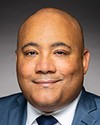
Marc Miller  Liberal

Status

In committee (House), as of Oct. 29, 2026

Subscribe to a feed (what's a feed?) of speeches and votes in the House related to Bill C-34.

Summary

This is from the published bill. The Library of Parliament has also written a full legislative summary of the bill.

Part 1 enacts the Digital Safety Act , whose purpose is, among other things, to promote the safety of persons in Canada, particularly children, reduce harms caused to them as a result of harmful content online and ensure that the operators of regulated social media services, regulated chatbot services and other regulated online services are transparent and accountable with respect to their duties under that Act.
That Act, among other things,
(a) imposes on the operators of regulated services
(i) a duty to act responsibly in respect of the regulated social media services that they operate, including by implementing measures that are adequate to mitigate the risk that users will be exposed to harmful content on the services, by providing tools to users to enable them to block other users and flag harmful content and by labelling synthetic content,
(ii) a duty to act responsibly in respect of the regulated chatbot services that they operate, including by implementing measures that are adequate to mitigate the risk that the chatbot will communicate harmful content to a user, measures to ensure intervention in crisis situations and measures that are adequate to mitigate the risk that the chatbot will engage in certain harmful behaviours,
(iii) a duty to protect children in respect of all of the regulated services that they operate by integrating into those services design features that are set out in the regulations, by implementing minimum-age restrictions for accessing pornographic content on regulated services, and, if provided for by regulations, by implementing minimum-age restrictions for being able to have an account with, or being otherwise registered with, regulated social media services,
(iv) a duty, in respect of the regulated social media services that they operate, to make inaccessible to persons in Canada, in certain circumstances, content on that service that sexually victimizes a child or revictimizes a survivor and intimate content communicated without consent, and
(v) a duty to be transparent in respect of all of the regulated services that they operate, including by submitting a digital safety plan to the Digital Safety Commission of Canada to assist it in determining whether an operator is complying with its duties under that Act;
(b) authorizes the Governor in Council to make regulations to make the operators of other online services subject to the duty to protect children and the duty to be transparent;
(c) provides that persons in Canada may make a complaint to the Digital Safety Commission of Canada that content on a regulated social media service is content that sexually victimizes a child or revictimizes a survivor or intimate content communicated without consent and authorizes the Commission to make an order requiring the operator of the service to make that content inaccessible to persons in Canada if the person making the complaint has used their best efforts to seek recourse from the operator of the service under that Act; and
(d) provides that persons in Canada may make submissions to the Digital Safety Commission of Canada respecting the measures taken by the operator of a regulated service to comply with its duties under that Act.
Part 2 enacts the Digital Safety Commission of Canada Act , which establishes the Digital Safety Commission of Canada, which has powers, duties and functions under the Digital Safety Act . The Part also makes consequential amendments to other Acts.

Elsewhere

All sorts of information on this bill is available at LEGISinfo, an excellent resource from Parliament. You can also read the full text of the bill.

Bill numbers are reused for different bills each new session. Perhaps you were looking for one of these other C-34s:

C-34 (2022) Law National Security Review of Investments Modernization Act
C-34 (2021) Law Appropriation Act No. 3, 2021-22
C-34 (2016) An Act to amend the Public Service Labour Relations Act and other Acts
C-34 (2014) Law Tla'amin Final Agreement Act

Debate Summary

line drawing of robot

This is a computer-generated summary of the speeches below. Usually it’s accurate, but every now and then it’ll contain inaccuracies or total fabrications.

Bill C-34 would set safety, transparency and content-removal duties for regulated social media and AI chatbot services, restrict social media accounts for children under 16 unless safeguards qualify for an exemption, and establish an independent commission to oversee compliance and penalties.

Liberal

  • Supports Bill C-34: The Liberal caucus supports the safe social media act as an urgent response to online harms, particularly those affecting children, and urges Parliament to advance the bill.
  • Platform accountability: The bill shifts responsibility from families to social media and chatbot companies, requiring them to assess and reduce risks, build safety into services, act on serious harmful content and publish safety plans.
  • Protecting children: The bill requires age-appropriate safeguards and generally prevents children under 16 from holding social media accounts, while allowing exemptions for platforms that demonstrate adequate protections.
  • Independent oversight and safeguards: An independent digital safety commission would oversee compliance, investigate complaints and impose penalties. Liberals also stress that implementation must protect privacy and freedom of expression and be informed by expert and youth input.

Conservative

  • Protect children online: Conservatives support protecting children from online exploitation, harmful content and addictive design, and want technology companies held accountable for risks their platforms create.
  • Empower parents: They argue that legislation should give parents practical, accessible tools and support their authority, rather than replacing parents with government decision-makers.
  • Scrutinize the framework: They question whether vague duties, future regulations and exemptions will deliver effective safeguards, and seek scrutiny of age restrictions, platform coverage and enforcement, including gaming and messaging services.
  • Protect rights and privacy: They warn that age checks and a powerful new commission could threaten privacy, civil liberties and lawful expression, and demand clear limits, oversight and accountability.

Bloc

  • Supports urgent action: The Bloc supports Bill C-34’s principle and urgent efforts to protect young people from harmful online content, while recognizing that the bill still requires substantial discussion and improvement.
  • Hold platforms accountable: The Bloc calls for binding duties requiring platforms to protect minors and address harmful content, and for rules informed by evidence, research and the risks posed by attention-capturing algorithms.
  • Consider youth access limits: Members remain open to age-based restrictions, including a ban, but stress that options must be examined carefully and adjusted in light of evidence about effectiveness.
  • Respect Quebec's jurisdiction: The Bloc supports the bill’s safety objectives but insists committee study must respect Quebec and provincial jurisdiction; it objects to Ottawa acting alone and seeks flexibility for Quebec’s distinct approach.

Green

  • Supports moving the bill forward: May supports Bill C-34 at second reading and wants it sent to committee, while stressing that she is not fully enthusiastic and wants the legislation improved.
  • Protect children online: She points to constituents’ concerns about screen time, children’s safety and artificial intelligence, and says online harms can damage mental health and contribute to a crisis among young people.
  • Strengthen corporate accountability: May argues that the proposed $10-million maximum penalty is only a cost of doing business. She wants stronger consequences, including strict liability and personal liability for corporate directors, to protect children.
  • Address bill’s uncertainties: She identifies vague regulations and broad powers for the proposed commission as major flaws, and urges committee study and amendments to build a workable law with public consensus.
Was this summary helpful and accurate?

Safe Social Media ActGovernment Orders

October 28th, 2026 / 10:10 p.m.

Conservative

Garnett Genuis Conservative Sherwood Park—Fort Saskatchewan, AB

Madam Speaker, I do not doubt the sincerity of every member who is talking about their aspirations to protect kids. I think that aspiration is widely shared. It is also important to underline that good intentions are not enough in legislation. What becomes law is not the good intentions of legislators. What becomes law is the text of the bill. That is the work we are doing now and that we will do at the committee. It is to discuss, as I did in my speech, the alignment between the intentions and the results as they would be created by the legislation.

There are good things in this bill. It is important to acknowledge that there may have been some dissonance in the communication that there would not be an age ban. It would not actually prevent people under 16 from accessing social media. While there are important and positive provisions around pornographic content, it would not cover pornography websites; it would only covers social media. That is why Bill S-209 is important.

The work that is going to happen at committee, the study, is very important. It is important to acknowledge what the bill would do and what it would not do. Again, it would not create an age ban. It does not address all issues of pornography. It only deals with pornography on some kinds of websites. However, there are important and positive aspirations that are expressed through it, and it is worthy of serious and thoughtful study.

Safe Social Media ActGovernment Orders

October 28th, 2026 / 10:10 p.m.

Liberal

Will Greaves Liberal Victoria, BC

Madam Speaker, I have heard my hon. colleagues mention several times, with a bit of fence-sitting, the question of whether the bill constitutes an age ban for young Canadians under 16. I am curious if the member is able to clarify that. In his view, would it be preferable to have a universal ban for Canadians under 16 on social media platforms, or would it be preferable to have social media platforms fix their systems such that there would be limitations on age-inappropriate content and young Canadians could safely use those platforms, given some of the benefits that we know exist? Which of those two options would the member prefer? I cannot tell based on his remarks this evening.

Safe Social Media ActGovernment Orders

October 28th, 2026 / 10:15 p.m.

Conservative

Garnett Genuis Conservative Sherwood Park—Fort Saskatchewan, AB

Madam Speaker, in the point I made, admittedly, I did not comment on that either way. I simply pointed out that the bill is not an age ban.

What would the ideal architecture be? I think there will be lots of time to study that question at committee. I am open to the argument—

Safe Social Media ActGovernment Orders

October 28th, 2026 / 10:15 p.m.

The Assistant Deputy Speaker (Alexandra Mendès) Alexandra Mendes

We are resuming debate.

The hon. member for Mont-Saint-Bruno—L'Acadie.

Safe Social Media ActGovernment Orders

October 28th, 2026 / 10:15 p.m.

Liberal

Bienvenu-Olivier Ntumba Liberal Mont-Saint-Bruno—L’Acadie, QC

Madam Speaker, the digital world now occupies an essential place in the lives of Canadians. It allows us to communicate, stay informed, learn and stay in touch with the people close to us. However, those opportunities also come with risks that we can no longer ignore. Today, children are accessing social media at increasingly younger ages, sometimes without their parents being fully aware. In a few clicks, a child can create an account, start using a platform and become exposed to harmful content while leaving his or her personal data behind.

In this environment, we have to wonder whether we are doing enough to protect our young people. I had a chance to consult with the people of Mont-Saint-Bruno—L'Acadie to better understand their concerns about these bills. During our conversations, child protection was front and centre, especially in terms of the negative effects of social media. These discussions reminded me that this issue extends far beyond technology. It concerns our families, our schools, our communities and the health of the next generation.

Parents want their children to reap the benefits of the digital world without being exposed to risks they are not yet able to recognize or manage on their own. As parliamentarians, we have a duty to listen and respond to their concerns.

The data presented in connection with this bill are concerning. According to the available data, over the past decade, depression has doubled and anxiety has quadrupled among young Canadians aged 15 to 24. Research also shows that young people who have been victimized online report three times more suicidal thoughts. These numbers should make us think long and hard about the environment in which our young people are growing up. It is important to recognize that mental health is influenced by many factors.

Social media cannot be held responsible for all the problems young people face. However, when the risks associated with digital spaces compound the challenges that teenagers already face, we cannot afford to look the other way.

According to the data, Canadian police recorded 19,516 incidents of online child sexual exploitation in 2023. That is 59% higher than in 2022. Behind these numbers are victims, families and lives that have been profoundly disrupted. These numbers illustrate the scale of the challenge before us. They demonstrate why digital safety must be regarded as a collective responsibility and why our responses must keep pace with evolving risks.

That is precisely why this bill represents a significant step forward. It proposes a shift from a primarily reactive approach to a more preventive one, in which platforms must assess the risks associated with their services and take measures to mitigate them.

First, tech companies must be held accountable. This bill therefore requires the services in question to regularly assess certain risks associated with their operations, make changes to their design to minimize harm and implement clear reporting mechanisms. It also provides for the publication of digital safety plans to help Canadians better understand the risks inherent to these platforms and the measures taken to address them. This transparency is essential.

Second, the bill proposes to strengthen the protection of children. It prohibits anyone under the age of 16 from owning a social media account, subject to exemptions for platforms that can demonstrate that their services are sufficiently safe for our young people. This approach is based on an important principle, specifically that protection must be built into the design of the services rather than simply added once a problem has emerged.

At that age, young people are going through a critical stage of their development. Their identity is taking shape, their social relationships are becoming increasingly important, and their ability to cope with certain pressures continues to evolve. Repeated exposure to bullying, harmful content and mechanisms that encourage excessive use can pose an additional risk.

Protecting young people does not mean denying their ability to think or make decisions. It means recognizing that the environment they grow in has to take their age and developmental stage into account. It is not just a matter of setting an age limit. It is also about encouraging companies to do more to create safer digital spaces.

The bill provides for expedited procedures to make certain content inaccessible, particularly content that sexually victimizes children or survivors, as well as intimate images shared without consent. When such content circulates online, every share can prolong a victim's suffering. Swift action can help limit its spread and prevent the affected person from being victimized again.

Our policies must be able to respond to today's risks while taking into account that technologies will continue to evolve. Some people may wonder whether these measures might infringe on freedom of expression or privacy. The answer is no. These concerns deserve a serious response. Freedom of expression is essential to our democracy. Canadians must be able to express their opinions, criticize the government, debate social issues and freely participate in public life.

The bill is not intended to suppress legitimate debate or ordinary conversations. It targets specific categories of harmful content, particularly the sexual exploitation of children, the non-consensual sharing of intimate images, the bullying of children and any content that incites violence.

Protecting young people and preserving freedom of expression should not be seen as opposing objectives. We can preserve the right to debate while requiring that businesses take action against serious harm. Privacy protections are just as essential. Age verification mechanisms must be implemented responsibly, with guarantees regarding the collection, use and destruction of personal data. The goal must be to protect young people, not create new risks to their privacy.

To ensure obligations are met, the bill also establishes an independent digital safety commission. Among its responsibilities, the commission would review platforms' safety plans, assess their age-verification mechanisms, support victims and ensure that platforms meet their obligations. It would also have the authority to impose financial penalties on platforms that fail to comply with the law. Under the proposed framework, these penalties could amount to up to 3% of a platform's global revenue. This is important because obligations must be backed by credible enforcement mechanisms.

I would now like to return to the consultations I had the opportunity to conduct with the people of Mont-Saint-Bruno—L'Acadie. The concerns raised by constituents remind us that the decisions we make here in the House of Commons have real consequences for families across the country. We must show them that we are prepared to act, not only when harm occurs, but also before it happens. We must ensure that platforms take responsibility, that victims have access to support and that parents are not left to navigate systems over which they have little or no control.

Prevention, digital education, support for families and work with specialized organizations will remain vital, but we cannot use the fact that we are doing those things as an excuse not to take action. Maintaining the status quo is not enough when risks are increasing, technology is changing and children continue to be exposed to preventable harm. We therefore have the responsibility to adapt our laws to address these challenges. We have the responsibility to ensure that platforms that profit from these young people also help keep them safe. Above all, we have the responsibility to place the well-being of our young people at the heart of our decisions.

This bill gives us an opportunity to recognize that just because our children are at home or at school does not necessarily mean that they are safe. We also need to make sure that they are safe in the digital world. By enhancing prevention, demanding greater transparency and accountability from platforms, expediting the removal of some particularly harmful content and establishing independent oversight, we can help create a safer digital environment. We must act with determination but also with discernment by protecting freedom of expression and privacy, which are at the heart of our democracy. Young people deserve to be able to learn, communicate and grow without being left alone to navigate risks that businesses have the means to prevent. That is our responsibility to our families, communities and future generations.

I want to thank the people of Mont-Saint-Bruno—L'Acadie for speaking with me and sharing their concerns. They remind why this work is necessary. As young parents, we have a responsibility to keep our children, youth and communities safe. This bill is an important milestone for the community that we represent here in the House. We may not be able to overcome every challenge that the digital world creates, but we can choose to protect the most vulnerable among us more effectively. When it comes to our children's safety, we have a duty to act.

Safe Social Media ActGovernment Orders

October 28th, 2026 / 10:25 p.m.

Liberal

Guillaume Deschênes-Thériault Liberal Madawaska—Restigouche, NB

Mr. Speaker, my colleague gave an excellent speech. He touched on a number of the key points in this bill. The reason we are still here tonight at this late hour is that we care deeply about protecting our children online.

I would like to know his opinion of the bill's architecture. Rather than imposing an outright ban, the bill allows platforms to be exempted if they can demonstrate that they have a rigorous safety plan, which would be assessed by an independent commission. That safety plan must show how children will be prevented from being exposed to harmful content. I would like to hear my colleague's thoughts on that approach. In my opinion, it was the right approach to take.

Safe Social Media ActGovernment Orders

October 28th, 2026 / 10:30 p.m.

Liberal

Bienvenu-Olivier Ntumba Liberal Mont-Saint-Bruno—L’Acadie, QC

Mr. Speaker, that is a good question. I do agree with my colleague's comment. This bill is intended to prevent harm. It also enables online companies to structure their operations to comply with the Government of Canada's framework. Once this bill is passed, young people who go online will be exposed to a much safer digital environment with stronger safeguards. Young people will be in a safer environment, and parents will have greater confidence that their government is acting responsibly.

Safe Social Media ActGovernment Orders

October 28th, 2026 / 10:30 p.m.

Liberal

Michael Coteau Liberal Scarborough—Woburn, ON

Mr. Speaker, I thought my colleague's intervention was very detailed and a really good analysis of Bill C-34.

He mentioned he had the opportunity to talk to people in his community and I want to know if he had the opportunity to speak to any families or young people about the implications of this proposed legislation.

Safe Social Media ActGovernment Orders

October 28th, 2026 / 10:30 p.m.

Liberal

Bienvenu-Olivier Ntumba Liberal Mont-Saint-Bruno—L’Acadie, QC

Mr. Speaker, that question is very much like one that a parent asked me recently when I was at the first meeting about this bill in Saint‑Basile‑le‑Grand.

The parents were very pleased that we were able to meet with them. They made it clear that it was time for Canada to act and that we had made the right decision. Parents shared their concerns with us. In no uncertain terms, they called for regulation. They feel this bill will address mental health concerns by providing much more robust protection against unauthorized images and the proliferation of intimate videos.

Safe Social Media ActGovernment Orders

October 28th, 2026 / 10:30 p.m.

Liberal

Natilien Joseph Liberal Longueuil—Saint-Hubert, QC

Mr. Speaker, I want to congratulate my colleague, as well as the people of Mont‑Saint‑Bruno—L'Acadie on having him as their member of Parliament.

Can my colleague explain to the House how this bill will require the platforms to take responsibility for digital security rather than leaving it up to users to protect themselves?

Safe Social Media ActGovernment Orders

October 28th, 2026 / 10:30 p.m.

Liberal

Bienvenu-Olivier Ntumba Liberal Mont-Saint-Bruno—L’Acadie, QC

Mr. Speaker, this bill is not going to impose bans without consequences. These companies know that. We have included penalties of 3% if they fail to reliably implement everything contained in this bill. There will be 3% penalties. This bill requires accountability.

We take comfort in the fact that if companies fail to comply with or respect this bill, they will be penalized by the commission that will be established.

Safe Social Media ActGovernment Orders

October 28th, 2026 / 10:30 p.m.

Liberal

Guillaume Deschênes-Thériault Liberal Madawaska—Restigouche, NB

Mr. Speaker, as my colleague explained, parents cannot monitor their children 24-7. In various settings in real life, we have certain expectations regarding the protection of children, whether at school, in community organizations or in different institutions. When we leave our children in these settings, we expect them to be safe.

Today, the virtual world is playing an increasingly important role in our everyday lives. It is a fact that children spend time in these virtual spaces. That is why I think it is important to put certain regulations in place to ensure the safety of our children when they use platforms like social media.

I would like my colleague to talk a bit more about that.

Safe Social Media ActGovernment Orders

October 28th, 2026 / 10:30 p.m.

Liberal

Bienvenu-Olivier Ntumba Liberal Mont-Saint-Bruno—L’Acadie, QC

Mr. Speaker, as I said very clearly in my speech, through this bill, we must show them that we are prepared to take action not only when harm occurs, but also before it occurs.

This bill is not only preventative. It is also coupled with corporate accountability.

As I said in my speech, children are not safe only at home and at school. When they leave those settings, they are exposed to the digital world. We need to make sure that our children are protected and safe in that world. If they are not, companies will be held accountable, and their fees could amount to 3% of global revenues under the provisions of the bill.

Safe Social Media ActGovernment Orders

October 28th, 2026 / 10:35 p.m.

Liberal

Guillaume Deschênes-Thériault Liberal Madawaska—Restigouche, NB

Mr. Speaker, quickly, why is it important to establish an independent digital safety commission?

Why is this a step forward, according to my colleague?

Safe Social Media ActGovernment Orders

October 28th, 2026 / 10:35 p.m.

Liberal

Bienvenu-Olivier Ntumba Liberal Mont-Saint-Bruno—L’Acadie, QC

Mr. Speaker, one of the things I like in this bill is that the commission will ensure that the provisions are applied and enforced. This is an independent commission that will closely monitor identity verification and ensure that the law is enforced. If the law is not obeyed, companies will be held liable and subject to a 3% penalty.