We're going to stop for a second. It happened again.
We'll take a quick break while we try to figure this out.

Evidence of meeting #24 for Agriculture and Agri-Food in the 45th Parliament, 1st session. (The original version is on Parliament’s site, as are the minutes.) The winning word was lacombe.
A video is available from Parliament.
Liberal
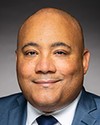
The Chair Liberal Michael Coteau
We're going to stop for a second. It happened again.
We'll take a quick break while we try to figure this out.
Liberal
The Chair Liberal Michael Coteau
Folks, we rebooted the system, so we're going to try again.
We'll go back to the Conservatives. They have one minute remaining.
Mr. Gourde.
Conservative

Jacques Gourde Conservative Lévis—Lotbinière, QC
Thank you, Mr. Chair.
I have some more questions for you, Ms. Martel. I only have a few seconds left.
Could the centre's crop seeding planning season be compromised, like it is at Saint‑Augustin‑de‑Desmaures and elsewhere, if the government doesn't send a signal in the short term?
General Manager, Centre d'expertise et de transfert en agriculture biologique et de proximité
Are you talking about the 2026 season?
General Manager, Centre d'expertise et de transfert en agriculture biologique et de proximité
Absolutely.
Research projects are under way, and most of the seeds should be ordered. I think planning could be compromised. Others can speak for themselves, but if there's no clear signal today, my organization's planning could be compromised.
Liberal
February 24th, 2026 / 11:55 a.m.
Liberal

Emma Harrison Liberal Peterborough, ON
Thank you to the witnesses for being here and taking the time to come and further discuss some of these cuts.
Ms. Oatway, I'd like to give you an opportunity to expand on some of the imminent effects of these cuts that you will see in Alberta. Can you explain that to me?
Research Scientist, Western Crop Innovations
I can tell you a bit about how our research group is being impacted and how our area is.
The federal Lacombe research station works very closely with our plant breeding company, Western Crop Innovations. We share some facilities between the two groups.
Our pathology lab is based at the Ag Canada station, and we are concerned about the immediate closure of that station. You need special facilities to get inoculum to do disease nurseries. That is one of our concerns. We've been told that it will be staying open into the fall, but there's no definitive answer to when that will be. Even if it stays open into August, we're still concerned about how that data will get out.
We have several joint projects between the two facilities. At this point, we are concerned with the relocation of scientists, how the programs are going to be moved and whether or not those research trials will be put into the ground in the spring. We have only about six weeks to make those decisions, and right now we are putting together those trials, so we need to know what facilities are going to be available to plant, what experts are going to be there and, of course, what technical staff. Even if the technical staff are not given their severance right away, we still need that expertise on the ground in order to plant the trials, get that data and continue with those projects. We're really concerned about how we shift away from what we've always known, and we need to make some backup plans, because not everything can be transferred locally.
Disease resistance is something we do across the entire country. Our work at Western Crop Innovations involves plant breeding trials throughout Canada, especially western Canada. Typically, we plant trials at Ag Canada in Lethbridge and at Ag Canada in Lacombe. We plant trials in Scott, Indian Head and Brandon, and they also plant trials at our station.
That's a way of getting across Canada, seeing the effects of our plant breeding, seeing how they are performing in all areas and making sure we have a great product coming back to our producers. Missing those locations or even specific scientific staff at those stations will impact the information we get back to our breeding program. We are not in isolation. We have a large scope throughout Canada, and we're concerned about all of those implications.
For producers, there are some definite concerns with closing facilities like Indian Head. Indian Head is responsible for putting out breeder seed. Breeder seed is the first seed given out from a breeding program. It goes to producers to multiply and then goes into farmers' fields. There have been estimates that 20% of all the breeder seed from wheat varieties comes out of the Indian Head facility. They then have to make decisions on whether we can continue forward.
If they have to move that entire program, we're looking at purity issues, staffing issues, technical issues and seed-cleaning issues. We have to make sure those are transferable as well. We could be looking at delaying by two to three years putting a new variety out by impacting just that one station.
We're very concerned about how this is impacting everything we do. I have concerns as a scientist as well as a producer, for sure.
Liberal
Emma Harrison Liberal Peterborough, ON
Thank you very much.
I'm still stuck on Mr. Gourde's comment that he gets four cuts of hay a season, because in my riding we all struggled to get one cut of hay due to some very significant drought. Currently, we're purchasing hay.
I'm jealous of your cuts of hay.
Madame Martel, you spoke about forage in the private sector and the lack of investment. Do you believe there's a way to incentivize the private sector to invest further in sustainable agricultural research?
General Manager, Centre d'expertise et de transfert en agriculture biologique et de proximité
Can you repeat your question? There's a bit of a lag in the interpretation.
Liberal
Emma Harrison Liberal Peterborough, ON
Certainly. Do you believe there is a way to incentivize the private sector to invest further in sustainable agricultural research?
General Manager, Centre d'expertise et de transfert en agriculture biologique et de proximité
Absolutely. There are a lot of opportunities for the private sector to invest in sustainable agriculture. Lots of technologies can be developed in sustainable agriculture. Use of drones is one example.
There's space for the private sector in many, but not all, aspects of sustainable agriculture. It's not that there's no space for it, but the private sector may not find space.
Liberal
The Chair Liberal Michael Coteau
Thank you so much.
We'll go now to the Bloc for two and a half minutes.
Bloc

Sébastien Lemire Bloc Abitibi—Témiscamingue, QC
Thank you, Mr. Chair.
Ms. Martel, when it comes to new programs, the government seems to prefer more targeted, short-term funding.
How do these choices affect applied research?
General Manager, Centre d'expertise et de transfert en agriculture biologique et de proximité
As I said earlier, we see agricultural production as a system. Targeted, short-term funding, especially very specifically targeted funding, loses sight of the whole system. When there are targeted, short-term programs, we develop knowledge quickly and apply it quickly. I think some of the programs can be designed that way.
However, we lose sight of the system as a whole, and we also lose the major innovations. When we work from a short-term perspective, our understanding of the impact of major innovations isn't as sophisticated. If we only take that approach, we'll end up with small innovations and rapid applications, but we'll miss out on major innovations in the medium and long terms.
Bloc
Sébastien Lemire Bloc Abitibi—Témiscamingue, QC
Thank you.
Mr. Buy, you lead a very interesting agri-food innovation council.
Can you tell me about the importance of providing all of your members with access to open, abundant data? What are the repercussions of access to that data and of disrupting a system?
Chief Executive Officer, Agri-Food Innovation Council
When we do research, we rely on existing data, so having access to that data is essential.
That's why these research centres have been around for so long. We have gathered data, we've produced it, we've worked on it and we continue to do so. Having these research centres across the country has given us a good foundation for that. Obviously, without that data, we're going to be in trouble in the future.
Bloc
Sébastien Lemire Bloc Abitibi—Témiscamingue, QC
Can you talk about the impact that could have on your members, specifically?
Chief Executive Officer, Agri-Food Innovation Council
Our members are researchers, university centres, companies and producer groups that rely heavily on all this research. That's why they're members of our council. They're members because they know that research and innovation are very important to the future of our sector and our country. Without this absolutely essential research, the future of the country and the health of the agri-food sector are in jeopardy.
Liberal
The Chair Liberal Michael Coteau
Thank you very much, Mr. Buy.
I apologize for mispronouncing your name at the beginning.
Chief Executive Officer, Agri-Food Innovation Council
It's not a problem. You're not the first one.