Yes, I would absolutely look at it.
You were talking about —

Evidence of meeting #30 for Agriculture and Agri-Food in the 45th Parliament, 1st session. (The original version is on Parliament’s site, as are the minutes.) The winning word was producers.
A video is available from Parliament.
Chair, Canadian Canola Growers Association
Yes, I would absolutely look at it.
You were talking about —
Liberal
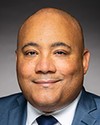
The Chair Liberal Michael Coteau
I'm going to have to stop you there, sir. I'm sorry about that. Thank you.
We're going to MP Harrison.
Liberal

Emma Harrison Liberal Peterborough, ON
Thank you.
Mr. Harpe, would you like to finish your comments? My line of questioning is in line with Mr. Epp's, and Mr. Pike....
I'll be coming back, as well, to AgriStability more specifically, because we hear, all the time—over and over—about red tape reduction, but we need more specifics. How do we attack these issues? We don't, specifically, have the voices of producers—what they're facing. The AgriStability issue is not foreign to me. I've never enrolled in AgriStability. My neighbours have, and it's not a benefit to them.
Mr. Harpe, could you continue with your answer, if you don't mind?
Chair, Canadian Canola Growers Association
Absolutely. Thank you.
Basically, yes, there is some tweaking to do that could add some major benefits to AgriStability, such as the trigger rate for it—basically how it pays out. One of the issues I've had is that for the last four or five years we have had what I would call “extended drought”. The trouble is that it rolls down our average. An example I was going to use was our being kept out of China over the winter. We had an extreme loss of canola exports, but because of my averages being brought down, that didn't trigger a payment. It has to be more responsive, because the insurance side is for the productivity, for the environmental part of it, but AgriStability needs to be more responsive to drops that are outside of our control or what we sell our products for.
Over the winter, we went from $15-a-bushel canola down to $12. That's a sudden drop. I have yet to talk to anybody who's enrolled in AgriStability where that actually worked or they are getting payments for that.
Liberal
Emma Harrison Liberal Peterborough, ON
Thank you.
Mr. Pike, you said there's 30% enrolment in AgriStability. That's incredibly low. Do you have anything specific to suggest, such as reducing its complexity for your producers?
Vice-President, Government and Industry Relations, Canadian Canola Growers Association
I would say that we're getting that together in consultation with our farmer membership. There's obviously a lot of work here to send the signals right now leading up to the FPT meeting in July, where that framework, I think, is going to be reinforced. Leading up to that process, we're speaking with government folks as well. I think that could have an impact or potentially play a part in this.
I don't have an explicit ask or examples for you right now, but that's something we can get together and provide a report to the committee on.
Liberal
Emma Harrison Liberal Peterborough, ON
Thank you.
Mr. Miller, when it comes to the BRM programs, what gaps exist in those programs and what changes would you like to see?
Executive Director, Canadian Seed Growers' Association
One example would be how we can encourage more adoption of new genetics. When we look at things like AgriInsurance, there are the provincial programs, which do have increased premiums for producers of certified seed, but there is only one jurisdiction in Canada that rewards producers for using certified seed, and that is Quebec. If there is that double-sided coin that could be added to a program like AgriInsurance, I think that would be quite beneficial.
Liberal
Emma Harrison Liberal Peterborough, ON
Thank you.
To the Western Grain Elevator Association, I have the same question.
Consultant, Western Grain Elevator Association
Yes, we'd love to have a business risk management tool. We've come up with an idea of using a tax credit, and I can tell you why it should be a tax credit. I think many of my colleagues around the table would tell you that applications are laborious, that the outcome isn't certain and there's red tape involved with that. It's the inconsistency and the unpredictability of an application to a program that doesn't work for our exporters, who are making in-the-moment decisions about whether or not the boat that's on its way from Canada to China needs to go to Bangladesh or Pakistan, or if we have to resell to Europe. Those are the sorts of on-the-spot decisions we need.
A tax credit provides predictability and consistency. A business can make that decision on the spot and know, roughly speaking, whether or not they would qualify for the tax credit, as opposed to a program that becomes much more complex. That would be our primary ask: a new business risk management tool to help agri-food exporters.
By the way, we don't believe this is something that would work only for grain exporters. We think it would work for all agri-food exporters.
Thank you.
Liberal
Bloc

Sébastien Lemire Bloc Abitibi—Témiscamingue, QC
Thank you, Mr. Chair.
Mr. Miller, obviously, seed growing requires a huge amount of research, since seed application can vary tremendously depending on the soil. Impact on the climate, number of hours of sunshine and other variables matter.
How are you coping given the cuts to research? Are the closures of these research centres affecting you, since you need to know how different additives react in different soils? How are you going to make up for the loss of these research centres?
Executive Director, Canadian Seed Growers' Association
Yes. Seed production is highly regional. Canada is a massive country with diverse ecosystems, and what works in Swift Current does not work down the highway. Whenever we look at these cuts, what we're really losing is the ability to test these varieties where producers are going to be growing them.
I think I've heard that we're going to have a gap within our testing network of about 650 kilometres. That might not seem like a big area in terms of kilometres, but there's a huge amount of variability within that production zone. What we're being asked for now is for farmers to test varieties that aren't necessarily adapted for their region, and the risk is being brought down to the producer.
Whenever I look at the longer term, I think there's a real risk that we face as a country, where we're asking Canadian farmers to potentially produce varieties that aren't necessarily bred for Canadian producers. An example of this that's already happening in real time would be in the Maritimes, where there's not a lot of R and D happening in seed variety development. Seed is being imported from Quebec and Ontario, and yes, those are good varieties, but they're not specifically bred for those environments, and we're not optimizing for that.
That is the question in the longer term. What do we want to be able to do? Do we want to be able to ship all of our seed in from Michigan? It's great for a Michigan producer in the corn belt, but it's probably not great for the Ontario hybrid-corn growers. There are some fundamental questions we need to ask ourselves about what we want from food sovereignty, because it all starts with seed.
Liberal
The Chair Liberal Michael Coteau
Thank you.
Next, we'll go to the Conservatives for five minutes.
Mr. Bexte, please go ahead.
Conservative

David Bexte Conservative Bow River, AB
Thank you, Mr. Chair. I appreciate it.
I welcome the witnesses today and welcome my colleagues.
I want to frame this next round of questioning. There are multiple aspects to business risk management: weather, logistics and geopolitics. We've touched on all these points. A healthy industry in the first place is a very important pillar of that, and we've alluded to that.
I would like to address the logistics and geopolitics part of it, and perhaps, Mr. Bjornson, you could address this. The Prime Minister said that canola tariffs were a priority with China: getting those tariffs removed and re-establishing the canola trade with China. At the same time, the Prime Minister says that trade with the U.S. is a weakness, but the U.S. is geopolitically and geographically attached to Canada, and we're never going to avoid that. It's by far the largest trading partner we have.
How does that square with the circumstances we have in business risk management programs, when we should be getting better trade relationships across the U.S. border?
Consultant, Western Grain Elevator Association
From the grain elevators perspective, it's the U.S. and China and other markets. It's not one or the other. We know the United States is by far our strongest trading partner. We need it to be that way for many years to come, but we also need access to major demand centres like China.
It's very difficult to say that you're going to replace one of those two major markets with 30 other countries. It's a very difficult task to do that. That's why it's critical that it's both the U.S. and China in Canada's trade relations. That those remain on the forefront is very critical.
Conservative
David Bexte Conservative Bow River, AB
What I'm getting at—and perhaps Dustin and Andre could comment on this—is ultimately how reliable China is as a trading partner, and when we're considering business risk management, putting all your eggs in one basket, as you alluded to.... We need 30 others. We have these two big ones, and maybe the EU too, but we're picking and choosing which one we want to partner with to the exclusion of the other. We can't do that. We have to be for all comers.
How does that impact the business risk management climate? Are there any adaptations in the systems we have today that account for that, with government policy being one of the major business risks we see?
Chair, Canadian Canola Growers Association
One thing I would say is that when you really depend on different trade partners, you always put yourself at risk. I have really enjoyed the opportunity we have with canola with the United States, and China also has been very good in the past, but one of the things that we recognize is that we can't depend on any one country.
Politics have changed, and geopolitics have changed. That's one of the things we've really been advocating for: We need to start using what we grow in Canada and we need to start using it in Canada. Recently, I was in Ottawa talking to a lot of people about how we really need to look at a biofuel market, because it is in a very good place. We need to start using it in Canada, because then we don't have to depend on either country as much as we have been.
As for right now, it's been really good. We've really been enjoying the trade.
Conservative
David Bexte Conservative Bow River, AB
Thank you. That leads me back to a point that has not been...not belaboured, but spoken hard enough about, which is about the aspects of research that are required to make the pivot you're talking about. If we don't have the domestic capacity to do that, we cannot rely on other people to carry our water for us.
I'd like to turn a bit more to business risk management as it relates to reliability up front. I recently introduced the FARM act, Bill C-273. How does that approach to the industry impact business risk management in terms of having a healthy industry to start with?
Vice-President, Government and Industry Relations, Canadian Canola Growers Association
I'll make a couple of quick comments. We're very appreciative of your private member's bill, Bill C-273. We put out a public release. It's obviously a very good signal about what our farmers do. We hope to see that make some movement through the House.
Of course, I want to acknowledge that, a couple of years ago, MP Kody Blois introduced his version, and we were publicly supportive of that as well.
We're very glad to see you bolster it by including a fertilizer component as well. Obviously, with the situation we're in.... Andre talked about increased fertilizer prices, so we need that kind of stuff.
It's very good timing, too. I didn't get a chance to talk about research stations. Although Andre mentioned the importance of research for farmers, it's very timely too. I think it was MP Lemire who characterized it as impacts—
Liberal
The Chair Liberal Michael Coteau
I'm sorry. I have to stop you there. I gave you an extra 20 seconds.
I'm going to go to the Liberals for the last five minutes.
MP Chatel, you can go ahead for five minutes.
Liberal

Sophie Chatel Liberal Pontiac—Kitigan Zibi, QC
Thank you, Mr. Chair.
Thank you to the witnesses for being here for this important study on the next agricultural policy partnership with the provinces and territories.
We are at a point in our history when we are experiencing some economic turbulence, as you mentioned. It's challenging, but we have to focus on what we can control in order to grow our economy. We also need to make sure that we have a national food security strategy, as the Prime Minister has talked about, and the agreements with the provinces on business risk management programming are one pillar.
I'm going to start with you, Mr. Miller, because I'm very curious about your recommendation. By the way, we'd very much appreciate your sending us all the details in writing. You recommend that AgriAssurance premiums be lowered for those renewing their varieties or adopting new ones, similar to what Quebec is doing.
Can you talk more about that to help us understand?
What challenges could arise? Who might object to such a recommendation?
Executive Director, Canadian Seed Growers' Association
We can definitely follow up with some additional information. This research is really starting to unfold. I talked about the research coming out at the University of Saskatchewan, and this is hot off the press. This is going to kick off a three-year project. That project is under way. It is looking for funding to get it over the hump there. Hopefully, there is an ability to access some funding there.
When it comes to leveraging new varieties, this is not a new concept. We've always been talking, as a sector, about how to increase the adoption rate of certified seed. There are a lot of different factors in place here. In Canada, we have such a strong focus on quality, such that we're releasing certified seed that is 99.7% pure. Farmers, especially for a self-pollinating kind of crop, are able to use that year in and year out. We don't want to change that. Things like the farmer's privilege and the farmer's right to save seed are not things we're looking to change, but there is the ability to ensure they have that investment pipeline. They're able to keep that innovation pipeline going.
Tyler talked about tax credits, and this is something that the seed sector looked at in 2007-08. They did a study on what a tax credit would look like that would incentivize the use of certified seed credits. There was quite extensive research done there that said that for every tax dollar the government forgoes, it would generate two to three dollars of increased productivity for the overall economy.
There are some things that we can dust off and share with you, but I think there's an opportunity for us to.... This is not testimony that seed growers would normally give, because we are a co-regulator with the Government of Canada. However, you reached out and asked, “Do you want to talk about business risk management?” We said, “Absolutely. This is a great opportunity to talk about what we do. We don't really get that opportunity.”
I will have my team reach out to share that information with the clerk. Today, actually, is my last day with the organization, so the next people will be able to keep it going for you. We'll be sure to be in touch.
Liberal
Sophie Chatel Liberal Pontiac—Kitigan Zibi, QC
Thank you for all the terrific work you've done over the years.
Similarly, Mr. Bjornson, I find your tax credit recommendation intriguing. I like tax credits a lot, for that matter. I think they're a good way to make programs more affordable. They also significantly reduce red tape, since we are always looking to make things more efficient.
You're proposing a tax credit to offset trade disruption costs. You mentioned a few of those costs, but I think it would be very helpful to the committee to have something in writing that lays everything out in more detail. You won't have enough time to answer in 30 seconds, so I would ask that you send us the details of your recommendation in writing, indicating what the tax credit could look like. You also said it should be refundable. I imagine it would apply to those who had not made a profit in the course of the year. I'd also like you to cover opportunities available through other programs that will be under review this summer.
Thank you.